וַיָּצֵץ צִיץ וַיִּגְמֹל שְׁקֵדִים – פרשת קורח
| The Torah portion of Korah begins, as expected, with the story of Korah, a distant cousin of Moses, also from the tribe of Levi, who recruits Datan and Aviram from the tribe of Reuben, and 250 other leaders from the Israelites to rebel against Moses and Aaron’s leadership. After all, the rebels say: “Enough with you, for the whole congregation is holy, and Hashem is in their midst, and why do you raise yourselves above hashem’s people?” (Numbers 16:3). The midrash tries to answer what motivated Korah, is it because he thinks that perhaps Moshe invented some of the commandments? Or didn’t give Korach the role he deserved? Or maybe, it was Korah’s wife who pushed him to “advance his career”? While the midrash is celebrating, the Torah doesn’t refer to the matter, perhaps because it doesn’t matter: in the end, even though Moses was chosen by Gd, performed many miracles, led the people from slavery to freedom, and has already been with them for many months on a very complex journey, some of the people didn’t accept his leadership…. What a lesson for all future leaders who will come and want the People of Israel to cherish and respect them…! | פרשת קורח מתחילה, כצפוי, בסיפורו של קורח, בן דוד רחוק של משה, גם הוא משבט לוי, המגייס את דתן ואבירם משבט ראובן, ועוד 250 מנהיגים מבני ישראל כדי להתמרד נגד מנהיגותם של משה ואהרון. אחרי הכל, אומרים המורדים: “רַב לָכֶם, כִּי כָל הָעֵדָה כֻּלָּם קְדֹשִׁים וּבְתוֹכָם ה’ וּמַדּוּעַ תִּתְנַשְּׂאוּ עַל קְהַל ה'” (במדבר טז:ג). המדרש מנסה לענות מה הניע את קורח, האם זה מפני שלדעתו, אולי משה המציא חלק מהמצוות? או לא נתן לקורח את “ה”תפקיד שהגיע לו? או אולי, בכלל היתה זו אשתו של קורח שדחפה אותו “להתקדם”? בשעה שהמדרש חוגג, התורה לא מתייחסת לענין, אולי מפני שזה לא משנה: בסופו של דבר, למרות שמשה נבחר ע”י הקב”ה, עשה ניסים רבים, הנהיג והוביל את העם מעבדות לחירות, וכבר נמצא איתם חודשים רבים במסע מורכב מאד, חלק מהאנשים לא קבלו את מנהיגותו…. איזה שיעור לכל המנהיגים העתידיים שיבואו וירצו שעם ישראל יוקיר ויכבד אותם…! |
| Korach’s rebellion became a symbol of a dispute that is not for the sake of heaven, as it appears in Chapters of the Fathers (5:17): “Every dispute that is for the sake of heaven, is bound to stand. And that is not for the sake of heaven, will not stand. What is a dispute that is for heaven’s sake, this is a dispute between Hillel and Shammai. And a dispute that’s not for heaven’s sake, this is a dispute between Korah and his entire congregation.” It’s interesting to note, that instead of ending with the words “this is a dispute between Korah and his entire congregation,” the mishna should have ended with the words “this is a dispute between Korah and Moshe”! It turns out that the main dispute was internal, between Korah and his entire congregation. | המחלוקת של קרח הפכה לסמל של מחלוקת שלא לשם שמים, כמו שמופיע בפרקי אבות (ה, יז): “כָּל מַחֲלוֹקֶת שֶׁהִיא לְשֵׁם שָׁמַיִם, סוֹפָהּ לְהִתְקַיֵּם. וְשֶׁאֵינָהּ לְשֵׁם שָׁמַיִם, אֵין סוֹפָהּ לְהִתְקַיֵּם. אֵיזוֹ הִיא מַחֲלוֹקֶת שֶׁהִיא לְשֵׁם שָׁמַיִם, זוֹ מַחֲלוֹקֶת הִלֵּל וְשַׁמַּאי. וְשֶׁאֵינָהּ לְשֵׁם שָׁמַיִם, זוֹ מַחֲלוֹקֶת קֹרַח וְכָל עֲדָתוֹ”. מעניין שבמקום להסתיים במילים “זו מחלוקת קורח וכל עדתו”, הרי המשנה היתה צריכה להסתיים במילים “זו מחלוקת קורח ומשה”! מסתבר שהמחלוקת העיקרית היתה של קורח וכל עדתו. |
| As we know, the earth opens its mouth and swallows Korah and his family and Dathan and Abiram, and the rest of the censers are burned by the fire that came from Gd, and still, the Moshe and Aaron’s leadership is challenged. Even after Gd’s decision is clearly displayed, the people continue to complain to Moses and Aaron with harsh words such as “You have killed God’s people”. In response to this, a plague breaks out, which Aaron stops by burning the incense. | כידוע, האדמה פותחת את פיה ובולעת את קורח ומשפחתו ואת דתן ואבירם, ושאר מקטירי הקטורת נשרפים באש שיצא מאת ה’, ועדיין, מנהיגותם של משה ואהרון מאותגרת. גם אחרי שנראית החלטת הקב”ה בברור, העם ממשיך להתלונן למשה ולאהרן במילים קשות כמו “אתם המיתם את עם ה'”. בתגובה לכך פורצת מגפה, שאהרן עוצר על ידי הקטרת קטורת הסמים. |
| To further strengthen Aharon’s election, Gd commands to take twelve staffs, one for each of the tribal leaders, and put them in the Tent of Meeting. And behold, “And it came to pass on the morrow, and Moses came to the Tabernacle of the Testimony, and behold, a flower, that Aaron put down in the house of Levi, and a flower came forth, and a bud came forth, and it sprouted almonds” (Numbers 17:23). Gd commands to keep the staff near the Ark of the Covenant in the Tabernacle, and explains the role of the tribe of Levi, as the bearers of the temple (Levi) and the priesthood (sons of Aaron the priests). Later in the portion, we hear about halachic commandments related to this (such as gifts of the priesthood, teruma, firstborn and more). | כדי לחזק עוד יותר את בחירתו של אהרן, מצווה ה’ לקחת שנים עשר מטות, מטה לכל נשיא מנשיאי השבטים ולשים אותם באוהל מועד. והנה, “וַיְהִי מִמָּחֳרָת וַיָּבֹא מֹשֶׁה אֶל אֹהֶל הָעֵדוּת וְהִנֵּה פָּרַח מַטֵּה אַהֲרֹן לְבֵית לֵוִי וַיֹּצֵא פֶרַח וַיָּצֵץ צִיץ וַיִּגְמֹל שְׁקֵדִים” (במדבר יז, כג). ה’ מצווה לשמור על המטה ליד ארון הברית במשכן, ומסביר את תפקיד שבט לוי, כנושאי המקדש (לוי) והכהונה (בני אהרון הכוהנים). כך גם בהמשך הפרשה אנחנו שומעים על ציווים הלכתיים הקשורים לכך (כמו מתנות הכהונה, תרומה, ביכורים ועוד). |
| The midrash enlightens us about its miracles and, lest we say, its peculiarities and also its lessons of the Temple (Vayikra Rabba 20,5): The Almighty said: Aaron’s sons were not likened to his staff! Aaron’s staff entered dry and came out moist, as it is said: “And a flower came forth and sprouted a bud” (Numbers 17:23). The wicked Titus entered the Holy of Holies and drew his sword in his hand, sharpened the veil and set it on fire. His sword was filled with blood, and he entered in peace and came out in peace. And Aaron’s sons went in to sacrifice, and came out burnt – “after the death of two of Aaron’s sons” (Leviticus 16:1). | המדרש מאיר לנו על נסיו ושמא נאמר, מוזרויותיו וגם שיעוריו של המקדש (ויקרא רבה כ,ה): אמר הקב”ה: לא היו בניו של אהרן דומין למטהו! מטהו של אהרן נכנס יבש ויצא לח, שנאמר: “ויוצא פרח ויצץ ציץ” (במדבר יז, כג). טיטוס הרשע נכנס לבית קודש הקדשים וחרבו שלופה בידו, גידד את הפרוכת ויצתה חרבו מלאה דם, ונכנס בשלום ויצא בשלום. ובניו שלאהרן נכנסו להקריב, ויצאו שרופים – “אחרי מות שני בני אהרן” (ויקרא טז,א). |
| That is, it’s upside down: in our reading, the staff entered “dry” and exited “moist”, blooming and bearing fruit, whereas, at the dedication of the tabernacle, Nadav and Abihu, the sons of Aaron, entered the tabernacle “damp” (alive) and exited “dry” (burnt), compared to Titus , which according to the Sages, enters “dry”, spiritually, but walks around the Holy of Holies as if he were in his own home, does what he wants, hurts and destroys, and comes out “wet”, happy and at peace. This midrash also connects us a very private sadness, of Aaron and his sons, with a very national sadness, of the destruction of the Temple, as if there really isn’t a big difference between the two: losing two priests is also a national sadness, and seeing the Temple damaged, this is not something distant, but a private sadness in the hearts of each and every one. It is also implied that the order is not clear The world, but what is true is that despite everything, there is no “insurance”, and the sanctity of the place, time or even the order of worship do not necessarily protect against any trouble. | כלומר, הפוך על הפוך: בפרשה שלנו, המטה נכנס “יבש” ויצא “לח”, פורח ובעל פירות, ואילו, בחנוכת המשכן,נדב ואביהוא בני אהרון נכנסו “לחים” (בחיים) למשכן ויצאו “יבשים” (שרופים), לעומת טיטוס, שמבחינת חז”ל, נכנס “יבש”, רוחנית, אבל מסתובב בקודש הקודשים כאילו הוא בביתו שלו, עושה מה שרוצה, פוגע ומחריב, ויוצא “לח”, שמח ובשלום. המדרש הזה גם מחבר לנו עצב פרטי מאד, של אהרון ובניו, עם עצב לאומי, של חורבן הבית, כאילו אין באמת הבדל גדול בין השניים: לאבד שנים מבני הכוהנים זה גם עצב לאומי, ולראות את המקדש פגוע, זהו לא משהו רחוק, אלא עצב פרטי בליבו של כל אחד ואחת. עוד משתמע, שלא ברורים סדרי העולם, אבל מה שכן, זה שלמרות הכל, אין “ביטוח”, וקדושת המקום, הזמן או אפילו סדר העבודה לא בהכרח מגינים מפני כל צרה שהיא. |
| Another Midrash (Tanhuma, Trumah, 11) mentions the cedars that Hiram, King of Tire, sent to Solomon for the construction of the temple: “Rabbi Levi said: When Solomon brought the ark into the Temple, all the trees and cedars there became moist, and bore fruit, as it is said: “those planted in the house of Gd, in the courts of our Gd they will flourish” (Psalms 92), and they would go on and make fruits and they were a great sustenance for the young priests, until Manasseh put the idol in the Holy of Holies and the Shekinah departed and the fruits dried up as it was said: “And the flower of Lebanon is withered” (Nahum 1,4). | מדרש אחר (תנחומא, תרומה, יא) מזכיר את הארזים ששלח חירם מלך צור לשלמה למלאכת בית המקדש: “אמר ר’ לוי: כשהכניס שלמה את הארון לבית המקדש, הרטיבו כל העצים והארזים שהיו שם ועשו פירות, שנאמר: “שתולים בבית ה’ בחצרות אלהינו יפריחו” (תהילים צב), והיו הולכין ועושין פירות והם היו פרנסה גדולה לפרחי כהונה, עד שמנשה הכניס את הצלם בבית קדש הקדשים ונסתלקה השכינה ויבשו הפירות שנאמר: “ופרח לבנון אומלל” (נחום א). |
| A final midrash on this matter tells how these tribes’ staffs were created, that “Moses took one beam and cut it into twelve saws and said to them: You are all from one beam, lift your stick, and why did he do that? … Lest they say: His stick was moist and blossomed.” And the term “reward almonds” – reward for all those who worked hard for the tribe of Levi. And why almonds and not pomegranates and walnuts? Since Israel was likened to them. And the same staff was in the hand of every king until the Temple was destroyed, then it was put away. And the same staff will soon be in the hands of the Messiah King in our days.” … (in Numbers Rabbah, 18:23). | מדרש אחרון בענין זה, מספר איך נוצרו המטות האלה של השבטים, ש”נטל משה קורה אחת וחתכה לשנים עשר נסרים ואומר להם: כולכם מקורה אחת, טלו מקלכם, ועל מה עשה כן? … שלא יאמרו: מקלו היה לח והפריח. “ויגמול שקדים” – גמל לכל מי שהיה שוקד על שבטו של לוי. ולמה שקדים ולא רימונים ולא אגוזים? לפי שנמשלו ישראל בהם. ואותו המטה היה ביד כל מלך ומלך עד שחרב בית המקדש ונגנז. ואותו המטה עתיד להיות ביד מלך המשיח במהרה בימינו”…. (במדבר רבה, יח,כג). |
| It is interesting that we have two opposite messages: one, to be a “one unified group”, as Jacob said when he parted from his sons on the eve of his death, out of a desire for connection, unity and full equality. And the other, to be each one a separate staff, even if it is sawn from one beam, gentle, thinner, flexible but also vulnerable, in itself, a kind of Moses’ method: unity that is also built on the agreement that there is a leadership, and there is a priesthood, and there are ‘chosen’ among the people and there is no situation that “the whole congregation is holy”, even though they also are… | מעניין שיש לנו שני מסרים הפוכים: אחד, להיות ל”אגודה אחת”, כפי שאמר יעקב כשנפרד מבניו ערב מותו, מתוך רצון לחיבור, אחדות ושוויון מלא, והשני, להיות כל אחד מטה נפרד, גם אם הוא מנוסר מקורה אחת, עדין, דק יותר, גמיש אבל גם פגיע, בפני עצמו, מעין, שיטת משה: אחדות שבנויה גם על ההסכמה שיש הנהגה ויש כהונה ויש ‘נבחרים’ בעם ואין מצב ש”כל העדה כולם קדושים”, למרות שהם גם כן… |
| For our trip this week we will mention a few things. Let’s start with the place called “Shaked”, (Almond) which was established in 1981 in the northwestern Samaria, on a plateau in the mountainous area at an altitude of 436m above sea level, whose name was given because of the almond trees in the area. And together with it, Bitan Aharon, a moshav founded in 1933 between Hadera and Netanya, today right on Highway 2, the road between Haifa-Tel Aviv. Bitan Aharon is not named after Aharon the first high priest, but after Aharon (Archibald Jacob) Freiman, who was the head of the Zionist Organization in Canada, and a right hand to Yehoshua Hankin in the purchase of the land in the area. Among the few places in Israel named after a couple, we will find here, right next to him, a place called “Chavatzelet HaSharon”, named after his wife, Lily Freiman (Lily = chavatzelet), and after the common flower in the area. For the travelers among us, we will mention that every year around December, a fragrant and charming daffodil bloom takes place in the area. | לטיול שלנו השבוע נזכיר כמה דברים. נתחיל בישוב “שקד”, שהוקם ב-1981 בצפון מערב השומרון, על רמה באיזור ההרי בגובה 436מ’ מעל פני הים, ושמו נקבע בגלל עצי השקד באיזור. ויחד איתו, ביתן אהרון, מושב שנוסד ב-1933 בין חדרה ונתניה, כיום ממש על כביש 2, חיפה-תל-אביב. ביתן אהרון לא נקרא ע”ש אהרון הכהן, אלא על שם אהרן (ארצ’יבלד ג’ייקוב) פריימן, שעמד בראש ההסתדרות הציונית בקנדה, ויד ימינו של יהושע חנקין ברכישת אדמות האיזור. בין המקומות הבודדים בארץ שנקראו ע”ש זוג, נגלה כאן, ממש לידו, את הישוב “חבצלת השרון”, ע”ש אשתו, לילי פריימן (לילי = חבצלת באנגלית), וע”ש הפרח הנפוץ באיזור. למטיילים בינינו נזכיר, שכל שנה בסביבות חודש דצמבר, מתקיימת באיזור פריחת נרקיסים ריחנית ומקסימה. |
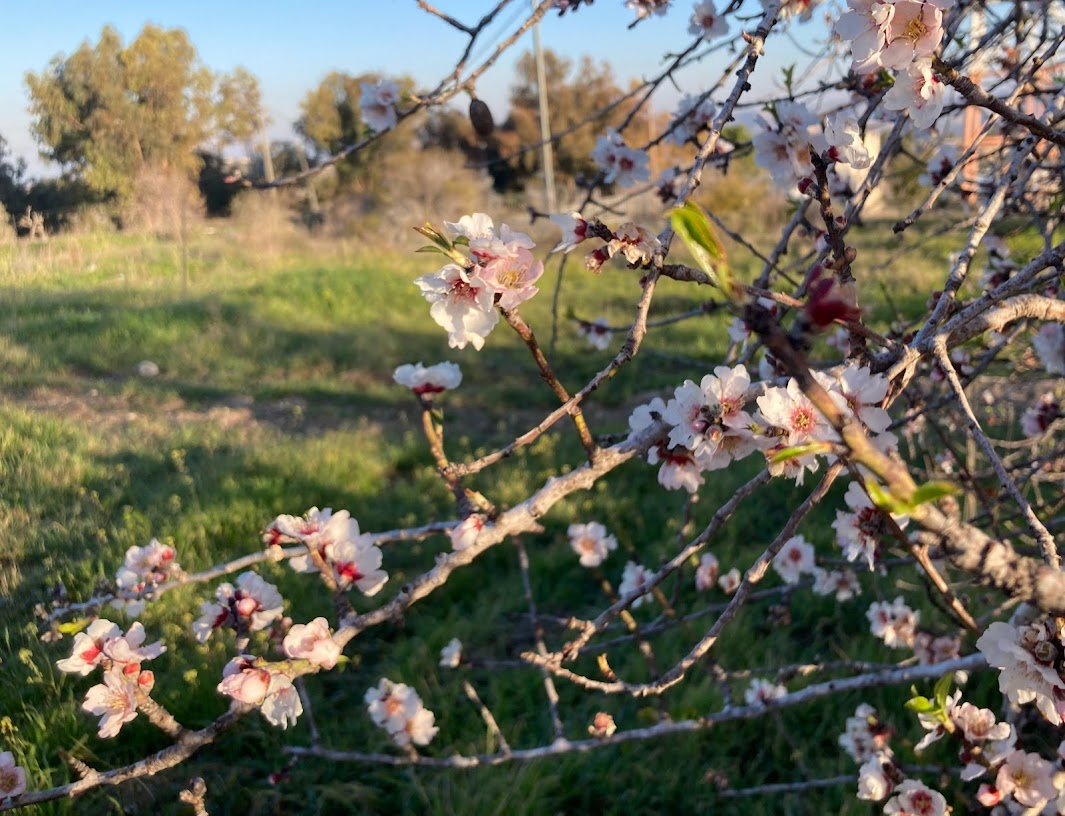
| And if we’re talking about flowers, then we can’t help but mention the almond itself, which decorates and graces the Land around Tu Bishvat with its wonderful flowers. Almonds have deep roots and therefore can grow even in areas that don’t have a lot of rain. There are cultivated almond orchards in Israel with sweet almonds, and there are also wild almonds. It is important to note that the wild almonds are bitter, and contain a substance called amygdalin, which breaks down and forms cyanide which is a poison, therefore eating a large amount of bitter almonds is dangerous. The cultivated varieties contain large amounts of fat, protein, vitamins and minerals and have great nutritional value (a double message here too, when good and bad are hidden within the same fruit, which is often a fruit that represents the People of Israel?). | ואם כבר בפריחה עסקינן, הרי שלא נוכל שלא לשוב ולהזכיר את השקד עצמו, שמקשט ומפאר את הארץ בסביבות טו בשבט בפרחים הנפלאים שלו. לשקד שורשים עמוקים ולכן יכול לגדול גם באיזורים שאין בהם הרבה גשמים. יש בארץ מטעי שקדים תרבותיים עם שקדים מתוקים, ויש גם שקדי בר. חשוב להזכיר שהזרעים של שקדי הבר הם מרים, ומכילים חומר שנקרא אמיגדאלין, המתפרק ויוצר ציאניד שהוא רעל, לכן אכילת כמות מרובה של שקדים מרים מסוכנת. הזנים התרבותיים מכילים כמויות גדולות של שומן, חלבון, ויטמנים ומינרלים ויש להם ערך תזונתי רב (גם כאן מסר כפול, כשטוב ורע מסתתרים בתוך אותו הפרי, שנזכר פעמים רבות כפרי שמייצג את עם ישראל?). |
| And just before saying goodbye for this week, we’ll also mention the Lufit Metzuya, or in its Latin name, Arisarum, known in Hebrew as Ma-te Aharon = Aaron’s staff! Because of the bent staff coming out of the stem. The Lufit is common in the Mediterranean region and in Israel it is the only species of its kind. It is common in shrubland (Chapparral in CA), deserted fields, edges of gardens, in shade or full sun. The leaves of the plant appear already in autumn, and flowers last from October to April. | ורגע לפני שנפרד לשבוע זה, נזכיר גם את הלופית המצויה שנקראת גם בשם – מטה אהרון! בגלל המטה הכפוף מטה היוצא מן הגבעול. הלופית המצויה נפוצה באיזור הים התיכוני ובארץ היא המין היחיד מסוגה. היא נפוצה בבתות, מעזבות, שולי גינות, בצל או בשמש מלאה. עלי הצמח מופיעים כבר בסתו, והפריחה נמשכת מאוקטובר ועד אפריל. |
שתהיה לנו שבת שלום – SHABBAT SHALOM
pictures below of the Lufit (from Wikipedia) and the almond tree (by me :-))



 Torah & more... תורה ועוד