תקע בשופר גדול”… ראש השנה תשפ”ד”
| Our “Rosh Hashana”, as such, is not mentioned in the Torah. If anything, another month is mentioned as “the first to you of the months of the year” (Exodus 12:2), and that is the spring month of Nisan. To increase the confusion, at the beginning of tractate Rosh Hashanah, four new-years are mentioned, some of them in dispute, and later on, a long (and wonderful) discussion between Rabbi Eliezer and Rabbi Yehoshua deals with the question of whether Rosh Hashanah falls on Tishrei or Nissan… the answers are less important at the moment. What is, is the fact that we have more new-years than we thought. We determine different beginnings “for years and months”, for trees, for school, for finances, for the Gregorian calendar and more… | “ראש השנה” שלנו, ככזה, לא מוזכר בתורה. אם כבר, מוזכר חודש אחר כ”ראשון הוא לכם לחודשי השנה” (שמות יב:ב), והוא חודש האביב, ניסן. כדי להגביר את הבלבול, בתחילת מסכת ראש השנה, מוזכרים ארבע ראשי שנים, חלקם במחלוקת, ובהמשך, דיון ארוך (ונפלא) בין רבי אליעזר ורבי יהושע העוסקים בשאלה האם ראש השנה חל בתשרי או ניסן… התשובות פחות חשובות כרגע. מה שכן, זו העובדה שיש לנו יותר ראשי שנים ממה שחשבנו. אנחנו קובעים התחלות שונות “לשנים ולחודשים”, לעצים, ללימודים, לכספים, ללוח השנה הלועזי ועוד… |
| The idea that we may take for granted, that it’s possible to draw a line, and start again from the beginning, is wonderful and unique. Not that no one thought of the practical need to correct the calendar, calculating the differences between the lunar and solar year, but the Jews also added the personal – national idea, that it’s possible to renew, and in different areas of life, all the time! | הרעיון שאנחנו אולי לוקחים כמובן מאליו, שאפשר למתוח קו, ולהתחיל שוב מהתחלה, מופלא ויחודי. לא שאיש לא חשב על הצורך המעשי לתקן את לוח השנה וההפרשים בין שנת הירח והשמש, אבל היהודים הוסיפו, גם את הרעיון האישי – לאומי, שאפשר להתחדש, ובתחומים שונים, כל הזמן! |
| Much of Rosh Hashana is unknown. And, symbolically (and practically), in stark contrast to all our holidays that are usually celebrated when the moon is full, shining, bright and perfect, Rosh Hashanah is the only holiday that begins when it’s dark and there’s almost no moon, just like all beginnings, and especially, “The” beginning of Creation, when it’s not clear what kind of world will come out of here… this is a holiday in which we do not celebrate a great success – the Exodus from Egypt, the Giving of the Torah, a victory, but – so strange – Soul-searching. Remembrance. Tuning in. A tiny seed for something in the future, for doing; for complete presence and awareness in the world, when the realization of the potential before us – is still completely hidden . | הרבה מראש השנה – נסתר. ובאמת, באופן סמלי (ומעשי), בניגוד חריף לכל החגים שלנו הנחגגים בד”כ כשהירח מלא, מאיר, בוהק ומושלם, ראש השנה הוא החג היחיד שמתחיל כשחשוך וכמעט אין ירח, ממש כמו כל ההתחלות, ובמיוחד, “ה”התחלה, “ה”בריאה, כשלא ברור איזה מן עולם יצא כאן…זהו חג בו אנחנו לא חוגגים הצלחה כבירה – יציאת מצרים, מתן תורה, נצחון כלשהו, אלא – כמה מוזר – חשבון נפש. זכירה. התכווננות. גרעין קטנטן למשהו עתידי, לעשיה, לנוכחות שלמה ומודעות בעולם, כשהתממשות פוטנציאל הדברים שלפנינו – עדיין נסתרת לגמרי. |
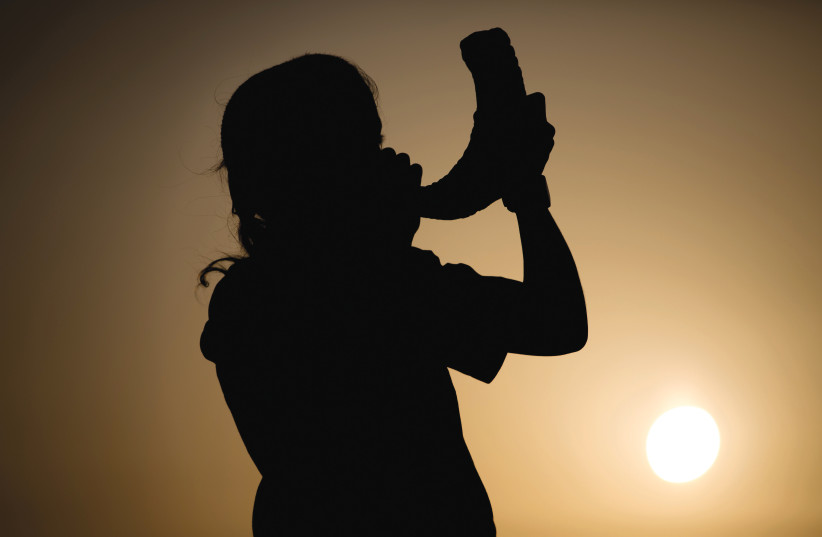
| In the Torah portion of “Emor” (Leviticus 23:24), the Torah refers to this day that we call “Rosh Hashanah” and says about it: “Speak to the Children of Israel thus: In the seventh month, on the first day of the month, you shall observe complete rest, a sacred occasion commemorated with loud blasts”, that is, a day that is indicated by blowing a shofar. | בפרשת “אמור” (ויקרא כג, כד) מתיחסת התורה ליום הזה שאנחנו קוראים “ראש השנה” ואומרת עליו: “דַּבֵּ֛ר אֶל־בְּנֵ֥י יִשְׂרָאֵ֖ל לֵאמֹ֑ר בַּחֹ֨דֶשׁ הַשְּׁבִיעִ֜י בְּאֶחָ֣ד לַחֹ֗דֶשׁ יִהְיֶ֤ה לָכֶם֙ שַׁבָּת֔וֹן זִכְר֥וֹן תְּרוּעָ֖ה מִקְרָא־קֹֽדֶשׁ”. “זכרון-תרועה” – כלומר יום שמצוין בתקיעת שופר. |
| The shofar appeared for the first time at Mount Sinai: “The blare of the shofar grew louder and louder. As Moses spoke, God answered him in thunder” And the shofar is also connected with redemption, when it is written – “And on that day, a great shofar shall be sounded; and the strayed who are in the land of Assyria and the expelled who are in the land of Egypt shall come and worship GOD on the holy mount, in Jerusalem” (Isaiah 27:13). Also in the year of the jubilee, when slaves are freed, it’s written “Then you shall sound the shofar loud; in the seventh month, on the tenth day of the month—the Day of Atonement—you shall have the horn sounded throughout your land” (Leviticus 25,9) And some say, that already during the creation of the world, Gd’s voice, commanding Creation, was like a shofar. | השופר הופיע לראשונה במעמד הר-סיני: “וַיְהִי֙ ק֣וֹל הַשֹּׁפָ֔ר הוֹלֵ֖ךְ וְחָזֵ֣ק מְאֹ֑ד מֹשֶׁ֣ה יְדַבֵּ֔ר וְהָאֱלֹהִ֖ים יַעֲנֶ֥נּוּ בְקֽוֹל” (שמות יט,יט). והשופר קשור גם בגאולה, כשכתוב – “וְהָיָה בַּיּוֹם הַהוּא יִתָּקַע בְּשׁוֹפָר גָּדוֹל וּבָאוּ הָאֹבְדִים בְּאֶרֶץ אַשּׁוּר וְהַנִּדָּחִים בְּאֶרֶץ מִצְרָיִם וְהִשְׁתַּחֲווּ לַיהוָה בְּהַר הַקֹּדֶשׁ בִּירוּשָׁלָ͏ִם” (ישעיהו כז, יג). גם בשחרור העבדים בשנת היובל כתוב “וְהַֽעֲבַרְתָּ֞ שׁוֹפַ֤ר תְּרוּעָה֙ בַּחֹ֣דֶשׁ הַשְּׁבִעִ֔י בֶּעָשׂ֖וֹר לַחֹ֑דֶשׁ בְּיוֹם֙ הַכִּפֻּרִ֔ים תַּעֲבִ֥ירוּ שׁוֹפָ֖ר בְּכׇל־אַרְצְכֶֽם׃ וְקִדַּשְׁתֶּ֗ם אֵ֣ת שְׁנַ֤ת הַחֲמִשִּׁים֙ שָׁנָ֔ה וּקְרָאתֶ֥ם דְּר֛וֹר בָּאָ֖רֶץ לְכׇל־יֹשְׁבֶ֑יהָ”… (ויקרא כה,ט). יש שאומרים שכבר בבריאת העולם, קולו של הקב”ה, מצווה על הבריאה, היה כשופר. |
| And every day we say in the Amida prayer, in the blessing that was established back in the days of the Second Temple, before the destruction: “Blow a big shofar for our freedom and raise the banner to gather our exiles and bring us together (quickly, the sefardis add) from the four corners of the earth to our Land. Blessed are you, O Lord, who gathers the outcasts of his people Israel”. Rav Kook asks about this, what does “big Shofar” mean? | ובכל יום אנחנו אומרים בתפילת עמידה, בברכה שנתקנה עוד בימי בית שני, לפני החורבן: תְּקַע בְשׁוֹפָר גָּדוֹל לְחֵרוּתֵנוּ וְשָׂא נֵס לְקָבֵץ גָּלֻיוֹתֵינוּ וְקַבְּצֵנוּ יַחַד (מְהֵרָה, הוסיפו הספרדים) מֵאַרְבַּע כַּנְפוֹת הָאָרֶץ לְאַרְצֵנוּ. בָּרוּךְ אַתָה ה’, מְקַבֵּץ נִדְחֵי עַמּוֹ יִשְׂרָאֵל. הרב קוק שואל על כך, מה פירוש “שופר גדול”? |
| According to him, the fact that it mentions a “big shofar” means that there is also a medium shofar and a small shofar. Indeed, there are different types of shofars that can be blown on Rosh Hashanah: the best, that of a ram. Next, a shofar of a kosher animal or beast, even if not a ram. Last, a horn of any animal or beast, even a rhinoceros, can be blown, but a blessings cannot be said over such a shofar. | לטענתו, זה שכתוב שיש שופר גדול, אומר שיש גם שופר בינוני ושופר קטן. אכן, יש סוגים שונים של שופרות בהם אפשר לתקוע בראש השנה: הטוב ביותר, של איל. לאחריו, שופר של חיה או בהמה כשרה, גם אם לא איל. ולאחר מכן, כל חיה או בהמה שהיא, אפילו קרנף, אפשר לתקוע אבל על שופר שכזה, אסור לברך. |
| Since sounding the shofar stands for our freedom – the national one (along with he in-gathering of our exiles), it turns out that there are also different freedoms, and different reasons to come to Israel: the small shofar corresponding to the smaller freedom, is coming to the Land due to constraints elsewhere, a way we all know from history lessons and family stories. The second – is our arrival at the Land because we recognize the “natural right of the Jewish people to be a nation like any other, independent in its own sovereign state” (from the “Declaration of Independence”). This is a great step, and still, after it, there is the third shofar, which calls us to come due to spiritual awakening that will manifest itself in physical realization, from the feeling that we want to raise the Shekinah from dust, to renew the encounter with Gd, and to build our deep connection with Him and with each other, through the Land . | מכיון שהתקיעה מסמלת את חירותינו – הלאומית (יחד עם קיבוץ גלויות), מסתבר שיש גם חירויות שונות וסיבות שונות לבוא לארץ: השופר הקטן המקביל לחירות הקטנה יותר, הוא בואנו לארץ מאילוצים, דרך שכולנו מכירים משיעורי הסטוריה וסיפורים משפחתיים. השני – בואנו לארץ כי אנחנו מכירים ב”זכותו הטבעית של העם היהודי להיות ככל עם ועם, עומד ברשות עצמו במדינתו הריבונית” (מתוך “מגילת העצמאות”). זו מדרגה נהדרת ועדיין, יש אחריה את השופר השלישי, שקורא לנו לבוא מתוך ההתעוררות רוחנית שתתבטא בהתממשות פיזית, מתוך תחושה שאנחנו רוצים להרים את השכינה מעפרה, לחדש את המפגש עם הקב”ה, ולבנות את הקשר העמוק שלנו איתו ואחד עם השני, דרך הארץ. |
| And it is also important to pay attention to the first time when the root – Sh.P.R. – appeared in the Torah, which was in Shifra’s name, the midwife in Egypt, who would “improve (meshaperet) the child”, awaken him, giving him life. According to Rambam, the Shofar is like an alarm clock. The human, after all, is a little sleepy, since the days of the Garden of Eden, when Gd caused him to sleep, and until now we have not been told that Gd woke him up! The shofar is His proxy, the one who seeks to remind, shake, move us, at least a little, from our place. This message is also found in the order of blowing the shofar: a complete blowing – broken and rickety (sh’varim-teru’a) – and again whole, as a hint that even if Creation was perfect, then later, in life, things break and fall apart, and our desire is to make out of the rickety (ra’u’a) – friendship (re’ut), connection, and improvement (shipur). | וחשוב גם לשים לב לפעם הראשונה כשהשורש – ש.פ.ר. – הופיע בתורה, בשמה של שפרה, המיילדת במצרים, שהיתה “משפרת את הוולד”, מעירה ונותנת לו חיים. לפי הרמב”ם, השופר הוא כמו שעון מעורר. האדם, אחרי הכל, קצת ישן, עוד מימי גן עדן כשהקב”ה הפיל עליו תרדמה, ועד עכשיו לא נאמר לנו שהוא העיר אותו! השופר הוא בא כוחו, זה שמבקש להזכיר, לנענע, לרגש, להזיז אותנו, לפחות קצת, ממקומנו. המסר הזה נמצא גם בסדר תקיעות השופר: תקיעה שלמה – שבורה ורעועה (שברים-תרועה) – ושוב שלמה, כרמז לכך שגם אם הבריאה היתה מושלמת, הרי אחכ, בחיים, דברים נשברים ומתפרקים, ושאיפתנו, לעשות מהרעוע – רעות, חברות, חיבור, קשר, שיפור והשתפרות. |
| Continuing our travel in the Land, we will mention two places in Israel whose name is from the root – Sh.P.R. The first is Moshav Shefer in the Upper Galilee which was founded in 1950 and its name is taken from the blessing of Jacob to Naftali – Naphtali is a hind let loose, Which yields lovely fawns = imrey shefer (Genesis 49,21). Therefore, it’s located near Moshav Amirim (the words “imrey shefer” in the blessing). The Moshav went through many difficulties at the beginning, but today it’s a beautiful place with fantastic views. Within the moshav is the Shafer fortress, which was originally called “Perdia” and was one of the chain of fortresses of the Northern Wall built by the British in the late 1930s. In the area there are springs and streams, trails and Galilean vista points. | בהמשך לטיולנו, נזכיר בארץ שני מקומות שבשמם השורש – ש.פ.ר. הראשון הוא מושב שֶׁפֶר בגליל העליון שנוסד ב-1950 ושמו לקוח מברכת יעקב לנפתלי – “נַפְתָּלִ֖י אַיָּלָ֣ה שְׁלֻחָ֑ה הַנֹּתֵ֖ן אִמְרֵי־שָֽׁפֶר” (בראשית מט,כא), לכן הוא נמצא בסמוך למושב אמירים (“אמרי שפר”). המושב שעבר קשיים רבים בתחילתו כיום הוא מקום יפיפה עם נוף פנטסטי. בתחומי המושב נמצאת מצודת שפר, שבמקור נקראה ״פרדיה״ והיתה אחת משרשרת מצודות גדר הצפון שנבנו ע”י הבריטים בסוף שנות ה-30, ובאיזור מעיינות ונחלים, שבילים ונקודות נוף גליליות. |
| The second place is Shefar’am, today an Arab city in the northern district, most of whose inhabitants are Arab-Muslims, and about a third are Christian Arabs and Druze. Shefar’am lies at the meeting point between the Galilee mountains and the valleys, which made it throughout its history, a central and important city. It has existed for thousands of years, and its roots go back to many centuries BCE, having been established in the Canaanite period and archaeological remains were found there. | המקום השני הוא שפרעם, כיום עיר ערבית במחוז הצפון אשר רוב תושביה הם ערבים-מוסלמים, וכשליש ערבים נוצרים ודרוזים. שפרעם שוכנת בנקודת המפגש בין הרי הגליל לבין העמקים, מה שהפך אותה לאורך תולדותיה, לעיר מרכזית וחשובה. היא קיימת אלפי שנים, ושורשיה מעמיקים עד מאות שנים רבות לפני הספירה. כנראה שהיישוב הוקם בתקופה הכנענית ונמצאו בה שרידים ארכאולוגים. |
| Shefar’am is mentioned in the Talmud in several places, in connection with the Bar-Kochva revolt, and as one of the places to which the Sanhedrin migrated to, from nearby Usha (around 150 CE). During the Roman rule, Rabbi Yehuda ben Baba lived here, ordaining students to be rabbis, and the Romans executed him. His tomb is located in the city and serves as a pilgrimage site. Some are inclined to see in Shefar’am’s name a combination of the Hebrew words Shefar (shofar) of the Nation. The Jewish community continued to live there until the beginning of the 20th century (about a century ago). | שפרעם מוזכרת בתלמוד בכמה מקומות, בהקשר למרד בר-כוכבא, וכאחד המקומות אליהם נדד מושב הסנהדרין מאושא הסמוכה לה (בערך בשנת 150 לספירה). בתקופת השלטון הרומי, חי במקום רבי יהודה בן בבא שהסמיך תלמידים לרבנות, והרומאים הוציאו אותו להורג. קברו שוכן בעיר ומשמש אתר עלייה לרגל. יש הנוטים לראות בשמה צירוף של המילים העבריות שפר (שופר) עם. הקהילה היהודית המשיכה וחיה במקום עד תחילת המאה ה-20 (לפני כמאה שנה). |
| In the ancient part of the city there is still – the “Shekinah Camp” synagogue, which was renovated about 250 years ago, by Rabbi Chaim Abulafia (the second) during the reign of Dahar al-Omar, the ruler of the Galilee in the 18th century, who gave the Jews permission to build it. It’s believed that the old synagogue was built on the site of an ancient synagogue that had stood here since the time of the Second Temple. We can count on it that for hundreds of years, shofar was blown there too… | בחלק העתיק של העיר שוכן – עדיין – בית הכנסת “מחנה שכינה”, שחודש לפני כ-250 שנים, על ידי רב חיים אבולעפיה (השני) בתקופת שלטונו של דאהר אל-עומר שליט הגליל במאה ה-18, שהעניק ליהודים רשות להקימו. סוברים כי בית הכנסת העתיק נבנה במיקומו של בית כנסת קדום שעמד במקום עוד מתקופת בית שני. אפשר להניח שבמשך מאות שנה, גם שם תקעו בשופר… |
מי יתן ונשמע גם אנחנו, ושתהיה לנו שבת שלום ושנה טובה ומתוקה!
May we hear as well, and let it be a Shabbat Shalom & SHANA TOVA U’METUKA!


 Torah & more... תורה ועוד
חידשת לי כמה דברים – לא שמתי לב שה’ לא העיר את האדם, ולא ידעתי על הקשר בין תרועה לבין רעועה.
שנה טובה וחג שמח