כנשר יעיר קינו… תורה וטיולים לשבת שובה עם פרשת האזינו
| The Torah portion of Ha’azinu, read on this Shabbat – Shabbat Shuva between Rosh Hashanah and Yom Kippur, is among the shortest Torah portions, and also – the least understood. Most of it is taken up by the Ha’azinu poem, which describes the cycle of what will happen to the People of Israel in the future – settlement in the Land of Israel, sin, exile and then, redemption. It,s written in a special way – rows and rows in a pattern called “tile on top of tile” – two long columns along the page (compared to the Song of the Sea which is written in the form of “tile on top of brick”…) | פרשת האזינו הנקראת בשבת זו – שבת שובה בין ראש השנה ויום הכיפורים, היא בין הפרשות הקצרות בתורה, וגם – הכי פחות מובנות. את רובה תופסת שירת האזינו, המתארת את המעגל של מה שיקרה לעם ישראל בעתיד – התנחלות בארץ ישראל, חטא, גלות ולאחר מכן, גאולה. היא כתובה בצורה מיוחדת – שורות שורות בתבנית הקרויה “אריח על גבי אריח” – שתי עמודות ארוכות לאורך הדף (לעומת שירת הים שכתובה בצורת “אריח על גבי לבנה”…) |
| After the poem, there are two more short passages: in the first, Moses is depicted reading the song to the Israelites and warning them again to be careful to keep the Torah: “For this is not a trifling thing for you: it is your very life; through it you shall long endure on the land that you are to possess upon crossing the Jordan” (Deut. 32:47), and in the second, Gd commands Moses to climb up Mount Nevo, look out over the Land of Israel and die there. | אחרי השירה יש עוד שתי פרשיות קצרות: בראשונה משה מתואר קורא את השירה לבני ישראל ומזהיר אותם שוב להקפיד לקיים את התורה: ”כִּי לֹא דָבָר רֵק הוּא מִכֶּם כִּי הוּא חַיֵּיכֶם וּבַדָּבָר הַזֶּה תַּאֲרִיכוּ יָמִים עַל הָאֲדָמָה אֲשֶׁר אַתֶּם עֹבְרִים אֶת הַיַּרְדֵּן שָׁמָּה לְרִשְׁתָּהּ” (דברים לב, מז), ובשנייה – מצווה אלוהים את משה לעלות להר נבו, להשקיף על ארץ ישראל ולמות שם. |
| In the Ha’azinu poem itself, the metaphor of the parent and the child between Gd and the People of Israel stands out, and it turns out that we are not such great children – stubborn, ungrateful and not always wise in our decisions. On the other hand, Gd remains a nurturing, caring and dedicated parent even when his children are more than a little annoying… . | בשירת האזינו עצמה בולט משל ההורה והילד בין הקב”ה ועם ישראל, ומסתבר שאנחנו לא ילדים משהו – עקשנים, כפויי טובה ולא תמיד חכמים בהחלטותינו. מנגד, הקב”ה נשאר הורה מטפל, דואג ומסור גם כשהילדים שלו קצת (הרבה) מעצבנים… |
| And so it says (Deut 32:9-11): For Hashem’s portion is this people; Jacob, Gd’s own allotment. [Gd] found them in a desert region, In an empty howling waste. [Gd] engirded them, watched over them, Guarded them as the pupil of Gd’s eye. Like an eagle who rouses its nestlings, Gliding down to its young, So did [Gd] spread wings and take them, Bear them along on pinions… | וכך כתוב (דברים לב: ט-יא): כִּ֛י חֵ֥לֶק ה’ עַמּ֑וֹ יַעֲקֹ֖ב חֶ֥בֶל נַחֲלָתֽוֹ׃ יִמְצָאֵ֙הוּ֙ בְּאֶ֣רֶץ מִדְבָּ֔ר וּבְתֹ֖הוּ יְלֵ֣ל יְשִׁמֹ֑ן יְסֹבְבֶ֙נְהוּ֙ יְב֣וֹנְנֵ֔הוּ יִצְּרֶ֖נְהוּ כְּאִישׁ֥וֹן עֵינֽוֹ׃ כְּנֶ֙שֶׁר֙ יָעִ֣יר קִנּ֔וֹ עַל־גּוֹזָלָ֖יו יְרַחֵ֑ף יִפְרֹ֤שׂ כְּנָפָיו֙ יִקָּחֵ֔הוּ יִשָּׂאֵ֖הוּ עַל־אֶבְרָתֽוֹ׃ |
| The eagle is mentioned in the Bible at the top of the list of unclean birds, but also as a symbol of strength and ease of flight. In the Talmud, the eagle is crowned the king of birds. Hence the name of the operation “On the Wings of Eagles” given to bringing mainly Yemenite and some Eritrean Jews to Israel in 1949-1950’s. In our portion, the eagle is described as a kind and caring parent who takes care of his offspring. As it is said (Mekhilta Darbi Ishmael), “All birds put their young between their legs, because they fear another bird that flies above their backs, but this eagle is only afraid of humans, lest he throws an arrow at him, Then (the eagle) says: It is better that it enters me, rather than his son… | הנשר מוזכר במקרא בראש רשימת העופות הטמאים, אך גם כסמל לעוצמה וקלות מעוף. בגמרא מוכתר הנשר למלך העופות. מכאן שם המבצע “על כנפי נשרים” שניתן להעלאתם של יהודי תימן בעיקר וקצת מיהודי אריתריאה לארץ בשנים 1949-1950. בפרשה שלנו הוא מתואר כהורה דואג ומטפל בצאצאיו. כפי שנאמר (מכילתא דרבי ישמעאל יתרו מסכתא דבחדש פרשה ב), “שכל העופות כולן נותנין את בניהם בין רגליהם, מפני שהן מתייראין מעוף אחר שהוא פורח על גביהם (מעליהם), אבל הנשר הזה, אינו מתיירא אלא מאדם זה בלבד, שלא יזרוק בו חץ. אמר (הנשר): מוטב שיכנס בו ולא בבנו… |
| On one of my recent Shabbat days, I walked up to “Little Switzerland” on the Carmel, where I discovered the “Chai-Bar” – wildlife reserve gate open, and of course, I couldn’t help but continue just a little further down the trail… The Carmel Wildlife Reserve covers about 6000 dunams and its purpose is to protect and return to nature animals that used to live in Israel, among them, also eagles. There is actually an age-old confusion, which we won’t enter into here, between the carrion-eating “eagle” (vulture) and the predatory eagle. Apparently the origin of the eagle’s name in Hebrew, Nesher, from the root N.Sh.R. – is because that’s the root for shedding — of feathers and the down hair that covers its head and neck, which helps it when it sticks its head into the dead animal it eats. The Israeli eagle – vulture is called a “biblical vulture – nesher”, in English – Griffon Vulture and in Arabic – نَسْر). | באחת השבתות האחרונות הגעתי בהליכת הבקר שלי לשווצריה הקטנה שעל הכרמל, שם גיליתי את שער החי-בר פתוח, וכמובן, לא יכולתי שלא להמשיך רק עוד קצת ולהכנס… שמורת החי-בר כרמל משתרעת על כ-6000 דונם ומטרתה – להגן ולהחזיר לטבע בעלי חיים שחיו בעבר בארץ, ביניהם, גם נשרים. קיים בלבול עתיק יומין, שלא נכנס אליו כאן, בין הנשר האוכל נבלות והעיט – הטורף. כנראה שהמקור לשמו של הנשר – מהשורש נ.ש.ר – בגלל נשירת הנוצות ופלומת השיער שמכסה את ראשו וצווארו, דבר שעוזר לו כשהוא תוחב את ראשו אל קרביו של הנבלה אותה הוא אוכל. הנשר הישראלי מכונה “נשר מקראי” (באנגלית -Griffon Vulture ובערבית – נַסְר” نَسْر. |
| The eagle / vulture, which lives in colonies on high cliffs, has a wingspan of almost 3 m! His weight is 5.3-8 kg and he lives for about 40-50 years in a monogamous relationship that probably lasts a lifetime (perhaps it helps that both parents participate in the incubation of the egg and the feeding of the chick…). In Israel there are concentrations of nesting eagles in the Golan Heights, where there is a colony in the Gamla area (recommended, especially in spring and especially always…), in Nahal Tzin and the Negev, and in the Carmel. Unfortunately, the eagle population has decreased due to hunting, poisoning, electrocution, being caught in agricultural nets, depletion of food sources and disturbance of nesting sites. The wildlife reserve initiates awareness activities and the establishment of feeding areas. The eagles here are marked and the adults are released with a satellite tracking bracelet to study their adaptability and migration. One of the eagles reached as far as Saudi Arabia and was captured. The authorities, who were surprised to encounter an eagle with an Israeli surveillance bracelet, firmly claimed that it was a spy eagle of the Mossad… | לנשר, שחי במושבות במצוקים גבוהים, מוטת כנפיים עד כמעט 3 מ’! משקלו 5.3-8 ק”ג והוא חי כ-40-50 שנה בקשר מונוגמי שנמשך כנראה לכל החיים (אולי זה עוזר ששני ההורים משתתפים בדגירה על הביצה ובהאכלת הגוזל…). בארץ ריכוזים של נשרים מקננים ברמת הגולן, שם יש מושבה באיזור נחל גמלא (מומלץ, במיוחד באביב אבל גם במיוחד תמיד…), בנחל צין ובנגב, ובכרמל. לצערנו, אוכלוסיית הנשרים הצטמצמה עקב ציד, הרעלות, התחשמלות, הילכדות ברשתות חקלאיות, הידלדלות מקורות מזון והפרעה באתרי קינון. החי-בר יוזם פעילות הסברה וכן הקמת שטחי האכלה. הנשרים כאן מסומנים והבוגרים משוחררים עם צמיד מעקב לוויני לשם חקר יכולת ההסתגלות והנדידה שלהם. אחד מהנשרים הגיע עד ערב הסעודית ונתפס. הרשויות, שהופתעו להיתקל בנשר עם צמיד מעקב ישראלי, טענו בתוקף שמדובר בנשר-מרגל של המוסד… |
| And if we are talking about eagles- nesher / nesharim in the Carmel, you’re welcome to join me on a route I take almost daily, through Nesher – literally “eagle” – a city since 1995, which is located right on the border of Haifa, on the northeastern slopes of the Carmel Ridge (route 752) between the Check-Post junction and Kibbutz Yagur. I admit and confess to my surprise and somewhat sadness, as to how little I knew about this place until writing these lines. The beginning of the settlement involves the story of the establishment of the cement factory, “Nesher”, the construction of which was predicted by Benjamin Ze’ev Herzl in his book “Altneuland” (1902). | ואם בנשרים בכרמל עסקינן, אתם מוזמנים איתי לנסיעה שאני עושה כמעט כל יום דרך נשר, העיר מאז 1995, ששוכנת ממש בגבול חיפה, על השיפולים הצפון־מזרחיים של רכס הכרמל (כביש 752) בין צומת הצ’ק-פוסט וקיבוץ יגור. אני מודה ומתוודה בהפתעה וקצת עצב, כמה מעט ידעתי עליה עד לכתיבת שורות אלה. ראשית היישוב בה כרוך בסיפור הקמת בית החרושת למלט, “נשר”, שאת בנייתו חזה בנימין זאב הרצל בספרו “אלטנוילנד” (1902). |
| In 1903, Nachum Vilbush made aliya to Israel, a Zionist activist, economic entrepreneur and the pioneer of modern industry in Israel, among other things he founded the “Shemen” (oil) factory, invented irrigation systems for irrigating citrus orchards, initiated the cultivation of sugar cane, and more. If we don’t know him, we might know some of his family members: his sister, Mania Shohat, head of “Bar Giora”, “Hashomer” and Kibbutz Kfar Giladi on the northern border; and his brother-in-law (his wife’s brother) Avshalom Feinberg, thinker and founder of Nili, an underground organization that operated in Israel during World War I and focused on providing intelligence services to the British who fought against the Ottoman Empire. | בשנת 1903 עלה לארץ נחום וילבוש, פעיל ציוני ויזם כלכלי ומחלוצי התעשיה המודרנית בארץ, בין השאר מי שייסד את בית החרושת “שמן”, המציא מערכות השקיה להשקיית פרדסים, יזם גידול קני סוכר, ועוד. אם אנחנו לא מכירים אותו, קרוב לודאי שנכיר כמה מבני משפחתו: אחותו, מניה שוחט, מראשי “בר גיורא”, “השומר” וקיבוץ כפר גלעדי בגבול הצפון, וגיסו (אחי אשתו) אבשלום פיינברג, הוגה ומייסד ניל”י, ארגון מחתרתי שפעל בארץ בתקופת מלחמת העולם הראשונה והתמקד במתן שירותי מודיעין לבריטים שנלחמו מול האימפריה העות’מאנית. |
| But back to Nahum Vilbush who was looking for possibilities for economic development in the Land. It seemed to him that a cement plant would be needed with the renewed construction boom. Because of the limestone rocks in the Carmel, the proximity to the port of Haifa and the Hijaz railway (and perhaps also Herzl’s dream), he recommended the establishment of a cement plant in Carmel and began the process of purchasing land in the area. | נחזור לנחום וילבוש שחיפש אפשרויות לפיתוח כלכלי בארץ. נראה היה לו שיהיה צורך במפעל למלט עם תנופת הבנייה המתחדשת. בגלל סלעי הגיר בכרמל, הקרבה לנמל חיפה ומסילת הרכבת החיג’אזית (ואולי גם חלומו של הרצל), הוא המליץ על הקמת מפעל מלט בכרמל והחל בתהליך רכישת קרקע באיזור. |
| In 1921 – almost 20 years later, finally! Yehoshua Hankin bought the land here, and the workers, who preferred to stay close to the place and not wander the dangerous roads, were housed in a road shanty instead. At first they engaged in agriculture until in 1925 the first furnace was operated in the factory, and the factory started producing cement. The place grew, especially after the War of Independence and with the waves of new comers in the 1950s, when today about 25,000 residents live here. | ב-1921 – כמעט 20 שנה מאוחר יותר, סופסוף! קנה יהושע חנקין את האדמות באיזור, והפועלים, שהעדיפו להשאר קרוב למקום ולא לנדוד בדרכים המסוכנות, שוכנו בחאן דרכים במקום. בהתחלה עסקו בחקלאות וב-1925 הופעל הכבשן הראשון בבית החרושת, והמפעל התחיל בייצור מלט. המקום גדל, במיוחד לאחר מלחמת העצמאות ועם העליות של שנות ה-50, כשכיום חיים כאן כ-25 אלף תושבים. |
| The origin of the name “Nesher” is still uncertain. It’s possible that the founder of the factory, Michael Polak, had a connection with a cement factory in Germany whose name included “eagle”; it’s possible that the houses up on the slopes of the mountain gave a feeling of observation “from the flight of the eagle” (thanks to Rabba Iris Yaniv for that), and it’s possible that it was was named after the bird in our Torah portion, which today also Lives, as mentioned, in Carmel, above the city. | המקור לשם “נשר” אינו ודאי. יתכן שלמייסד המפעל, מיכאל פולק, היה קשר עם מפעל מלט בגרמניה שבשמו היה “נשר”, יתכן שבתיה הגבוהים נתנו תחושה של תצפית “ממעוף הנשר” (תודה על כך לרבה איריס יניב), וויתכן שנקרא כך על שם העוף בפרשה שלנו, שכיום גם חי, כאמור, בכרמל, מעל לישוב. |
אז מוזמנים לבקר בהר הירוק תמיד ולגלות פינות חדשות!
So, you’re more than welcome to visit the “Ever-Green Mountain” and discover new sites!
ובנתיים, שבת שלום וכתיבה וחתימה טובה!
and meanwhile, Shabbat Shalom and may you be inscribed and sealed for goodness!
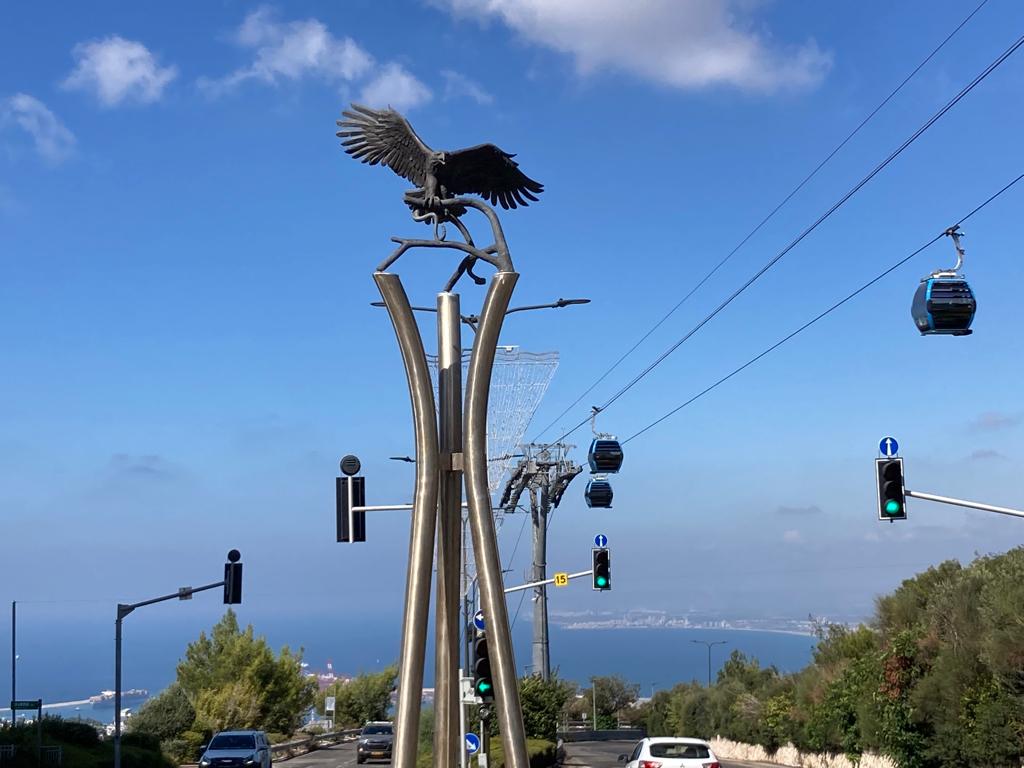
פסל הנשר של הפסל אלכס פלקוביץ בכניסה הצפון-מזרחית לעיר נשר, ונוף מפרץ חיפה ברקע


 Torah & more... תורה ועוד