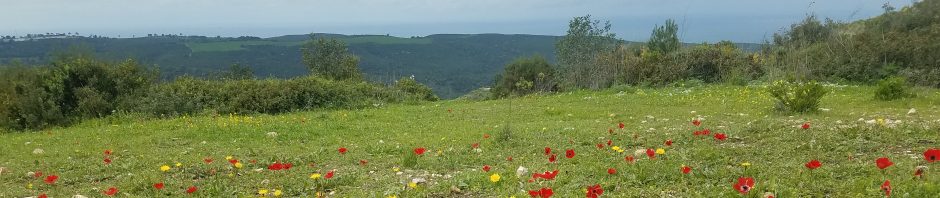
וזאת הברכה…
| We have come to “Ve’zot Habracha” – and this is The blessing”, the last Torah portion; a portion, that on one hand, does not have its own Shabbat, because it is recited on Simchat-Torah, and on the other hand, on the holiday of Simchat-Torah itself, it is read again. And again. And again. And again. In order to allow everyone who comes to synagogue to have an aliya to the Torah, to merit and receive, personally, something from The blessing of Moses (and for those who wonder, if it really is “everyone”, then especially on this holiday, the children are also given an aliya, even under bar mitzvah age, and parents join, with babies, under a large tallit together, and some will also allow women to get an aliya). | הגענו אל “וזאת הברכה”, הפרשה האחרונה בתורה, פרשה שמצד אחד, אין לה שבת משלה, כי היא נקראת בשמחת-תורה, ומצד שני, בחג שמחת-תורה עצמו, קוראים אותה שוב. ושוב. ושוב. ושוב. כדי לאפשר לכל באי בית הכנסת לעלות לתורה, לזכות ולקבל, אישית, משהו מ”ה”ברכה של משה (ולמי שתוהה, אם באמת “כל”, הרי שבמיוחד בחג הזה, מעלים גם את הילדים, אפילו מתחת לגיל בר מצוה, והורים באים עם תינוקות ונכנסים מתחת לטלית גדולה ביחד, ויש, שיאפשרו גם לנשים לעלות). |
| “And this is the blessing with which Moses, the man of Gd, blessed the Children of Israel before his death” (Deut. 33:1), thus begins the Torah portion which describes Moses’ last hours, and this seemingly simple opening, stops us, raising numerous questions, like, why “And this is the blessing”? Why begin with a connecting Hebrew letter vav? And why, considering what’s about to follow are blessings (in the plural), shouldn’t the Torah have said – “And these are the blessings”? | וְזֹ֣את הַבְּרָכָ֗ה אֲשֶׁ֨ר בֵּרַ֥ךְ מֹשֶׁ֛ה אִ֥ישׁ הָאֱלֹהִ֖ים אֶת־בְּנֵ֣י יִשְׂרָאֵ֑ל לִפְנֵ֖י מוֹתֽוֹ (דברים לג,א), כך מתחילה הפרשה שמתארת את שעותיו האחרונות של משה, והפתיח, הלכאורה פשוט הזה, עוצר אותנו לרגע ומעלה שאלות רבות, כמו למשל, למה “וזאת הברכה”? למה להתחיל פרשה בוואו החיבור? ולמה, בהתחשב בזה שמה שבא אח”כ אלו הן ברכות לכל השבטים, האם לא היתה צריכה התורה להגיד – “ואלו הברכות”? |
| And what about the strange term “Moses the man of Gd”? The Midrash already wondered, “If it says ‘man’, why say ‘Gd’, and if it says ‘Gd’, why say ‘man’”? (Tanhuma, Vezot Habracha, 1:1) And perhaps above all, the words “before his death”: if a person has the ability to know exactly when his life on earth is about to end, what will he do with these last hours? And if he doesn’t have the ability to know, what will he do… at all?… And the midrash already prefaces another question about the words “before his death”, I think almost with a smile: “And would you imagine that after his death he blessed Israel”?… | ומה על הביטוי המוזר “משה איש האלוהים”? כבר תהה המדרש, “אִם אָמַר אִישׁ, לָמָּה נֶאֱמַר אֱלֹהִים, וְאִם אָמַר אֱלֹהִים, לָמָּה אָמַר אִישׁ?” (תנחומא, וזאת הברכה א,א) ואולי מעל לכל, המילים “לפני מותו”: אם יש לאדם יכולת לדעת מתי בדיוק עומדים חייו עלי אדמות להסתיים, מה יעשה עם שעותיו האחרונות האלו? ואם אין לו יכולת לדעת, מה יעשה… בכלל?… וכבר המדרש מקדים שאלה אחרת על המילים “לפני מותו”, נדמה לי כמעט בחיוך: “וְכִי תַּעֲלֶה עַל דַּעְתְּךָ שֶׁלְּאַחַר מוֹתוֹ בֵּרֵךְ אֶת יִשְׂרָאֵל”?… |
| The midrash continues, and perhaps wants to remind us that our lives are not elsewhere, but here, in this world, even to a man “who none has risen like him” and who spoke with the Almighty “face to face”. Furthermore: it is said that on that day the angel of death came to Moses, and said to him, ‘Already I was given permission from Gd to take your life’! Moses answered him, ‘I am not going with you, only with the King of Kings Himself, and before that, I have one more thing to do, to bless Him and the Children of Israel’… | המדרש ממשיך ואולי מבקש להזכיר לנו שחיינו אינם בעולם אחר, אלא כאן, בעולם הזה, אפילו לאדם “שלא קם כמותו” ושדיבר עם הקב”ה “פנים אל פנים”. ועוד: מסופר שבאותו יום הגיע מלאך המוות למשה, ואמר לו, ‘כבר ניתנה הרשות מהקב”ה בידי, לקחת את נשמתך’! ענה לו משה, ‘אני לא הולך איתך, רק עם מלך מלכי המלכים בכבודו ובעצמו, ולפני כן, יש לי עוד דבר אחד לעשות, לברך אותו ואת בני ישראל’… |
| And when the angel of death mocked him and said, “There are others who will bless Gd, for it is written (in Psalms 19:2), “The heavens declare the glory of Gd,” Moses answered him, ‘they too will listen to me, as it was said in last week’s verse, “Let the heavens listen” etc. (Deut. 32,1)… And the Almighty sealed it all, saying: “Never again did a prophet arise in Israel like Moses, whom Gd knew face to face, with all signs and wonders” (Deut. 4:11-11). . | וכשלגלג עליו מלאך המוות ואמר, יש מי שיברך את אלוהים, כי הרי כתוב (בתהילים יט,ב), “הַשָּׁמַיִם מְסַפְּרִים כְּבוֹד אֵל”, ענה לו משה, גם הם יקשיבו לי, כמו שנאמר בפרשה של שבוע שעבר, “הַאֲזִינוּ הַשָּׁמַיִם” וְגוֹ’ (דברים לב, א)… ועל כל זה חתם גם הקב”ה ואמר: “וְלֹא קָם נָבִיא עוֹד בְּיִשְׂרָאֵל כְּמֹשֶׁה, אֲשֶׁר֙ יְדָע֣וֹ ה’ פָּנִ֖ים אֶל־פָּנִֽים לְכָל הָאוֹתוֹת וְהַמּוֹפְתִים” (דברים לד, י-יא)… |
| It was entirely reasonable that Moshe, who already knows, as we saw in the previous chapter, that after his death, the people will rise up and turn after other gods (Deut. 32,16), would say something like – ‘Enough, for heavens sake, leave me alone. I have no energy. Today is my birthday, by the way, if anyone remembers, I don’t think I saw a cake, and I’m already 120 years old, and tonight, I have another rather steep ascent to Mount Nevo, and then I’ll meet with His honor so that he can bury me there, so listen. Or not. I’m going to die soon anyway, and you guys are probably going to do whatever you’re doing anyway, so… well… what does it matter, blessings no blessings’… | היה לגמרי סביר שמשה, שכבר יודע, כמו שראינו בפרשה הקודמת, שאחרי מותו, העם יקום ויפנה אחרי אלוהים אחרים (דברים לא,טז), יגיד משהו כמו – ‘די, בחייכם, באמא-שלכם, עזבו אותי. אין לי כח. היום יש יומולדת, אגב, אם מישהו זוכר, לא חושב שראיתי עוגה, ואני כבר בן 120 שנה, והערב, יש לי עוד עליה די תלולה להר נבו, ואז נפגש עם כבודו כדי שיקבור אותי שם, אז תשמעו. או לא. אני ממילא תיכף מת, ואתם ממילא, בטח תעשו מה שאתם עושים אז… נו… מה זה משנה, ברכות לא ברכות’… |
| Sounds familiar, doesn’t it? This is what we would say even before we reached 120 years, when we had a much less steep climb ahead of us, and a much less complex undertaking (and with higher chances of success!)…. But Moshe doesn’t give up, and decides to devote his last hours to blessing the people with “And this is The blessing”, a blessing that is connected to the past and the future, and that has many parts and specific sayings for each tribe, but still, The blessing of the “man of Gd” in all its colors, is One. Blessing. To A people – that despite, and perhaps many times precisely because of all its various colors, it is still, and always, one people. | נשמע מוכר, לא? זה מה שהיינו אומרים גם לפני שהגענו ל- 120 שנה, כשלפנינו עליה הרבה פחות תלולה, ועשיה הרבה פחות מורכבת (ועם סיכויי הצלחה גבוהים יותר!)…. אבל משה לא מוותר, ומחליט להקדיש גם את שעותיו האחרונות לברך את העם ב”וזאת הברכה”, ברכה שהיא מחוברת לעבר ולעתיד, ושיש לה הרבה חלקים ואמירות ספציפיות לכל שבט, אבל עדיין, “ה”ברכה של “איש האלוהים” על כל גווניה, היא ברכה. אחת. לעם – שלמרות, ואולי הרבה פעמים דוקא – בגלל – כל גווניו, הוא עדיין, ותמיד, עם אחד. |
| Just like Moses, who is one person of many parts and even contrasts, who is called “the man of Gd” here: he is a human being like the rest of us. He has parents, a brother and a sister. And a wife, who tells him what to do. At first he has a speech impediment. He has fears. Anger. Troubles. There are times when he is completely – human. And there are also times when he is beyond the here and now, for example, when he stays on the mountain for 40 days and 40 nights, without food or drink, siting with Gd, receiving Torah. | כמו משה, שהוא אדם אחד של הרבה חלקים ואפילו ניגודים, ולכן נקרא כאן “איש האלוהים”: הוא בן אנוש כמו כולנו. יש לו הורים, ואח ואחות. ואשה, שאומרת לו מה לעשות. בהתחלה יש לו בעיית דיבור. יש לו פחדים. כעסים. צרות. יש זמנים שהוא לגמרי – איש. ויש גם זמנים שהוא מעבר לכאן ועכשיו, למשל, כשהוא נשאר בהר 40 יום ו-40 לילה, בלי אוכל ושתיה, יושב עם הקב”ה ומקבל את התורה. |
| Moshe is also one person with two almost opposite roles: he is Moshe Rabbenu, our teacher, “the Giver of the Torah”, and he is also the political leader who stands before Pharaoh and leads the Israelites out of Egypt. It might even be worth emphasizing that first, he fulfills the “practical”, material, political role, and only later – the spiritual role. Does this also exemplify the order of things for us? As well as the fact that these two, action and spirituality, are not separated from each other, as it is very tempting to think these days? | משה הוא גם אדם אחד עם שני תפקידים שגם הם כמעט מנוגדים: הוא משה “רבנו”, “נותן התורה”, והוא גם המצביא המדיני-פוליטי שעומד מול פרעה ומוציא את בני ישראל ממצרים. אפילו אולי כדאי להדגיש, שקודם הוא ממלא את התפקיד ה”מעשי”, חומרי, פוליטי, ורק אח”כ – את התפקיד הרוחני. האם בכך מדגים משה גם את סדר הדברים עבורנו? כמו גם את העובדה ששני אלה, העשיה והרוח, אינם מנותקים זה מזה, כפי שמפתה מאד לחשוב בימינו? |
| Rav Kook says about this in “Orot”: “there’s a great mistake is in the hands of those who do not feel the special unity in Israel…. because all the matters of thought, feeling and idealism, which we find in the Israeli nation, are one undivided unit, and everything works together” ( “Orot”, Israel and its resurrection, paragraph 3a). | על כך אומר הרב קוק ב”אורות”: “טעות גדולה היא ביד אותם שאינם מרגישים את האחדות הסגולית שבישראל…. כי כל עניני המחשבה, ההרגשה והאידיאליות, שהננו מוצאים באומה הישראלית, חטיבה אחת בלתי מחולקה היא, והכל ביחד עושה” (“אורות”, ישראל ותחיתו, פסקה ל”א). |
| For those who listen to the news, and in general, it’s not always easy to feel The Blessing of Moshe, and the “Special Unity” that Rav Kook speaks of, and yet, this is how the Torah ends, and this is how this holiday season closes, and this is how we are ushered into the next year, with hope that every day of the new year , even when it will be cold and dark, we won’t forget The Blessing. | למי ששומע חדשות ובכלל, לא תמיד קל להרגיש את “הברכה” של משה, ואת ה”אחדות הסגולית” עליה מדבר הרב קוק, ובכל זאת, כך מסתיימת התורה, וכך מסתיימת תקופת החגים, וכך אנחנו נשלחים לשנה הבאה בתקוה שגם בכל יום בשנה החדשה, גם כשיהיה קר וחשוך, לא נשכח את הברכה. |
SHABBAT SHALOM & CHAG SAME’ACH שבת שלום וחג שמח…
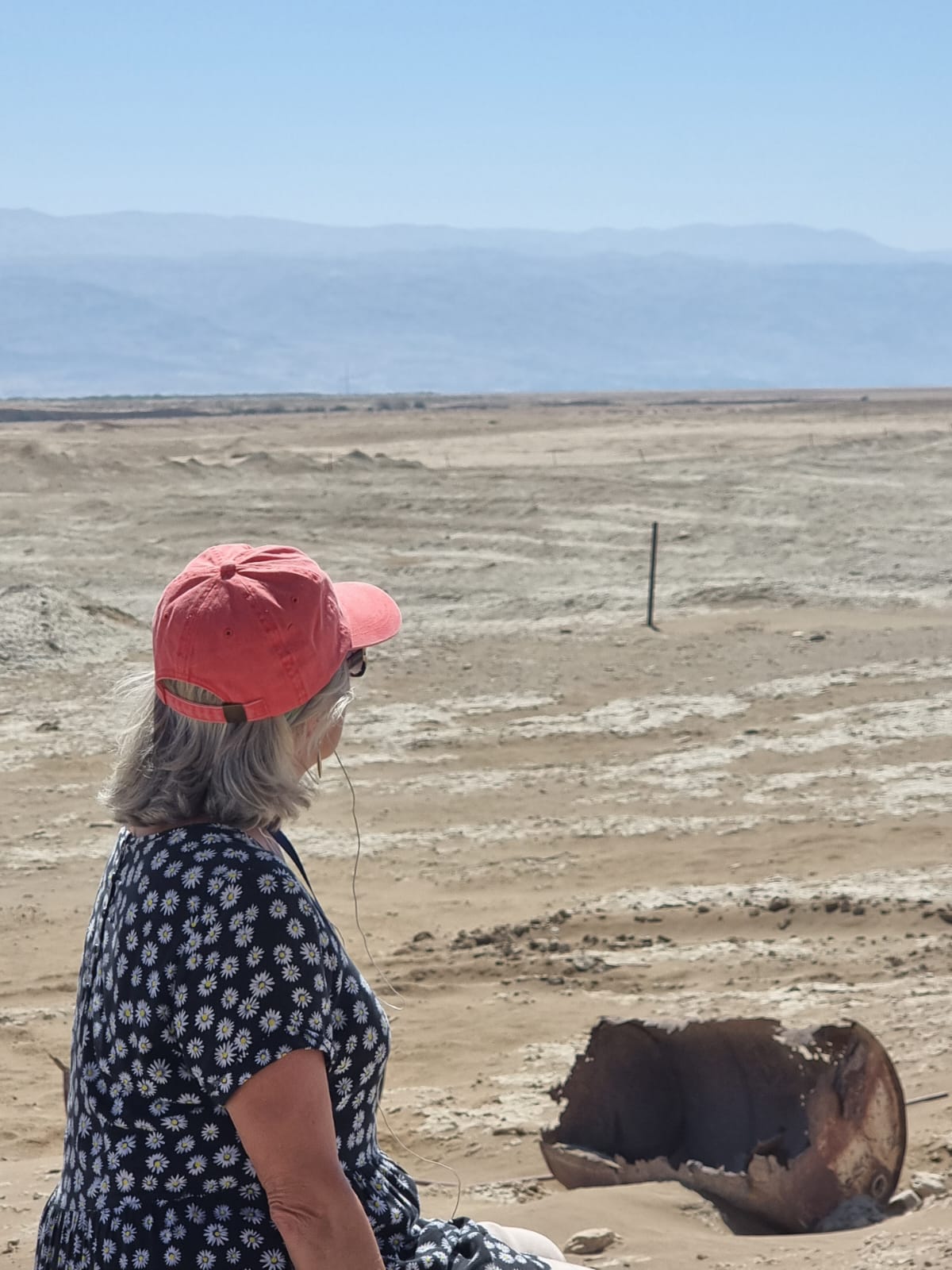
כי מנגד תראי את הר נבו ושמה לא תבואי…. (ההר בצד ימין, כנראה ….)
Last week, just north of the Dead Sea with Mt. Nevo in the background… paraphrasing on Deut 32:52: ‘for from afar you shall see Mt. Nevo but there you will not go’…


 Torah & more... תורה ועוד