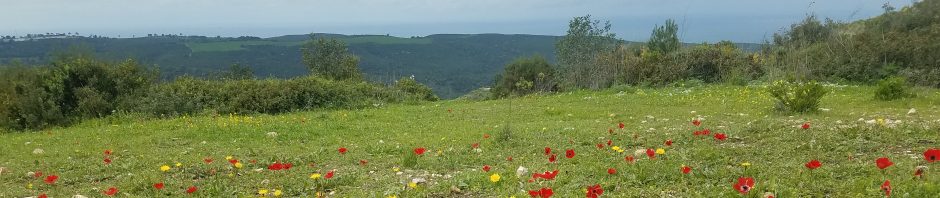
פרשת תולדות – בארות יצחק
אני מודה: לקח לי הרבה זמן להעריך ולאהוב אפילו, את יצחק.
לכאורה, הוא אדם כל כך “חסר אישיות”, חלש, פסיבי: אמא שלו מחליטה עם מי ישחק ובעיקר, עם מי לא. אבא שלו, יום אחד, קם מוקדם בבקר, סוחב אותו במעלה ההר להעלות אותו לעולה, שם הוא שוכב לו כפות על הסלע בלי אף מילה. עבד אברהם מביא לו אשה שהוא מוצא ליד באר רחוקה. האשה מהנדסת איזה ילד הוא יברך. הבן הממשיך מתחפש ומרמה אותו… נו באמת, זה אחד “ה”אבות של “ה”אומה הישראלית, הנבחרת והקדושה?
אבל יש פסוק אחד שמרמז, שאולי בכל זאת, עומד מולנו אדם בעל שיעור קומה:
וַיִּגְדַּ֖ל הָאִ֑ישׁ וַיֵּ֤לֶךְ הָלוֹךְ֙ וְגָדֵ֔ל עַ֥ד כִּֽי־גָדַ֖ל מְאֹֽד (בראשית כו,יג).
תשע מילים, ובשליש מתוכן – השורש ג.ד.ל, הלוך וגדל, גדל מאד!
מה קרה שהוא גדל כל כך? מספר הפסוק שלפניו:
וַיִּזְרַ֤ע יִצְחָק֙ בָּאָ֣רֶץ הַהִ֔וא וַיִּמְצָ֛א בַּשָּׁנָ֥ה הַהִ֖וא מֵאָ֣ה שְׁעָרִ֑ים וַֽיְבָרְכֵ֖הוּ ה’.
הפתעה! יצחק, חסר האישיות, הפסיבי והחלש, לא עושה מה שכל המשפחה עושה. הוא אינו רועה צאן, כמו אביו, בנו, ורבים אחרים, אלא – עובד אדמה, חקלאי, ואפילו – חקלאי מצליח ביותר!
המדרש אומר שהמילים “בארץ ההיא” ו”בשנה ההיא” – מספרות שהארץ קשה, והשנה קשה, שהיתה שנת רעבון, ועדיין, יצחק מצליח להוציא פי מאה ממה שהיה צפוי!
אז אולי לא נמושה?…
ובכל זאת, איך נסביר את כל השאר?
אברהם נחשב איש של חסד. יצחק, כמו שרה, נחשב לנציג מידת הדין. לאברהם אישיות יוזמת ופועלת בעולם. ליצחק אישיות סבילה יותר. הוא מבין את העולם אחרת מאביו. לו הבין יצחק את העולם כמו שהבין אותו אביו, אולי היה מנתץ את האלוהים של אביו, כפי שעשה אברהם לתרח, ואנחנו לא היינו כאן היום… אך יצחק יודע איך להיות ממשיך, שזו אחת המשימות הקשות ביותר בחיים. והוא יודע מאיזה גורמים לקבל השפעה ואיך, וגם, מאיזה לא. הסבילות שלו אינה באה מעצלות, אלא מבחירה פעילה, חזקה ואמונית. נכון, הוא מכיל הרבה, אבל הוא עושה זאת מכוח ושלוה פנימית. ובתוך כל זה, הוא גם הגבר הראשון בתורה, אחרי דורות לא מעטים, עליו כתוב שהוא אוהב את האשה שלו.
אוקי, אתם אומרים, נלך על זה, אבל מה עם הברכות לעשו ויעקב?
באותו אירוע לא פשוט בפרשה שלנו, אומר יצחק את הפסוק המפורסם: הַקֹּל֙ ק֣וֹל יַעֲקֹ֔ב וְהַיָּדַ֖יִם יְדֵ֥י עֵשָֽׂו (כז,כב). הנה! האם זו לא הוכחה חותכת לכך שהוא זקן, עוור, חלש, סנילי שלא מבדיל מי ומה לפניו? מה, הוא לא יודע מי הם הבנים שלו?
מרתק לראות את הרגשות הקשים שעולים במפגש עם יצחק. כעס. בושה. ועוד. האם אין לנו כבוד למישהו שיש לו בעיות ראיה? או חולשה? או שמא, הוא מזכיר לנו חלקים בעצמנו שעוד לא עשינו איתם שולם? אניח לזה. אציע קריאה שונה:
במקום למהר לתקן את יצחק ש”עושה לנו בושות”, נשאל, האם יתכן שהוא מנסה להגיד לנו משהו אחר? אולי דוקא ברגעים הכביכול פסיביים שלו, הוא מראה אמונה ובטחון. אין לו ספק שהדבר הנכון יקרה: שהוא חי בארץ הנכונה ולא עוזב אותה מעולם, שהוא חי עם האשה הנכונה ולא מוסיף נשים ושפחות גם כשהחיים ביניהם אתגריים מאד, ושהבן הנכון יקבל את הברכה הנכונה. כך הוא גם אומר את דברו, שמי שצריך לקבל את הברכה של אברהם (אחרי הכל, זו לא ברכה פרטית שלו), זה מישהו שעונה לתיאור בא – “הקול – קול יעקב, והידיים – ידי עשו”, כלומר, את הברכה יקבל הבן שיש לו את הפנימיות – רוחניות – תכונות אופי של יעקב, יחד עם החיצוניות – גוף וחומר – כמו של עשו.
תגידו, אבל אין לו בן כזה??!!
אה, אבל עוד יהיה!
מה? רגע, התבלבלתי, הרי יש לו רק שני בנים?! זה או-או! אי אפשר גם וגם!
אולי. אולי בעיניים שלנו “אי אפשר”. אבל יצחק – על פי שמו, לא חי בהווה, אלא בזמן עתיד. ויצחק – למרות עוורונו, רואה דברים שאנחנו עוד לא.
כי יום אחד, יעקב בנו התם ויושב אוהלים, זה שמכין נזיד עדשים ועושה מה שאמא אומרת, יצא לדרכו, יצליח נגד כל הסיכויים, וגם ילחם במלאך, המלאך שהוא שרו של עשו כפי שמלמד אותנו המדרש, ויעקב יוכל לו. יעקב אז יקבל שם חדש – ישראל, השם של הישות שכלפי חוץ היא מחוספסת, לפעמים גסת רוח וחוצפנית, היא צריכה ויכולה להתמודד עם עשו, עם העולם הזה, עם עוול ורוע ורשע, רמאות, מלחמה, ושאר צרות. אך כלפי פנים, הוא ימשיך להיות אותו “איש תם, יושב אוהלים”, לומד תורה, אוהב חסד ועושה טוב. איך יתכן ששני אלו ידורו בכפיפה אחת בתוך אותו האדם? כן.
זו ההמשכיות הנדרשת מבנו של יצחק. ומאיתנו. ואדם גדול, ההולך וגדל, עד כי גדל מאד, כמו יצחק, הוא זה שדוקא מתוך עוורונו וזקנתו, רואה את זה ומכוון לכך. הוא האיש שהפלישתים, בני הארץ בעת ההיא, מקנאים בו, ואין סיכוי שהם מקנאים באיש חלש וחסר יכולת. אלא דוקא מפני שבעשיה השקטה שלו, באהבה שלו, באמונה ובבטחון, הוא מצליח בדרכיו.
יצחק נולד בנס, הנס הראשון שמתרחש בתורה, רמז לעם ישראל, לתפקידו, למעמדו, לקיום הניסי שלו לאורך כל ההסטוריה. יש סיפור על אפיפיור שבקש מחכמיו להביא לו הוכחה לקיומו של אלוהים בעולם, לנוכחות של משהו מעל ומעבר ל”טבע”. אחרי דרישה ותהיה הם חזרו ואמרו, ‘הוד רוממותך, היהודים’. כל זה, לא היה אפשרי בלי יצחק. אולי לא פלא שאנחנו קוראים את סיפורו תמיד סמוך לתחילת חודש כסלו, חודש שבו נתפלל את תפילת (שיר וריקוד) “על הניסים”, ודוקא בתקופה זו.
מתוך כך, אני בוחרת לטייל איתנו היום לקיבוץ “בארות יצחק”, קיבוץ דתי במישור החוף, בין פתח תקוה לשדה התעופה בן גוריון. בארות יצחק נקרא ע”ש יצחק אחר: הרב יצחק ניסנבוים (1868-1942/43) – דרשן, סופר, מהוגיה הראשונים של הציונות הדתית, ונשיאה האחרון של תנועת המזרחי בפולין אשר את בטאון תנועתה גם ערך. הרב ניסנבוים גורש עם משפחתו לגטו ורשה שם מצא את מותו. לפני כן, אמר: “זוהי שעה של קידוש החיים ולא של קידוש השם במוות. לפנים דרשו אויבינו את הנשמה והיהודי הקריב גופו על קידוש השם. עתה הצורר דורש את הגוף היהודי וחובה על היהודי להגן עליו – לשמור חייו”.
מלבד דמותו מעוררת ההשראה, גם לקיבוץ עצמו סיפור מעניין: הקיבוץ הוקם בתחילה בצפון-מערב הנגב, כשקבוצת חלוץ של 12 חברים עלתה על הקרקע שנקנתה, בכסף מלא, ע”י הקרן הקימת לישראל כ-5 ק”מ מדרום-מזרח לעזה ב-26.1.1943. אין ספק ששם המקום, בארות יצחק, רומז גם לדמותו של יצחק אבינו והבארות שחפר למרות אויביו, באותו איזור, עד שהצליח במאמצים גדולים להגיע למים חיים, ומים – הם תמיד גם התורה, תורה שלא למד וקבל על אוטומט, אלא רכש מחדש בכוחותיו שלו.
בארות יצחק הקיבוץ “הלך וגדל”. בעלית 11 הנקודות להתיישבות בנגב (1946), יצאו מבארות יצחק שלוש שיירות להקים את כפר דרום, תקומה ובארי, שמות שבשבועות האחרונים נהיו כל כך מוכרים.
ב-15 במאי, 1948, עם סיום המנדט הבריטי והכרזת המדינה, פלש צבא מצריים לתחום מדינת ישראל, וקיבוץ בארות יצחק היה לאחת ממטרותיו. כבר ביום הראשון, הקיבוץ סבל מהפגזות קשות מהקרקע והאויר, ובלילה פונו במהירות האמהות והילדים למרכז הארץ. במקום נשארו להלחם 60 חברות וחברים, תחת הפגזות, עד לקרב המכריע ב- 15 ביולי, 1948.
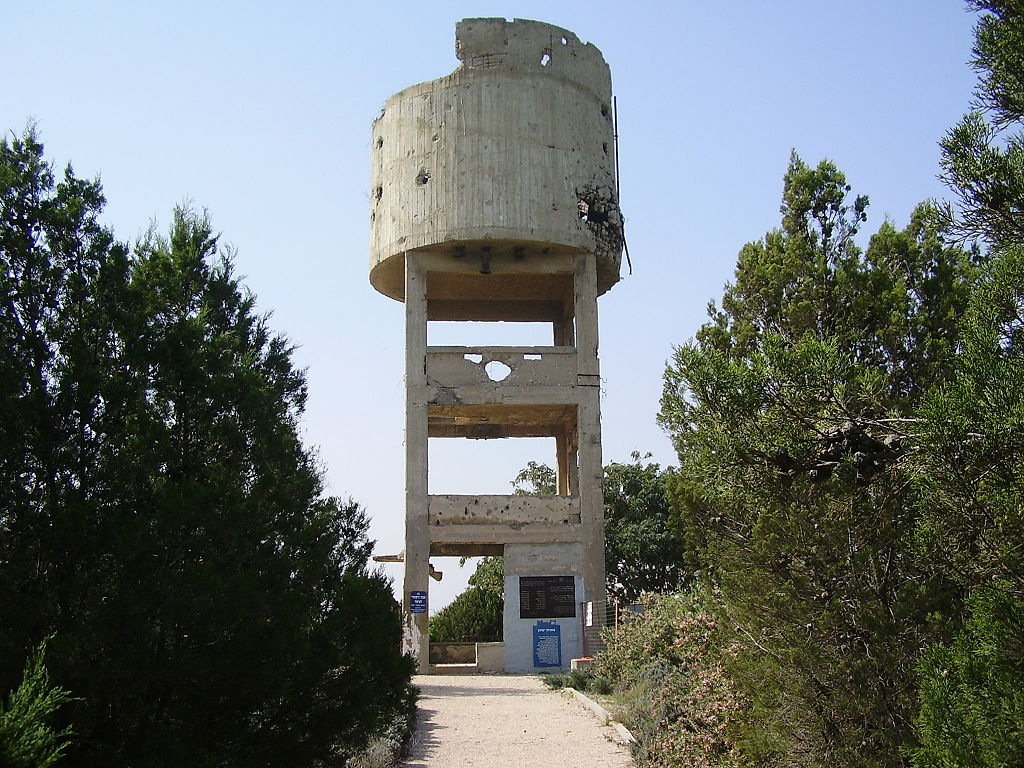
אותו היום, מוקדם בבקר, המצרים, מחופים בהפגזה קשה, התקרבו למשק בטנקים, נשקים ומאות חיילים. בשלב מסוים, נפגע מגדל המים והמים שנשפכו ממנו הציפו את התעלות, הקשר לעמדות השתבש והתחמושת נרטבה. בשעה 10:40 אירע פיצוץ אדיר בעמדה הצפונית-מערבית. מגיני העמדה נהרגו והמצרים שניצלו זאת, חדרו לקבוצת בתים ונאחזו בהם.
מצב המגינים, שנסוגו לקו הגנה פנימי יותר, היה נואש. המצרים ריכזו כוחות להתקפה אחרונה ולחיסול הנקודה. גדוד של חטיבת הנגב ניסה להגיע לבארות יצחק. המצרים מנעו את התקדמות השיירה על ידי הפצצה אווירית, אבל אנשי הגדוד הצליחו לקדם פלגה של שני תותחי שדה 65 מ”מ (“נפוליאונצ’יק“) לאזור קיבוץ סעד. הפגזים הראשונים החלו ליפול במרכז הכוח המצרי בדיוק כשזה עמד לפתוח בהתקפה אותה חשב לאחרונה, מה שגרם לבהלה ונסיגת מנוסה של המצרים. המקום ניצל. למגיני הקיבוץ היו 17 הרוגים, 15 פצועים ונזקים כבדים למשק שנהרס לחלוטין. למצרים היו 200 נפגעים, בהם הרוגים רבים ושלל רב.
לאחר ויכוחים רבים בקרב חברי הקיבוץ הוחלט לא לחזור לאותה נקודה. החברים העידו על עצמם כי היו פגועים נפשית וסבלו מהלם קרב, וההחלטה הייתה לשקם את חברי הקבוצה תוך ויתור על שיקום היישוב. חברי בארות יצחק התיישבו באופן זמני במושבה הטמפלרית הנטושה, וילהלמה (לא רחוק מנתב”ג), וב- 1952 הקימו את בארות יצחק במיקומה הנוכחי, שהיום הוא קיבוץ פורח, חיוני ומצליח. מהקיבוץ הישן נשאר רק מגדל המים המחורר שנמצא בשדה פתוח בין קיבוץ עלומים ונחל עוז. ב- 2013 המקום שודרג והפך אתר הנצחה לבארות יצחק בנגב (כולל מיצג בקיבוץ עלומים).
בחרתי במקום הזה לשבוע זה, כמובן, בגלל יצחק והבארות. וגם – בגלל איזור עוטף עזה שנהיה כל כך מוכר וקרוב וכואב לאחרונה, ובעיקר – בגלל ההחלטה האמיצה של חברי הקיבוץ בזמנו “לשקם את חברי הקבוצה תוך ויתור על שיקום היישוב”. בימים אלו, נשמעות לא מעט שיחות, ראיונות, כתבות, ספקולציות, וגם, לצערי הרב, בקורות ו”תהיות” האם התושבים של עוטף עזה יחזרו, מי, מתי, איך, באלו תנאים… מתוך הכרות אישית ושותפות, חלקית לפחות, עם מקום אחד – קיבוץ כיסופים, אני יודעת שיש כוונות רציניות מלוות בעשיה כבר עכשיו, לחזור בהקדם האפשרי, לשקם ולבנות. ויחד עם זאת, יש ויהיו כאלה שיבחרו אחרת. כמו אברהם ויצחק (ושאר בני ובנות המשפחה), הלוואי שכל אחד מאיתנו יוכל לעשות את חלקו.ה המיוחד לו, שנשתלב ביחד במאמץ המשותף, עם קצת פחות בקורת, והרבה יותר אמונה ובטחון בנס של מי שאנחנו.
בברכת חודש כסלו טוב, ושבת שלום
I must admit: it took me a long time to appreciate and even like Yitzchak.
He’s seemingly such a “personality-less”, weak, passive person: his mother decides who he plays with and, more so, who he not. His father, one day, gets up early in the morning, carries him up the mountain to bring him up as an ola offering, and he just lays there, bound on the rock without a word. Avraham’s servant brings him a wife he finds by a distant well. The wife manipulates which son he blesses. The continuing son disguises himself and deceives him… Come on, is this one of “the” ancestors of “the” Jeiwsh people, the chosen and holy one?
But there is one verse that suggests that perhaps, after all, a man of great stature is standing before us:
“And the man grew, and grew more, until he was very grown” Genesis 20:13). I know, the English translations use “get richer” and “very wealthy”, but I wanted to stick to the Hebrew, because in the Hebrew, there are 9 words, and in a third of them – the root G.D.L., for becoming big, i.e. the man is growing and growing until he is very grown!
What happened that he because so great? The priori verse says:
“Isaac sowed in that Land and reaped a hundredfold during that year, and Hashem blessed him”.
Surprise! Isaac, the one lacking personality, who is passive and weak, does not do what almost the whole family does. He is not a shepherd, like his father, his son, and many others, but – a farmer, and even – a very successful farmer!
The midrash says that the words “in that Land” and “in that year” tell us that the land was hard, and the year was hard; that there was a time of famine, and yet, Yitzchak manages to reap a hundred times more than was expected!
So maybe not such a wimp?
Still, how do we explain everything else?
Abraham is considered a man of chesed, kindness. Isaac, like Sarah, is considered a representative of the measure of din or gevura, justice, bravery. Abraham’s personality is that of an initiative, and he works in the world. Isaac has a more tolerable personality. He understands the world differently than his father. If Isaac had understood the world the way his father understood it, he might have smashed his father’s idols, as Abraham did to Terach, and we wouldn’t be here today… but Isaac knows how to continue, which is one of the most difficult tasks in life. And he knows which factors to get influence from and how, and also, from which not. His passivity does not come from laziness, but from an active, strong and faithful choice. True, he contains a lot, but he does so from strength and inner peace. And amidst all of this, he is also the first man in the Torah, after quite a few generations, on whom it is written that he loves his wife.
Ok, you say, let’s go for it, but what about the blessings for Esau and Jacob?
In the same difficult event, which we read about in our parasha, Yitzchak says the famous verse:
“The voice – is the voice of Jacob, and the hands are the hands of Esau” (27:22). Here! Is this not a conclusive proof that he is an old, blind, weak, senile man who does not distinguish who and what is in front of him? What, he doesn’t know who his sons are?
It is fascinating to see the kind of emotions that arise when we meet Yitzchak. Anger. Shame. And more. Do we have no respect for someone who has vision problems? or a weakness? Or does it remind us of parts of ourselves that we have not yet dealt with? I’ll leave that for now, and offer, rather, a different reading:
Instead of rushing to correct Yitzchak who “embarrasses us”, we can ask, is it possible that he is trying to tell us something else? Perhaps precisely in his supposedly passive moments, he shows faith and confidence. He has no doubt that the right thing will happen: that he lives in the right Land and never leaves it; that he lives with the right woman and does not add wives and maidservants even when life between them is very challenging; and that the right son will receive the right blessing. This is also his way of expressing his idea, that the one who should receive Abraham’s blessing (after all, it is not his own private blessing), is someone who answers to the following description – “The voice is the voice of Jacob, and the hands are the hands of Esau”, that is, the blessing will be received by the son who has the internal – spiritual – character traits of Jacob, along with the external – body and matter – of Esau.
But, he doesn’t have a son like that??!!
Ah, yes, but he will!
Wait, what? I’m confused. He only has two sons?! It’s this or that! It can’t be both!?!
Maybe. Maybe in our eyes “it can’t be”. But Yitzchak, according to his name (which means – he will laugh), does not live in the present, but in the future. And Yitzchak – despite his blindness, sees things we don’t, yet.
Because one day, Jacob, his son, the “wholehearted man, a tent dweller” (25:27), the one who prepares lentil soup and does what his mama says, sets out on his journey, where he will succeed against all odds, and will also fight an angel, an angel who, per the midrash, is Esau’s minister, and Jacob will be able to fight him and stand his ground. Jacob will then receive a new name – Yisra’el, the name of the entity that outwardly is rough, sometimes rude and insolent, as it needs to be able to deal with Esau, with this world, with injustice and evil and wickedness, cheating, war, and other troubles. But on the inside, he will continue to be the same “wholehearted man, a tent dweller”, studying Torah, loving kindness, and doing good.
How is it possible for these two to be together within the same person? Yes.
This is the continuity required of Isaac’s son. And from us. And a great man, who grows and grows, until he has grown a lot, like Isaac, is the one who, out of his blindness and old age, sees this and aims for it. He is the man whom the Philistines, the people of the Land at that time, envied, and there is no way that they would envy a weak and incapable man. But precisely because in his quiet work, in his love, faith and confidence, he succeeds in his ways.
Yitzchak was born miraculously, the first miracle that occurs in the Torah, a hint to the people of Israel, their role, their status, their miraculous existence throughout history. There is a story about a Pope who asked his wisemen for a proof of the existence of Gd in the world, of the presence of something above and beyond the “natural”. After looking here and there, they came back and said, ‘the Jews, your majesty’. All of this would not have been possible without Isaac. Perhaps it’s no wonder that we always read his story near the beginning of the month of Kislev, a month in which we pray (and sing and dance) “al hanisim”, “about the miracles”, so needed precisely during this time.
For this story, I choose to travel today to Kibbutz Be’erot Yitzchak, literally meaning – Isaac’s Wells, a religious kibbutz on the coastal plain, between Petach Tikva and Ben Gurion Airport. Be’erot Yitzchak was named after another Yitzchak: Rabbi Yitzchak Nissenbaum (1868-1942/43) – a teacher, writer, one of the first thinkers of religious Zionism, and the last president of the Mizrachi movement in Poland, who also edited the movement’s newspaper. Rabbi Nissenbaum was deported with his family to the Warsaw ghetto, where he died. Before that, he said: “This is an hour of the sanctification of life and not of the sanctification of Hashem in death. Before, our enemies demanded the soul and the Jew sacrificed his body for the sanctification of Gd. Now the oppressor demands the Jewish body, and it is the duty of the Jew to protect it – to save our life.”
Apart from his inspiring character, the kibbutz itself also has an interesting story: the kibbutz was initially established in the northwestern side of the Negev, when a pioneer group of 12 members moved onto a piece of land, bought, once paid in full, by the Jewish National Fund, about 5km southeast of Gaza on January 26, 1943. There is no doubt that the name of the place, Be’erot Yitzchak, also alludes to the character of Yitzchak our father and the wells he dug in spite of his enemies, in that area, until he succeeded with great efforts to reach living water. And water – is always also the Torah, a Torah that he did not learn and accept automatically, but acquired anew in his own strength.
Kibbutz Be’erot Yitzchak “grew and grew”. When the 11 points were settled in the Negev (1946), three caravans left from Bee’rot Yitzhak to establish Kfar Darom, Tekuma and Be’eri, names that have become so familiar in recent weeks.
On May 15, 1948, with the end of the British mandate and the declaration of the state of Israel, an Egyptian army invaded the territory of the State of Israel, and Kibbutz Be’erot Yitzhak was one of its targets. Already on the first day, the kibbutz suffered heavy shelling from the ground and the air, and at night the mothers and children were quickly evacuated to the center of the country. 60 people remained to fight there, under shelling, until the decisive battle on July 15, 1948.
That day, early in the morning, the Egyptians, protected by their own heavy shelling, approached the farm with tanks, weapons and hundreds of soldiers. At some point, the water tower was damaged, and the water that spilled from it, flooded the trenches. Communication broke and ammunition got wet. At 10:40am a huge explosion occurred in the northwestern position. The defenders of the position were killed and the Egyptians who took advantage of this, entered a cluster of houses, occupying them.
The situation of the defenders, who retreated to a more inner defensive line, was desperate. The Egyptians gathered forces for a final attack and the elimination of the point. A battalion of the Negev Brigade tried to reach Be’erot Yitzhak. The Egyptians prevented the advance of the convoy by aerial bombardment, but the men of the battalion managed to advance a salvo of two 65mm field cannons (“Napoleonchik“) to the area of nearby Kibbutz Sa’ad. The first shells began to fall on the center of the Egyptian forces just as they were about to launch the attack, they thought would be the last one. This caused the Egyptians to panic and retreat. The place was saved. The defenders of the kibbutz had 17 dead, 15 wounded and heavy damage to the farm which was completely destroyed. The Egyptians had about 200 casualties, including many dead and much loot.
After many arguments among the kibbutz members, it was decided not to return to that point. The members testified among themselves that they were mentally damaged and suffered from battle shock, and the decision was to rehabilitate the members of the group while renouncing the restoration of the settlement. The members of Be’erot Yitzchak temporarily settled in the abandoned German Templer settlement, Wilhelma (not far from Tel Aviv), and in 1952 established Be’erot Yitzhak in its current location. Today it’s a flourishing, vital and successful kibbutz. Only the perforated water tower that is in an open field between Kibbutz Alumim and Nahal Oz, in the original location, remains of the old kibbutz. In 2013 that site was upgraded and became a commemorative spot for Be’erot Yitzchak in the Negev.
I chose this place for this week, of course, because of Yitzchak and the wells. And also – because of the area surrounding Gaza that has become so familiar and close and painful recently, and mostly, because of the brave decision of the kibbutz members at the time to “rehabilitate the members of the group while renouncing the rehabilitation of the settlement”. These days, there are quite a few conversations, interviews, articles, speculations, and, unfortunately, criticism and “wonderings” whether the residents of the “Otef Gaza” – area surrounding Gaza -will return, who, when, how, under what conditions… out of personal acquaintance and partnership, at least partially, with one place – Kibbutz Kissufim, I know that there are serious intentions accompanied by action, already now, to return as soon as possible, to restore and rebuild. And at the same time, there are and will be those who will choose otherwise. Like Abraham and Isaac (and the rest of the family), I wish each could do his own special part, which will come together in our common effort, with a little less fear, and much more faith and confidence in the miracle of who we are.
Wishing you a good new month, and Shabbos Shalom
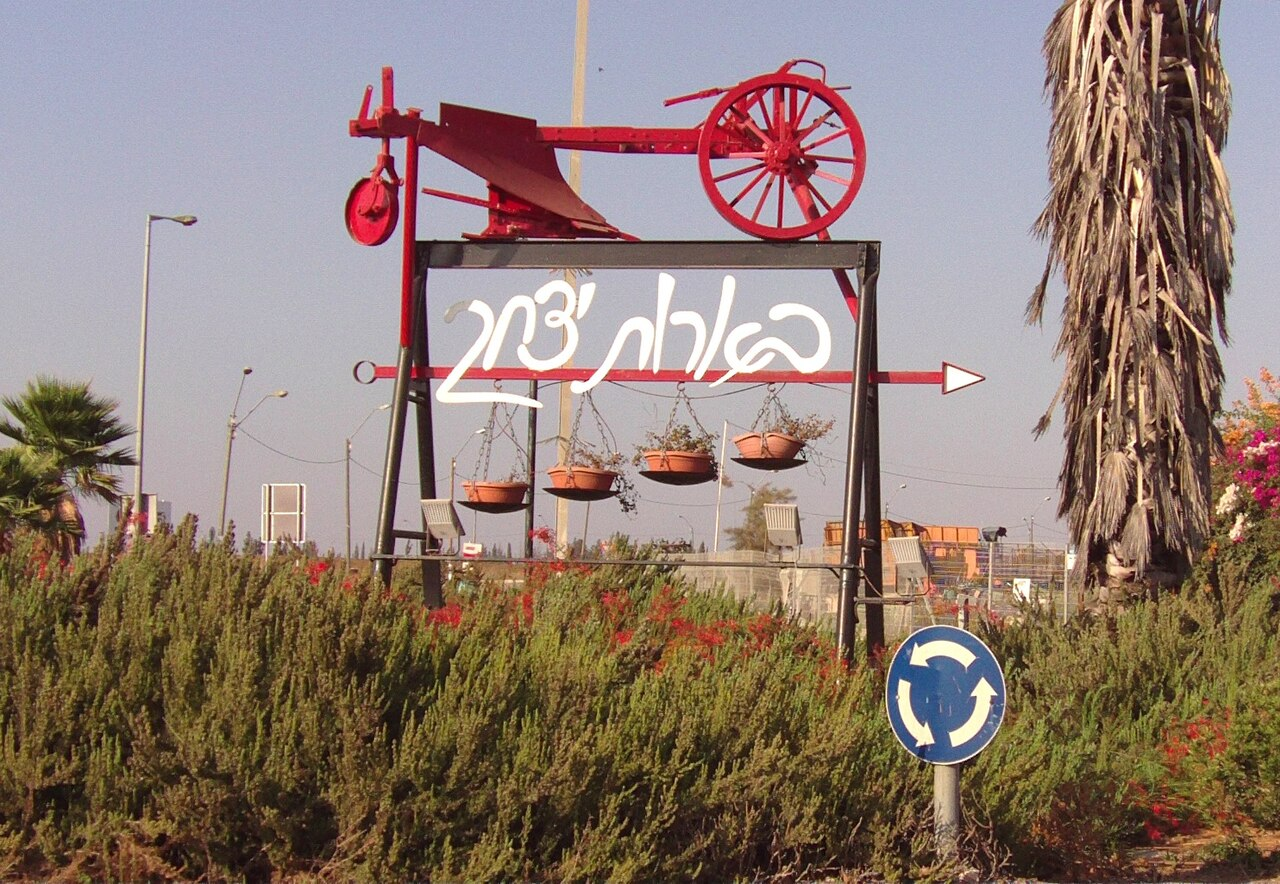
השלט לקיבוץ כיום – the sign to Be’erot Yitzchak
The water Tower in the original location, nowadays – מגדל המים במקום המקורי, בימינו


 Torah & more... תורה ועוד