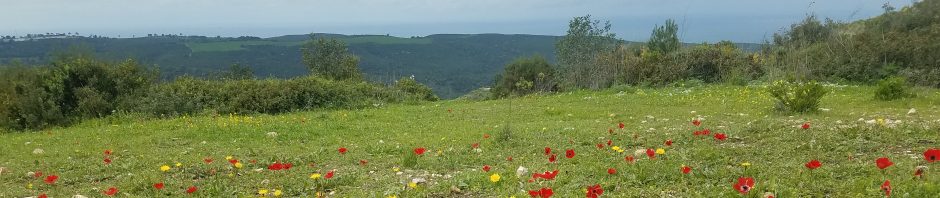
Hanukkah is a great time to travel in the footsteps of the Hasmonaeans, the Jewish dynasty founded by Matityahu, the priest, and his five sons, Judah Maccabi and his brothers, who lead the successful rebellion against the Greek Seleucid Empire, celebrated on Hanukkah. We often end the story there, with the menorah and the miraculous pitcher of oil, but what happened afterwards?
The Hasmonaeans continued to rule the Land of Israel for about 130 years. They gained autonomy and presence for Judea until the rise of Herod in 37 BCE who, brutally, annihilated all of them. Until then, they lived in the palaces, fortresses; took care of the Land, minted coins, were involved in trade and more, leaving behind remnants to shed light on their and our holiday’s story, connecting past and present. The next time there will be a solid, independent Jewish entity in the Land of Israel will be with the establishment of the State of Israel in the 20th century.
So I invite you on a little tour to see who were the Hasmoneans and what they did. We’ll start by heading to Modi’in, the family’s hometown, which is convenient if we just landed… Modi’in sits in the heart of Israel, about 23 km / 14 miles southeast of Ben Gurion airport. Matityahu, the father who was a priest of the Yehoyariv Watch, moved here from Jerusalem. Hellenism was rising all around; leaders robbed the Temple of its treasures, and forbade Jewish observances. When a representative showed up in Modi’in, in an effort to enforce the new king’s deathly laws, he met up with Matityahu and his sons. Their swords at hand, they killed him and some of the Hellenistic Jews who wanted to offer sacrifices to those gods. Matityahu’s call, ‘anyone who’s for the Torah and the (Jewish) Covenant, follow me’ echoed Moses’ call at the Golden Calf, offering an alternative to submission.
Modi’in is already mentioned in various places in the Babylonian Talmud as well as in the Books of Maccabim which didn’t enter the canonized Tanach (Jewish Bible). Early Christian source (from around the 4th century) noted that “this is the village the Maccabis were from, and their gravesites are shown to this day” and so does the Map of Mababa in Jordan. The Arabs of the area, possibly, maintained this tradition by calling the place “Kubur el-Yahud”, literally – the Jews’ gravesite. The precise site is being debated, but there are a number of spots that can match the description in the same area, with an old cemetery, stones, small coffins, writings in Hebrew and Greek and more.
But the Hasmoneans expanded their kingdom well beyond their hometown. One of their achievements is the chain of six huge fortresses built on the edge of the desert, above the western cliffs of the Jordan Valley, to defend the growing kingdom. From north to south they are: Sartaba – Alexandrion; Dagon – Dok above Jericho; Kiprus above Wadi Kelt; Horkania above the Kidron Valley, Masada and Michvar, opposite Mitzpe Shalem.
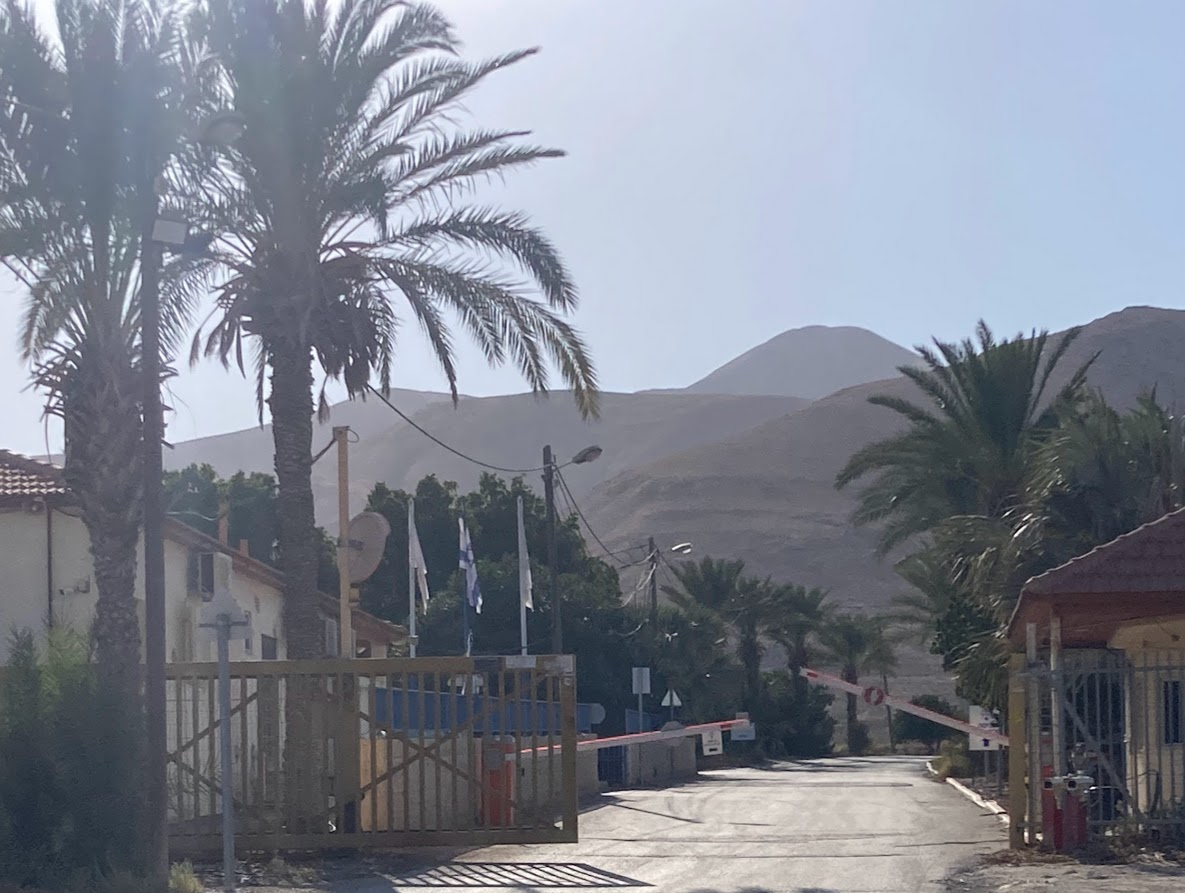
Due to security issues, it’s challenging to visit some of these fortresses, but, following the road to Jerusalem and from there, onward towards the Dead Sea, we can get to Masada (if we turn south near Jericho), and to Sartaba – Alexandrion (turning north).
The latter sits on a pointy, barren hilltop, the tallest point in the southern Shomron (Samaria) desert, towering 650 meters (2133 feet) over the Jordan Valley (377 meter / 1237 feet above sea-level). Its name “Alexandreion” is mentioned in Josephus’ “Antiquities of the Jews”, while in the Mishna and the Talmud, it is mentioned by its name, Sartaba, described as one of the mountaintops of which torches would be lit to announce the new month. Here is the Mishna from Tractate Rosh Hashana (b:4). By the way, in memory and in honor of this event, the moshav at the foothill of the mountain was named, Masu’a, literally, a torch:
| And from which mountains would they light the torches? They would transmit the message from the Mount of Olives in Jerusalem to Sartaba, and from Sartaba to Gerofina, and from Gerofina to Ḥavran, and from Ḥavran to Beit Baltin. And from Beit Baltin they would not move to light torches in any other predetermined location. Rather, the one who was appointed for this task would wave the torch back and forth and up and down, until he would see the entire Diaspora before him alight like one large bonfire, as they would light torches to continue transmitting the message from place to place all the way to the farthest reaches of the Diaspora. | וּמֵאַיִן הָיוּ מַשִּׂיאִין מַשּׂוּאוֹת, מֵהַר הַמִּשְׁחָה לְסַרְטְבָא, וּמִסַּרְטְבָא לִגְרוֹפִינָא, וּמִגְּרוֹפִינָא לְחַוְרָן, וּמֵחַוְרָן לְבֵית בִּלְתִּין, וּמִבֵּית בִּלְתִּין לֹא זָזוּ מִשָּׁם, אֶלָּא מוֹלִיךְ וּמֵבִיא וּמַעֲלֶה וּמוֹרִיד עַד שֶׁהָיָה רוֹאֶה כָל הַגּוֹלָה לְפָנָיו כִּמְדוּרַת הָאֵשׁ: |
Most researchers agree that the fortress at the top of the Sartaba, is Alexandrion, constructed by the Hasmonean king, Alexander Yanai. Josephus wrote that this beautiful splendor of a fortress was one that the king’s wife, queen Shlomtsion, didn’t want to give up when she transferred other fortresses to the Sadducees, because in it were “her special treasures”.
When the Hasmonean kingdom fell, these fortresses were all destroyed, but Herod instructed to rebuild Sartaba. His idea was to use it as a prison for his political opponents including his 2nd wife, Miriam the Hasmonean (and her mother), once he realized she was more loyal to her father’s family than to him. Tragically, this was also the burial site of their two sons who were executed once their rebellion against their father, Herod, discovered. Indeed, this was the end of the Hasmonean dynasty. During the Great revolt (~70CE), Vaspasian or Titus razed what was left of it, and so it has sat there for almost 2000 years, waiting for us.
Archeological digs in the site revealed remnants from the Hasmonean era, pillars and other decorations, with expectations to find more in future digs. An impressive water system, which, surprisingly, mostly survived the ages, led water from a dam at a nearby wadi, and using a siphon, brought the water to big water holes at the foot of the fortress. Recent years have, sadly, witnessed destruction, neglect and robbery of the Sartaba. We can only hope that with more travelers, Sartaba too, will once again be a site of splendor and inspiration.
There are many more fascinating Hasmonean sites, but as our time is short, let me just share one more. We won’t be able to visit, but since we hear so much about it in the news, it might be worth mentioning…
In Gd’s command to the people of Israel to go into the Land of Israel, it is said: “Turn and go and come… and in the Negev and on the seashore” (Deut 1:7). The Sages interpreted: “‘And in the Negev and on the seashore’ – this is Gaza, Ashkelon and Cesarea” (Sifre on this verse). Gaza fell in the possession of the tribe of Judah (Joshua, 11, 22; Joshua, 15, 17) and was occupied at the end of the tribes’ settlement period (Judges, 1:18), but it seems that the Israelites did not hold it for long as there was a strong Philistine city there.
The Hasmonean period is the first time we see a known Jewish community in Gaza. Some say that Shimon, Judah Maccabee’s brother lived in the city for a while. Yet, the city was hostile to the Hasmoneans and was destroyed by the Hasmonean king, Alexander Yanai in 96 BCE, remaining in ruins until the Roman conquest of the Land of Israel. According to the dates on coins found here, it was rebuilt and began to number its years from 61 BCE which is also the year the Jewish community in the city was expelled.
Following, the Jewish settlement in the city of Gaza existed intermittently – from the 2nd century BCE until 1948, knowing times of great pain (for example, sold as slaves in the Gaza market after the Bar Kochva Rebellion) as well as times of growth and joy. It produced rabbis, poets, leaders and well-known personalities; it had great synagogues with tall pillars and on them, Jewish inscriptions; fancy mosaic floor with David playing the harp. The Sages considered Gaza to be outside the boundaries of the Land of Israel, but allowed them to settle there, because “it is beautiful”.
And before saying our good-byes, one more word about the Hasmonean rule, a time of political independence and military power; an era of brilliance and material flourishing for the Jewish people and Jewish culture; economic prosperity, including lower tax burden, territorial expansion, and establishment of ports and trade routes, along with a cultural strengthening and a firm stand against Hellenism. The Hasmoneans stood their ground and persevered in difficult situations, contributing to the survival of our people, not just then, but during the long exile, the existence of the sovereign Hasmonean state allowed us to hope and imagine how, one day, despite the disasters that befell them, we too, would emerge from the centuries of servitude and suffering, to be independent in our homeland once again. This year, when we light our Hanukkah candles, let’s light them also in honor of our amazing history, beautiful Land, and strong commitment to a brighter future, even better than anything we’ve known until now.
Wishing you and yours a Hanukkah Or – filled with light
((* written for Yeshivat Maharat Hanukkah booklet – English only))
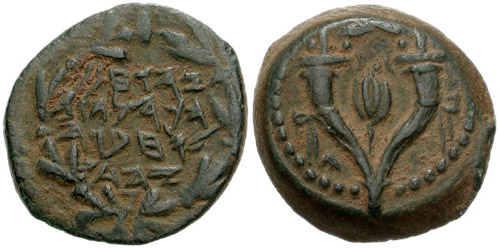
” יהוחנן כהן גדול חבר היהודים” (באלפבית עברי עתיק). מטבע מהתקופה החשמונאית בארץ ישראל, מיוחס ליוחנן הראשון או השני. המאה השנייה לפני הספירה


 Torah & more... תורה ועוד