“מי שלא ראה שמחת בית השואבה לא ראה שמחה מימיו” – סוכות, תשפ”ה
האמירה המפורסמת “מי שלא ראה שמחת בית השואבה לא ראה שמחה מימיו”, מקורה בתלמוד, במסכת סוכה (נא:א) ובאירוע שהיה קורה תוך כדי חג הסוכות. מתי זה ועל מה מדובר?
בימינו, נשארו לנו בחג הסוכות שלוש מצוות – לשבת בסוכה, ליטול ארבע מינים ולהיות “אך שמח”, אך בתקופת בית המקדש היו מצוות ומנהגים נוספים שלנו נשארו מהם כיום רק רמזים. אחת מהן היא “ניסוך המים”.
התורה מצווה במפורש על ניסוך שמן ויין על המזבח, ואילו המים רק נרמזו דרך אותיות נוספות וחסרות בפסוקים העוסקים בקרבנות חג הסוכות, כמו שנאמר בתלמוד:
רבי יהודה בן בתירה אומר: נאמר בשני: “וְנִסְכֵּיהֶם” (במדבר כט, יח) ונאמר בששי: “וּנְסָכֶיהָ” (שם, לא) ונאמר בשביעי “כְּמִשְׁפָּטָם” (שם, לג) – הרי מ”ם יו”ד מ”ם, הרי כאן מים. מכאן רמז לניסוך המים מן התורה (תענית ב:ב).
רגע… בגלל כמה אותיות (3!) חז”ל “ממציאים” מצווה לחג?
לא בדיוק. לפי התלמוד, ניסוך המים הוא הלכה למשה מסיני (סוכה לד:א) ובנוסף, מסופר במפורש שדוד ניסך מים (ספר שמואל ב’ כ”ג, ט”ו-ט”ז), אך האמת, שזו שאלה שנוגעת בשיחה ארוכה יותר על תורה שבכתב ותורה שבע”פ. הקיצור הוא שבשעה שיש עמים ודתות אחרות ש”אימצו” את התנ”כ – כפי שנראה כשבלא מעט מלונות בארה”ב אפשר למצוא ליד המיטה “בייבל” – הרי מה שמבדיל ומייחד את עם ישראל הוא לא התנ”כ עצמו, אלא דרך ההבנה והפירוש שיש לנו על התנ”כ בפרט והחיים בכלל, כלומר, התורה שבע”פ. כקוראים אנחנו מתעקשים, ‘למה לא כתבו בדיוק’…? אך בו בזמן אנחנו יודעים שאי אפשר לכתוב הכל. אפילו בספר מודרני יש לא מעט דברים שהושארו, בכוונה, עבור הקורא. קל וחומר, בתורה יש דברים רמוזים ונסתרים.
בדיוק מסיבה זו, היו סביב ניסוך המים מחלוקות גדולות בין הפרושים לצדוקים בתקופת בית המקדש, ולא רק מחלוקות תאוריתיות אלא תגרות ממש. מסופר במשנה על צדוקי שנסך מים על רגליו מכיון שלא קבל את ניסוך המים על המזבח, ועל כך, “רגמוהו כל העם באתרוגיהן ונפגמה קרנו (הפינה) של מזבח” (משנה, מסכת סוכה ד,ט).
מה הענין עם המים?
המים בתורה הוזכרו לראשונה מיד בתחילת ספר בראשית (בראשית א,ב):
“וְהָאָרֶץ הָיְתָה תֹהוּ וָבֹהוּ וְחֹשֶׁךְ עַל פְּנֵי תְהוֹם וְרוּחַ אֱ-לֹהִים מְרַחֶפֶת עַל פְּנֵי הַמָּיִם”.
בעברית המילה מים היא ריבוי זוגי של המילה “מה”, כפילו של מהות, עיקר. רש”י מסביר שבפסוק הראשון כתוב ש”בראשית ברא אלוהים את השמים ואת הארץ”, ובפסוק השני “ורוח אלוהים מרחפת על פני המים”. מאיפה הגיעו המים פתאום? הרי המקרא לא גילה לנו “בריאת המים מתי היתה”! אם כך, “קדמו המים לארץ”, כלומר, המים היו שם עוד לפני כל הבריאה, והם יסוד אחד שמרכיב ומאחד הכל.
אך בעולם שלנו המים נפרדו: הקב”ה “מַבְדִּ֔יל בֵּ֥ין מַ֖יִם לָמָֽיִם. וַיַּ֣עַשׂ אֱלֹהִים֮ אֶת־הָרָקִ֒יעַ֒ וַיַּבְדֵּ֗ל בֵּ֤ין הַמַּ֙יִם֙ אֲשֶׁר֙ מִתַּ֣חַת לָרָקִ֔יעַ וּבֵ֣ין הַמַּ֔יִם אֲשֶׁ֖ר מֵעַ֣ל לָרָקִ֑יעַ” (א:ו-ז). היה צורך בהפרדה הזו כדי שהעולם יתקיים. זהו פירוד שהיה בו הכרח אך גם גרם להרבה צער, כך בימי נח, זמן קצר יחסית לאחר בריאת העולם, כבר היה העולם מושחת. כדי לתקן, חזר הקב”ה ואיחד בין המים של הרקיע והמים שלמטה. במבול ההוא, הכל נמחה ונמחק. היקום שב לאחדות המקורית מלפני הבריאה, אך בשבילנו, הוא עצר מלהתקיים.
עוד נאמר על המים ביום השלישי לבריאה: “וַיֹּאמֶר אֱ-לֹהִים יִקָּווּ הַמַּיִם מִתַּחַת הַשָּׁמַיִם אֶל מָקוֹם אֶחָד וְתֵרָאֶה הַיַּבָּשָׁה וַיְהִי כֵן”… (א,ט). בעברית, יקוו מלשון קו, כלומר – יהפכו לקו אחד, יתאחדו כולם מדבר תלת ממדי לדבר דו-ממדי ואולי אפילו חד ממדי. המילה “יקוו” גם מחוברת ללשון תקווה, מעין נקודה מסתורית בעתיד כשהכל יהיה טוב. כי בסוף הכל מתאסף ושייך וזורם למקום אחד.
טקס הניסוך המורכב והמפואר עצמו סימל את כל זה. בטקס היו שואבים מים בחג הסוכות מדי יום ממעיין השילוח, מים שמקורם במי גשמים, וזו שמחת בית השואבה. משם היו מובילים אותם לבית המקדש, מה שהיה מלווה בחגיגה גדולה עם ריקודים, תרגילי ג’גלינג מסובכים וכלים מוזיקליים. בבית המקדש היו שופכים את המים שנשאבו לתוך חור במזבח שנקרא “שיתין” שדרכו היו המים יורדים ומתחברים למי התהום. חיבור המים העליונים והתחתונים סימל את החיבור בין שמים וארץ, וביטא את זה שבשעה שמבחינה מעשית יש לנו צורך בהפרדה מסוימת כדי להתקיים, יש בנו גם רצון עז לאחדות.
וזהו חג סוכות: חג שעליו נאמר “והיית אך שמח”. שמחה שלמה לא מלווה בפירוד ובמחלוקות, אלא בהרמוניה, אמונה, בטחון פנימי. זהו זמן לשבת בסוכה ביחד, ב”צל שכינה”, להחזיק את ארבעת המינים כאגודה ביחד. לחיים יש לנו הרבה בלתי נודע ומורכבות שנסתרת מעינינו ומבינתנו. אם יש שנה שחוינו זאת על בשרינו, זו בהחלט השנה האחרונה הזו, אך הפלא ופלא, אף על פי כן ולמרות הכל, היא גם חיזקה אותנו ואיחדה אותנו.
בסוף החג הזה נחזור להוסיף בתפילת עמידה את “משיב הרוח ומוריד הגשם”, ונתפלל שחלק מהרוחניות והאחדות שנרגיש בחג, ילווה אותנו גם בחורף המתקרב ובא עלינו לטובה.
חג שמח ומועדים לשמחה.
“Anyone who has not seen the joy of Beit HaSho’eva has not seen (real) joy in his life” – Sukkot, 5785-2024
The famous saying “anyone who has not seen the joy of Beit HaSho’eva has not seen (real) joy in his lifetime”, originates in the Talmud (tractate Sukkah 51:a) at an event that happened during the holiday of Sukkot. When is it and what is it about?
Nowadays, we have three mitzvot left for us to do during Sukkot: to sit in the sukkah, to take the four species and to “rejoice”, but during the time of the Temple we had other mitzvot and customs of which only hints remain today. One of them is the “water libation”.
The Torah specifically commands the pouring (“libation”) of oil and wine on the altar, while water was only hinted at through additional and missing letters in the verses dealing with the Sukkot sacrifices, as stated in the Talmud, and learned from the 3 missing letters that form the Hebrew word for water, mayim (Ta’anit 2:b).
Wait… because of a few missing letters (3!) the Sages “invent” a mitzvah for this holiday?
Not quite. According to the Talmud, the water libation is a halakha for Moses from Sinai (Sukkah 34:a) and in addition, it is specifically mentioned that King David did that (2nd Samuel 23:15-16), but the truth is that this is a question that touches on a longer conversation about the Written Torah and the Oral Torah. The short is that while there are other nations and religions that have “adopted” the Bible – as seen when in quite a few hotels in the USA where you can find a “Bible” next to the bed – what differentiates and sets the People of Israel apart is not the Bible itself, but the way of understanding and interpretation that we have about this book in particular, and life in general. As readers we insist, ‘why didn’t they write it down?’ but simultaneously, we know that one cannot write everything. If in a modern literature book, there are many things left, purposefully, for the reader to figure out. All the more so, there are hinted and hidden things in the Torah.
Precisely for this reason, there were great disputes between the Pharisees and Sadducees during the time of the Temple, and not just theoretical disagreements, but real fights on the topic of the water libation. It is told in the Mishnah about one such Sadducee who sprinkled the water on his feet because he did not accept the libation of water on the altar, and because of this, “all the people stoned him with their etrogim (possibly an allusion to insults?) and the horn (corner) of the altar was damaged” (Mishnah, Tractate Sukkah 4:9).
What’s with the water?
Water in the Torah was mentioned for the first time right at the beginning of the book of Genesis (Genesis 1:2): “And the earth was formless and void, and darkness on the surface of the deep, and the Spirit of Gd hovered over the waters.”
In Hebrew the word water – mayim – is a double plural of the word “ma”, an essence, main substance. Rashi explains that in the first verse it is written that “in the beginning Gd created the heavens and the earth”, and in the second verse it says that “the spirit of God hovered over the surface of the water”. Where did the water suddenly appear from? After all, the Torah did not reveal to us “when was the creation of the water”! If so, “water came before the earth was created”; that is, water was there even before all creation. Therefore, it is one element that makes up and unites everything.
But in our world the water is separated: “Gd said, “Let there be an expanse in the midst of the water, that it may separate water from water. Gd made the expanse, and it separated the water which was below the expanse from the water which was above the expanse”… (1:6-7).
This separation was necessary in order for the world to exist. So it’s a separation that was needed but also caused so much sorrow, so that in the days of Noah, relatively not that long after creation, the world was already corrupt. To fix it, Gd returned and united the waters above and the waters below. In that flood, everything was expunged and erased. The universe has returned to its original form of unity which it had before creation, and for us, it has ceased to exist.
It was also said about the water on the third day of creation: “And Gd said, let the waters under the heavens be gathered together to one place, and the dry land shall appear”… (1:9). In Hebrew, “gathered” here is in the word “yikavu”, related to word “kav”, which means one line, as if the water will all unite from a three-dimensional object to a two-dimensional one and maybe even a one-dimensional dot. The word tikvah, hope, also shares the same root, implying a kind of mysterious point in the future when everything will come together and be good. Because in the end, everything gathers and belongs and flows into one place.
The complex and magnificent water libation ceremony itself symbolized all this. In the ceremony, the people would draw water every day of Sukkot from the Shilo’ach spring, water that comes from rainwater, and this is the joy of Beit Hasho’eva, the place of drawing water. From there, it would be led to the Temple, which was accompanied by a great celebration with dancing, complicated juggling exercises and musical instruments. In the Temple they would pour the drawn water into a hole in the altar called “shitin” through which the water would go down and rejoin to the groundwater. The connection of the upper and lower waters symbolized the connection between heaven and earth, and expressed that while from a practical point of view, we need certain separations in this world in order to exist, we also have a strong desire for absolute unity.
And this is the holiday of Sukkot: a holiday about which it is said “and you shall be only joyful”. Complete joy is not accompanied by division and disputes, but by harmony, faith, and inner security. This is a time to sit in the sukkah together, in the “shadow of the Sh’chinah”, the presences of Hashem, to hold the four species together as one. Life has a lot of unknown and complexity that is hidden from our eyes and understanding. If there is a year that we experienced this firsthand, it is definitely this past year, and yet, wonder of wonders, nevertheless and in spite of everything, it also strengthened us and united us.
At the end of this holiday, we will come back to add a line in the Amida prayer: “the one who brings back the wind and brings down the rains”, and we will pray that some of the spirituality and unity that we will feel during this holiday, will accompany us in the approaching winter months, may it come upon all of us for goodness and blessing.
Good tidings & happy holidays.
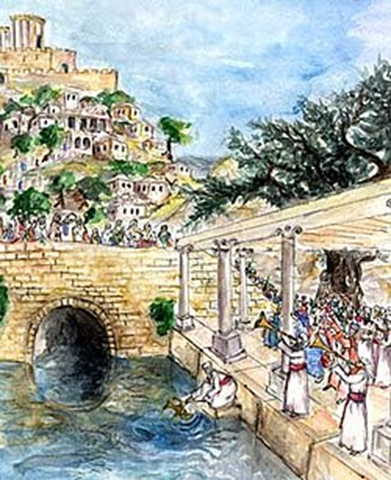
The water Libation ceremony during Temple time (pic from Wikipedia)


 Torah & more... תורה ועוד