פרשת בא: “והגדת לבנ(ת)ך”…
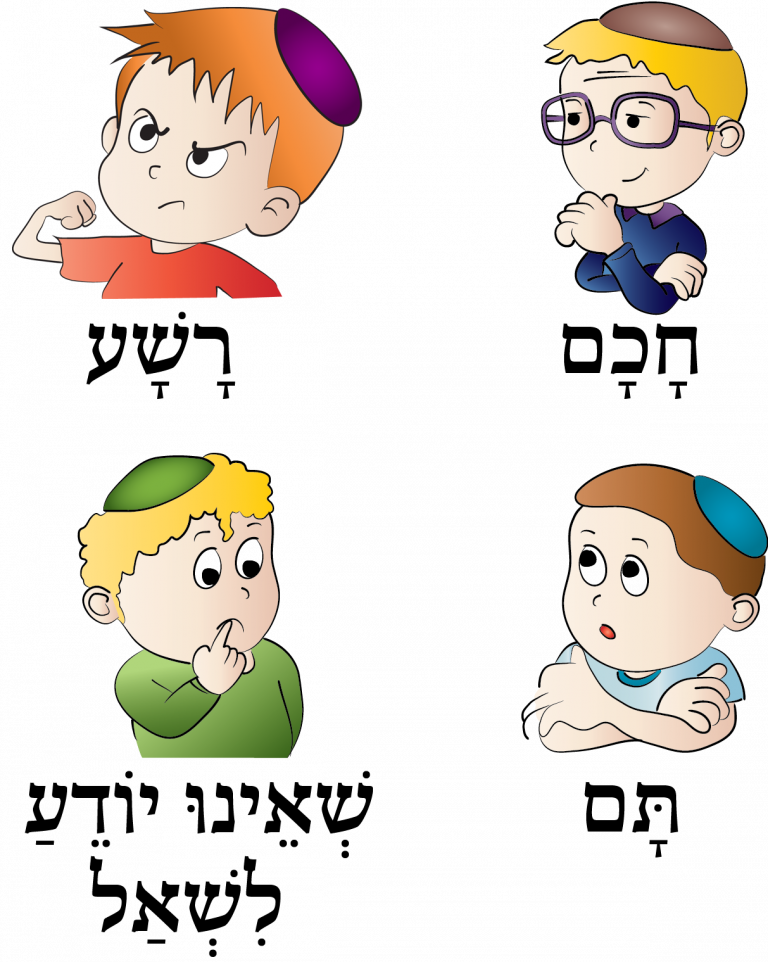
כנגד ארבעה בנים דברה תורה, כך מספרת לנו ההגדה לפסח, ושלושה מתוכם מופיעים בפרשת השבוע שלנו, פרשת “בא”: הרשע, התם וזה שאינו יודע לשאול, ואילו החכם יופיע בסוף ספר דברים. בסה”כ, ארבעה בנים ששואלים שלוש שאלות ומקבלים מעין חמש וחצי תשובות… מי שאל (או לא שאל) מה, ואיזה תשובה קבל?
החכם שואל מָ֣ה הָעֵדֹ֗ת וְהַֽחֻקִּים֙ וְהַמִּשְׁפָּטִ֔ים אֲשֶׁ֥ר צִוָּ֛ה ה’ אֱלֹהֵ֖ינוּ אֶתְכֶֽם?
בתורה הוא מקבל תשובה מפורטת: “וְאָמַרְתָּ֣ לְבִנְךָ֔ עֲבָדִ֛ים הָיִ֥ינוּ לְפַרְעֹ֖ה בְּמִצְרָ֑יִם וַיֹּצִיאֵ֧נוּ ה’ מִמִּצְרַ֖יִם בְּיָ֥ד חֲזָקָֽה׃ וַיִּתֵּ֣ן ה’ אוֹתֹ֣ת וּ֠מֹפְתִ֠ים גְּדֹלִ֨ים וְרָעִ֧ים בְּמִצְרַ֛יִם בְּפַרְעֹ֥ה וּבְכׇל־בֵּית֖וֹ לְעֵינֵֽינוּ׃ וְאוֹתָ֖נוּ הוֹצִ֣יא מִשָּׁ֑ם לְמַ֙עַן֙ הָבִ֣יא אֹתָ֔נוּ לָ֤תֶת לָ֙נוּ֙ אֶת־הָאָ֔רֶץ אֲשֶׁ֥ר נִשְׁבַּ֖ע לַאֲבֹתֵֽינוּ׃ וַיְצַוֵּ֣נוּ ה’ לַעֲשׂוֹת֙ אֶת־כׇּל־הַחֻקִּ֣ים הָאֵ֔לֶּה לְיִרְאָ֖ה אֶת־ה’ אֱלֹהֵ֑ינוּ לְט֥וֹב לָ֙נוּ֙ כׇּל־הַיָּמִ֔ים לְחַיֹּתֵ֖נוּ כְּהַיּ֥וֹם הַזֶּֽה׃ וּצְדָקָ֖ה תִּֽהְיֶה־לָּ֑נוּ כִּֽי־נִשְׁמֹ֨ר לַעֲשׂ֜וֹת אֶת־כׇּל־הַמִּצְוָ֣ה הַזֹּ֗את לִפְנֵ֛י ה’ אֱלֹהֵ֖ינוּ כַּאֲשֶׁ֥ר צִוָּֽנוּ (דברים ו, כ-כה).
ואילו ההגדה עונה לו על משהו שכלל לא שאל: “וְאַף אַתָּה אֱמוֹר לוֹ כְּהִלְכוֹת הַפֶּסַח: אֵין מַפְטִירִין אַחַר הַפֶּסַח אֲפִיקוֹמָן”.
הרשע שואל: מָ֛ה הָעֲבֹדָ֥ה הַזֹּ֖את לָכֶֽם? תשובת התורה אליו היא בהסבר מסודר: “וַאֲמַרְתֶּ֡ם זֶֽבַח־פֶּ֨סַח ה֜וּא לַֽה’ אֲשֶׁ֣ר פָּ֠סַ֠ח עַל־בָּתֵּ֤י בְנֵֽי־יִשְׂרָאֵל֙ בְּמִצְרַ֔יִם בְּנׇגְפּ֥וֹ אֶת־מִצְרַ֖יִם וְאֶת־בָּתֵּ֣ינוּ הִצִּ֑יל וַיִּקֹּ֥ד הָעָ֖ם וַיִּֽשְׁתַּחֲוֽוּ׃ וַיֵּלְכ֥וּ וַֽיַּעֲשׂ֖וּ בְּנֵ֣י יִשְׂרָאֵ֑ל כַּאֲשֶׁ֨ר צִוָּ֧ה ה’ אֶת־מֹשֶׁ֥ה וְאַהֲרֹ֖ן כֵּ֥ן עָשֽׂוּ” (שמות יב:כו-כח).
ואילו ההגדה מקשה עליו ומדגישה לנו את המילה “לכם” בשאלתו, ומכריזה עליו שהוא מוציא עצמו מן הכלל, וזאת למרות שגם החכם אמר “אתכם” בגוף שני! אלא שבענין הרשע הקפידה ההגדה: “וּלְפִי שֶׁהוֹצִיא אֶת עַצְמוֹ מִן הַכְּלָל כָּפַר בְּעִקָּר. וְאַף אַתָּה הַקְהֵה אֶת שִׁנָּיו וֶאֱמוֹר לוֹ: “בַּעֲבוּר זֶה עָשָׂה ה’ לִי בְּצֵאתִי מִמִּצְרָיִם”. לִי וְלֹא־לוֹ. אִלּוּ הָיָה שָׁם, לֹא הָיָה נִגְאָל”, אך… איפה אמרה (לו) התורה: “בַּעֲבוּר זֶה עָשָׂה ה’ לִי בְּצֵאתִי מִמִּצְרָיִם”?
שאלת התם כביכול פשוטה: מַה־זֹּ֑את? התורה גם לו נותנת הסבר מפורט: “וְאָמַרְתָּ֣ אֵלָ֔יו בְּחֹ֣זֶק יָד הוֹצִיאָ֧נוּ ה’ מִמִּצְרַ֖יִם מִבֵּ֥ית עֲבָדִֽים׃ וַיְהִ֗י כִּֽי־הִקְשָׁ֣ה פַרְעֹה֮ לְשַׁלְּחֵ֒נוּ֒ וַיַּהֲרֹ֨ג יְהֹוָ֤ה כׇּל־בְּכוֹר֙ בְּאֶ֣רֶץ מִצְרַ֔יִם מִבְּכֹ֥ר אָדָ֖ם וְעַד־בְּכ֣וֹר בְּהֵמָ֑ה עַל־כֵּן֩ אֲנִ֨י זֹבֵ֜חַ לַֽה’ כׇּל־פֶּ֤טֶר רֶ֙חֶם֙ הַזְּכָרִ֔ים וְכׇל־בְּכ֥וֹר בָּנַ֖י אֶפְדֶּֽה׃ וְהָיָ֤ה לְאוֹת֙ עַל־יָ֣דְכָ֔ה וּלְטוֹטָפֹ֖ת בֵּ֣ין עֵינֶ֑יךָ כִּ֚י בְּחֹ֣זֶק יָ֔ד הוֹצִיאָ֥נוּ ה’ מִמִּצְרָֽיִם” (שמות יג, יד-טז).
ההגדה לעומת זאת בחרה רק בפסוק הראשון מתוך ההסבר: “בְּחוֹזֶק יָד הוֹצִיאָנוּ ה’ מִמִּצְרַיִם מִבֵּית עֲבָדִים”. זהו, די והותר!
וזה שאינו יודע לשאול? עליו אמרה התורה: וְהִגַּדְתָּ֣ לְבִנְךָ֔ בַּיּ֥וֹם הַה֖וּא לֵאמֹ֑ר בַּעֲב֣וּר זֶ֗ה עָשָׂ֤ה ה’ לִ֔י בְּצֵאתִ֖י מִמִּצְרָֽיִם׃ וְהָיָה֩ לְךָ֨ לְא֜וֹת עַל־יָדְךָ֗ וּלְזִכָּרוֹן֙ בֵּ֣ין עֵינֶ֔יךָ לְמַ֗עַן תִּהְיֶ֛ה תּוֹרַ֥ת ה’ בְּפִ֑יךָ כִּ֚י בְּיָ֣ד חֲזָקָ֔ה הוֹצִֽאֲךָ֥ ה’ מִמִּצְרָֽיִם׃ וְשָׁמַרְתָּ֛ אֶת־הַחֻקָּ֥ה הַזֹּ֖את לְמוֹעֲדָ֑הּ מִיָּמִ֖ים יָמִֽימָה (שמות יג, ח-יא), ואילו ההגדה קצרה והדגישה לנו: אַתְּ פְּתַח לוֹ, שֶׁנֶּאֱמַר, וְהִגַּדְתָּ לְבִנְךָ בַּיּוֹם הַהוּא לֵאמֹר, בַּעֲבוּר זֶה עָשָׂה ה’ לִי בְּצֵאתִי מִמִּצְרָיִם. רגע, זה נשמע מוכר! אכן, זו תשובת ההגדה לרשע. חז”ל רומזים לנו שיש קשר מסוכן בין אדישות ורשעות. ידועה האמירה המפורסמת (למרות שלא ברור מי אמר אותה בראשונה): “כל מה שנחוץ כדי שרוע יגבר, הוא שמספיק אנשים טובים לא יעשו כלום”.
המהר”ל מפראג שואל בהגדה לפסח שלו, למה התייחסה התורה דוקא לארבעה בנים אלו?וכי אין סוגי בנים נוספים, כמו הבן הפיקח, השוטה, או העצלן? מדוע אליהם לא התייחסה התורה באופן מפורש?
בנוסף, נשאלת השאלה, למה הראשון הוא החכם, ואילו השני הוא הרשע? הלא אם הראשון הוא החכם, השני שכביכול עומד נגדו, היה צריך להיות שוטה, או לחילופין, אם אנחנו דנים בבן רשע, הרי לעומתו היה צריך להיות צדיק, ולמה נכתבים החכם והרשע כביכול אחד נגד השני?
ונראה לומר, כך לפי המהר”ל, שודאי ישנם סוגי ילדים נוספים אולם כאן אנו עוסקים במצווה להעביר את המסר והידיעה, ולכן יש להתייחס אליהם דוקא ביחס לצורת קליטתם, קבלתם והתייחסותם לידיעות המועבורת אליהם, וכלפי תכונות אלו של קבלת הידיעות והשימוש בהם, יש, לדעת המהר”ל, רק ארבעה סוגים:
האחד, מי שבידיעות וההשכלה שיש לו, משתמש כבסיס להתפתחות נוספת, ומנסה מתוך מה שכבר יודע, להוסיף ולהחכים. זהו ה”חכם”, כי הוא עסוק כל ימיו בקניית חוכמה והוספת דעת.
השני (וכוונתו לתם) טוב לו במה שכבר בידו, וחסרון ידיעתו לא מפריע לו, רק כשיראה משהו שעומד בסתירה לידיעותיו הקודמות, ינסה לברר “מה זאת”. אדם כזה נקרא “תם”: הוא מרגיש שלם ולא בהכרח מחפש להוסיף ידע. כך נאמר על יעקב בתחילת דרכו “איש תם יושב אוהלים” (בראשית כה,כז), ולכן, החיים מטלטלים אותו ומציבים לו אתגרים שונים כדי לאפשר לו להתפתח ולגדול למי שהוא צריך להיות כאבי האומה.
השלישי (כוונתו לרביעי בהגדה) לא רק שלא מחפש ידע, אלא גם כשנתקל בדברים שונים ומשונים, לא מנסה להתעניין בהם, והוא “אינו יודע לשאול”.
לעומת שלושתם הסוג הרביעי (הרשע בהגדה) שונה. הוא לא נמצא בהמשכיות לאחרים, אלא הוא בעל אותה תכונה כמו החכם: הוא מעוניין להשתמש בידיעות שלו להוסיף חוכמה, אלא שמטרתו בחוכמתו היא להרע. חז”ל מאירים לנו כאן שהתכונה עצמה איננה הענין, אלא איך אנחנו משתמשים בתכונות שלנו.
זאת ועוד: בעברית אנחנו מדברים על “יצר הרע” אבל לא על “יצר רשע”, למרות שבאנגלית שניהם יתורגמו אותו הדבר. מהו בעצם ההבדל בין “רע” ורשע”?
ה”רע” עושה טעויות, נסחף אחרי יצרו, לא בוחר נכון ונופל מדרך הישר. כל זה יכול לקרות לכולנו, ועל כך אפשר לעשות תשובה ולתקן דרכנו. אבל הרשע, ע”פ חכמי ההגדה, הוא לא מי שסתם טעה, אלא מי שמטרתו היא ללעוג ולקלקל לאחרים.
על דרך הפשט, ההבדל בין שניהם הוא האות “שין” שצורתה כשיניים. האות שין מספרת לנו על משהו שחוזר על עצמו שוב ושוב כמו לעיסת אוכל בשיניים או כמו שנאמר לנו “ושיננתם לבניך”, לימוד שאנחנו חוזרים ו”משננים” אותו. לכך נאמר “הקהה שיניו” – צריך להוציא את ה”שין” מתוך הרשע כדי שיהיה לסתם רע! כך, הוא יוכל לעשות תשובה ולתקן את דרכיו, ואנחנו נוכל להתמודד איתו.
אך אולי החשוב מכל כאן שכבר התורה הבינה שיש לנו ילדים שונים, ושכל אחד מהם הוא עולם ומלואו וזקוק לדרך חינוך שונה. דבר זה היא מדגישה לנו דוקא בפרשה הזו, ביציאה מעבדות ושעבוד לחירות וגאולה. חלק מהחירות היא היכולת להיות מי שאנחנו, ולאפשר זאת לאחרים, גם לילדינו. הדבר נכון במיוחד בחינוך: אותו ההסבר לא ידבר לכולם באותה צורה והדבר מצריך עבודה, עקשנות ויציריות, אך עדיין, אין זו סיבה לוותר על העברת הסיפור שלנו מדור לדור.
בשורות טובות, שבת שלום וחודש שבט טוב.
The Torah spoke of four sons, as the Passover Haggadah tells us, and three of them appear in this week’s Torah portion, “Bo”: the rasha (wicked), the tam (innocent), and she’eino yode’a ilsh’ol (the one who does not know how to ask), while the chacham (wise) one appears at the end of the Book of Deuteronomy. In total, four sons who ask three questions and receive something like five and a half answers… Who asked (or didn’t ask) what, and what answer did they receive?
The chacha, (wise) son asks, What are the testimonies, statutes, and judgments that the Lord our Gd has commanded you?
In the Torah he receives a detailed answer:
“Then you shall say to your son, We were slaves of Pharaoh in Egypt, and Hashem brought us out of Miżrayim with a mighty hand: and the Lord gave signs and wonders, great and sore, upon Miżrayim, upon Pharaoh, and upon all his household, before our eyes: and He brought us out from there, that He might bring us in, to give us the Land which He swore to our fathers. And the Lord commanded us to do all these statutes, to fear the Lord our Gd, for our good always, that He might preserve us alive, as it is at this day. And it shall be accounted virtue in us, if we take care to do all these commandments before the Lord our Gd, as He has commanded us” (Deuteronomy 6:20-26)
But the Haggadah answers him about something he did not even ask: “And you also said to him, ‘As for the Passover, do not leave anything after the afikoman.’”
The wicked one asks: What is this work for you? The Torah’s answer to this is in an organized explanation: “that you shall say, It is the Passover sacrifice of the Lord, who passed over the houses of the Children of Yisra᾽el in Miżrayim, when he smote Miżrayim, and delivered our houses. And the people bowed their head and worshipped. And the children of Yisra᾽el went away, and did as the Lord had commanded Moshe and Aharon, so they did” (Exodus 12:26-28).
However, the Haggadah makes it difficult for him and emphasizes the word “you” in his question, and declares that he is excluding himself from the majority, even though the wise one also said “you” in the second person! But regarding the rasha (wicked), the Haggadah was strict with him: “and for he excluded himself, he went against the main principle. And you too, should dull his teeth, and say to him: “for this, the Lord did this to me when I came out of Egypt.” For me and not for him. If he had been there, he would not have been saved,” but… Where did the Torah say (to him): “for this, the Lord did this to me when I came out of Egypt”?
A innocent’s question is seemingly simple: What is this? The Torah also gives a detailed explanation: “And you said to him, ‘By a strong hand the Lord brought us out of Egypt, out of the house of bondage.’ And it came to pass, when Pharaoh made it difficult for us to leave, that the Lord killed all the firstborn in the land of Egypt, both the firstborn of human and the firstborn of beast. Therefore I sacrifice to the Lord all the firstborn of the males, and all the firstborn of my children, I shall redeem; and it should be a sign upon your hand, and for frontlets between your eyes: for by a strong hand the Lord brought us out of Egypt” (Exodus 13:14-16).
The Haggadah, on the other hand, chose only the first verse from this explanation: “With a strong hand the Lord brought us out of Egypt, out of the house of bondage.” That is enough!
And what about the one who does not know how to ask? The Torah said about him: “And you shall tell your son in that day, saying, ‘This is what the Lord did for me when I came out of Egypt.’ And it shall be for you as a sign on your hand and as a memorial between your eyes, so that the Torah of the Lord may be in your mouth, for with a strong arm the Lord has brought you out of Egypt; keep this law as it should be, day by day” (Exodus 13:8-11),
while the Haggadah is brief and emphasizes for us: You shall start things up for him, as it is said, and you shall tell your son on that day, saying, “for this, the Lord did this to me when I came out of Egypt”… Wait, that sounds familiar! Indeed, this is the Haggadah’s response to the rasha (wicked). The Sages hint to us that there is a dangerous connection between indifference and wickedness, as the famous saying (although it’s not clear who first said it) teaches: “All that is needed for evil to prevail is for enough good people to do nothing.”
The Maharal of Prague asks in his Passover Haggadah, why did the Torah refer specifically to these four children? Aren’t there other types, such as the clever, the foolish, or the lazy one? Why didn’t the Torah refer to them?
In addition, the question arises, why is the first one the wise one, while the second one is the wicked one? If the first one is the wise one, the second one, who supposedly stands against him, should be a fool, or alternatively, if we are discussing a wicked son, then facing him should be a righteous one, but and why are the wise and the wicked written as if one were against the other?
It seems, according to the Maharal, that there are certainly other types of children, but here we are dealing with the mitzvah of teaching and transferring knowledge, and therefore we address them in accordance to their way of learning, treating and absorbing the information conveyed to them, and with regard to these qualities of receiving information and using it, there are, according to the Maharal, only four types:
One, who uses the knowledge and education he has as a basis for further development, and tries to grow wiser from what he already knows. This is the “wise” one, because he is busy all the while acquiring wisdom and adding knowledge.
The second (though he means the simple one) is good at what he already has, and his lack of knowledge does not bother him, only when he sees something that contradicts his previous understanding will he try to find out “what is this.” Such a person is called “simple”: he feels complete and does not necessarily seek to add knowledge. This is what was said about Jacob at the beginning of his journey, “a simple man (ish tam) dwelling in tents” (Genesis 25:27), and therefore, life shakes him and presents him with various challenges in order to enable him to develop and grow into the fathers of the nation he’s about to become.
The third (that is, the fourth in the Haggadah) not only does not seek knowledge, but also when he encounters various strange things, does not try to be interested in them, and he “does not know how to ask.”
Compared to these three, the fourth type (the wicked one in the Haggadah) is different. He is not in ine with the others, but has the same characteristic as the wise one: he is interested in using his knowledge to increase wisdom, but his goal in this wisdom is to do and cause evil. The sages here point to us that any trait in itself might not the issue, but how we use our traits.
And furthermore: In Hebrew we speak of the “yetzer ha-ra” – evil inclination, but not the “yetzer ha-rasha,” even though in English they would be translated the same. What is the difference between “ra” and “rasa”?
The “ra” makes mistakes, is carried away by his instincts, does not choose correctly and falls from the straight path. All of this can happen to all of us, and for this we can repent and correct our ways. But the “rasa,” according to the sages of the Haggadah, is not someone who simply makes mistakes, but rather, someone whose goal is to mock and spoil things for others.
Simply put, the difference between the two is the letter “shin” which is shaped like teeth. The letter shin tells us about something that repeats itself over and over again, like chewing food with our teeth or as we are told, “and you shall teach it to your children” – veshinantam – a teaching that is repeated again and again. This is why it is said to “make his teeth numb” – the “shin” must be taken out of the rasha so that it will be just ra! That way, he can repent and correct his ways, and we can deal with him.
But perhaps the most important thing here is that the Torah already understood that we have different children, and that each of them is a whole world and needs a different way of raising them. It emphasizes this to us precisely in this weeks’ Torah portion, when we leave slavery and bondage, and go to freedom and redemption. Part of freedom is the ability to be who we are, and to allow others to do the same, including our children. This is especially true in education: the same explanation will not speak to everyone in the same way. This requires work, perseverance and creativity, but still, it is no reason to give up on passing our story from generation to generation.
May we hear good tidings, Shabbat Shalom and a good new month of Sh’vat.
And something (famous) from Tractate Sanhedrin- ומשהו (מפורסם) ממסכת סנהדרין
לְפִיכָךְ נִבְרָא אָדָם יְחִידִי, לְלַמֶּדְךָ שֶׁכׇּל הַמְאַבֵּד נֶפֶשׁ אַחַת מִיִּשְׂרָאֵל, מַעֲלֶה עָלָיו הַכָּתוּב כְּאִילּוּ אִיבֵּד עוֹלָם מָלֵא. וְכׇל הַמְקַיֵּים נֶפֶשׁ אַחַת מִיִּשְׂרָאֵל, מַעֲלֶה עָלָיו הַכָּתוּב כְּאִילּוּ קִיֵּים עוֹלָם מָלֵא…
The court tells the witnesses: Therefore, Adam the first man was created alone, to teach you that with regard to anyone who destroys one soul from the Jewish people, i.e., kills one Jew, the verse ascribes him blame as if he destroyed an entire world, as Adam was one person, from whom the population of an entire world came forth. And conversely, anyone who sustains one soul from the Jewish people, the verse ascribes him credit as if he sustained an entire world.…


 Torah & more... תורה ועוד