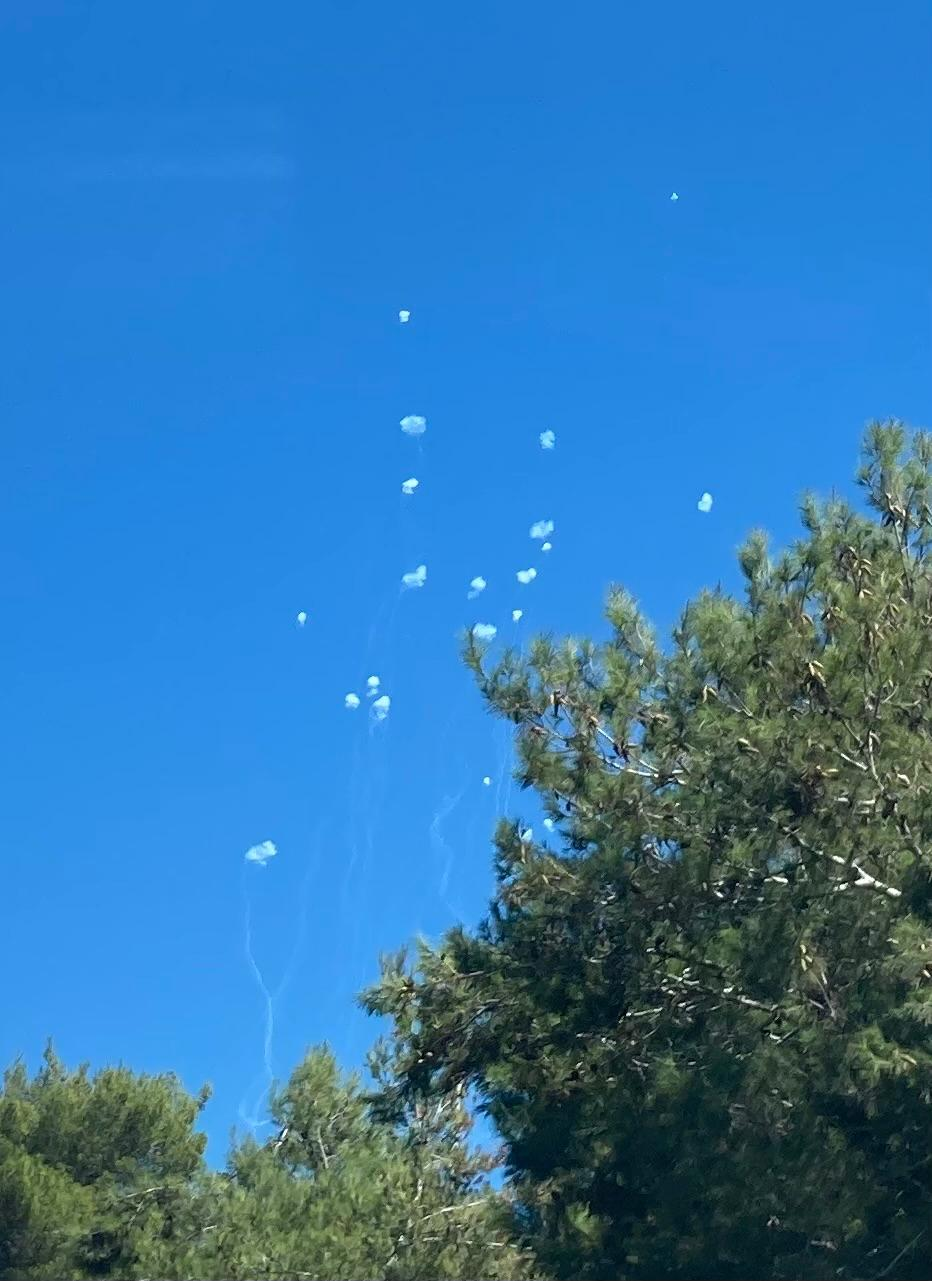
(EN below) שמים כחולים ובלונים לבנים – יום הכיפורים, תשפה
שמים כחולים ובלונים לבנים. הספקתי לצלם תמונה מהירה בדרך הביתה, באמצע האזעקה. שמים כחולים ובלונים לבנים. וקבוצת אנשים מקרית תופסת מחסה מתחת לגשר: “וואו, זה היה קרוב”, אומר אחד לצלילם של כמה בומים מאיימים במיוחד, מישהו מהצד השני מרגיע. “כנסי, כנסי יותר פנימה”, אומרת לי אחרת. “אולי יש למישהו מטען לאייפון?” “בטח, בטח”, עונה לי מישהו, “הנה, בואי, שימי באוטו שלי”. לכמה דקות אנחנו האנשים הכי קרובים אחד לשני בעולם. בעוד כמה דקות ניסע מכאן, כל אחד לדרכו. קרוב לודאי שכשנפגש שוב, אולי אפילו לא נזהה אחד את השני. אבל לרגעים אלו, “הגורל” זימן אותנו לכאן, ביחד.
מה הוא ה”גורל” העלום הזה?
במפתיע, דוקא בתקופת התשובה – חרטה, כפרה, מחילה וסליחה – חלק לא קטן מקריאות התורה והנביאים של יום הכיפורים מדברות בנושא הגורל:
וְנָתַ֧ן אַהֲרֹ֛ן עַל־שְׁנֵ֥י הַשְּׂעִירִ֖ם גֹּרָל֑וֹת גּוֹרָ֤ל אֶחָד֙ לַה’ וְגוֹרָ֥ל אֶחָ֖ד לַעֲזָאזֵֽל (ויקרא טז:ח), כך הכהן הגדול בבית המקדש כשעומדים לפניו שני השעירים: אחד יוקרב בבית המקדש ואחד ישלח לעזאזל. איזה מהם לאן? שניהם זהים, כמו שאומרת הגמרא במסכת יומא (סב:א): שְׁנֵי שְׂעִירֵי יוֹם הַכִּפּוּרִים — מִצְוָתָן שֶׁיִּהְיוּ שְׁנֵיהֶן שָׁוִין בַּמַּרְאֶה וּבַקּוֹמָה וּבַדָּמִים וּבִלְקִיחָתָן כְּאֶחָד. …
במקרה כזה, “הגורל” הוא המחליט. כך גם בספר יונה, שנקרא ביום כיפור אחהצ: “וַיֹּאמְר֞וּ אִ֣ישׁ אֶל־רֵעֵ֗הוּ לְכוּ֙ וְנַפִּ֣ילָה גֽוֹרָל֔וֹת וְנֵ֣דְעָ֔ה בְּשֶׁלְּמִ֛י הָרָעָ֥ה הַזֹּ֖את לָ֑נוּ וַיַּפִּ֙לוּ֙ גּֽוֹרָל֔וֹת וַיִּפֹּ֥ל הַגּוֹרָ֖ל עַל־יוֹנָֽה” (יונה א:ז). אלו הם קולות המלחים שלא יודעים מאיפה ולמה הגיעה הסערה בים. אין להם שום דרך לדעת, אך לאחר שהפילו גורלות, נפל הגורל על יונה.
הגורל גם שותף בחלוקת הנחלות בארץ: “לָאֵ֗לֶּה תֵּחָלֵ֥ק הָאָ֛רֶץ בְּנַחֲלָ֖ה בְּמִסְפַּ֥ר שֵׁמֽוֹת׃ לָרַ֗ב תַּרְבֶּה֙ נַחֲלָת֔וֹ וְלַמְעַ֕ט תַּמְעִ֖יט נַחֲלָת֑וֹ אִ֚ישׁ לְפִ֣י פְקֻדָ֔יו יֻתַּ֖ן נַחֲלָתֽוֹ׃ אַךְ־בְּגוֹרָ֕ל יֵחָלֵ֖ק אֶת־הָאָ֑רֶץ לִשְׁמ֥וֹת מַטּוֹת־אֲבֹתָ֖ם יִנְחָֽלוּ” (במדבר כו:נג-נה).
וכמובן, לא נשכח את המן ופורים, שהיא המילה הפרסית (פור) למילה העברית “גורל”: “בַּחֹ֤דֶשׁ הָרִאשׁוֹן֙ הוּא־חֹ֣דֶשׁ נִיסָ֔ן בִּשְׁנַת֙ שְׁתֵּ֣ים עֶשְׂרֵ֔ה לַמֶּ֖לֶךְ אֲחַשְׁוֵר֑וֹשׁ הִפִּ֣יל פּוּר֩ ה֨וּא הַגּוֹרָ֜ל לִפְנֵ֣י הָמָ֗ן מִיּ֧וֹם לְי֛וֹם וּמֵחֹ֛דֶשׁ לְחֹ֥דֶשׁ שְׁנֵים־עָשָׂ֖ר הוּא־חֹ֥דֶשׁ אֲדָֽר” (אסתר ג:ז).
אז מה זה הגורל? סתם מקריות? אך, אם זו סתם מקריות, מה מקומה מול מלכותו הכל יכולה של הקב”ה? אולי בכל זאת מחוצה לה?
גורל, לפי המחשבה היהודית, אינו הפטליזם של המזרח. הוא אינו דבר קבוע שהוחלט מראש ב”ככה זה”, “אין לי מזל”, “זה הגורל שלי”… להיפך: העולם נברא עם חוקי טובע, ובד”כ פועל על פיהם. החוקים האלה כל כך חזקים שאפילו הקב”ה כמו כבל את עצמו אליהם. אולם, אם הכל, הכל קבוע מראש, מה מקומנו? ומה מקומו של הקב”ה? לא אנחנו ולא הקב”ה נוכל להתערב בכלום! לכך, השאיר הקב”ה מרחב “אקראי”, מרחב שבו לא הכל קבוע מראש. שם יש מקום ל”נס”. שם יש מקום ל”גורל”. זהו לא תחום מקרי ולא תחום ברשות השטן או מחוץ לקב”ה! זהו תחום שמלכתחילה הושאר כך, להיות מרחב פעולה ששבכוונה הושאר לדברים “אקראים”, לא קבועים, יכולים לקרות.
אולי לכן אלו הן הקריאות ליום הכיפורים. התקופה הארוכה של סליחות ותשובה עלולה לשכנע אותנו ש- הנה,אם רק נעשה כך וכך, מובטח לנו ש… אחרי הכל, אני “טוב”, למה “זה” מגיע לי? ואכן, יש לנו אלמנט שכזה בתורה: כל יום אנחנו קוראים בשמע וברכותיה, שאם נעשה טוב, יהיה טוב. אין ספק שאנחנו נקראים ללימוד, מחשבה, עשיה, לקיחת אחריות, ואין ספק שלמעשים שלנו יש השפעה חזקה וחשובה בעולם.
אך יש לזה גם צד שני: כי ברגע שנתחיל לחשוב שרק בגלל שעשינו טוב, מובטח רק טוב, ואנחנו מתחילים לאחל אחד לשני ש”מגיע לנו שנה יותר טובה…” אנחנו מסתכנים במקום כמעט שחצני מידי, יודע מידי, כל יכול מידי, שמפספס את מקומנו ואת מקומו של הקב”ה. “אין לסמוך על הנס”, אמרו חז”ל, ובשולחן ערוך נאמר “אין שואלים בחוזים בכוכבים ולא בגורלות” והרמ”א מוסיף – “משום שנאמר: ‘תמים תהיה עם ה’ א-להיך’ (שולחן ערוך, יורה דעה, קעט ,א). ואנחנו לא. אנחנו עושים מה שאפשר. בקר וערב. ולאט לאט – שוכחים. ואז יום אחד אנחנו מוצאים את עצמנו, מתחת לגשר, תוהים, מקוים, מתפללים, נזכרים, שאפילו עכשיו, “לית אתר פנוי מיניה” (אין מקום בו הוא איננו). ומעלינו – שמים כחולים ובלונים לבנים.
שבת שלום וגמר חתימה טובה לכם וליקירכם ולכל עם ישראל.
Blue sky and white balloons. I managed to take one quick picture on the way home, in the middle of the siren alarm. Blue sky and white balloons. And a random group of people taking cover under the bridge: “Wow, that one was close,” says one to the sound of some particularly menacing booms, while someone on the other side reassures. “Get in closer, come closer” beckons me another. “Does someone happen to have an iPhone charger?” “Sure, sure,” someone answers me, “Here, come, some, put it inside my car.” For a few minutes we are the closest people to each other in the whole world. In a little while we will leave this spot, each to his/her own place. We might not recognize each other when we meet again. But for these few moments, the goral, “fate, “destiny” or “lot” summoned us here, together.
What is this unknown “goral“?
Surprisingly, precisely during the period of Teshuva, Repentance – atonement, forgiveness and compassion – quite a few of the readings of Yom Kippur talk about goral: …“and he (Ahron, the High Priest) shall place lots upon the two goats, one marked for Hashem and the other marked for Azazel” (Leviticus 16:8), this is how the high priest in the Temple stands with the two goats before him: one will be sacrificed in the Temple and one will be sent to Azazel. Which one to where? They are both the same, as the Gemara says (in Tractate Yoma (62:a): “The mitzva of the two Yom Kippur goats is as follows, ab initio: That they will both be identical in appearance, i.e., color, and in height, and in monetary value, and their acquisition must be as one”….
In such a case, “lot” is the decider. This is also the case in the book of Jonah, which is read on Yom Kippur afternoon: “and they said to one another, “Let us cast lots and find out on whose account this misfortune has come upon us.” They cast lots and the lot fell on Jonah” (Jonah 1:7). These are the voices of sailors who do not know where and why the storm in the sea came from. They have no way of figuring this out, but after casting lots, the lot fell on Jonah.
Lots also took part in the distribution of estates in the country: “Among these shall the land be apportioned as shares, according to the listed names: with larger groups increase the share, with smaller groups reduce the share. Each is to be assigned its share according to its enrollment. The land, moreover, is to be apportioned by lot; and the allotment shall be made according to the listings of their ancestral tribes” (Numbers 26:53-55).
And of course, let us not forget Haman and Purim, which is the Persian word (Pur) for the Hebrew word, goral, lot: “In the first month, that is, the month of Nisan, in the twelfth year of King Ahasuerus, pur—which means “the lot”—was cast before Haman concerning every day and every month, [until it fell on] the twelfth month, that is, the month of Adar” (Esther 3:7).
What are the lots? Just a happenstance? But, if it is just a coincidence, what is its place in the Almighty’s majestic kingdom of Gd? Maybe it’s something outside of it, after all?
According to Jewish thinking, “lot” is not the fatalism of the East. It is not a fixed thing that was decided in advance with a “that’s the way it is”, “I’m unlucky”, “this is my destiny” tune… on the contrary: the world was created with laws of the universe set in place, and everything usually acts accordingly. These laws are so strong that even Gd sort of chained Himself to them. However, if everything is predetermined, what is our place? And what is Gd’s place? Neither we nor Gd can interfere in anything! For this, Gd left a “random” space, a space where not everything is predetermined. There is a place for a “miracle”. There is a place for “goral”. This is not an accidental domain and not a domain under the authority of Satan or outside of Gd! This is an area that was originally left as such, to be a space of action that was intentionally left for “random”, not fixed, things to happen.
Maybe that’s why these are the readings for Yom Kippur. The long period of forgiveness and repentance may convince us that – here, if we just do this and that, we are guaranteed that… after all, I am “good”, then why do I deserve “this”? Indeed, we have such an element in the Torah: every day when we recite the Sh’ma and its blessings, we say that if we do good, it will be good. There is no doubt that we are called to study, think, do, take responsibility, and there is no doubt that our actions have a strong and important influence in the world.
But there is also another side to this: because as soon as we start thinking that just because we did good, only good is guaranteed, and we start wishing each other that “we deserve a better year…” we risk entering a place where we have a chance of becoming almost too arrogant, too knowledgeable, too omnipotent, who miss our place and the place of the Almighty. “One should not rely on the miracle,” said the Sages, and in the Shulchan Aruch it is said “One does not ask seers in the stars or lots” and the Ram”a adds – “because it is said: ‘Be wholehearted with Hashem your Gd’ (Shulchan Aruch, Yore De’a, 179,a). And we don’t. We do what we can. Morning and evening. And slowly, we forget. And then one day, we find ourselves, under a bridge, wondering, hoping, praying, reminded, even now, that there is no place devoid of Hashem. And above us, blue skies and white ballons.
Shabbat Shalom and Chatima Tova to you and your loved ones and to all the People of Israel.


 Torah & more... תורה ועוד