פרשת תרומה: ״ועשית מנורת זהב טהור״…
״ועשו לי מקדש ושכנתי בתוכם״ (שמות כה:ח). תוהה האור החיים, איך אפשר להגיד דבר כזה? ״הנה תצילנה אזנים משמוע כדבר הזר הזה. כי איזה הדרך ישכון אור שכינתו יתברך בארץ הלזו, במקדש כוננו בני האדם?״ אלא שאמרו חכמים, לא נאמר ״בתוכו (בתוך המשכן), אלא בתוכם״. כלומר, הצעד הראשון הוא שכולנו ביחד, וניקח תְּרוּמָ֑ה מֵאֵ֤ת כׇּל־אִישׁ֙ אֲשֶׁ֣ר יִדְּבֶ֣נּוּ לִבּ֔וֹ (שמות כה:ב). אז השכינה תשכון איתנו, בינינו, בתוכנו, ומתוך כך, נבנה את המשכן ואח״כ את בית המקדש. מתבקש אם כן, שכל אחד מאיתנו יהיה מעין מקדש מעט בעצמו, מה שאומר שתחילת בנין בית המקדש לא תהיה בחומר ובלבנים, אלא בכל אחד מאיתנו.
לעומת זאת, “בעת שהחריב טיטוס את בית המקדש: קפצה קטגוריה… (ואמרה), כך יהיה רשע מתגאה ואומר אני החרבתי… אלא (שחז״ל ענו לו): אריה קטילא קטלת, קמחא טחינא טחינת” (אריה הרוג הרגת, קמח טחון טחנת. נמצא באיכה רבתי א, מג). כלומר, טיטוס, קיסר רומי, ״משויץ״ בכך שהצליח להרוס את ירושלים, אך חז״ל עונים לו שזה לא היה תלוי בכוחו, ואלא זה הישג חסר משמעות כמו לטחון קמח שכבר נטחן, מכיון שהחורבן הפיזי היה בלתי נמנע.
אין ספק שהבנין הפיזי של המשכן והמקדש חשוב מאד ואנשים רבים מקדישים משאבים רבים לכך, אך לא מדובר כאן בעוד יצירה אדריכלית מפוארת ככל שתהיה, אלא במבנה שמחבר שמים וארץ ומשקף את המצב הרוחני של העם, וזה מתחיל מכל אחד מאיתנו.
כך גם כלי המשכן סמלו דברים שונים באדם ובאומה. למשל, הדעת הנבואית מיוצגת בארון עם הלוחות שנמצא בקודש הקודשים. לגבי הארון נאמר שבְּטַבְּעֹת֙ הָאָרֹ֔ן יִהְי֖וּ הַבַּדִּ֑ים לֹ֥א יָסֻ֖רוּ מִמֶּֽנּוּ (שמות כה,טו), כלומר, הארון חייב להיות מוכן לנסיעה תמיד, כמו שאנחנו במשך הדורות תמיד לקחנו את התורה איתנו.
המנורה מסמלת את הארת החוכמה, והשולחן – את טהרת המעשים. מזבח הקטורת הונח ביניהם כסמל של אחדות כוחות הנפש. בחצר הפתוחה לשמים, היה המזבח החיצון שעליו מועלים האימורים, להזכיר לנו שיהיו כל מעשינו לשם שמים.
לא מזמן קראנו על המנורה בדף היומי (מנחות כח). חז״ל שם מנסיים לדייק את תיאור המנורה:
מכיון שנאמר פעמיים מִקְשָׁ֞ה (שמות כה לא ו-לו), ברור שמהנורה צריכה להיות עשויה גוף אחד ולא מחלקים (מה שהגמרא קוראת ״גרוטאות״). ומכיון שגם נאמר באותם פסוקים פעמיים זָהָ֣ב הובן שמהנורה צריכה להיות עשויה ממתכת, ויש אומרים, ממתכת יקרה. בנוסף היו לה גם גביעים, כפתורים ופרחים ״משוקדים״. משקל המנורה הוא כִּכָּ֛ר – בערך 57-60ק״ג, וגובהה לפי חישוב חז״ל, כ-1.40-175מ׳. שני הפרטים האלה מסבכים את החישובים שלנו כי לא ברור איך משהו מזהב במשקל כזה התנשא לגובה כזה בלי חיבורים.
המנורה היתה עד כדי ייחודית וניסית, שלפי חז״ל גם משה לא הבין בדיוק ולכן בסוף תיאור המנורה, אמר לו הקב״ה, ״וּרְאֵ֖ה וַעֲשֵׂ֑ה בְּתַ֨בְנִיתָ֔ם אֲשֶׁר־אַתָּ֥ה מׇרְאֶ֖ה בָּהָֽר״ (שם, שם, מ) ורש״י מסביר לנו: וראה ועשה. רְאֵה כָאן בָּהָר תַּבְנִית שֶׁאֲנִי מַרְאֶה אוֹתְךָ, מַגִּיד שֶׁנִּתְקַשָּׁה מֹשֶׁה בְמַעֲשֵׂה הַמְּנוֹרָה עַד שֶׁהֶרְאָה לוֹ הַקָּבָּ”ה מְנוֹרָה שֶׁל אֵשׁ, כלומר הקב״ה הראה למשה כמו תכנית ארכיטקטונית ואז משה יכולה היה להגיד, אה, סוג של הבנתי…
במשכן ובמקדש דלקה אש המנורה תמיד. המקרא מספר שבמקדש שלמה היו עשר מנורות, לצד מנורת המשכן, שעלתה על השאר בחשיבותה (מלכים א ז, מ”ט). כנראה כל המנורות האלה הושמדו בכיבוש הבבלי ובחורבן בית המקדש הראשון שבנה שלמה (586 לפנה”ס). 70 שנה מאוחר יותר, כאשר שבי ציון חנכו את בית המקדש השני, הוצבה גם בו מנורה, שכנראה נגזלה ״עי אנטיוכוס הרביעי (אפיפנס, ב- 169לפנה״ס). החשמונאים, לאחר שהשתלטו על ירושלים, בנו במקומה מנורה חדשה, וגם בבית המקדש של הורדוס היו כמה וכמה מנורות, ואחת מהן, או דמותה המשוערת, צוירה על שער טיטוס אחרי חורבן בית המקדש השני (בשנת 70 לספירה).
אובדן המנורה זוהה עם אובדן העצמאות, ולכן הפכה היא לסמל לגעגועים לארץ ולחיים בה. ממצאים ארכאולוגים רבים מתקופת בית שני, ולאחר מכן, מתקופת המשנה והתלמוד (מאות ב’-ז’ לספירה) כוללים תבליטים, מצבות קבורה, פסיפסים, מטבעות, משקופי בתים וחרטות, כמו שניתן לראות למשל בעיר דוד שבירושלים, בית שערים, חמת טבריה וציפורי שבגליל, וגם כשלא היו היהודים בארץ, המנורה נשארה סמל לתקוה להחזרת ״עטרה ליושנה״, כך שלא במקרה נבחרה להיות סמל מדינת ישראל, כשלצידה ענפי עץ הזית, סמל לכמיהה ושלום.
שבת שלום
Parashat Terumah: “And you shall make a menorah of pure gold”
“And they shall make Me a sanctuary, and I will dwell among them” (Exodus 25:8). The Ohr HaChaim wonders: How can such a thing be said? “One’s ears should be shocked to hear such a strange statement. How could the Light of the Divine Presence dwell in this earthly realm, in a sanctuary built by human hands?”
Rather, our Sages said: it does not say “within it” (within the Tabernacle), but “among them.” In other words, the first step is that all of us together take an offering “from every person whose heart so moves him” (Exodus 25:2). Then the Divine Presence will dwell with us, among us, within us, and from that place we will build the Tabernacle and later on, the Temple. It follows, then, that each of us must become a kind of miniature sanctuary ourselves. The beginning of building the Temple is not with materials and bricks, but within each and every one of us.
In contrast, “When Titus destroyed the Temple, the prosecuting angel leapt forth… (and said): So shall this wicked one boast and say, ‘I destroyed it!’… But (our Sages answered him): ‘You killed a dead lion; you ground already-ground flour’” (Lamentations Rabbah 1:43). In other words, Titus, the Roman emperor, bragged that he had succeeded in destroying Jerusalem, but the Sages responded that it was not dependent on his power. It was a meaningless achievement, like grinding flour that has already been ground, since the physical destruction had already become inevitable.
There is no doubt that the physical construction of the Tabernacle and the Temple is extremely important, and many people dedicate great resources to it. But we are not speaking here of just another magnificent architectural creation, however impressive. We are speaking of a structure that connects heaven and earth and reflects the spiritual state of the nation, and that begins with each one of us.
So too, the vessels of the Tabernacle symbolize various aspects of the individual and of the people as a whole. For example, prophetic knowledge was represented by the Ark containing the Tablets, which stood in the Holy of Holies. Concerning the Ark it is said, “The poles shall remain in the rings of the Ark; they shall not be removed from it” (Exodus 25:15). That is, the Ark had to be ready to travel at all times, just as throughout the generations we have always taken the Torah with us.
The menorah symbolizes the illumination of wisdom, and the table symbolizes the purity of deeds. The incense altar was placed between them as a symbol of the unity of the soul’s powers. In the courtyard, open to the heavens, stood the outer altar upon which the sacrificial portions were offered, reminding us that all our actions should be for the sake of Heaven.
Not long ago we studied about the menorah in Daf Yomi (Menachot 28). There, the Sages carefully analyze its description.
Since the word mikshah (“hammered from one piece”) appears twice (Exodus 25:31 and 25:36), it is clear that the menorah had to be made from a single piece and not from separate parts (what the Talmud calls “scraps”). And since the word gold also appears twice in those verses, it was understood that the menorah had to be made of metal and, according to some, specifically precious metal. In addition, it had cups, knobs, and “almond-shaped” flowers.
The weight of the menorah was a kikar – about 57–60 kilograms – and according to the Sages, its height was approximately 1.40–1.75 meters. These two details complicate our calculations, since it is unclear how something made of gold and weighing that much could rise to such a height without joints.
The menorah was so unique and wondrous that, according to the Sages, even Moses did not fully understand it. At the end of its description, Gd said to him: “See and make it according to the pattern, which you are shown on the mountain” (Exodus 25:40). Rashi explains: “See and make: see here on the mountain the pattern that I am showing you,” teaching that Moses had difficulty with the construction of the menorah until the Holy One, blessed be He, showed him a menorah of fire. In other words, Gd showed Moses something like an architectural blueprint, and only then could Moses say, “Ah, I think I understand…”
In the Tabernacle and the Temple, the menorah’s flame burned continually. Scripture tells us that in Solomon’s Temple there were ten menorot in addition to the original menorah of the Tabernacle, which surpassed the others in importance (I Kings 7:49). Apparently all these menorot were destroyed during the Babylonian conquest and the destruction of the First Temple built by Solomon (586 BCE).
Seventy years later, when the returnees to Zion inaugurated the Second Temple, a menorah was placed there as well, which was apparently plundered by Antiochus IV Epiphanes (in 169 BCE). After the Hasmoneans regained control of Jerusalem, they built a new menorah in its place. In Herod’s Temple there were also several menorot, and one of them – or its presumed likeness – was depicted on the Arch of Titus after the destruction of the Second Temple (70 CE).
The loss of the menorah came to symbolize the loss of independence, and thus it became a symbol of longing for the Land and for life within it. Many archaeological finds from the Second Temple period, and later from the Mishnaic and Talmudic periods (2nd–7th centuries CE), include reliefs, tombstones, mosaics, coins, lintels, and engravings—such as those found in the City of David in Jerusalem, Beit She’arim, Hamat Tiberias, and Tzipori in the Galilee. Even when the Jewish people were not in the Land, the menorah remained a symbol of hope for the restoration of former glory. It is therefore no coincidence that it was chosen as the emblem of the State of Israel, flanked by olive branches, symbolizing yearning and peace.
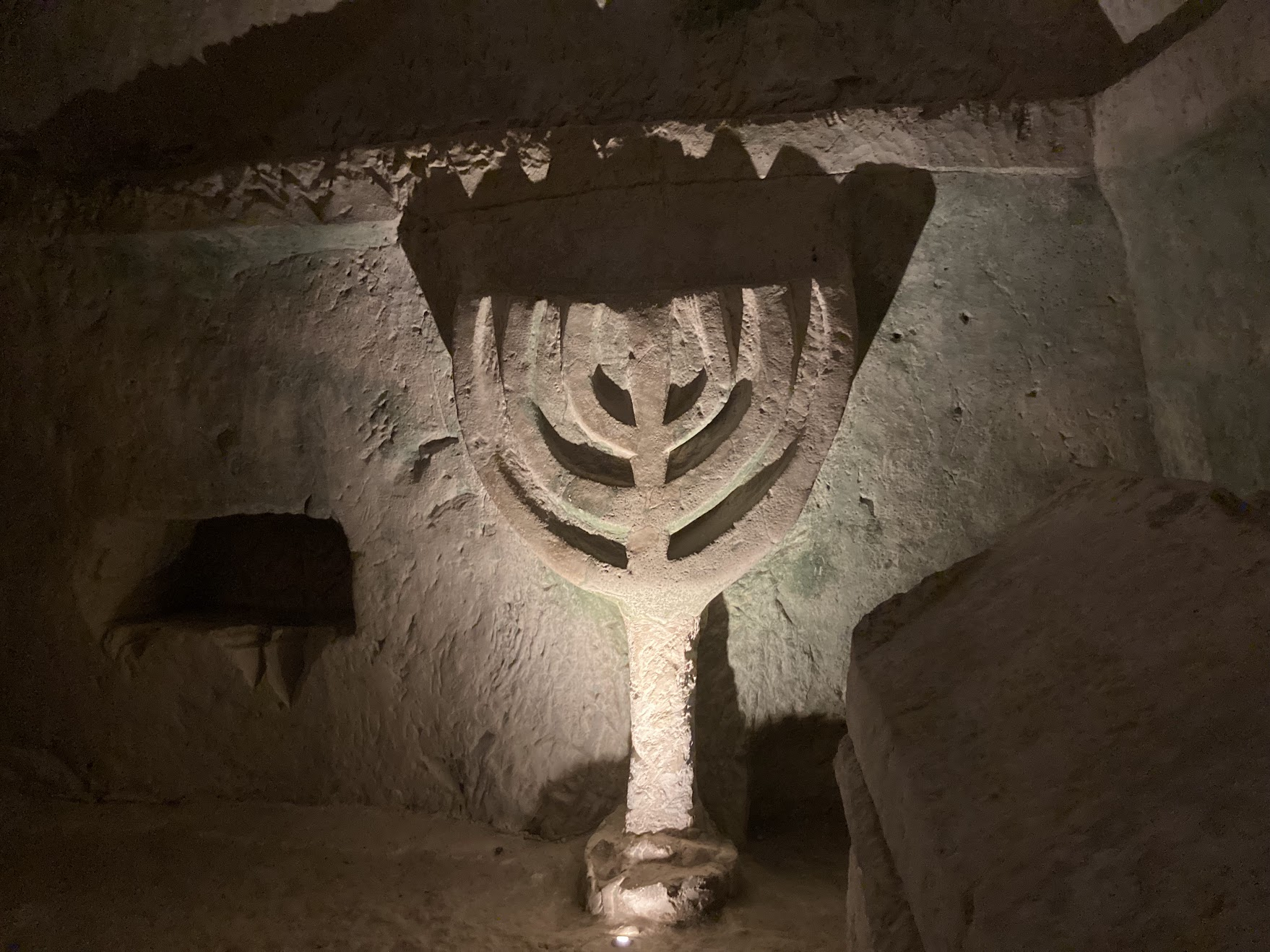
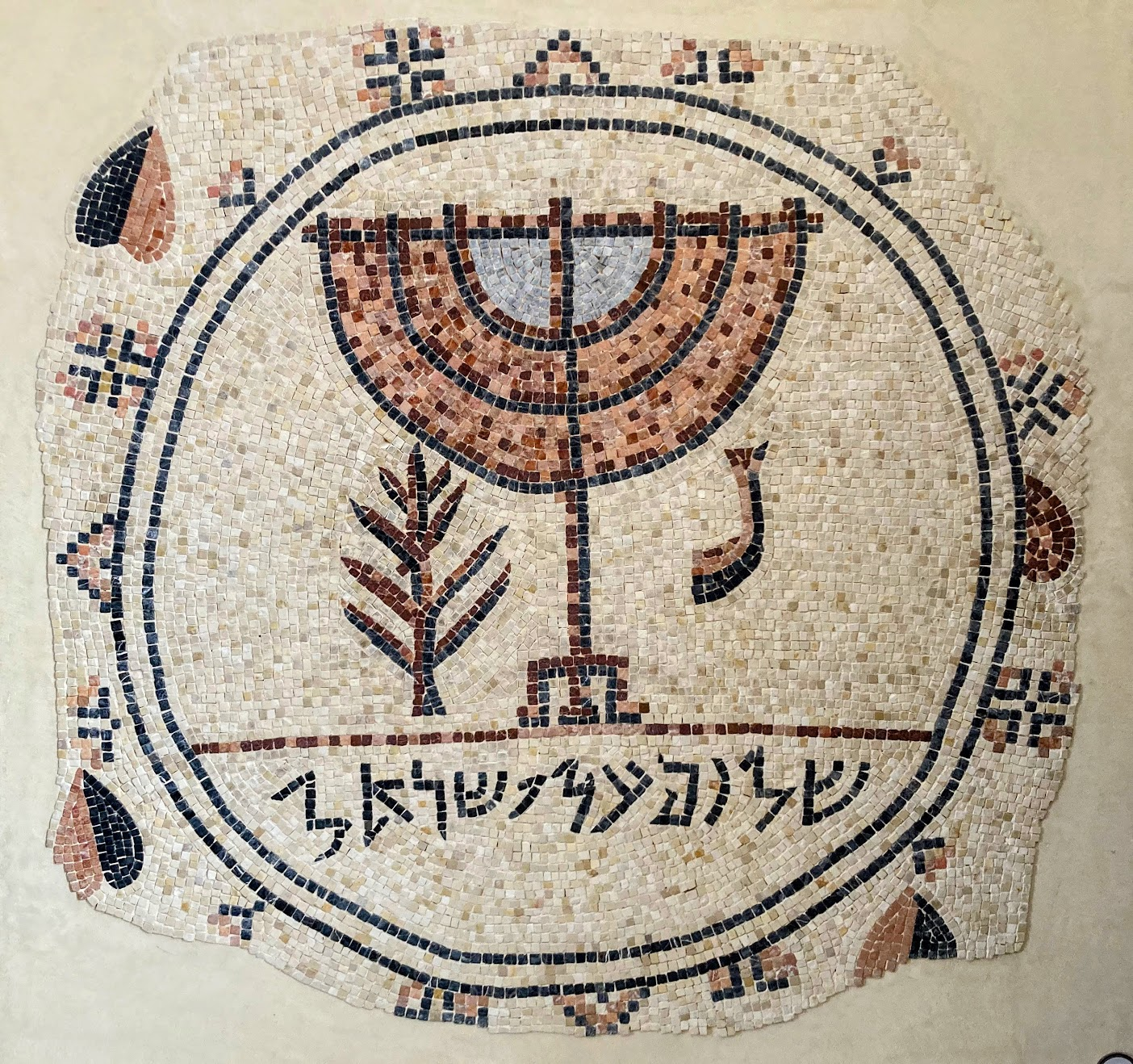
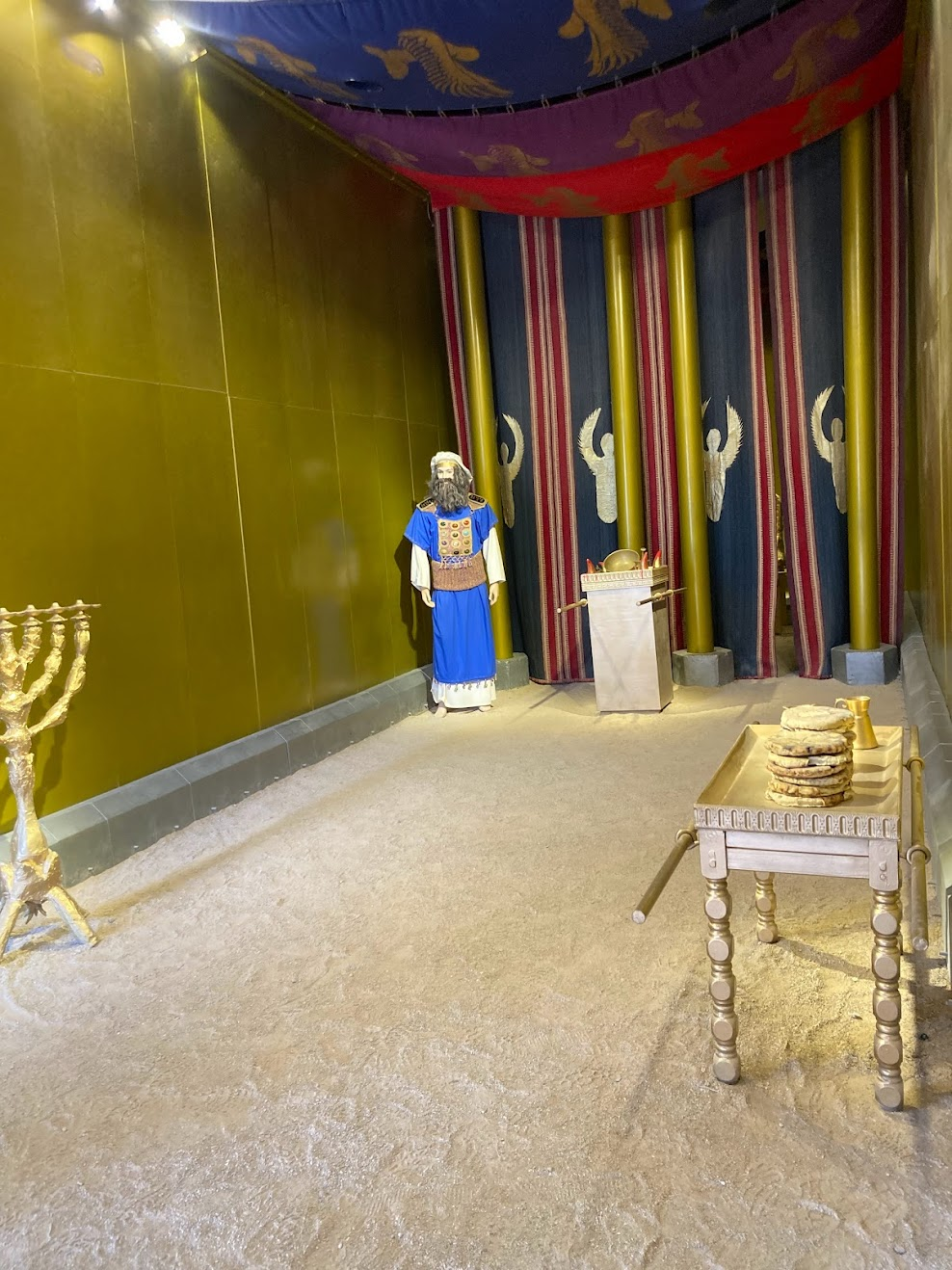
Pics: Beit She’arim; Mosaic from Beit Knesset “Shalom al Yisrael” near Jericho; a replica of the Mishkan near Timna.


 Torah & more... תורה ועוד