כִּֽי־עִמְּךָ֥ הַסְּלִיחָ֑ה לְ֝מַ֗עַן תִּוָּרֵֽא…. מחשבות ליום הכיפורים, תשפ״ו
לקראת יום הכיפורים, נשלחות מצגות ואימוג׳ים חביבים לבקשות סליחה יצירתיות ואפילו מרגשות, אבל… אני זוכרת שמישהי נגשה אלי פעם עם סוג של התנצלות על פגיעה שפגעה בי. האמת, שאני כבר שמתי את כל הסיפור בצד ושכחתי – או השכחתי אותו ממני, אבל כשאמרה, שאלה, ׳אני רק רוצה לוודא שאנחנו בסדר׳, כל מה שממש לא היה בסדר, חזר ועלה… כלומר, לא בדיוק ״סלחתי ושכחתי״ כמו שרציתי לחשוב…
אז מה זה בדיוק סליחה? זה אפשרי? אנחנו מצופים וגם יכולים למחוק משהו שכבר קרה? לגמרי??
שִׁ֥יר הַֽמַּעֲל֑וֹת מִמַּעֲמַקִּ֖ים קְרָאתִ֣יךָ ה׳, קורא משורר התהילים בשירו,
אֲדֹנָי֮ שִׁמְעָ֢ה בְק֫וֹלִ֥י תִּהְיֶ֣ינָה אׇ֭זְנֶיךָ קַשֻּׁב֑וֹת לְ֝ק֗וֹל תַּחֲנוּנָֽי
אִם־עֲוֺנ֥וֹת תִּשְׁמׇר־יָ֑הּ אֲ֝דֹנָ֗י מִ֣י יַעֲמֹֽד,
כִּֽי־עִמְּךָ֥ הַסְּלִיחָ֑ה לְ֝מַ֗עַן תִּוָּרֵֽא…
מסתבר שזה לא כל כך פשוט.
סליחה אמיתית, אומר משורר התהילים, אפשרית רק לקב״ה. בן אדם כשהוא סולח ומוחל למי שחטא כנגדו, תמיד עושה את זה בגלל עניינים נוספים. אולי החוטא התחרט, או רחם על עצמו או על מי שפגע בו, או רוצה למצוא חן בעיניו, ואם כן, סיבת הסליחה – לא תמיד, אם בכלל – נמצאת עם הסולח, אלא אולי רק עם מי שסולחים לו.
אבל הקב״ה, הסליחה איתו ובו, ״כי אי אפשר שיצוייר אל בורא ומקיים ברואיו, אם לא יהיה סולח לעולם״, כל המלבי״ם בפירושו על הפסוק הנ״ל. הסליחה של הקב״ה ביום הכיפורים מתוארת כשמים שנוקו מעננים וחזרו להיות תכולים, נקיים, כאילו מעולם לא היה בהם שום-כלום. זה דבר שאדם לא יוכל אי פעם להגיע אליו.
על פי המדרש אברהם אבינו אומר לקב”ה, ׳אם דין אתה מבקש – אין עולם, ואם עולם אתה מבקש – אין דין״. השניים לא יכולים לדור בכפיפה אחת: אם העולם ישפט רק ע״פ דין, העולם שהוא לא מושלם ועושה טעויות לא יוכל להתקיים, ואם נרצה לשמור על העולם בכל מחיר, לא נוכל שיהיה דין, אמת, צדק.
אנחנו חיים עם ערכים נפלאים – בתאוריה, כשבביצוע – יש פשרה. סליחה מוחלט אפשרית רק אצל הקב״ה ולכן נאמר במזמור, ״כי עמך הסליחה״. סליחה אמיתית מעבירה ״את העוון כאילו לא היה במציאות כלל, וזה לא יוכל האדם לעשות״, כי האדם לא יכול לברוא משהו מכלום וגם לא יכול להעלים דבר שהיה במציאות כאילו לא היה, ״ועל כן, לא נמצא בשום מקום בתנ”ך סליחה מאדם לאדם רק מה’״.
אם אין לנו באמת אפשרות לסלוח אחד לשני, אז מה כן?
מה שיש בין בני אדם, במקרה הטוב, זהו – פיוס.
פיוס הוא משהו שאפשר ללמוד מ-יוסף״, והרי רמז – יש להם יש את אותן אותיות!
האם יוסף ״סולח״ לאחים שלו? האם אפשר להגיד שהכל נמחק ביניהם כמו ענן שנעלם מהשמים?
האמת, לא ממש.
אז מה כן?
כשהם נפגשים וסופסוף מתוודעים אחד לשני, יוסף אומר לאחיו:
״וְעַתָּ֣ה אַל־תֵּעָ֣צְב֗וּ וְאַל־יִ֙חַר֙ בְּעֵ֣ינֵיכֶ֔ם כִּֽי־מְכַרְתֶּ֥ם אֹתִ֖י הֵ֑נָּה, כִּ֣י לְמִֽחְיָ֔ה שְׁלָחַ֥נִי אֱלֹהִ֖ים לִפְנֵיכֶֽם… וַיִּשְׁלָחֵ֤נִי אֱלֹהִים֙ לִפְנֵיכֶ֔ם לָשׂ֥וּם לָכֶ֛ם שְׁאֵרִ֖ית בָּאָ֑רֶץ וּלְהַחֲי֣וֹת לָכֶ֔ם לִפְלֵיטָ֖ה גְּדֹלָֽה״ (בראשית מה:ה-ז)
ושוב אחרי שיעקב נפטר, והאחים דואגים שאולי עכשיו יוסף יתנקם בהם, הוא אומר: ״וְאַתֶּ֕ם חֲשַׁבְתֶּ֥ם עָלַ֖י רָעָ֑ה, אֱלֹהִים֙ חֲשָׁבָ֣הּ לְטֹבָ֔ה, לְמַ֗עַן עֲשֹׂ֛ה כַּיּ֥וֹם הַזֶּ֖ה לְהַחֲיֹ֥ת עַם־רָֽב״ (בראשית נ,כ).
רגע, אז הוא סולח?! אז למה הוא לא אומר את זה במפורש?
אולי כי באמת סליחה מוחלטת – אי אפשר, אבל אפשר לקחת נשימה עמוקה, לזוז צעד אחורנית, לזכור שאנחנו חלק מסיפור גדול הרבה יותר, שגם אם אנחנו לא רואים בו הכל מיידית, לא אומר שהוא לא שם. נכון, אנחנו לא יכולים להזיז עננים בשמים, אבל אולי שם, ברגע הזה, יש את הדבר הכי קרוב לסליחה שיכול להיות לנו.
גמר חתימה טובה ושנה טובה
“For with You is forgiveness – that You may be revered”
As Yom Kippur approaches, we receive all kinds of notes, PowerPoints and cute emojis with creative and sometimes even moving apology messages.
But…
I remember someone once approached me with a kind of apology for something they had done that hurt me. To be honest, I had already put the whole story behind me — or maybe pushed it out of my mind.
But when she said, sort of asked: “I just want to make sure we’re okay,” — suddenly everything that wasn’t okay came rushing back… turns out I didn’t “forgive and forget as I might have tried to think…
So what exactly is forgiveness?
Is it really possible?
Are we expected — and even capable — of erasing something that already happened? Completely??
“A song of ascents. Out of the depths I call to You, O Lord.
Lord, hear my voice; let Your ears be attentive to the voice of my pleas.
If You, O God, should mark iniquities, who could stand?
For with You is forgiveness — so that You may be revered…”
(Psalm 130)
It turns out forgiveness is not so simple.
True forgiveness, says the Psalmist, is only possible for Gd.
When a human being forgives someone who has wronged them, it’s often not because of what the offender did, but because of other factors — maybe either one felt regret, or the one forgiving felt compassion, or perhaps they wanted to be on good terms with the other.
Either way, the reason for the forgiveness doesn’t necessarily come from within the forgiver — but perhaps from the person being forgiven.
But with Gd — forgiveness is with Him and in Him.
As the Malbim explains on this verse:
“It is inconceivable to imagine a Creator who sustains His creations, and yet is not eternally forgiving.”
Gd’s forgiveness on Yom Kippur is described like a sky cleared of clouds — returning to blue, clean, as if nothing was ever there.
That is something no human being can ever achieve.
According to the Midrash, Abraham says to Gd:
“If You demand strict justice, there can be no world. And if You desire a world — there can be no strict justice.”
The two cannot fully coexist:
If the world was judged only by pure justice, a world that is imperfect and prone to mistakes could not survive.
But if we wish to preserve the world at all costs, we must compromise on justice, truth, and fairness.
We live by beautiful values — in theory.
In practice, they often require compromise.
Perfect forgiveness is only possible with Gd.
That’s why the verse says:
“For with You is forgiveness.”
True forgiveness means the sin is erased — as if it never existed.
And that is something no human being can do.
We cannot create something from nothing, and likewise — we cannot make something that happened disappear from reality.
“And so,” writes the Malbim, “nowhere in the Bible does it speak of a person forgiving another — only of Gd’s forgiveness.”
So if we can’t truly forgive one another — what can we do?
What is possible, between human beings, at best — is reconciliation (piyus in Hebrew).
Reconciliation is something we can learn from Yosef — and fittingly, the Hebrew word “piyus” shares the same letters as “Yosef” (פ,י,ו,ס)!
Does Yosef “forgive” his brothers?
Can we really say that everything between them was erased — like a cloud that simply vanished from the sky?
Not really.
So what can be done?
When they finally reunite and reveal themselves to each other, Yosef says to his brothers:
“And now, do not be distressed, and do not be angry with yourselves for selling me here;
for it was to save life that Gd sent me ahead of you…
Gd sent me before you to make for you a remnant in the land, and to keep you alive for a great deliverance.”
(Genesis 45:5–7)
And again, after Jacob dies and the brothers are afraid Yosef will take revenge, he tells them:
“You intended to harm me, but Gd intended it for good,
to bring about this present result — to preserve the lives of many people.”
(Genesis 50:20)
So… does he forgive them?
Then why doesn’t he say it explicitly?
Maybe because full, absolute forgiveness isn’t possible.
But we can take a deep breath, take a step back, and remember that we are part of a larger story.
Even if we don’t see it all clearly yet (or at all)— that doesn’t mean it’s not there.
True, we can’t move clouds in the sky, but maybe, at that moment — that’s the closest we can ever get to forgiveness.
Gmar Chatima Tova & Shana Tova.
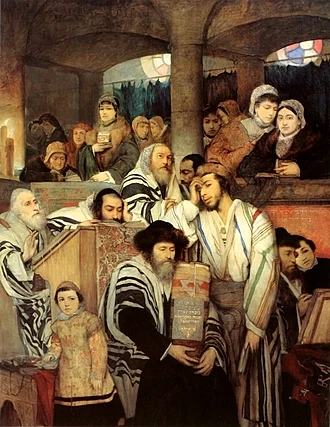
by Maurycy Gottlieb (from Wikipedia)


 Torah & more... תורה ועוד
אני קוראת את זה במוצא יום כיפור, כשהתפילות עדיין מתנגנות לי בראש.
אף פעם לא חשבתי על המשמעות הזאת של “כי עמך הסליחה”. אבל אני מסכימה – לפעמים קשה לסלוח, עוד יותר קשה לשכוח.
כן, בדיוק. תודה!