Closing the 3rd Book; Celebrating the One City…

After the dramatic closing of the Book of Leviticus with “The Blessings and the Curses / Consequences”, there’s another chapter we rarely get to; a little appendix, as if the Torah says, oh wait, I have a few notes left here, let’s just put them where no one will see it…

If Genesis and Exodus were books describing G-d acting in the world, Leviticus spells out for us what to do. The first books are a pouring from on high – down, and this one – from down – up. At the very end we look at a person’s value. This is done vis-à-vis what happens is a person takes a vow and needs to redeem themselves at the Temple. This might seem sacrilegious: how can we speak of people’s value when people are created in G-d’s image? When we teach that people are created equally?? Isn’t each of us irreplaceable and therefore, impossible to estimate? How dare the Torah do that?!!

And yet, insurance companies, for example, must deal with this all the time: when paying for certain damages, how much is this or that human being “worth”? Why? How do we figure it out? I might not love or understand all the Torah has to say about this – I don’t know much about “vows” and “Temple calculations”, one reason why we have a whole Talmudic tractate on the issue called Arakhin and coming up in Daf Yomi later in June – but I love that it does dare to speak about it, and offer us two simultaneous scales: each person is equal: “If it is a male from twenty to sixty years of age, the “equivalent is fifty shekels of silver by the sanctuary weight” (Leviticus 27:3). What kind of a man? Wise? Kind? Strong? None of the above? Doesn’t matter. And at the same time, weather this is a free man or slave, might matter. Namely, not the human being but our role within the society.

There are many challenges in this chapter and the tractate, and laws following. I am not saying the scale is perfect or user friendly nowadays. For one, it applies to vows and Temple. But the idea that our worth is made of both who we are as single, unique, individuals, made in G-d’s image being while at the same time, influenced by the world we live in, does resonate. This is maybe the reminder at the end of a book filled with laws: You are one and only; you are an integral part of the whole and the whole does need to be considered. Which way is it? You got it: yes.

** ** ** ** ** ** **

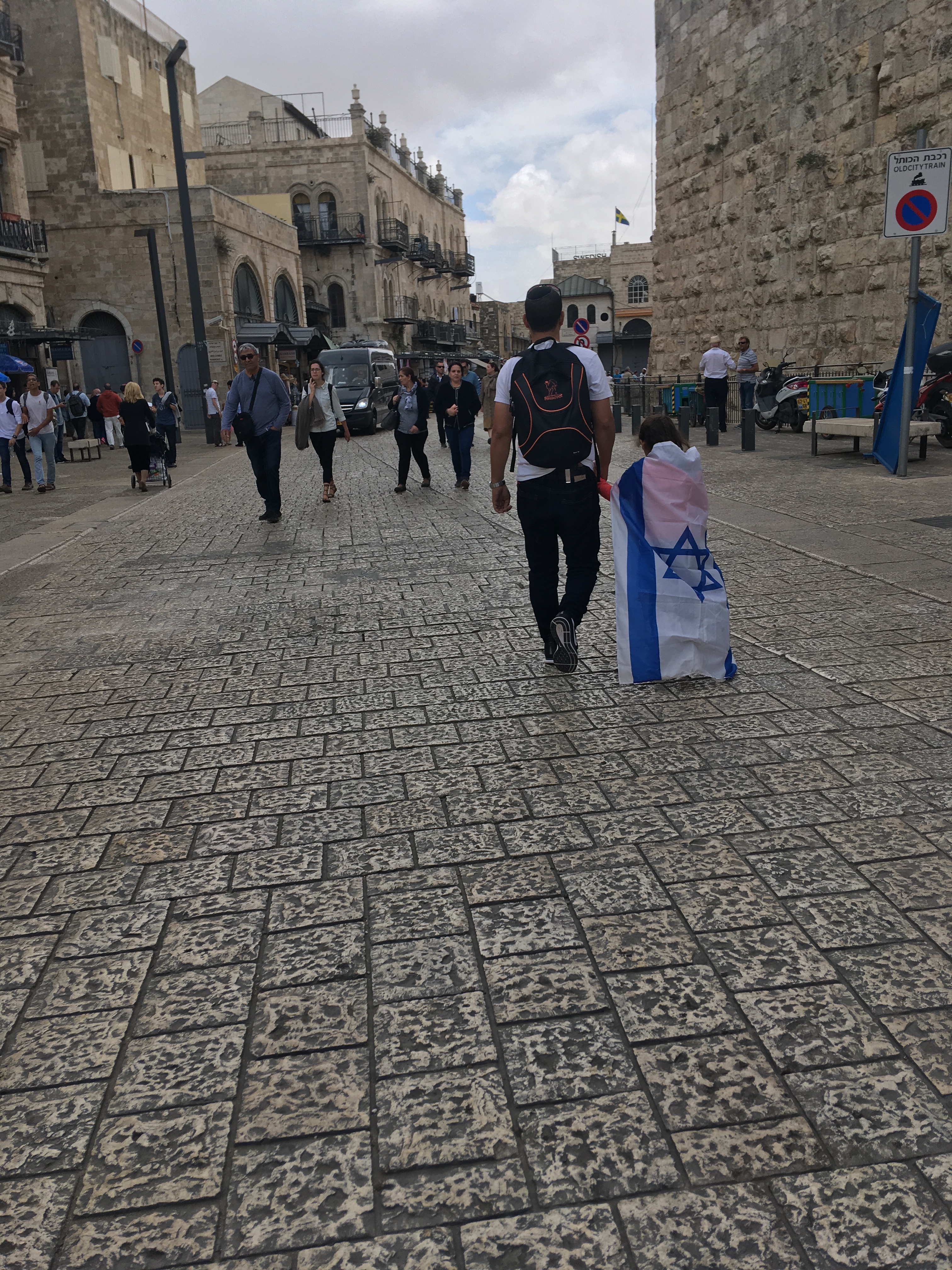
This Sunday, the 28th of Iyar, is Yom Yerushalayim, Jerusalem Day, a day commemorating the reunification of the city in 1967. The midrash tells us that many, many years ago, Shem, the son of Noah suggested that this clear-mountain air city would be called Shalem, wholeness, perfection; while Abraham suggested that this site, chosen by G-d, should have be knowsn as Yir’a, reverence, awe.
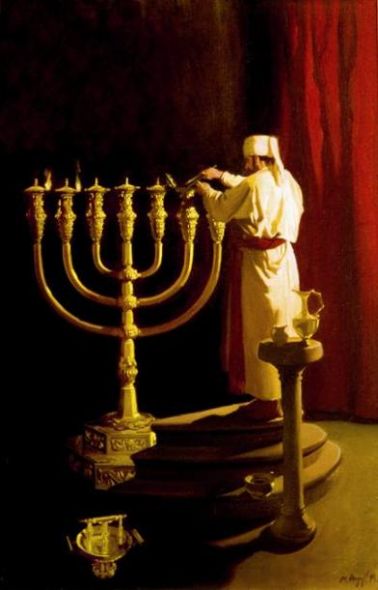
G-d, who listened to both decided to combine both names into one, and call the city Yeru-shalem, but then Shem came back all sad: “not enough you put me second, Abraham’s name is longer: mine is 3 letters and his is 4”. G-d decided to rearrange things slightly, making from yir’a – yir’u (which combined the alef and heh into a vav, maintaining their numerical values), so Shem wont be upset. But after he left, G-d decided to add another letter, the letter yod for His name, maybe so we remember our priorities, and so that Yerushalayim will have 7 letters (in Hebrew) like the 7 days of the week, the 7 branches of the menorah, and many more sevens of perfection.
Just this morning, there was a stabbing attack in the city, that struggles to hold holiness and perfection along with the utmost mundane and pained life, of screams and sirens, noisy bulldozers and cranes and buses and light-train and traffic jams and taxi drivers honking through narrow streets; merchants yelling in the open markets where people rush between bins of fresh vegetables, sweet fruits, and colorful spices, avoiding the tahini sauce smeared on the sidewalk; kids running around. And soldiers. And people: religious, secular, Arabs, Jews, tourists, foreigners, locals; countless languages and accents. Talking about peace, perfection and reverence seems absolutely delusional. And yet, a gateway is naturally a place full of hustle and bustle. A place that connects heaven and earth can’t be all heavenly; it must be both. This possibility, now more alive than maybe ever, is what we celebrate.

Shabbat Shalom & a peaceful, joyful Yom Yerushalayim.

Posted in Uncategorized | Leave a comment

Fire in the Land and a day for memory away – Weekend of Shabbat Be’har

I’m watching the news about the recent, some still going on, fires in Israel with a strange mixture of anger and pain. Images from past fires, that of recent November in NorCal; Haifa of December 2010 and November 2016 come to mind. At first, I am angry at “us”. After all, if there are fires on the heels of Lag Ba’omer, a day notorious for hazards following elaborate bonfires at night, and especially when the temperatures are in the 100F and it’s super dry, it must be carelessness, it must be stupidity, it must be… it must be “us” “not doing enough”. Then initial investigation notes that those are not started by a random, unattended “kumtzitz” left to smolder, but rather by arson. And then… of course, it’s ok to be angry at ourselves but not quite as p.c. to be angry with anyone else. What to do? what to feel??

In tractate Bava Batra (117:a) of the Babylonian Talmud we learn: משונה נחלה זו מכל נחלות שבעולם – This Inheritance – i.e. this Land – is unlike any other in the world. How can anyone say it, especially some 1800 years ago? Have they traveled all over the world and checked it out? Did their “compare and contrast”??
The Torah reading of this week takes it further, with the commandment of shmita, the “sabbatical”. The Land, we’re told, has its own Shabbat. Just like us. The land is a living thing, not just something we act on, but something that responds in its own way. She “eats” (Numbers 13:32) and can choose to “throw up” (Leviticus 18:25); a land that responds to a loving hand and reject those who mistreat her, exhaust her and manipulate her to their own hearts content.
I have this idea that it’s possible to look at (at least) the first three Books of the Torah as a spiral rather than just a linear story. Things (motifs, verbs, themes…) happen in a parallel fashion, expanding on each other and not just a long continuance story (that too, but not just-).

I can’t help but notice that each book has a central, somewhat magical, godly, divine place of its own: in Genesis, it’s the Garden of Eden; in Exodus – it’s the mishkan (tabernacle) and in Leviticus –the Land of Israel. Under the “spiral theory”, each adds meaning as well as observance to that of previous one presented: Genesis is about individuals, Exodus – about Peoplehood, and Leviticus – about the practical implications of the earlier ideals in the form of mitzvot. This pattern repeats in more than one aspect.

Specifically here, as far as a “The Place”, in Genesis, we had a Garden, a heaven for just two people and G-d; in Exodus – the building of the mishkan – a place for the whole nation to connect directly with G-d who lives amongst us; and in Leviticus, we have the Land, a national home and source of “light unto the nations”, to inspire, not only our own individual and communal selves’ growth and well-being, but the whole world, in ways that are beyond what we understand.

The fires are extremely painful, and the smoke might cover our eyes and burn our lungs, but homes will be rebuilt and trees will be planted, those that were destroyed and more.

* * * * * * *

This Monday is Memorial Day, a fun, long, sunny, pleasant weekend of shopping, bbq’s, parks and travels. A Few years ago, back in CA, I got into a conversation with a community member, when I did my proud Israeli thing and invited him to Yom Hazikaron ceremony. He said, ‘will you also come to Memorial Day’? I said, ‘what’ in surprise, and thought (a little haughtily I must admit), ‘what, there’s a sale somewhere I shouldn’t miss?’ but he (patiently, I must add) directed me to the service at the Jewish cemetery, honoring fallen US soldiers, and I stood there, in awe and tears. And ever since, my Memorial Day changed. I still hope for a fun, long, sunny weekend with all its trimmings; no, it’s not at all Yom Hazikaron, and yet, somewhere along the day, it’s nice to pause.

Shabbat Shalom


Posted in Uncategorized | Leave a comment

The holiday not on the list: Parashat Emor

This year, 8th day of Pesach was on Shabbat. On that day, Israel went back to the regular weekly Torah reading, while outside of Israel, we remained with the holiday one more day, and since – one Torah portion behind. That’s how it’s going until the week of August 2!! Every week, in this season of celebrating redemptions, past and present, I get “Torah words” for two different Torah readings, mirroring two different worlds we live in. Ina  For this, and other reasons, I opt to write about a holiday coming up next week.

A holiday?? Yes, a Torah holiday; a Torah holiday which doesn’t appear in this week’s (chutz la’aretz) parasha of Emor (Leviticus 21:!-24:23) and the only Torah holiday during the month of Iyar.

Pesach Sheni – literally 2nd Passover – addresses people who missed the 1st Pesach. When it was time to bring the Pascal offering, they were unavailable, either because they were “ritually impure through contact with a dead body, or away on a distant journey” (Numbers 9:1-12). This situation has never come up before, so it is not obvious for Moses what to do. In response to their query, he asks G-d who tells him that these people can prepare the same offering a month later, on the next full moon, the 14th of Iyar, this year coming up this Sunday, May 19.

If you google it, you’ll find some lovely commentaries how the day has come to symbolize how there are always “second chances” and a “power to go back in time and redefine the past”…
Lovely. Except that for me, Pesach Sheni happens to be my father’s yahrzeit (the anniversary of his death). And there is nothing like a yahrzeit to remind us that try as we might, there is not “always” a second chance, nor a way to rectify and redefine the past. In fact, the whole teaching seems to highlight exactly the opposite! If there was “always” a second chance, then 1. there would not have been a need to ask Moses about it; 2. there would not have been a need for him to check with G-d Almighty before replying; and 3. We would have had already a Yom Kippur Sheni, Sukkot Sheni, Hanukkah Sheni etc etc.

But…. we don’t.

So the fact is that the people asking and Moses himself, knew very well, as I am painfully reminded each year, that second chances are super rare and hard to come by; that while we pray and hope, beg and bargain for them, rather than an “always”, they are usually not readily available and extremely unlikely; that life should be lived while we can rather than by relying on an “always tomorrow”.

More than anything: by focusing on the “p.c.” message of “second chances” as the core value of this day, we completely miss what it is, what is its place in our tradition, and what does it teach us about our own time!

So what it is? for that, please join me at Beth Jacob Congregation in Oakland, CA this Shabbat 😊

Shabbat Shalom.


Posted in Uncategorized | 2 Comments

On the Juxtaposition of Zikaron & Atzma’ut

Translate Yom Hazikaron to English and you get “Memorial Day”: end of spring to summer weather; BBQ’s with beer and wine; a long awaited weekend chill getaway; flowery summer dresses on sale.

Maybe it’s no wonder then that it’s almost impossible to explain this day: Traffic jams at the entrance of cemeteries; sadly familiar heart-breaking music; framed photos and stories of endless love cut short; a candle; grey-haired men crying.

For many in Israel, this day is more serious and holy than Yom Kippur, more soul-searching, thought-provoking, touching, and therefore, much more observed. You might see people biking on Yom Kippur through the empty streets or enjoying a fall day on the beach, claiming that “that’s how they connect to G-d”, but you’re likely to see far fewer, if any, doing so during the memorial siren of Yom Hazikaron. This is a reflection of the new phase of ge’ula גאולה – this time of redemption: it creates its own commemorative day as well as joyful holy-days, which initially are incredibly personal. And perhaps that too makes it ever so hard to communicate.

*******

And then the sun sets and the day is over, and just like this – it’s all gone: the white button-down collar shirt with the memorial sticker, gives way to a fashionable statement; loud speakers in the streets, noisy music, parties, and yes, BBQ’s too. We run from the cemeteries to the dance floors, hold hands, wave flags and cheer. And one wonders, must we?? How about doing it like in the U.S for example, Memorial Day more than a month away from Independence Day – with time to switch moods as needed ?

And yet, we are a People of juxtapositions, of contradictions, able to hold this and that simultaneously, not as a default but as an ideal, knowing that if we let go of one, they’ll both lose their meaning.

We are therefore deeply rooted in a rich past, still mourning a long ago and far away Temple destroyed almost 2000 years ago, and at the same time, equally committed to an even better future, leading the way in creativity and innovation;

We focus our attention and pray for peace in one tiny place 6000 miles away, while we live everywhere around the globe;

We raise our glass with a cheerful Lechayim, not for one minute letting go of what it takes for us to be here, to say that Lechayim

We are people of Juxtapositions.

Last week, we read from the Torah portion of אחרי מות – Acharei Mot, literally meaning – “after the death of”; this week, it’s קדושים Kedoshim, “holy ones”; and the week after, we’ll read אמור “Emor”, say. If we put it all in one sentence, we’ll get – אחרי מות קדושים אמור – “After the death of the holy ones, say”… But wait, Acharei Mot refers to the death of Aaron’s sons, and after their death he was silent! So, should we be silent or say something?? The answer of course is, yes. Let us have our day of silence, sadness and tears today. We’ll be back to doing tomorrow.

(Previous articles on this day here can be found by searching “Yom Hazikaron”)


Posted in Uncategorized | 2 Comments

“From Victims to Victors”: a moving Yom Hasho’a visit

Yom HaSho’a in NYC: subways and traffic jams; people rushing, jogging, zigzagging to their errands, their work, their home; pretty stores flash their goods; passersby and store-keepers half nod a hi, welcome, have a nice day, and as if on automatic pilot, I nod back. The only sirens – a lone ambulance or police car, here and gone. I walk in the streets mindlessly, the mixed-up undecided weather – cloudy, sunny, drizzly all at once – reflecting my feelings.

Having grown up in a country which on this day stands still, flag lowered, radio music switched in all channels, ceremonies everywhere, the voice of the new reporter solemn, the day is etched in my soul. What to do with it here? How to hold it? For years, I’ve organized, wrote, announced, spoke, sought speakers, arranged the music, practiced with the children, made sure others came…. This year I pause to look what’s around. There are several respectful gatherings, ceremonies, stories by survivors and their offspring; there are photos and movies, names and violin music; The “Bayit” in Riverdale puts together an admirable and should be duplicated Yom HaSho’a seder, predicated on the Pesach Haggadah and initiated by Rav Avi Weiss. But all in all, one must seek these things out; they can be easily missed.

I thought it was a struggle to deal with the Holocaust in Israel – the silence of the survivors and those around them, the “diagnosis” of the 2nd and now 3rd generations, the burden, the guilt, the pain, the joy of making it through, the faith and its loss, the silence (did I mention it?), the loud sound of quiet, of those of won’t speak, those who won’t ask and hear… and yet, slowly, I realize the complexities of dealing with the Holocaust and its “Day” from abroad. I wonder, how close do we actually dare get, living in a “land not ours”?

Perhaps this is why I am especially appreciative that my yeshiva organizes a visit to the home of Ted Comet. Ted, a native of Cleveland, Ohio and a graduate of Yeshiva University, has been a key player in Jewish communal affairs since the end of World War II, working to meet the needs of Israel and world Jewry. In his career he held several major positions including, to name a few (hold your breath-) Associate Executive Vice President of JDC, Executive Vice President of the World Council of Jewish Communal Service, longtime Assistant Director of the Council of Jewish Federations and the National Director of the American Zionist Youth Foundation, as well as founder/chairman of the Israel Parade on 5th Avenue and producer Israel folk dance festivals (!) at Carnegie Hall and the World’s Fair.

But our visit’s focus is his wife’s art work, a survivor who chose to deal with her trauma first through weaving, and then through helping others in deep, meaningful psychotherapy. We stand in awe in front of the impressive tapestry, thinking and feeling  the pain, not only of those who perished, the immense, immeasurable loss for the Jewish people which we haven’t yet recovered, but of the pain of the living and the struggle we all share, in her words, “to turn the victims to victors”.

We often hear the words, “never again”, then watch in honor the recent shootings in Pittsburgh and outside of San Diego; the swastikas on walls, the marches in Germany, the yelling elsewhere, and we wonder, didn’t we just say, “never again”?? Do these words even mean anything??

For some reason, I am reminded of another Yom HaSho’a long ago and far away: while the ceremony was going on inside, outside a demonstration ensued. When I approached their leader, he barked at me, ‘You Jews, always whining about your people and what the Nazis did to you, he said mockingly, what about everyone else who suffered’? I told him that I agree with him; that I’m really sorry for his and everyone’s else pain, and that I wish the whole world would stop, if only for one day, to remember and cry together. I don’t know if my words had any impact or they just got tired or their permit expired, but before too long, they were gone.

The Torah readings around this day are usually from Leviticus 16-20 – Acharei Mot (this Shabbat, outside of Israel; and) Kedoshim (in Israel), jointly translated as – ‘after the death of – the holy ones’… what can we do “after the death of the holy ones”? At the end of the day, we have little control over what others do and what is done to us by others, but we can “never again” ourselves: “never again” will we forget; “never again” will we doubt our own family’s stories; “never again” will we respond with silence when speech and action is appropriate, with carelessness when a helping hand is called for; “never again” will we address victors as victims. There is still so much internal healing to do.

I left Ted’s home thinking, maybe I’ll buy a loom… maybe just start there and see where it goes.

Shabbat Shalom.

Ted Comet, and his wife’s Shoshana z”l, healing weaving

Posted in Uncategorized | Leave a comment

Closing Pesach with a Song

The Hebrew word “aviv”, spring, sounds almost the same as “be’ahava”, with love, and is identical in its gymatria. Just a coincidence?
We might never know. It’s up to us to choose what we want to see. That too, is what Pesach is all about, and that too, is love.
Among the Five Megillot (scrolls) in the TaNaCh, Shir Hashirim – Song of Songs – is the one we read on this holiday. It was Rabbi Akiva who famously insisted: “the whole world is only worthy as the day the Song of Songs was given to the People of Israel; for while all the writings are holy, the Song of Songs is – kodesh kodashim – holy of hollies” (Mishna Yadayim, 3:5). What is “holy of hollies”? According to Rav Sherki, we have 3 categories: chol, daily or mundane, kodesh – holy, and kodesh-kodashim – holy of hollies. That is the place where the mundane and holy touch, like in the inner most chamber of the Temple, and like in the Song of Songs.
Shir Hashirim is passionate, poetic, and full of colorful imagery (a belly like a “heap of wheat”?), but perhaps what is most striking are the intense details. There is no “he’s a good guy”; “she’s a nice person”. No generalizations, but a great attention to every little minutia. The beloved know each others’ every move, every wrinkle, the way he smiles, the way she listens. They can see each other clearly, even from miles apart. They hear each other without words.
Love makes it so everything matters. Small things are suddenly a big deal that can make or break a whole day. One kind gesture; one silly word. Everything is magnified; everything is critical; everything has significance.
This is what we do just before Pesach too. Remember how we looked for every little spec of chametz, every crumb? It all had to be burned, for between lovers there is no room for even the littlest thing; nothing separates them.
And then comes Pesach eve, and we celebrate that G-d “passed-over” our homes; that we were taken to freedom and liberation; that we were given another chance.
Through what great merit did we deserve this? Have we done anything grand?
Our sages tell us that there are 50 gates of “tum’a” טומאה, “spiritual impurity” and distance, and that we made it to gate 49. But nevertheless, G-d “passed-over” our mishaps and saw our “potential”, our ”light” and the “big picture”.
And that too, is love.
Rashi says that the word “u-fasachti” ופסחתי “and I will pass-over”, means “vechamalti” – וחמלתי “and I have shown compassion”. There is great compassion – and love – in, at times, being able to not see every detail, in skipping over.
Indeed, the Pesach prep has to be scrupulous. Such is winter: we count rain days, precipitation, temperatures, clothing, supplies. But then spring comes, and that’s all gone. The windows are open; heater is off, and we are joyful to see just the smallest blossom. There is no way to “measure” that. We say thank you not because the tiny flower is physically greater than however many months of darkness and cold we had, but because it’s here; because it exists; because it reminds us there is hope. Our joy and appreciation “skip over” all the previous – cold, dark, slushy – days.
The Song of Songs introduces a loving form of “passing over”, expressed in the lover’s voice rushing to the beloved, leaping and skipping over any obstacles:
קול דודי הנה זה בא, מדלג על ההרים, מקפץ על הגבעות
Behold! my beloved! behold, he comes, leaping upon the mountains, hopping upon the hills.. (2:8)
It seems like love is both about paying close attention to details, and about skipping over; about daily tedious hard work, and about dancing for joy and not seeing every little mess as a big obstacle to joy. The art and challenge is when to apply which. Perhaps figuring that out is also at the heart of the journey from slavery to freedom.

Chag (Hug) Same’ach & Shabbat Shalom!

Posted in Uncategorized | 1 Comment

The Metzora and Pesach ? – on an unlikely connection

It would seem to make sense to read, during these Shabbatot, from the 4-5 first Torah portions in the Book of Exodus, but instead, we’re reading from some of the most intimate and obscure Torah portions: in the heart of Leviticus, the heart of the Torah, we find the metzora, erroneously often translated as one who is afflicted with leprosy.

We don’t exactly know what is the metzora. In a long discussion, the midrash (Vayikra Raba 16:2) explains:

משֶׁה מַזְהִיר אֶת יִשְׂרָאֵל וְאוֹמֵר לָהֶם: זֹאת תִּהְיֶה תּוֹרַת הַמְצֹרָע, תּוֹרַת הַמּוֹצִיא שֵׁם רָע

Moses warns the Children of Israel and tells them that the metzora is a “motzi shem ra”, someone who speaks badly about another.

The Biblical metzora has skin afflictions. This week’s Torah portion describes those in details, each depicting a different moral and spiritual fall, which gets progressively worse: first the person is called “Adam”, a whole human being, who has a spot in the skin. Then, the spot becomes the subject and the human being is secondary. Then, there is a “man or a woman”; and then, only a man, who has lost his ability to be in a relationship, and finally – a garment, a covering of the human being. It seems that the way the person interacts with the environment, is disharmonic with G-d’s will and the world.

Is there a way this can be related to Pesach, or might we end up with the impression that the Torah portions and the holidays are 2 totally unrelated, distinct cycles??

If we think about the mitzvot of the seder night, a quick glance will reveal that they all have to do with eating (matza, karpas, maror, charoset etc) and speaking (telling the story, singing hallel etc). Indeed, someone without a mouth, cannot celebrate Pesach. Further: the word Pesach can be separated into two words: peh & sach, meaning “a talking mouth”!

When the first human being was created, G-d breathed air into him and turned him into a nefesh chaya, which literally means “living soul”, but the ancient Aramaic translation describes as a “speaking soul”. The ability to speak is what made the first human that unique creature made in G-d’s image. That ability is what connects us to other humans and to the Divine, and it is therefore challenged all the time.

If so, it is perhaps no wonder that at this season of spring and new beginnings, the Torah reminds us of the power of speech and the ways it can be repaired, while during this season’s holiday, we’re asked to use our mouth, the limb that made us humans, for goodness: to enjoy, taste, bless, sing, educate and share in the joys of being truly free.

Shabbat Shalom, and soon, Chag Pesach Same’ach!

My mom’s childhood Hagada, Germany 1936

Posted in Uncategorized | Leave a comment

Beginnings and ends – Shabbat Tazria, Hachodesh & Rosh Hodesh Nisan

רַבִּי שִׁמְעוֹן אוֹמֵר, הַמְהַלֵּךְ בַּדֶּרֶךְ וְשׁוֹנֶה, וּמַפְסִיק מִמִּשְׁנָתוֹ וְאוֹמֵר, מַה נָּאֶה אִילָן זֶה וּמַה נָּאֶה נִיר זֶה, מַעֲלֶה עָלָיו הַכָּתוּב כְּאִלּוּ מִתְחַיֵּב בְּנַפְשׁוֹ:

Rabbi Shimon says: He who is walking on the way and repeating his studies, and interrupts his studies and says, “How lovely is this tree! And how lovely is this newly plowed field!” – Scripture considers him as if he is liable for [forfeiture of] his life (Pirkei Avot 3:7)

What is the emphasize in this teaching? Is it indeed that one who looks at a tree, we “considers him as if he is liable for his life”? what’s are we not allowed to look at trees? to enjoy nature? To say, wow, this is amazing?

Or perhaps it’s about the word “interrupts” meaning: “He who is walking on the way and repeating his studies, and interrupts his studies to see a tree…” he who sees no continuity between his (or her) learning and environment, his studies and nature around him, the kind of person for whom education is a theoretical aspect and not an integral part of life; who lives a split life between what’s in the books and what’s outside, is in danger.

This is especially true during the month of Nisan when we’re asked to go outside and look for a blooming tree to say the blessing:

“ברוך שלא חיסר בעולמו כלום, וברא בו בריות טובות, ואילנות טובות, להתנאות בהן בני אדם” – Blessed in the One who made the world lack nothing, and who created in it good creatures and good trees for people to enjoy.

Our relationships with trees go “way back”: The first tree was planted by G-d in the Garden. Later, we’re told that people are like trees of the field. Trees were used to build life-saving devices, like Noah’s ark, and to constantly give us life as food and shelter. This month let’s find a tree to appreciate, to learn from and with.

* * * * * * *

A woman brings two sacrifices after childbirth, an olah and a chatat. Why? Our tradition understands pregnancy as partnership with the Divine in creation. It is a way to literally – very physically, emotionally, spiritually – touch the future, with childbirth being a farewell to that process. Suddenly, the “future” is forced outside of her, leaving her behind. This brings tremendous feelings, both happy and sad, some of which repeat again when, years later, the “future” leaves home altogether. The Torah, in its wisdom, makes space to acknowledge this complex process davka for the woman, to celebrate and mourn the nuances of renewal’s joy and sadness, davka at this season.

*  * * * * * *

My cousin would not be happy with me connecting his life – or death – to anything remotely religious. All this “nonsense”, that was my department. And yet, last Shabbat, when Aaron’s sons, Nadav & Avihu, were swallowed in a strange, heavenly fire, and he too was laid to rest after battling with cancer, I couldn’t help think of the fire within him, always curious, interested, passionate, taking things apart and rebuilding them, figuring out how things work, why they don’t; loving life and wanting to do more.

In a way, cousins are like extended siblings. So it was for Nadav and Avihu who were carried out in their shirts by their uncle’s children. I, on the other hand, just sat here, 6000 miles away, stunned, silenced, looking at words on a screen, unable to do anything at all. His cancer left little room for surprises, so I was “lucky to visit before”, and yet, so much was left, and so much will be missed. May his memory be for a blessing.

Shabbat Shalom & Hodesh Tov.

Yehonatan Felix Ron – 1956-2019

Posted in Uncategorized | 1 Comment

To Remember & Forget

via To Remember & Forget

Posted in Uncategorized | 2 Comments

Spinning the goats – the Torah portion of Vayakhel

Not enough we spent two whole Torah portions talking about every details of how we will build the Tabernacle, now we start all over again to talk about how we are building it. Why the repetition?? What’s the big deal? Our People built a lovely worship-tent! Great. Can we move on now??

But we can’t.

First, I would argue that this is no doubt one of the greatest miracles in the Bible, if not ever. I know, what about the Sea splitting? The Bush burning? The Plagues, the Exodus? But that’s exactly it: everything that is done by G-d can’t quite be considered a miracle, because G-d by definition can do anything. As for us…

Imagine: we’re invited to bring whatever we have, whatever we feel like giving – gold, silver, beautiful cloth, wood. And we do. Generously. And, not only do we follow precise directions, but when we put it all together, it makes exactly this amazing prescribed structure. Nothing is missing and there’s no leftovers. How is that possible?? Yes, a miracle.

What’s more, it seems that this project was not planned initially at all – we were supposed to just leave Egypt and go to the Land! I can relate to such delays and changes in the original plan… Indeed, especially after the painful episode of the Golden Calf, much healing is needed.

Further: our reading does not open with the almost usual we might expect: ‘And G-d spoke to Moses, saying, gather the people’… but with Moses “gathering” the People. Who told him to do so? Who told them to come? But the whole Israelite community assembled (Exodus 35:1) we they will all jointly create a space for G-d in their midst. Thus, the Book which began in slavery, ends in “free collaboration”, working together willingly.

In the long list of those actively working on the mishkan, we find this (Exodus 35:26):

וְכָל־הַ֨נָּשִׁ֔ים אֲשֶׁ֨ר נָשָׂ֥א לִבָּ֛ן אֹתָ֖נָה בְּחָכְמָ֑ה טָו֖וּ אֶת־הָעִזִּֽים׃

And all the women whose heart lifted them in wisdom, spun the goats.

Wait, what? Didn’t you forget a word at the end? Shouldn’t’ it be “goat’s hair”?? Maybe. But the Hebrew doesn’t say that. It says that the women – spun – the goats. Rashi explains based on the Talmud that “spun the goats” required extraordinary skill, for they spun the goat’s hair from off the backs of the goats, whist it was still on the living animals.

Here it is from the Talmud itself:

תנו רבנן: יריעות התחתונות של תכלת ושל ארגמן ושל תולעת שני ושל שש, ועליונות של מעשה עזים, וגדולה חכמה שנאמרה בעליונות יותר ממה שנאמרה בתחתונות, דאילו בתחתונות כתיב וכל אשה חכמת לב בידיה טוו ואילו בעליונות כתיב וכל הנשים אשר נשא לבן אתנה בחכמה טוו את העזים, ותניא משום רבי נחמיה שטוף בעזים וטווי מן העזים: (שבת צ״ט א:ב׳

Our Sages taught: The bottom curtains in the Tabernacle were made of sky blue wool, and of purple wool, and of scarlet wool, and of fine linen; and the top curtains were made of goat hair, even though that material is considered to be inferior and common. However, the wisdom that was stated with regard to the top curtains was greater than that which was stated with regard to the bottom ones. This is because, with regard to the bottom curtains, it is written: “And every wise-hearted woman spun with her hands, and they brought that which they had spun, the blue, and the purple, the scarlet, and the linen” (Exodus 35:25); while with regard to the top curtains, it is written: “And all of the women whose hearts inspired them with wisdom spun the goats” (Exodus 35:26).

The phrase “whose hearts inspired them” suggests a greater degree of wisdom. Apparently, spinning the goat’s hair curtains required greater skill than spinning the various kinds of wool. And on a similar note, it was taught in a baraita in the name of Rabbi Neḥemya: The hair was rinsed on the goats, and it was even spun from the goats, which required a great deal of skill ((Shabbat 99a).

So the women sit there, weaving heaven and earth to complete the mishkan; the colors of heaven – are closer to the ground, while the hairs of the earthy goats – up high. The word for goats is – עיזים izim, sharing its root with עוז oz, power, courage, strength.

The same women who began this book by quietly saving the people and their leader from slavery, now leave their mark at its end. Is it coincidental that the strength that “most people” (i.e. the men 🙂 would think as earthly and mundane, the women put up high, making it at times less visible from below?

There are many pairs in these Torah portions, from the way they appear (Teruma-Tetzave; Vayakel-Pekudei), to Moses and Aaron’s roles, and the two Cherubim. Throughout them all we learn that it’s not either-or, but that each is needed, not by changing into another but by being wholeheartedly – “no more and not less” – themselves.

Shabbat Shalom.

ויקהל: “וכל הנשים… טוו את העיזים”, שמות לה:26. ציור של אהובה קליין


Posted in Uncategorized | Leave a comment