פרשת דברים – הרשומון של משה
| At the end of the Torah portion of Noah, we are told that Terach, Abram’s father, took his son, his grandson Lot, and Sarai, who is both his daughter-in-law and his granddaughter, and together they all left Ur Kasdim to go to the land of Canaan. They came as far as Haran, roughly around nowadays southeastern Turkey / northern Syria, “and sat there”. and then: “The days of Terah came to 205 years; and Terah died in Haran” (Gensis 11:32). Then chapter 12 opens with a commandment to Abram: …Go from your country and from your birth place and from your father’s house to the Land that I will show you… (ibid. 12:1). | בסוף פרשת נח מסופר לנו שתרח, אבי אברם, לקח את בנו, את לוט נכדו, ואת שרי שהיא גם כלתו וגם נכדתו, ויחד יצאו כולם מאור כשדים ללכת לארץ כנען. הם הגיעו עד חרן, באיזור דרום מזרח טורקיה / צפון סוריה של ימינו, “וישבו שם” . ואז: וַיִּהְי֣וּ יְמֵי־תֶ֔רַח חָמֵ֥שׁ שָׁנִ֖ים וּמָאתַ֣יִם שָׁנָ֑ה וַיָּ֥מׇת תֶּ֖רַח בְּחָרָֽן (בראשית יא:לב). לאחר מכן, נפתח פרק יב בציווי לאברם: …לֶךְ־לְךָ֛ מֵאַרְצְךָ֥ וּמִמּֽוֹלַדְתְּךָ֖ וּמִבֵּ֣ית אָבִ֑יךָ אֶל־הָאָ֖רֶץ אֲשֶׁ֥ר אַרְאֶֽךָּ…. (שם יב:א). |
| We can understood from this that Terach died in a ripe old age surrounded by family; then, in excellent timing, Gd sounded His voice, and Abram, Sarai and Lot continued on their way. Rashi destroys this idyllic scene for us and writes: And Terah died in Haran – (this happened) after Abram left Haran and came to the land of Canaan, and was there more than sixty years; As it is written, that Abram was 75 years old when he left Haran, and Terah was 70 years old when Abram was born, which comes to Terach being 145 when Abram set on his journey with many year left for Terach. And why did the story of Terah’s death precede Abram’s departure? So people won’t say that Abram did not uphold the commandment to honor one’s father, and rather, let him grow old and just left him… | נוכל להבין מכך שתרח נפטר בשיבה טובה כשכל משפחתו סביבו, ואחר-כך, בתזמון מעולה, אלוהים השמיע את קולו, ואברם, שרי ולוט המשיכו בדרך. רש”י הורס לנו את האידיליה הזו וכותב: וימת תרח בחרן – (זה קרה) לְאַחַר שֶׁיָּצָא אַבְרָם מֵחָרָן וּבָא לְאֶרֶץ כְּנַעַן, וְהָיָה שָׁם יוֹתֵר מִשִּׁשִּׁים שָׁנָה; שֶׁהֲרֵי כָתוּב וְאַבְרָם בֶּן חָמֵשׁ שָׁנִים וְשִׁבְעִים שָׁנָה בְּצֵאתוֹ מֵחָרָן, וְתֶרַח בֶּן שִׁבְעִים שָׁנָה כְּשֶׁנּוֹלַד אַבְרָם, הֲרֵי קמ”ה (145 שנה) לְתֶרַח; כְּשֶׁיָּצָא אַבְרָם מֵחָרָן עֲדַיִן נִשְׁאֲרוּ מִשְּׁנוֹתָיו הַרְבֵּה, וְלָמָּה הִקְדִּים הַכָּתוּב מִיתָתוֹ שֶׁל תֶּרַח לִיצִיאָתוֹ שֶׁל אַבְרָם? שֶׁלֹּא יְהֵא הַדָּבָר מְפֻרְסָם לַכֹּל וְיֹאמְרוּ לֹא קִיֵּם אַבְרָם אֶת כְּבוֹד אָבִיו, שֶׁהִנִּיחוֹ זָקֵן וְהָלַךְ לוֹ… |
| Wait, so Abram left 60 years before Terah died! Why did the Torah confuse us? According to Rashi, the Torah did it on purpose, so that we would get the wrong impression that we got, otherwise, we might think badly of Abram, and that would spoil the rest of the story for us. But this way, we will continue reading, discovering who Avraham is, the father of our nation, the great believer, then finally, when we complete the puzzle, we will forgive him, and maybe even justify him for leaving home, when his father is still alive. And what is the long introduction for, when we are definitely not dealing with the Torah portions of Noah or Lech-Lecha? | רגע, אז אברם עזב 60 שנה לפני שתרח נפטר! למה התורה בלבלה אותנו? לפי רש”י התורה עשתה את זה בכוונה, כדי שנקבל את הרושם המוטעה שקבלנו, אחרת, אנחנו עלולים לחשוב עליו רעה, וזה יקלקל לנו את ההמשך. ככה, נמשיך לנו בקריאה, נגלה מי הוא אברהם, אבי האומה, המאמין הגדול, ולבסוף, כשנשלים את הפאזל, נסלח לו, ואולי אפילו נצדיק את זה שעזב את הבית, כשאביו עדיין בחיים. ולשם מה ההקדמה הארוכה, כשאנחנו בהחלט לא בפרשת נח או לך-לך? |
| First of all, because these days, anything is better, and certainly Torah, than, for example, more time in front of the news… but also, mostly, because somehow it is related to our week’s Torah portion. Here, we just learned that sometimes the Torah connects or separates certain events for us in order for us to get a certain impression, an impression that is sometimes, on purpose, wrong. | קודם כל, כי בימים אלו, עדיף כל דבר ובהחלט תורה, מאשר, למשל, עוד זמן מול החדשות… אבל גם, בעיקר, כי איכשהו זה כן קשור לפרשת השבוע שלנו. הנה למדנו, שלפעמים התורה מחברת או מפרידה לנו אירועים מסוימים כדי שנקבל רושם מסוים, רושם שהוא לפעמים, בכוונה, מוטעה. |
| According to tradition, the Book of Deuteronomy, which begins this week, is Moshe’s last speech; a letter from him, in his own language, to us. And already a wonder: the man who began his life as one who is of a “heavy mouth and a heavy tongue” (Exodus 4:10), who told us he is “not a man of words”, ends his life with a whole book that opens with the words, “these are the Words (or “things”) that Moses spoke to all of Israel”…. Touching! | לפי המסורת, ספר דברים שמתחיל השבוע, הוא הנאום האחרון של משה, מכתב ממנו, בלשונו, אלינו, וכבר פלא: האיש שהתחיל את סיפור חייו כ”כְבַד-פֶּה וּכְבַד לָשׁוֹן” (שמות ד:10), והעיד על עצמו “לֹא אִישׁ דְּבָרִים אָנֹכִי” (שם), מסיים אותם בספר שלם שנפתח ב”אֵ֣לֶּה הַדְּבָרִ֗ים אֲשֶׁ֨ר דִּבֶּ֤ר מֹשֶׁה֙ אֶל־כׇּל־יִשְׂרָאֵ֔ל”… מרגש! |
| In this book, the last of the five pentacles, Moshe tells us “things” from his perspective. One of the interesting stories is the story of the spies that we read in the Book f Numbers (chapter 13). There, when the spies returned, and said that ascension to the Land was impossible, we heard Caleb ben Yefuna, the representative of the tribe of Judah, who, along with Joshua, were the only ones who thought that “we can indeed go, make aliya, and inherit her for we are capable” (Numbers13:30). Moshe there, didn’t say anything, but this week in Deuteronomy, he tells us that he did speak up! Why did the Torah separate these two stories? | בספר הזה, האחרון מבין חמשת החומשים, משה מספר לנו “דברים” מהזווית שלו. אחד הסיפורים המעניינים הוא סיפור המרגלים אותו קראנו בספר במדבר (פרק יג). שם, כשהמרגלים חזרו, ואמרו שעליה לארץ היא בלתי אפשרית, שמענו את כלב בן יפונה, נציג שבט יהודה, שיחד עם יהושע, היו היחידים שחשבו ש”עָלֹ֤ה נַעֲלֶה֙ וְיָרַ֣שְׁנוּ אֹתָ֔הּ כִּֽי־יָכ֥וֹל נוּכַ֖ל לָֽהּ” (במדבר י”ג,ל). משה, שם לא אמר כלום. אבל השבוע בפרשת דברים, הוא מספר לנו שדוקא הוא כן אמר! למה הפרידה לנו התורה את שני הסיפורים? |
| Some might say that it was because Moshe changed his mind; he saw the respect given to Caleb and he also wanted to run. Some might say that it is because he no longer remembers exactly what really happened; that in “his” book, he is rewriting history… And there is, to my joy, another possibility, which says, that similarly to what we saw between Abram and Terah, the Torah, like a good detective script, deliberately separated the two parts of the story for us, so that we would get the wrong impression that we got. | יש שיגידו שזה בגלל שמשה שינה את דעתו, הוא ראה את הכבוד שעשו לכלב וגם הוא רצה. יש שיגידו שזה מפני שהוא כבר לא זוכר בדיוק מה באמת קרה, שבספר “שלו” הוא משכתב את ההסטוריה… ויש, לשמחתי, אפשרות אחרת, והיא שבדומה למה שראינו בין אברם ותרח, התורה, כמו תסריט בלשי טוב, בכוונה הפרידה לנו את שני חלקי הסיפור, כדי שנקבל את הרושם המוטעה שקבלנו. |
| That is, Moshe did speak back then, and this is what he tells us this week that he said (then) “I said to you, “Have no dread or fear of them. Hashem your Gd who goes before you, He will fight for you, just as [Gd] did for you in Egypt before your very eyes”…. (Deuteronomy 1:29-30), that is, don’t worry, Gd who has arranged miracles for you thus far, will arrange miracles for you in the future! It turns out that Gd Himself did not like this answer: Hashem heard your loud complaint and, becoming angry, vowed: Not one of those involved, this evil generation, shall see the good land that I swore to give to your fathers; none except Caleb son of Jephunneh; he shall see it… Because of you Hashem was incensed with me too, saying: You shall not enter it either (ibid, 34-37). Wait! I thought Moses didn’t enter the land because of a quarrel, when he struck the rock instead of talking to it? Is it actually because of the incident with the spies…?? But… he’s encouraging the People! What’s wrong? | כלומר, משה כן דיבר אז, וזה מה שהוא מספר לנו השבוע שאמר (אז): “וָאֹמַ֖ר אֲלֵכֶ֑ם לֹא־תַעַרְצ֥וּן וְלֹא־תִֽירְא֖וּן מֵהֶֽם׃ ה’ אֱלֹֽהֵיכֶם֙ הַהֹלֵ֣ךְ לִפְנֵיכֶ֔ם ה֖וּא יִלָּחֵ֣ם לָכֶ֑ם כְּ֠כֹ֠ל אֲשֶׁ֨ר עָשָׂ֧ה אִתְּכֶ֛ם בְּמִצְרַ֖יִם לְעֵינֵיכֶֽם”…. (דברים א:כט-ל), כלומר, אל תדאגו, הקב”ה שסדר לכם ניסים עד עכשיו, יסדר לכם ניסים גם הלאה! מסתבר שהקב”ה בעצמו לא אהב את התשובה הזו: וַיִּשְׁמַ֥ע ה’ אֶת־ק֣וֹל דִּבְרֵיכֶ֑ם וַיִּקְצֹ֖ף וַיִּשָּׁבַ֥ע לֵאמֹֽר׃ אִם־יִרְאֶ֥ה אִישׁ֙ בָּאֲנָשִׁ֣ים הָאֵ֔לֶּה הַדּ֥וֹר הָרָ֖ע הַזֶּ֑ה אֵ֚ת הָאָ֣רֶץ הַטּוֹבָ֔ה אֲשֶׁ֣ר נִשְׁבַּ֔עְתִּי לָתֵ֖ת לַאֲבֹתֵיכֶֽם׃ זֽוּלָתִ֞י כָּלֵ֤ב בֶּן־יְפֻנֶּה֙ ה֣וּא יִרְאֶ֔נָּה…. גַּם־בִּי֙ הִתְאַנַּ֣ף ה’ בִּגְלַלְכֶ֖ם לֵאמֹ֑ר גַּם־אַתָּ֖ה לֹא־תָבֹ֥א שָֽׁם” (שם,שם,לד-לז). רגע! חשבתי שמשה לא נכנס לארץ בגלל מי מריבה, כשהוא היכה את הסלע במקום לדבר אליו? זה בכלל בגלל סיפור המרגלים…?? אבל… הרי הוא מעודד את העם! מה לא בסדר? |
| When Moses suggested that God would arrange miracles for them, he actually said that the Land of Israel would be a continuation of the Exodus from Egypt and the time in the desert, thus showing that he does not understand the Land and life in it. Because in the land, there will be no manna from heaven, but hard work in the fields, orchards, vineyards and orchards Not water in traveling wells who accompany us for 40 years, but a prayer for rain, careful collection in reservoirs and one day, desalinization too. No mountains that will hover and protect us, but building, one stone after another, one house after another, one village after another. The Land of Israel offers a different model for our relationship with the Holy One. Our sages also told us that “one should not count on miracles” (Pesachim 64:b). That is, it is not that there will be no miracles, but they can’t be relied on; they can’t be used as a method. | כשמשה הציע שהקב”ה יסדר להם ניסים, הוא בעצם אמר שארץ ישראל תהיה המשך של יציאת מצרים ושל הזמן במדבר, ובכך הראה שהוא לא מבין את הארץ והחיים בה. כי בארץ, לא יהיה מן מהשמים, אלא עבודה קשה בשדות, במטעים, בכרמים ובפרדסים. לא מים בבארות שיטיילו איתנו 40 שנה, אלא תפילה לגשם, איסוף קפדני במאגרים ויום אחד, גם התפלה. לא הרים שיסגרו להגן עלינו, אלא בניה, אבן על אבן, בית אחר בית, ישוב ועוד ישוב. ארץ ישראל היא מודל אחר לקשר שלנו עם הקב”ה. גם חז”ל אמרו לנו ש”אין לסמוך על הנס” (פסחים סד:ב). כלומר, זה לא שלא יהיו ניסים, אבל לא לסמוך. לא כשיטה. |
| Interestingly, this is one of the first stories that Moshe chooses to rework with us in his book. It is possible that this is his great trauma, and what is in the forefront of his mind: he, who was told from the beginning, who knew and clearly understood that the whole purpose of the Exodus from Egypt was to bring the People to the Land of Israel, will not enter it, and as the Midrash explains, not even as a bird that flies above or a cow that grazes in a meadow… and he processes this again and again. When the Torah tells us here the story of the spies again, we learn of Moses’ pain, but also, possibly, what he may have missed: the greatness and uniqueness of this Land. | מעניין שזהו אחד הסיפורים הראשונים שמשה בוחר לעבד איתנו מחדש בספרו. יתכן שזו הטראומה הגדולה שלו, והדבר שנמצא בראש מעייניו: הוא, שנאמר לו מלכתחילה, שידע והבין בברור שכל מטרת יציאת מצרים היתה להביא את העם לארץ ישראל, לא יכנס אליה, וכפי שמאיר המדרש, אפילו לא כציפור שתעופף מעל או פרה שתרעה באחו… והוא חוזר לדוש ולדרוש בכך. כשהתורה מספרת לנו כאן את סיפור המרגלים בשנית, אנחנו לומדים את כאבו של משה, אבל גם את מה שהוא אולי פספס: את גדולתה ויחודה של הארץ הזו. |
שבת חזון שלום, בשורות טובות וצום משמעותי לצמים
Shabbat Shalom, good tidings and a meaningful fast for those fasting
ומי יתן ויתקיים בנו: כֹּה אָמַר ה’ צְבָאוֹת: צוֹם הָרְבִיעִי (י”ז בתמוז) וְצוֹם הַחֲמִישִׁי (תשעה באב) וְצוֹם הַשְּׁבִיעִי (צום גדליה) וְצוֹם הָעֲשִׂירִי (עשרה בטבת) יִהְיֶה לְבֵית יְהוּדָה לְשָׂשׂוֹן וּלְשִׂמְחָה וּלְמֹעֲדִים טוֹבִים וְהָאֱמֶת וְהַשָּׁלוֹם אֱהָבוּ (זכריה ח:יט).
Amay we merit the fulfillment of this verse: Thus said GD of Hosts: The fast of the fourth month (the 17th of Tammuz), the fast of the fifth month (the 9th of Av), the fast of the seventh month (the Fast of Gedalia), and the fast of the tenth month (the 10th of Tevet) shall become occasions for joy and gladness, happy festivals for the House of Judah; but you must love honesty and integrity.
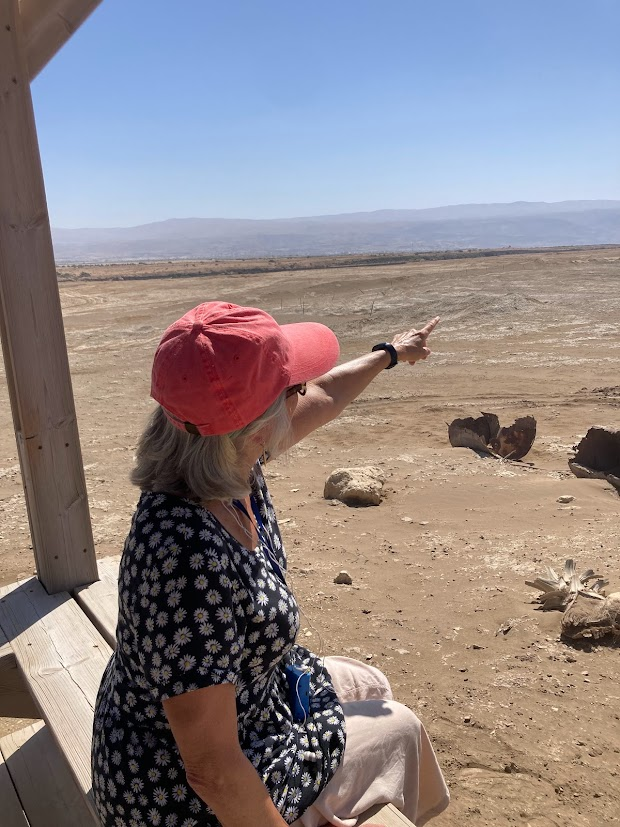
Pointing to Mt. Nevo area, where Moses gave his last speech
(צולם בצפון ים המלח, ספטמבר 2023) שם הר נבו, ממנו נשא משה את נאומו האחרון


