We’re all strings in David’s harp – the Torah portion of Sh’mot

“We’re all strings in David’s harp”, said Joey Weisenberg at this week’s Hadar’s Singing Communities Intensive, four days of non-stop soulful singing, which he runs with his incredibly talented ensemble. It’s hard to write when one’s head is full of melodies, and yet, this line struck a cord (haha) with me, especially on the backdrop of this week’s Torah portion.

The book we’re beginning this week, “Exodus”, Sh’mot, is also called “the 2nd book”, not because it is simply the second (of course), because the 3rd one is not called “the third”, but because if the first one told the story of creation, this one, too, tells the story of creation, a second creation – not of individuals but that of nationhood. And just like the first creation, it too comes out of תוהו ובוהו – mess.

We are in Egypt, and the curtain rises over the Hebrews in Egypt (to the tune of Prince of Egypt). There is slavery, mud, danger, little food, harshness, sand, suffering… we’re so focused on what there is, that we don’t notice, what there is not.

The book, which in Hebrew is called “names” and begins with the names of the tribe leaders coming to Egypt, slowly loses all names. People are referred to mother, daughter, sister, king, midwives. Although we know their names, the Torah does not refer to them with their names, but through their function. A name is a symbol of an identity that’s greater than any one function an individual has. A name indicates purpose; a sense of direction in life; a place we come from and a place we’re going to. Slavery on the other hand, strips away that identity. You do not matter anymore, only what you do for the society around you. And it better be good. And beneficial. And in accordance with the king’s commands. But you yourself don’t matter at all. You’re a number. And easily replaceable.

And this is going to be the struggle in this week and the many weeks to come: to get out of slavery; to get out of the narrow straights – which is the meaning of the name for Mitz’rayim, Egypt, same root as tzores, troubles.

“We’re all strings in David’s harp”. Sometimes, we open our mouth and nothing comes out. We don’t always know which note are we; how loud, how soft to sing; who will like our voice, if any. This is the whole story, over and over again – how to leave slavery in its broadest sense, and journey out towards freedom. How to find our voice. After losing everything, how to regain our name, identity, purpose. How to be a string in David’s harp, to sing the most beautiful music, with just the touch of the wind.

Shabbat Shalom.


Posted in Uncategorized | Leave a comment

To be… that is the Blessing – the Torah portion of Vayechi

Jacob and Joseph share many traits: both stay back in the tent with their parent; are young and favorite; have fantastic dreams and have great cries. Both will die in this week’s reading, and both will be particular about their burials: Jacob will insist that his body will not touch Egypt’s soil and Joseph – is “processed” via all traditional Egyptian customs, staying with people in exile until the last minute.

it is indeed, the beginning of a long, harsh and painful exile, and during its years we need local leadership, which knows how to deal with the current situation, along with longing and commitment to, one day, return to the Land. “Exile” without a desire to come back, is just another name for a new home. In order for it to remain “exile”, there also must remain a strong connection to the homeland; a connection which isn’t for granted but rather takes work, as is evident, for example, from the great trouble Joseph goes to, in order to bury his father in the same cave where his grandfather and great grandfather are buried in, but — not his mother (which is also a conversation the father and son now share – Genesis 48:7). The Book of Genesis closes with us realizing that although we pray, dream of, remember and struggle to return to the Land, and that one day, indeed, we will, our life will also be filled with many hours away from it; hours that allow for a different kind of growth, pain and the endless longing, longing we couldn’t have had, had we been back….

*******

Just before his death, Jacob calls his sons and blesses them. We know how important his father’s blessing was to him when he was young; so much so, that he – and his mom – made sure he gets it rather than his brother Esau. We might expect the grown Jacob to have learned his lesson and show us the best “blessing giving” in history. However, we are confronted with verses like:
Reuven, you are my first-born, my might, and the first-fruits of my strength… unstable as water… you have ascended your father’s bed; then defiled it… Shimon and Levi… cursed be their anger for it was fierce, and their wrath for it was cruel; I will divide them in Jacob, and scatter them in Israel.” (Genesis 49:3-7). 
This style not only contradicts our imaginary of “everything will be ok” blessing but also what just happened a few verses back in the same Torah potion, when Joseph brought his own two sons, Ephrayim & Menashe to be blessed by Jacob and lo and behold – Jacob gives both of them the same blessing; the same blessing we still pronounce every Friday evening: “And he blessed them that day, saying: ‘Through you shall Israel bless, saying: God make you as Ephraim and as Manasseh” (Genesis 48:20).
What is blessing and what does it mean “to bless” someone?
The Torah has different blessings: G-d blesses people and the world; People also pronounce a blessing that includes G-d; and people bless each other (mostly parents bless their children, but surprisingly in this portion, Jacob also blesses Pharaoh).
Rabbi Hirsch of the 19th century, a genius in conducting thorough “root-canals” on Hebrew roots, teaches that b.r.ch – the root for bracha, blessing – has to do with “power growth”, “spur prosperity”. He connects therefore 2 other Hebrew words that superficially look unrelated. These are the words berech, knee, and brecha, pool, reservoir.  The knee is the power point joint, the limb that propels us, that makes us go down or jump to new heights. From here, we have the verb lehavrich, as in to settle down camels, or bow down in prayer, which is close to kneeling. A pool likewise is a place from which one can recharge and draw strength. Rav Hirsch further connects it to other verbs like barak – a separate flash of lightening; and all the verbs that start with peh.resh and have to do with getting out on one’s own, developing, flowering and also getting wild.
A blessing if so, is no magic; no abracadabra. It can’t turn an Esau into a Jacob, a Reuven into Judah. Rather, it expresses the ability to truly see someone and wish for them to grow to be the best they can be, no matter the outward conditions and challenges.
To this day we bless our boys with “may G-d make you like Ephrayim & Menash” perhaps because Joseph’s sons grew up in Pharaoh’s palace, in the place where it would be easiest to assimilate. And instead, they opted to join the brothers, their uncles and cousins, and become part of the Jewish people.
Of course, not everyone has to join the Jewish people but as Shakespeare said in Prince Hamlet’s speech, “to be or not to be, that is the (only) question”. If to be able to be truly who we are – is what life is all about, then for someone else to see our core true self, believe in us, and wish for us to fully be that – is indeed, a blessing.

Shabbat Shalom.


Posted in Uncategorized | Tagged , , , , , , | Leave a comment

Re-meeting Joseph and his Brothers – Vayigash

We often listen to those who speak – the louder, the more attention, but what about those who don’t say a word?? Who is it that noticeably doesn’t speak, even though all the brothers are up in arms for him? and through his silence, or anyone’s, does he actually say nothing, or maybe??? maybe it would be appreciate to be silence about that… 

*******

Some time ago, I had the opportunity to meet up with a friend of long ago, I haven’t seen for many (many) years. I think about this meeting again as we’re caught in the midst of the encounter between Joseph and his brothers, because I can’t help wonder, did Joseph’s brothers really not recognize him? At all? 

On my way to my meeting with my friend, I realize I have no idea what she looks like, after all these years. She changed, some; perhaps, we both did (:) and yet, at the same time, also not that much had changed. 

Of course, with Joseph and his brothers it was different. It has been 20 years. And Joseph, who has been away since he was 17, grew up, the peach-fuzz face turning to stubble or beard, and his locks shaved. And he’s wearing Egyptian clothing and possibly make-up. And he has a new name. And was “out of context”. But was he, really? After all, if anyone should have been at least suspicious, it’s the brothers who last saw him, sold to a convoy going down to Egypt, the next-door neighboring country, less than a 7 days walking journey! And, both Yishmaelites and Midyanites were involved in the transaction (Genesis 37:27-29), relatives of their own grandfather’s (half) brother, who were parts of caravans traveling often, carrying, not only goods, merchandise and potential servants, but also news. And then, between this whole exchange, this beautiful, brilliant, unique, wonderchild just vanishes? And, when rumors reach them about a great wise new leader, right in Egypt; one who saves the whole region from a horrible famine by “interpreting dreams”, they, who are themselves heir to this way of life of prophecy and spirituality, don’t for a minute have even the slightest, tiniest suspicion that it’s their long-lost brother?

Joseph on his end knows who the ten Hebrew men are immediately when they enter Egypt, as we read last week (Genesis 42:7):

וַיַּ֥רְא יוֹסֵ֛ף אֶת־אֶחָ֖יו וַיַּכִּרֵ֑ם וַיִּתְנַכֵּ֨ר אֲלֵיהֶ֜ם וַיְדַבֵּ֧ר אִתָּ֣ם קָשׁ֗וֹת וַיֹּ֤אמֶר אֲלֵהֶם֙ מֵאַ֣יִן בָּאתֶ֔ם וַיֹּ֣אמְר֔וּ מֵאֶ֥רֶץ כְּנַ֖עַן לִשְׁבָּר־אֹֽכֶל׃

When Joseph saw his brothers, he recognized them; but he acted like a stranger toward them and spoke harshly to them. He asked them, “Where do you come from?” And they said, “From the land of Canaan, to procure food.”

Commentators suggest he was waiting for them. Or Hachayim (18th century, Morocco) writes on Genesis 42:6:

וְיוֹסֵ֗ף ה֚וּא הַשַּׁלִּ֣יט עַל־הָאָ֔רֶץ ה֥וּא הַמַּשְׁבִּ֖יר לְכָל־עַ֣ם הָאָ֑רֶץ

And Joseph was the ruler of the land; he was the one who sold to all the people of the land:

Even though Joseph was the ruler, and it is not usual for the ruler to personally conduct the grain sales, especially when this involved so much effort, he did so himself in order to encounter his brothers eventually (Or Hachayim).

We also know that hard as he tried, he didn’t forget his family back home, even naming his son after his painful departure and his desire to forget, which ironically meant, he never did (Genesis 41:51):

וַיִּקְרָ֥א יוֹסֵ֛ף אֶת־שֵׁ֥ם הַבְּכ֖וֹר מְנַשֶּׁ֑ה כִּֽי־נַשַּׁ֤נִי אֱלֹהִים֙ אֶת־כָּל־עֲמָלִ֔י וְאֵ֖ת כָּל־בֵּ֥ית אָבִֽי׃

Joseph named the first-born Manasseh, meaning, “God has made me forget completely my hardship and my parental home.”

But how about the brothers?

Judah’s plea is one of the most moving speeches in the whole Bible. We’re touched by his commitment to his father, his stepping up to take care of the family where his three older brothers failed, and by his sincere effort at teshuva (repentance). At the same time, Judah’s eloquence clouds our ability to check his facts so we don’t notice the inaccuracies and mismatched details between the speech and reality.

For example, Judah says (Genesis 44:19):

אֲדֹנִ֣י שָׁאַ֔ל אֶת־עֲבָדָ֖יו לֵאמֹ֑ר הֲיֵשׁ־לָכֶ֥ם אָ֖ב אוֹ־אָֽח׃

My lord asked his servants, ‘Have you a father or another brother?’

But, Joseph, when he previously spoke to the brothers, never asked this question.(Genesis 42:13-20).

Judah also inserts a detail about Jacob which Joseph doesn’t know, and therefore can’t ask, that his father is not only still alive but is still pained over his absence and never lost hope to see him again (Genesis 44:28-29):

וַיֵּצֵ֤א הָֽאֶחָד֙ מֵֽאִתִּ֔י וָאֹמַ֕ר אַ֖ךְ טָרֹ֣ף טֹרָ֑ף וְלֹ֥א רְאִיתִ֖יו עַד־הֵֽנָּה׃

But one is gone from me, and I said: Alas, he was torn by a beast! And I have not seen him until now.

Here, Judah talks about the missing brother as someone who was “torn by a beast” although just earlier he said he died (Genesis 44:20), expressing their possibly true confusion.

But more important, this is a direct response to Joseph’s most dreaded fear: as far as he knows, his father was part of the plot to get rid of him, by sending him to check on the brothers in a faraway field, knowing full well that the brothers hated him and might harm him. Was Jacob actually trying to get rid of him? This is the first time he learns that his father is actually heartbroken, continuously longing to see him again.  

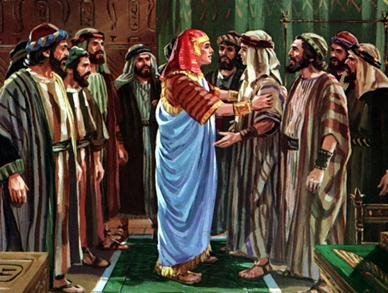
Reading it so, Judah’s speech is constructed carefully so that if the person in front of him is not Joseph, none of those details would mean anything to a stranger; but if he is Joseph, then the message of care, remorse, love and hope would come across. Only then Joseph “can’t hold it back”, asking all to leave as he reveals himself.

The Book of Beresheet is full of complicated sibling rivalries, and yet, here we find the beginning of hope for a long awaited reconciliation.

Shabbat Shalom from Oakland CA.


Posted in Uncategorized | Tagged , , , , | Leave a comment

Joseph, Olive Oil & Chag Habanot – 3 shorts for Shabbat Hanukkah-Rosh Hodesh Tevet

Exactly XX year ago, Miketz was the Torah reading on my Bat Mitzvah, and some years later, and many miles away, my son’s too.

The bat mitzvah was at the reform synagogue, Ohr Chadash (a new light) in Haifa, Israel. It was winter, and “one never knows what the weather will do”, so my mom and I got a “warm” woven, blue and white skirt and short jacket. My description doesn’t do it justice – it was really lovely. Nobody particularly cared or pushed me to do anything, but I wanted to read from the Torah. For the weeks prior, I studied weekly with the rabbi so I could read the short maftir (on a 3-year cycle) and the haftara. After the service, we all went home to our “3 rooms” (i.e. 2 bedrooms and a living room) apartment, where all my immediate family and close friends had some food and time to just be together. Presents included thick books titled “4000 years of Jewish history”, arts and crafts kits and enough money to buy my first record, Shocking Blue with their biggest hit, Venus.

The maftir was about Joseph “Jacobson” and his wife, Osnat who’s described as “the daughter of Poti-fera, the priest of Onn” and according to the sages is really Dina’s daughter, expanding their family. They have two sons: Ephrayim & Menashe. Rav Hirsch (1808-1888) rejects the simplistic, common translation of Menashe to be  “G-d has made me forget completely my hardship and my parental home” and perhaps based on a hint from Rabbi Ibn Ezra (1089-1167) suggests another read, which would reject Joseph forgetting anything, least of all his own toil and his father’s house! Fortunately, says Rav Hirsch “to forget” is not the only meaning of מנשה; it also denotes “being a creditor”. Accordingly, נשני nashani would mean: G-d has turned my tragedy and my family into my creditors; what until now seemed to me misfortune and abuse, G-d has turned into an instrument to shape my happiness, so that I find myself deeply indebted to my troubles and to my family”.

*******

If you told me, growing up, that Hanukkah is an agricultural holiday from the Torah, I would probably alternate between surprise and disbelief. Hanukkah? Everybody knows it’s about the Maccabees and their battles which can be hiked at and re-imagined; a miracle and a flask of oil, which rekindled the light in the Temple menorah; presents and get together, but agricultural? What’s to do? It’s raining and cold! Besides, we have our agricultural holidays: Pesach, Shavuot and Sukkot! and those are commemorated in the modern Israel with wonderful celebrations in the kiubtzim, so that must be all there is.

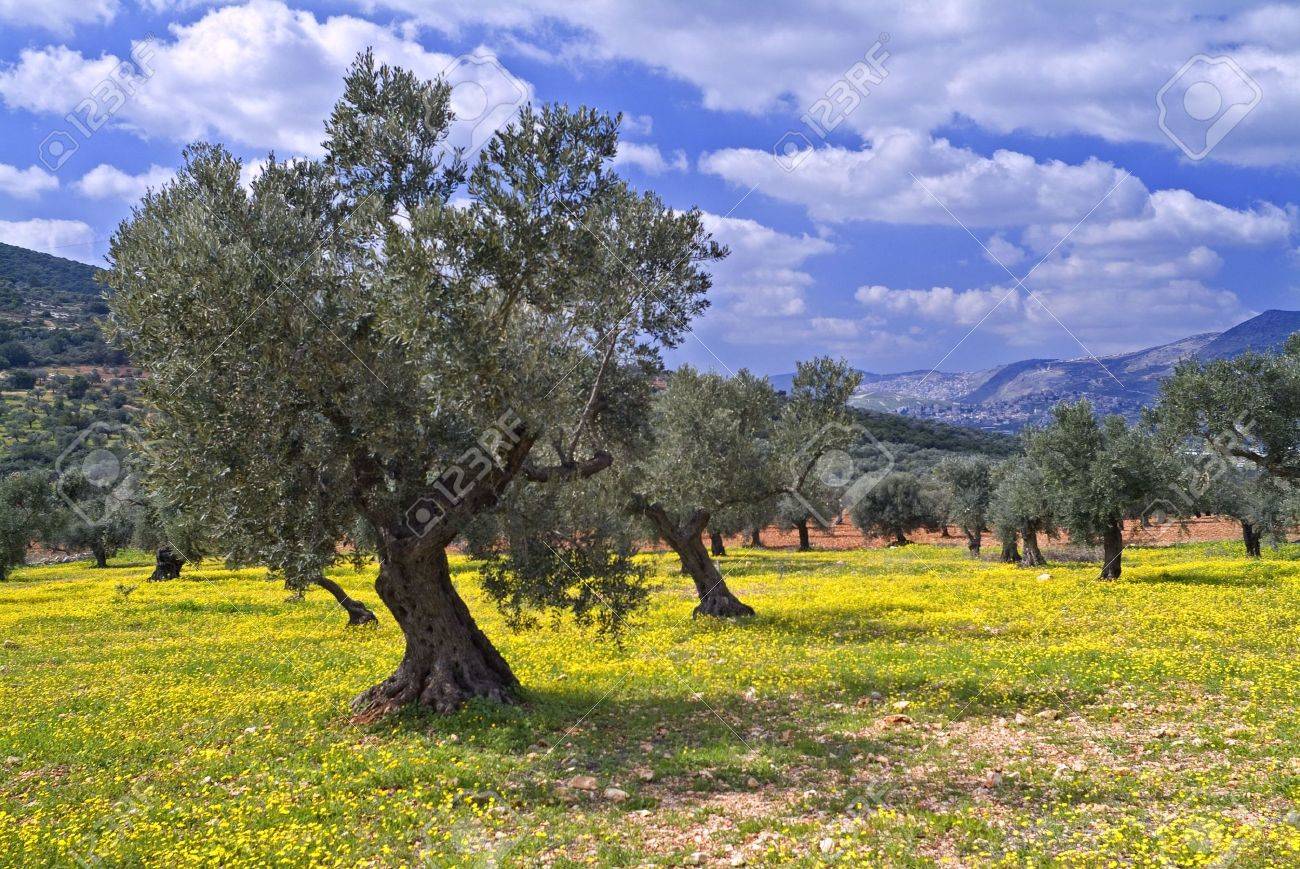
In the Israel that I grew up in, there were citrus orchards and apple trees; fields of wheat and barley. Olive trees, on the other hand, were largely associated with Arabic villages, and not much attention was spent on how one goes from “olive tree” to “olive oil”. Who knew that right at Hanukkah is the time of harvest and production of olive oil throughout Israel, to this very day!

The Torah in its way presents it in a verse that many read daily as part of the Blessings of the Shma:

וְנָתַתִּ֧י מְטַֽר־אַרְצְכֶ֛ם בְּעִתּ֖וֹ יוֹרֶ֣ה וּמַלְק֑וֹשׁ וְאָסַפְתָּ֣ דְגָנֶ֔ךָ וְתִֽירֹשְׁךָ֖ וְיִצְהָרֶֽךָ׃

I will grant the rain for your land in season, the early rain and the late. You shall gather in your new grain and wine and oil—

וְנָתַתִּ֛י עֵ֥שֶׂב בְּשָׂדְךָ֖ לִבְהֶמְתֶּ֑ךָ וְאָכַלְתָּ֖ וְשָׂבָֽעְתָּ׃

I will also provide grass in the fields for your cattle—and thus you shall eat your fill.

Notice the annual cycle: there will be rain in its time so we can collect our produce, also in its time: דגן – dagan, wheat to make bread from, – symbolizing Shavuot; תירוש – tirosh – wine making grapes, symbolizing Sukkot and יצהר – yitzhar, oil, symbolizing Hanukkah! We will also have animal food, barley, indicating, the bounty will last until next Pesach, thus giving us a full annual cycle how it will be to “eat and be satisfied”.

*******

This Shabbat is also Rosh Hodesh (the new moon of the month of) Tevet, which in some North African communities is consider חג הבנות – “Chag Habanot”, Id El-banat (Arabic) or Fete des Filles (French). The holiday was kept primarily in Tunisia, where, according to tradition, the Temple’s priests were exiled to, and thus maintains a number of ancient traditions, and celebrates this day, which always falls in the heart of Hanukkah, to salute women along Jewish history. About Hanukkah we’re told in the Talmud (Shabbat 23:1) that women are obligated in candle lighting “because they were in the same miracle”. In the Scroll of Esther, we’re told that, that on the “10th month” (i.e. Tevet) Esther was crowned to be queen. Hanukkah and Purim share many commonalities: they are both “human-made” victories, but alas! in this case, human actually means women-made. The day was celebrated with great joy, foods, gift-giving, music and dance, to bring in “tastes” from Purim into Hanukkah. In the modern state of Israel, “mother’s day” is (was?) always part of Hanukkah and now I just wonder, if that’s how it traveled. One way or another, maybe a good opportunity to celebrate the women in your life, maybe with an olive oil massage 😊

Shabbat Shalom, Hanukkah Same’ach & Hodesh Tov!!

Posted in Uncategorized | Tagged , , , , , | Leave a comment

“Vayeshev” (sitting) in Darkness (with a twinkling light far away….)

In the opening verse of this week’s Torah portion is says:
א וַיֵּשֶׁב יַעֲקֹב, בְּאֶרֶץ מְגוּרֵי אָבִיו–בְּאֶרֶץ, כְּנָעַן. 1 And Jacob dwelt in the land of his father’s sojourning, in the land of Canaan.
There are two verbs to describe “dwelling”: one, indicating permanence (lashevet), and one, indicating temporariness (lagur). The first (y.sh.v) is related to y.tz.v. – stability, and denotes standing firmly, undisturbed. By contrast, the second, (lagur) denotes being a ger, a transient resident, living in a place where one does not belong; living in fear (asher yagorti).
The Kedushat Levy, Chasidic commentary from the 18th century, teaches that Jacob was afraid, and that, as is implied from this verse in מגורי אביו – megurei aviv, especially the fear of his father was on him, for all the “normal” Freudian reasons, such as disappointing both his earthly and heavenly fathers. For example, Isaac was told to never leave the Land. Jacob left already once for 20 years with Lavan, and soon, he’ll have to go to Egypt, eventually to die there. Is he doing something that his father, who very well might still be alive, does not approved of?! That once again, his affinity to siting, will cost him in father thinking he’s not “man” enough, like favorite Esau? His fear of his father reflects his fear of Hashem, but Kedushat Levy thinks is a positive thing, because Jacob always keep one’s eyes on the ball, is always being concerned he’s doing what G-d wants of him, keeping to G-d’s straight (yashar-el) and narrow. It seems like too much fear can be paralyzing but some fear helps us be accountable to who we are.
*******
This Sunday evening is first candle of Hanukkah. As we know there are Shabbat candles and there are – Hanukkah candles. What’s the difference? According to Rav Soloveichik, Shabbat candles are there for שלום בית  -“shlom bayit”, peace in the house, so there won’t be darkness, because in case of darkness, someone might fall, and then there will be fighting. Hanukkah candles on the other hand, are not allowed to be used. Contrary to what we often think (or sing -), Hanukkah candles don’t come to dispel darkness, but they remind us of a greater cosmic light, faraway. This can be compared to someone walking alone in the forest, and someone gives them a flashlight. This helps see the next few feet on the path. On the other hand, G-d says to Abraham, “lift up your eyes and see the stars”… this is reminder of the Divine in life, of possibilities, of a greater world than the painful here and now which we know so little of. These are the Hanukkah candles, a blessing from another world in the heart of the dark winter.

Shabbat Shalom.

Posted in Uncategorized | 1 Comment

No Hollywood in Jacob’s journey – 3 shorts on Parashat Vayishlach

It’s a glorious sunny day in NYC, bright and beautiful. And 30 degrees. Fahrenheit. Need to layered up some, and remember that things are not always as they seem.

In the Torah portion of Vayishlach, Jacob is traveling back after 20 year with Lavan in “chutz la’aretz” (outside of Israel) to the Land of Israel. He has accumulated great wealth, kids, herds, stuff; It’s hard to leave, hard to travel and hard to settle. Along the way, Rachel dies; Dina is raped; Yitzchak dies; Esau, with whom he manages to make some peace, moves away; An angel struggles with him on route and he gains his name, Yisrael, “for you have become the commanding power before G-d and men (people), since you have prevailed” (Genesis 32:29).
The sun, which set on his way out of the Land, as he headed to a form of darkness, now shines on Jacob, but he is limping (32:32). I simultaneously like it and hate it: I want a Hollywood ending, with Jacob marching out of the smoke, triumphant, unharmed, no ifs and buts, with everybody smiling, everybody living “happily ever after”, the captions rolling on the screen as they fade into the horizon. But the Torah doesn’t do that. It doesn’t let me escape the deep, intrinsic complexity of life: ‘we’ll be ok’’ it says, ‘we’ll aim high, and it will be great, but don’t expect it to be totally smooth’. I sigh with great discomfort and relief.

Dina is Jacob and Leah’s daughter, and 13th child. Commentaries suggest that she’s expected to be the mother of the 13th tribe, and that Jacob hoped to marry her off to a prince of the land, to establish his presence in the region. Is that why she “went out”, trusting, knowing she’s following her father’s plan? The rabbis tell us that Dina became pregnant and that her daughter, who was sent to be a servant at the home of the Egyptian priest, Potifera, is Osnat, the one who marries Joseph and bears him Menashe and Ephrayim from whom a messiah might be born. Nevertheless, this time, the “happy ending” doesn’t make it good. It’s an awful story we used to like to skip, that now regains attention, highlighting issues of abuse, power, and the unique dangers women face. And yet, it’s no more a “women’s issue” than if there are abused anyone (children, immigrants, workers). In a situation where abuse regains, everyone gets hurt, not just the person who suffers the blows, be those physical, spiritual, emotional, financial, sexual, existential of any kind. Maybe it’s an especially good Shabbat to pause, somewhere alone one of the many “mi sheberach’s” (prayers for healing) and add, whether in prescribed words, heartfelt or in silence, a space that says, let’s raise our awareness, let’s work towards enough.

Blast from the Past: Just in time for Daf Yomi’s sacrifices and offerings matters, an amazing gift from the past showed up this week, when archeologist found a small weight from the time of the 1st Temple, south of the Kotel in the City of David, in Jerusalem. The weight has backwards ancient Hebrew letters so it can be used as a stamp. The letters are B.K. A’ – ב.ק.ע. The “beka’” was equivalent to half a shekel, a donation each person over 20 years old had to bring. This corresponds to the Exodus 38:26:

בֶּ֚קַע לַגֻּלְגֹּ֔לֶת מַחֲצִ֥ית הַשֶּׁ֖קֶל בְּשֶׁ֣קֶל הַקֹּ֑דֶשׁ לְכֹ֨ל הָעֹבֵ֜ר עַל־הַפְּקֻדִ֗ים מִבֶּ֨ן עֶשְׂרִ֤ים שָׁנָה֙ וָמַ֔עְלָה לְשֵׁשׁ־מֵא֥וֹת אֶ֙לֶף֙ וּשְׁלֹ֣שֶׁת אֲלָפִ֔ים וַחֲמֵ֥שׁ מֵא֖וֹת וַחֲמִשִּֽׁים׃

a beka’ – half-shekel a head, half a shekel by the sanctuary weight, for each one who was entered in the records, from the age of twenty years up, 603,550 men.

If you’re in Israel this Hanukkah, the finding will be presented in the National Gardens of Ein Tzurim.

Shabbat Shalom!

By Gustave Dore, 1832-1883

Posted in Uncategorized | Tagged , , , , , , | Leave a comment

Two Jacobs, One Yisrael – Vayetze

Leaving NYC in the height of its first seasonal snowstorm, we land in Oakland CA, where the sky is a hazy pinkish-white with air quality ranking “the worst in the world”. There’s a strong recommendation not to leave indoor spaces, especially not to “stam” walk outside; my friends ask for masks from NY because most hardware stores in NorCal are out; residents evacuate for the Sierra Foothills, Lake Tahoe and coastal areas. I sit and write about other people’s journeys and mishaps along the way.

Biblical Yaakov (Jacob) escapes from his brother who wants to kill him. What does it mean? Sure, Esau is angry, but kill his brother?? Jacob has taken what Esau has sold him earlier!! Wanting Jacob dead is perhaps symbolic of not accepting an either-or; not a world in which we’ll both live, even if different from each other, but a one way, “only I” solution. This scenario of a farmer, a man of the filed, fighting with his shepherd brother to death, should look familiar, and we’ll see another version of it in the stand-off between Joseph and his brothers. Luckily this time, we are open to a different solution.

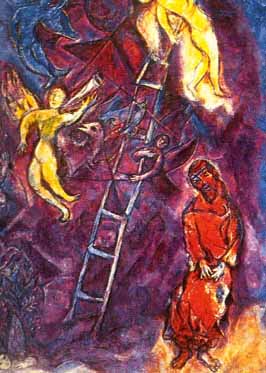
Jacob leaves Be’er Sheva for Haran, and on the way, “hits the place” where he sleeps an sees a ladder, although the word “sulam” doesn’t appear anywhere else in the Torah and we can only imagine it from the text. It’s a thing that connects while not being grounded in either places, as indicated by the words “artza” and “shamayma”, “towards earth” and “towards heaven”, but not quite “there” in either one. It implies the need to “jump”, someplace along the way from one to the other, like squirrels who swing among the tree branches. Jacob has two names, which he continues to use interchangeably throughout his life; he marries two wives; and is able to live in two worlds, being our first forefather who opts to move to the galut, diaspora, then back to the Land of Israel. Yet, he’s the only one to have all his children become “The Children of Israel”.
At the end of this week’s Torah portion, he makes a covenant with Lavan, symbolic of the first time he does so, as a nation with another nation. Lavan, whose name means “white”, bidding farewell to Jacob just before the red sun will rise on him again, calls the place “Yegar Sahaduta”, in its Aramaic name, while Jacob calls is Gal’ed, in Hebrew. This might be parallel to the Pesach Hagada, which likewise we begin in Aramaic (“ha lachma anya” – הא לחמא עניא) and end in Hebrew (“Le’shana habaa bYirushalayim!” – לשנה הבאה בירושלים). The transition between Aramaic and Hebrew stands for the transition between exile-living and redemption גולה – גאולה. The ability to switch between languages is an expression of the ability to live in more than one world. This all might be reminiscent of Eliezer Ben Yehuda, and those who revived the Hebrew language around the same time that the recent galut began to end. This is Jacob, and this is his gift to us too. We too are invited day how to live – and thrive – in more than one world.

Shabbat Shalom.

Posted in Uncategorized | Leave a comment

Next up, “the future”

Last week Yitzchak (Isaac) brought Rivkah (Rebecca) into his mother’s tent in what seems to be a sweet gesture:
ויבאה יצחק האהלה שרה אמו ויקח את־רבקה ותהי־לו לאשה ויאהבה וינחם יצחק אחרי אמו
Isaac brought her into the tent of his mother Sarah, and he took Rebekah as his wife. Isaac loved her, and thus found comfort after his mother’s death.
On the surface, so lovely: The newly arrived bride has come to replace his beloved, recently deceased mother. But a second look begs the question: Is that really what’s going on here? According to the midrash, Sarah dies in conjunction with Yitzchak’s Binding, which happens three years before Rivkah’s appearance on the scene. When Rivkah arrives, Yitzchak is at “Be’er Lachai Ro’ee” (Genesis 24:62) which is actually where Hagar and Yishma’el live! Why does Yitzchak bring Rivkah to the late Sarah’s tent? For someone who says so little, what is he trying to say?
I have often played with the idea of a book called (something like) ‘our forefathers and foremothers on the therapist’s couch’…. Indeed, from a psychologist’s perspective, Yitzchak might have had a troubled childhood: his dad torn between the handmaid who bore him his oldest (beloved) son and his mom; his dad schlepping him up the mountain with nothing but a knife and wood for the fire (chap.22); his taunting, though only, brother; his overly protective mother… no wonder he’s slightly shell-shocked, maybe suffering from PTSD, the glistening knife blinding his eyes…
The Kabbalists also point out that Yitzchak is a momma-boy, not because she protects him, coddles him and keeps bad influences away from her ‘little darling long-awaited for baby’, but because, as we’ve seen, a careful read reveals that he is really – “her child”. Sarah is the one who’s din in that relationship; she’s the one who calls Yitzchak “my son”, as Avraham calls Yishma’el “his son”. Avraham is all chesed, kindness and endless compassion; Yitzchak, like Sarah, is din, or gevura – judgment and strength, a quality who’s role it is to limit endless giving and too much generosity (and yes, there is such a thing to be too good, too giving, too much sugar). She’s the one who asks Avraham to be a “judge” (between her and Hagar), a task he (Avraham) is not naturally suited for.
No wonder Yitzchak’s wife is all chesed, like Avraham. When we read the story of how she cares for the stranger and his camels at the well (chap 24), we are struck by her similarity to Abraham, as he cares for his guests (chap 18), and the text uses similar verbs (like “rushing”) to make sure we don’t miss it. See?! Endless kindness!! The perfect match to the Avrahamic family!!
Perhaps when Yitzchak brings her into the tent he actually says, chesed is great but this way of life is much more nuanced; more is needed. We are the heirs of chesed along with din and gevura, and our child will have to be that. As the years go by, Rivkah is no longer the “all out” little girl who runs back and forth with her pitcher to the well, but a mature woman, who can keep a secret, who can manipulate a situation, who can love, but care very differently for both her sons. It is in that sense, perhaps, that he brings her into Sarah’s tent (and not Avraham’s), to let her know, that there is more.
Their relationship, in turn, is different from that of their parents. I can see him, walking in the field, figuring out how they are going to do it “right”. There’s going to be no handmaid, only long prayers with the only one, beloved wife. There’s going to be one child – one “perfect” (tam- תם) child. But G-d in His infinite wisdom and sense of humor, says, you too will have two children, and the birthright will have to be sorted out again, that’s how we get to this week’s reading.
When the twins are born, Yitzchak loves Esau, and Rivkah – loves Yaakov. Esau’s name shares its letters with “asui” – עשוי = עשיו, complete, done – what you see is what you get. Yaakov’s name comes from follower, also crooked (והיה העקב למישור). Yitzchak loves Esau “for there’s hunting in his mouth” (Genesis 25:28); Esau is worldly and capable, often called the “gadol”, the big one. Rivkah loves Yaakov, “the little one” for no obviously stated reason. Yet. Yaakov is smooth, as if “not done” yet, implying the need to grow, to move from “crooked” to “straight” (yashar – like yis’ra-el), and at times to be able to hold both. In all that, Rivkah “gets it”. She therefore brings a new dimension which Yitzchak, the boy almost sacrificed and now blind, so badly needs: not only her endless kindness and boldness, but a daring belief in the unknown, the hidden, the potential; an ability to see – and believe- in the “future”.

Shabbat Shalom.

Rivkah going to inquire of G-d – by Ahuva Klein
רבקה הולכת לדרוש אלוהים – אהובה קליין

Posted in Uncategorized | Leave a comment

In the Land of Yitzchak & Yishma’el

This week’s reading, Chayey Sarah – “The Life of Sarah”, opens with Sarah’s death, and Abraham seeking to purchase for her a burial place, achuzat kever. Rabbi Hirsch (19th century Germany) shares a beautiful explanation, and so he writes:
“To interpret “achuza” as “property”, because the object is held – ne’echaz (which is from same root as achuza) is a mistaken interpretation. Achuza refers exclusively to land property, which is precisely what cannot be held. Further, in the instances the verb is used, the object (i.e. the land) is not held by tis owner but rather – the owner is held by the object…. Land holds its owner, and he is bound in its chains… This is also the reason why a person cannot take an oath on the land. This is because land outlines the person; the person is subordinate to the land rather than the land being subordinate to the person. Hence, he cannot subordinate the existence of the soil to the truth of his word”…
Likewise, Abraham wants a permanent place in the Land, a place that will stay in the family long after he is gone. A place, that is not so much for her, as it is for him and future generations.
Interestingly, kever, the Hebrew word for grave, is the same word the Talmud uses for womb. Is it the hint for things that are deeply hidden? The end that is also a chance for a new beginning?
Abraham too will die at the end of this Torah portion, and he will be buried by both sons, Yitzchak and Yishma’el.
The week of this Torah portion, I’ve had the great honor of participating on an Encounter program. As Encounter defines itself, it is a “diverse community of Jewish leaders ready to encounter the complex stories, people and place at the heart of the Israeli-Palestinian conflict”.
As an Israeli citizen, I need a special permit to go to Areas A & B under the Oslo accord. I walk through places I have not been able to get to in decades, “encountering” the busy Manara Square in Ramallah and the peaceful glorious sunset over Beit Jalla; the impoverished villages east of Herodion and the luxurious hotel in center Beit Lechem; the antsy, nervous, angry line at the border check point and the tensions over homes in East Jerusalem the morning after the elections.
Wherever I go, Yitzchak and Yishma’el walk with me: Yitzchak with his quality of gevura, din – judgment and bravery, and Yishmael, with his boundless, overflowing chesed, kindness, each one looking over his shoulder at what the other has and what he doesn’t have; each one forgetting his role and focusing on what the other one is not doing well or well enough… What do these two brothers need in order to play nice in their father’s land?
The Torah reminds us through several stories that as adults, they do like each other and do get along; that they learn to let each be who he is, appreciating their complimentary aspects. But the road there might be not simple at all.
May we merit to see peace and well-being. Shabbat Shalom.

Posted in Uncategorized | Leave a comment

Sh’ma Abraham! The Torah portion of Vayera

Jane: Honey, what is that wooden sled still doing here? Every time I walk into the garage, I almost trip over this thing! I hate it! I need you to lose it and asap!
Joe: Honey! How could you ask me to… what?? You know how much this sled means to me! With this very sled my high school sweetheart and I won the foreign teens championship in Norway thirty years ago! You cant possibly ask me to…
G-d: Joe! Forget that sled, I’ll get you another one, and listen to whatever Jane says…

Last week, Sarah (Sarai then) suggests to Abraham (Abram) take Hagar, her handmaid, for him to have a child. After all, G-d promised him an offspring, but maybe not through her? They have been in the land now, after returning from Egypt, for ten years. Surely if G-d wanted them to have children together, it would have happened by now, wouldn’t it?
Interestingly, Abraham who fights to save Lot and argues about Sodom and Gamora, here, just says, ok, or – nothing, He quickly complies as Hagar also maybe answers his prayers for a child; for a child with the Egyptians who has the potential of making him – and his way of life – a great dynasty. Hagar becomes pregnant, and treats Sarah, her mistress, “lightly”, feeling, herself to be Abraham’s rightful wife, possibly fueled by his feelings as well. Sarah approaches Abraham asking for his help in the matter, and his response is, “do to her as you wish”. Sarah “tortures” her (vate’aneha” – a word with multiple roots and meanings -) and Hagar runs away.
The angel that finds her calls her “Hagar the maidservant of Sarai” (15:8) as if trying to remind her who she is and what’s her role, instructing her to go back. The Abarbanel points out that she didn’t head back right away, suggesting she was scared to be worked too hard and lose her baby. Only when the angel says, “behold you’re pregnant with a son…” (15:11) she knows her promise will be kept and agrees to go back.
In this week’s Torah portion, Isaac is born and Sarah observes with great distress the interactions between “her son”, Isaac and “his son”, Yishma’el. She uses the verb “garesh”, same root used for gerushin, divorce when telling Abraham to send them away.
The text tells us that Abraham felt very badly for “his son”, but G-d says, “don’t feel bad for the boy and for your maidservant”, which might be the first time that someone actually notes the special bond that developed between Abraham and Hagar. For a brief moment, it seems that G-d “understands” Abraham’s feelings. Still, in spite of the brief compassion, G-d tells him: “Listen to Sarah’s voice”. Rashi notes that this comes to show that Abraham was secondary to Sarah in prophesy. Rabbi Hirsch notes that the voice is likened to the soul and that G-d instructed Abraham to be tuned with Sarah’s spiritual knowledge. In a way, Abraham was the transistor while Sarah was the antenna. A careful read reveals that G-d never talks to Abraham without Sarah being by his side!
But there is also irony in this section, expressed by the choice of roots: Hashem tells Abraham about Sarah, “shma bekola”, listen to her voice (21:12) using the same word as our Shma “mantra”, and the same root as Yishma’el, And already Pirkei D’rabbi Eliezer notes that G-d does not put his name (“el” – G-d) in many names, but He did in Isra-el and in Yishma-el, to hint that at the end of time, these two children of Abraham will have to “figure things out”.
Back to Sara, I must admit, there were times when I was almost jealous. Wouldn’t anyone like it if G-d showed up on their side when one is about to lose a major argument, telling everybody to listen up?!
But then it dawned on me, how terrible Sarah must have felt, to need such an Advocate, to not be heard by the person who was her nearest and dearest, especially when it came to the most critical issue in their life; to be so far that G-d Himself had to intervene… Having such a powerful ally might shed light not only her great spirituality, as Rashi and others say, but also on her pain and danger and the grave state of their relationship at that point.
But in spite of the pain and him not fully understanding, Abraham complies. He gets up early, packs a lunch and saddles his donkey. By doing so, perhaps he gives Sarah what is still one of the greatest gift anyone can give another: the gift of listening.

Shabbat Shalom.  


Posted in shabbat shalom | Tagged , , , , , | Leave a comment