Listen, Sukkot is almost here! Parashat Ha’azinu and the upcoming holiday

This Shabbat we read a song, Shirat Ha’azinu. What is the difference between prayer and song? The Kabbalist point out that the words for tefila (prayer) and shira (song) have the same numerical value (515), as if to say that a song is a kind of a prayer but possibly while prayer initially tends to be more spontaneous, a song is more perfect, more thought-through.
The text of this week’s reading is written in two columns as opposed to the usual running text. The words are arranged like bricks, building two towers through layers, one on top of the other. There is a parable about a man who watches a tailor preparing a garment. The man, who does not know the art of sewing, is alarmed when the tailor reaches for the cloth and starts cutting and tearing at it, but the end result is a beautiful garment. To the untrained eye, the song too, is constructed of pieces, torn away from the “regular” words. But then appears one of the most amazing parts of the whole Bible, maybe just as we delve into the New Year, it helps remind us that somewhere, sometime, there is a possibility for perfection; not something we might be able to access all the time; we don’t live in that realm, but it does exist.
The Song opens with Moses telling even heavens and earth to be quiet, because he is now going to be speaking! How dare it? And isn’t he the humblest person to ever lived on the earth, like e-ver? Does he have something to say that’s greater than heaven and earth?
In this section, Moshe summarizes the Torah, prophecies of the messianic era and more, which can be understood as getting ready to learn about eternity. Then we might wonder, how can I too, in my own little personal life, be part of eternity? When Moshe tells heaven and earth to listen to his words (Deuteronomy 32:1), he tells things that we perceive as eternal that he has something greater yet – greater even than heaven and earth; something for which heaven and earth should keep quiet and listen. What is it? “his words”, the words of Torah. Unlike Aaron the High Priest, we know little of Moses’ physical children, but in a way, we are his children, and we got this gift of his, the gift of eternity, having words of Torah.
Coming up: Sukkot:
Almost as soon as Yom Kippur is over, there’s excitement in the air: Sukkot is coming! Rabbi Shlomo Carlebach told that during Neila, the last prayer of Yom Kipuur, when we get scared that the gates will be closed, hashem invites us to his inner most chambers, and whispers in each one’s ears: I have a special invite for you, to come and join me in my summer house; join me there for a week and I’ll heal your heart and soul and give you strength”. This means when we enter the sukkah, we have to feel at home!
Sukkot though, could have chosen a better season: if we commemorate the Children of Israel dwelling in Sukkot, why do it now? We did it for 40 years, with no particular date!? How about combining Sukkot and Pesach, won’t that be so much better? We can eat matza in the sukkah, avoid the crazy cleaning, let the crumbs fall in the yard, while we enjoy the spring!!
But, Sukkot comes davka (especially) when it gets colder outside (fall colors already spotted at Prospect Park!) and everybody thinks about going in and getting ready for winter, we “go out”. You might say that the Torah didn’t know we’d be living in North America and thought more of fall in the Land of Israel but even there it starts raining during this season, so what’s going on?
If we look at our tradition, we notice that “going out” is one of our ‘things”. G-d told Abraham to go out of his homeland and birth place. Jacob had to go out from that homeland. The Children of Israel left their land and then again, left Egypt. We have “gone out” of almost every country we lived in, being dispersed in the world; and then, just when we finally kind of figured out how to live in the diaspora, we leave that to go back to the Land.
To be clear, I am not suggesting a nomadic lifestyle, but there is a certain power in going out: going out of our homes and seeing nature, noticing small and large miracles and other people with their wisdom, joys, and pains; going out of our minds and expanding our thinking; going out as individuals, couples, families, communities, to see that which we don’t yet know.
In the Talmud, among the description of the Temple service, it says that the High Priest used to say: : יותר ממה שקראתי לפניכם כתוב כאן – More than I have read before you, is written here (Babylonian Talmud, Yoma 68:b). Should we think that what we have in front of us, is all there is, we’re reminded again and again: there is so much more. Rain or shine, go out and see.

Shabbat Shalom & Chag Same’ach!

Posted in Uncategorized | Tagged | Leave a comment

Moshe and his fitbit – The Torah portion of Vayelech

I love Moshe in the Torah portion of Vayeylech, the shortest parasha in the Torah: at 120 years old, he walks. And not for his own musing, but in order to talk to the People “all these things” (Deuteronomy 31:1). Couldn’t they come to him? Didn’t anyone think, oh, Moshe is getting old, our journey is nearing its end, we should try to hear as much Torah from him as possible, let’s all go”… The portion’s name should have been “Venelech”, in the first person plural, as in “let us go”! but instead, the humblest person we know of, gets up and goes, so that we too will learn to walk; to go talk; to ask, to teach, to bid farewell when the time comes; to not sit around and wait for things to happen, but to get up and make them happen, at least start.
At 120, he also writes the Torah, coincidentally, or not, with the same Torah portion he “walks”, possibly to hint at a connection between the two (“walking”, lalechet, halacha and the Torah)? According to our tradition, he wrote 13 scrolls: one for each tribe and one to be placed in the holy ark. The sages have already noted the various authors of the Biblical books (Babylonian Talmud, Bava Batra 14:b and copied below). The question of course arises regarding “who wrote the Torah”. The Torah itself says that Moses did (Deuteronomy 31:9), but then, there are issues: Could Moses actually write about his own death? According to some, sure, why not; he was G-d’s secretary and would write whatever the Boss told him! And yet according to others, writing about his own death would have been too much to ask, and Joshua wrote that. Ah, but once we say that any part of the Torah was written by someone else, what about other seemingly out of place verses, like Genesis 12:6: – והכנעני אז בארץ- “And the Canaanites were then in the Land”. What does the Torah mean by “then”? Did someone write it in later??? There are ways to explain it but the question remains: Did Moshe write the whole Torah as describe right here in our reading?
In the early 1990’s a fantastic kids’ book was published: The Always Prayer Shawl. The Books tells of the time when Adam’s family leaves Russia for America, Grandfather gives him an ancient prayer shawl that has been passed down from generation to generation, and in time, an older Adam passes the prayer shawl down to his own grandson. The problem is the prayer shawl get frayed: the tzitzit unravels, the writing fades, the cloth falls apart. Every generation fixes something, so by the time it reaches Adam’s own grandson, it’s a completely different prayer shawl. Nevertheless, it is the always prayer shawl, the same exact one, passed down through the generations.
I think of this story often: on one hand, one of our principals is that G-d gave the Torah to Moses, but on the other hand, He also gave the Torah to us, and as Rabbi Yehoshua noted in the famous debate (Bava Metzia 59b) it didn’t stay in the heavens. Further, if we think Moses got the whole Torah already at Sinai, we have many problems. For example, why was he worried during Korach’s rebellion? Why was he pleading to go into the Land? More likely is that Moses wrote as they traveled and at the end, put it all together to give us one book. The sages already split hairs on what is this “all together”: really all or maybe just most?? And what would be the ramifications of that??
Luckily, we don’t have to decide. It is possible to accept both and understand it in a boarder way, exactly like with the Always prayer shawl: too many changes, additions and adjustments, will make the shawl a table cloth or perhaps a dress. The Torah we have is, of course, the Torah of Moses, and yet, at the same time, it is being written again and again, as it being transmitted from one generation to the next.
Shabbat Shalom.

From the Talmud:

בבא בתרא יד:ב: ומי כתבן? משה כתב ספרו ופרשת בלעם ואיוב יהושע כתב ספרו ושמונה פסוקים שבתורה שמואל כתב ספרו ושופטים ורות דוד כתב ספר תהלים על ידי עשרה זקנים ע”י אדם הראשון על ידי מלכי צדק ועל ידי אברהם וע”י משה ועל ידי הימן וע”י ידותון ועל ידי אסף
Bava Batra 14:b: The baraita now considers the authors of the biblical books: And who wrote the books of the Bible? Moses wrote his own book, i.e., the Torah, and the portion of Balaam in the Torah, and the book of Job. Joshua wrote his own book and eight verses in the Torah, which describe the death of Moses. Samuel wrote his own book, the book of Judges, and the book of Ruth. David wrote the book of Psalms by means of ten elders of previous generations, assembling a collection that included compositions of others along with his own. He included psalms authored by Adam the first man, by Melchizedek king of Salem, and by Abraham, and by Moses, and by Heman, and by Jeduthun, and by Asaph,
15a
ועל ידי שלשה בני קרח
and by the three sons of Korah.
ירמיה כתב ספרו וספר מלכים וקינות חזקיה וסיעתו כתבו (ימש”ק סימן) ישעיה משלי שיר השירים וקהלת אנשי כנסת הגדולה כתבו (קנד”ג סימן) יחזקאל ושנים עשר דניאל ומגילת אסתר עזרא כתב ספרו ויחס של דברי הימים עד לו
Jeremiah wrote his own book, and the book of Kings, and Lamentations. Hezekiah and his colleagues wrote the following, and a mnemonic to remember which books they wrote is yod, mem, shin, kuf: Isaiah [Yeshaya], Proverbs [Mishlei], Song of Songs [Shir HaShirim], and Ecclesiastes [Kohelet]. The members of the Great Assembly wrote the following, and a mnemonic to remember these books is kuf, nun, dalet, gimmel: Ezekiel [Yeḥezkel ], and the Twelve Prophets [Sheneim Asar], Daniel [Daniel ], and the Scroll of Esther [Megillat Ester]. Ezra wrote his own book and the genealogy of the book of Chronicles until his period.

Posted in Uncategorized | Leave a comment

This Rosh Hashana holiday, what is it all about?

Why do we celebrate Rosh Hashana? We often say, “it’s the birthday of the world!” and it is, but… turns out, it’s a bit more complicated than that. According to Rav Uri Sherki, every Jewish holiday is connected to a historical event. If the event is creation, we already have a holiday to celebrate that (Shabbat!). Further, we don’t celebrate events we don’t attend. This is why although light was created first, it only got a holiday when we encounter the historical events of Hanukkah. So what it is that happened on Rosh Hashana?
Rabbi Eliezer and rabbi Yehoshua debate that too, and the Talmud tells us (Masechet Rosh Hashana 10:2) that these two esteemed sages actually disagreed on whether the world was created in Tishrei because Rabbi Yehoshua holds that the world was created in Nisan, in the spring, and there is no way that not only do we celebrate an event which we did not attend, but an event over which there is a machloket (unresolved debate)! But there are a few things they agree on, and one national event: בטלה העבדות במצריםSlavery in Egypt was canceled.
Wait, what?? What about the charoset, maror, matza baked in haste?? Prince of Egypt?? Anything??
Yes, all of it and yet, according to our sages, it is really Rosh Hashana that celebrates the beginning of freedom!
And what about Yom Kippur? What historical, national event does Yom Kippur celebrate?
Our tradition teaches that the day Moses comes back with the second set of tablets is – Yom Kippur, the day of reconciliation, forgiveness and second chances. If so, what we’re about the celebrate is a fall variation of Pesach and of Shavuot!
What is the time span between this first event and the second?
If slavery was canceled in a sort of emancipation on Rosh Hashana, then the Exodus itself in the spring, then Shavuot, first set of tablets, followed by the golden calf, and more days on Sinai leading to getting the second set on the next Yom Kippur, it means that it’s been one whole year between them; well, if to be precise, one year and 10 days; ten days that don’t quite “belong” to either year. Those are the ten days we’re beginning tonight, the ten days of teshuva, repentance, a time of recalibrating and starting over.

May it be a good beginning to a good New Year! Shana Tova!!


Posted in Uncategorized | Leave a comment

Stand up! The King is coming! for Parashat Nitzavim

The Torah portion of ניצבים- Nitzavim – standing guarding and attending – is always read before Rosh Hashana, and as I often say, this is definitely one of my 54 most favorite readings. It is home to the famous לא בשמים היא – “It is not in the heavens” (Deuteronomy 30:12), which is the saying many centuries later Rabbi Yehoshua used in his argument against Rabbi Eliezer, trying to emphasize how the Torah is ours, for us to use, kneed and work with; it talks about choice and about teshuva (repentance, coming back) and more.
One of these gems is especially curious (Deuteronomy 29:28):
הנסתרת ליהוה אלהינו והנגלת לנו ולבנינו עד־עולם לעשות את־כל־דברי התורה הזאת (ס)
The concealed acts are to Hashem our God and the revealed one it is for us and our children forever to do all the words of this Torah.
I purposely took out any punctuation so the confusion can be obvious. It can be read in (at least) two ways):
The concealed acts are to Hashem our God.
And the revealed ones are for us and our children forever to do all the words of this Torah.
OR
The concealed acts are to Hashem our God and the revealed ones.
It is for us and our children forever to do all the words of this Torah.
Which way is it?
One way to check is to look at the Torah trope, the musical notes that help us make sense of the text, highlight, divide, punctuate the verses. But even those, put over the word הנגלות – “haniglot” – the revealed – a non-committal mark which can make the word go with either side of the sentence. And, not only that, but above that words -לנו ולבנינו עד עולם – “to us and our children forever”, very (very!) unusually so, there are eleven dots. According to Rav Hirsch, this is all about our mutual responsibility for each other (in the sense of —- all Israel have mutual solidarity or care for one anoter), and these dots “serve to limit the applicability of our responsibility”. For Hirsch it means that even for the –נגלות – niglot, the responsibility only takes effect after entering the Land and the proclamation of the covenant on Mount Grizim and Mount Eival (which we read about last week). Until that time, the נגלות – niglot (revealed things) too, are just like the נסתרות – nistarot (concealed), and are to Hashem. What is it about the entry to the Land for him? Is it “the Land” (i.e. anyone being in it)? or is it us being together? Or a combination of us being together in the Land? This question is not just a “pilpul” (Talmudic argument) but an inquiry of what’s on us to do. When we stand and say, “it’s this way”! “This is the only answer”! How do we know? Perhaps, it is no coincidence that this quest for an added “chip” of humility, comes right before Rosh Hashana, the day we crown G-d as King. As if to say, we know some; with great effort, we can know a tiny bit little more, but we don’t know it all. This can be both scary and comforting. We’re not in full control but we also don’t have to worry about everything; there’s a Boss. Let’s just do the little things we can.

Shabbat Shalom.

Hide and Seek


Posted in Uncategorized | Tagged , , | Leave a comment

Don’t Worry, Be Happy – Ki Tavo

In the process of “going and coming” and of finding balance, Parashat Ki Tavo can be hard to read. So much so that a major part of it is customarily read by many in whisper.
It starts all nice with a beautiful detailed account of how we bring the bikurim, first fruits, a reading which is included, still, every year, in the Passover Haggadah as the story of where we’ve come from, where we’re going to and what are we doing here.
But then, this gives way to the notorious “Blessings and Curses”, perhaps better translated as “consequences” – what will happen if we listen and, alternatively, what if we don’t. Are those two possibly connected?
The process of bringing the first fruit to the priest in the Temple is especially hard to understand today maybe because we live in such a “fast-food”, fast-anything culture, where everything must happen immediately if not sooner (‘what! It’s been 20 seconds and no answer to my text?!’).
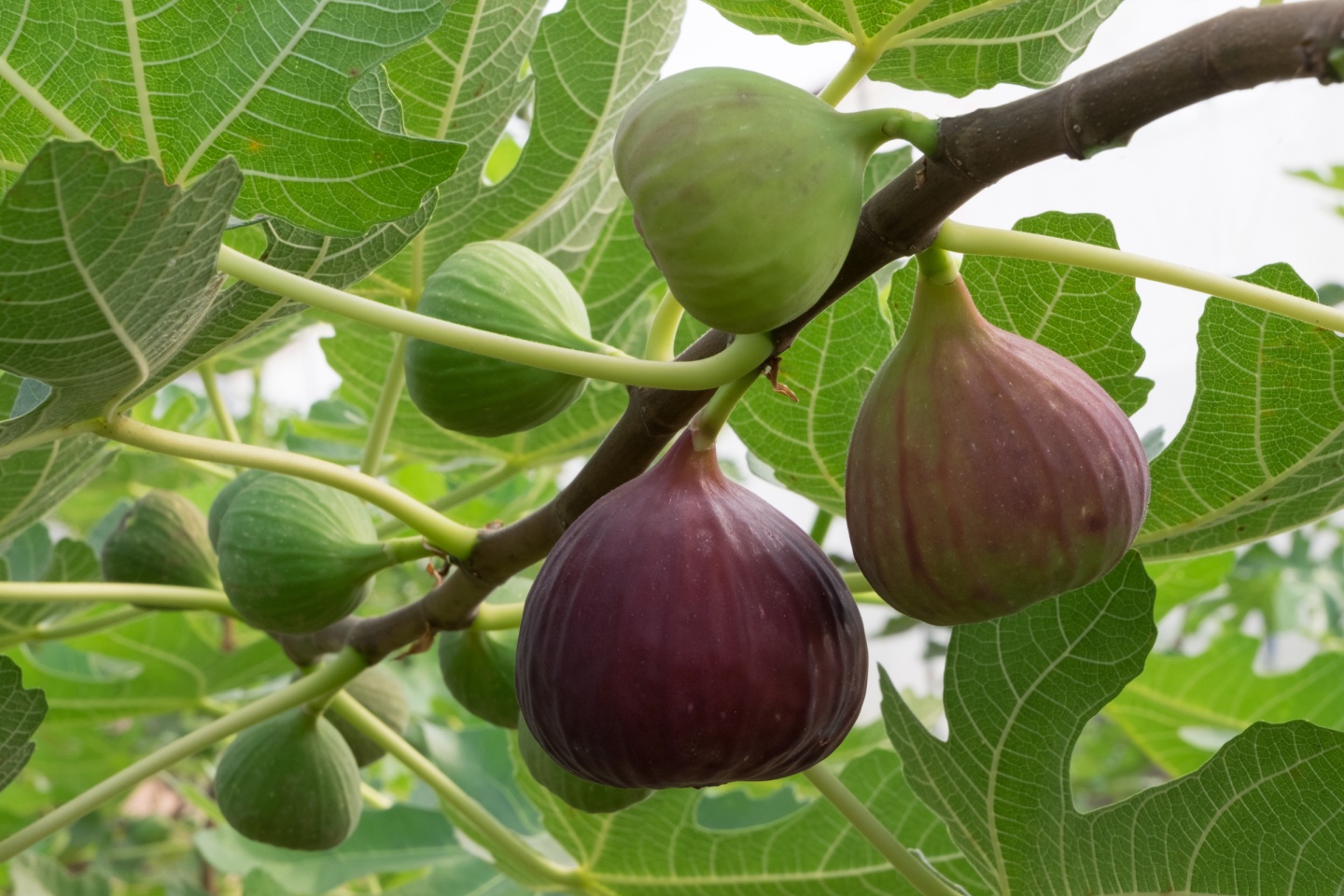
But in order to bring the first fruit…. It wasn’t even enough to see that first fig beginning to ripen on the tree, when it was marked with a special ribbon, then guarded throughout the season, making sure it keeps growing nicely, then picked, wrapped safely, then put in the basket and carried all the way – with everything that can happen along the journey – to Jerusalem, just to say, Look! This is It! This is the fruit of my partnership with the amazing, endless, wonderful gifts G-d gave me and family!
Not only could this long, arduous process been disrupted at any moment, but it had to start much earlier, with preparing the soil, planting the tree, caring for it. Or, caring for the animals, feeding them, taking them out, cleaning after them, day in and day out; season in and season out. At any moment we can begin to think, ‘oh look at me and what I’ve done!! At any moment, we can begin to think, ‘oh, this will never work; I’m worthless!’
And the Torah, again and again wants to remind us: we’re not everything, we’re not nothing. Most of all, we are not alone but a part of.
What’s our part? According to the Kabbalists, there is bounty coming to the world all the time, just good stuff pouring down from the heavens, but without a “something” on earth to catch it, it flows on. There needs to be a vessel to collect it, like a reservoir for rain and flood water. We are that reservoir; we are that vessel. It is perhaps no coincidence that we are made of “dirt”, of the material most used for pottery. We can hold. We can sustain. We can collect, then share.
Kids in Israel sometimes say (or used to say?) שברו את הכלים ולא משחקים – “the vesses are broken and we can’t play”. I used to think of it as just a silly kids’ rhyme. Some say it’s about the proximity between כלים (kelim, vessels) and כללים (klallim, rules) but then, I realized, that maybe it says that when our vessel is cracked or broken, for any reason, we can’t “play”, we can’t participate. Because, after all, we do not and cannot create or bring this bounty from scratch; that’s not on us. But we can bring the vessel to hold it and give it on.
And our “vessel” needs prep. There are times when we’re grumpy or haughty; too much or too little of anything and we can’t “be”; We might think, ‘ah, no worries, I’ll just be “ready” when I need to without all this work on the way’, but it’s not possible, no more then it’s possible to jump out of bed with a beautiful fig or sheep and run to the Temple. Not unless we did all the necessary steps long beforehand. Even then, there is no guarantee, but without it, so much less.
It is customary to read Ki Tavo before Rosh Hashana, during this month of Elul which is intended for reflection because Ki Tavo can help us think back about where we’ve done well, where we’ve erred, and how to proceed in our relationships with others and with G-d. According to the Torah, blessings and curses don’t just happen randomly. They are like signs along the way for us, how to maximize or minimize our chances.
The Torah includes another strange statement in this week’s reading: ושמחת בכל הטוב אשר נתן לך ה’ אלוהיך… then you will be happy with all the good that Hashem your G-d has given you (Deuteronomy 26:11). Is that a mitzvah or a simple statement of facts? Yes. And… Maybe it’s an expression of how we feel in those moments when we just “are”, in what some now call “flow”, moments of pure simcha, joy, moving about knowing where we’ve come from, where we’re going to and what we’re here to do.

Shabbat Shalom.

Posted in Uncategorized | 1 Comment

IF you go out, then here’s the list… The Torah portion of Ki Tetze

Rudyard Kipling wrote his famous poem, “If”, about the first word in this week – and next week’s – Torah portion. Well, maybe. At least this is what comes to my mind this week when reading that “Ki”. “Ki” has many meanings, including the more commonly used “because”, but here it is “If”: “If you go out to war”… Already Rashi (1040-1105) points out on the opening verse (Deuteronomy 21:10) that the real war, the toughest war of all this section is talking about, is the internal war one wages against one’s own self. This is also why many suggest this “ki” as “when”: the war we wage against ourselves is going to happen; it’s just a question of time “when” comes the moment that we look at ourselves in the mirror and say, ‘eh, this needs a little work’. The core of our lives s conditional: if we go out, if we take things on, there will be struggles, challenges, fights and wars. But ultimately, only if we go out, we can expect to eventually arrive, as will be the opening next week.
*******
The Torah portion of “Ki Tetze” has the most commandments any parasha in the Torah has: 74 in total: 27 “positive” (do this and that) and 47 “negative” (don’t do this and that). On the surface, all these commandments are dealing with our immediate physical existence, starting with “if you go out to war” and on. But already Rashi (1040-1105) comments of the opening verse (Deuteronomy 21:10) that the real war, the toughest war of all this section is talking about, is the internal war, one wages against one’s own self, one’s own evil inclination.
This continues throughout the rest of the reading. The commandments can be understood on a “pshat”, simple level, as directive for a safer, more wholesome living, and, at the same time, as holding deep spiritual messages.
For example,
During my studies at the Haifa University, I wrote a paper about “the roof in the Arabic houses”. I postulated that by analyzing the roof, I can learn a lot about how the people underneath that roof live their lives and maybe even, see the world. The Torah looks at roofs too. Deuteronomy 22:8 states: “When you build a new house, then you shall make a railing for your roof”… which totally makes sense. In the ancient world, and still in some parts of the world today, the roof is a usable place where one can dry fruits and seeds, hang laundry, sleep in the summer or sunbathe in winter, play, sit and chat and more. Such a roof, should have a railing so no one falls. But, this is so obvious! Does the Torah really need to tell us that?
The Kabbalists add a less obvious layer. They play with the fact that in gymatria “gag-cha” – your roof – is numerically equal to G-d’s four letter name (26), and tell us that we should have a railing – or what today we would call “boundaries” and discuss extensively – around ourselves to protect ourselves and disallow disruptive things from coming in. Our human “gag” – roof, the highest point in our being is our mind, our thoughts, and much of our connection with the Divine. That part needs to be secure and safely guarded.
The next verse (22:9) states: “You shall not sow your vineyard with two kinds of seeds; lest the fullness of the seed which you have sown be forfeited together with the increase of the vineyard”. Interestingly, the Hebrew word for “two kinds of seeds” is “kil’ayim”, which literally means – two prisons. Rav Hirsch (1808-1888) explains in his commentary that “two prisons” implies that we are not to mix two different kinds – of seeds or anything that grows, people too. Things that inhibit and limit each other’s growth, that “imprison” each other, and don’t allow mutual growth, have no room in the same “mix”. Our goal should be to strive to develop to our fullest potential; boundaries and a good environment – are key necessities, but something – or someone – who holds us back and restrains us, is a no-no. Elsewhere in the parasha, we’re told that it is a man’s duty to “gladden his wife” (24:5), and yet, what if that’s not possible? In the very same parasha, we’re also given provisions for separation, and even – divorce, for the very same reason of “not mixing things” that imprison each other.
And one more for this Shabbat: In the beginning of that chapter (22:1-4) is a famous favorite mitzvah, that of returning lost objects. The mitzvah of hashavat aveda – returning lost objects – is what’s called “a double mitzvah” because the Torah says “hashev teshivenu” – “indeed you shall return”, using the same root-verb twice. There is also an added negative one: “lo tuchal lehit’alem” – “you will not be able to ignore / avoid”. The sages teach us that if you find your neighbor’s lost object you must return it. This too seems to make sense; why state the obvious? Then the sages add: you must return it, meaning even 100 times! That’s when it becomes less obvious and one wonders: really?? 100 times? What can we possibly return 100 times??
So maybe the construct hashev teshivenu does not only refer to returning a lost object but also to another word that shares the same root: teshuva. Tshuva, which we quickly translate to mean “repentance” shares its root with “answer” as well as “return”. If so, this is also about us noticing within us – or others – things that are lost; different qualities that have gone astray, that we forgot somewhere and no longer use to our betterment, like the ox within us symbolizing our insistence and stubbornness who maybe now no longer works for us; or our lamb – symbolizing our meekness and more. In that sense, these are the things we must notice and can’t ignore; the things we must return back to ourselves. Even more than lost objects – a garment, a donkey – and especially in the month of Elul before the High Holidays, this is a reminder for making teshuva with each and every one of our separate, lost pieces – our outer covering, our physical, hardworking drive – and even if it takes us 100 times, still, never-ever give up on bringing those back home.

Shabbat Shalom.

Rooftops from Brooklyn NY

Posted in Uncategorized | Tagged , , , , , | Leave a comment

Shoftim & Shotrim: 19S goes to see BlacKkKlansman

On my last visit to 19S Bellevue Hospital’s prison “med-surg” floor, R. is asking me to do something for him. This is exactly the sort of opening that prison authorities warn against: “no sooner will you go in there”, say the authorities, “they’ll start asking you to do stuff for them, bring things, Don’t. The slightest thing will give “them” ideas”; before you know it, you’ll be running drugs for them” … No one has ever done this with me. The requests I got were for Bibles, rosaries, Korans, a prayer, a wish for well-being, a ‘can you maybe visit again, sister’. R’s request, though unique, is likewise not the kind the guards worry about: he’d like me to go see BlacKkKlansman, for him.
The movie which is described as “entertaining” is anything but. Set in 1970s Colorado Springs, the plot follows the first African-American detective in the police department, Ron Stallworth, who sets out to infiltrate and expose the local chapter of the Ku Klux Klan. He first calls the chapter, pretending to be a white man. While he is “the voice” of the operation, he then recruits his Jewish coworker, Flip Zimmerman, to act as him when meeting the Ku Klux Klan members in person. In a play of the recent Torah portions, we could say that “The Black” and “The Jew” separate and mix “sight” and “sound” in order to cultivate their relationship with the local Ku Klux Klan chapter. Under the pretense of expediting his membership, Stallworth even begins a series of phone calls with David Duke, the Grand Wizard, or national director, in Louisiana, who eventually comes to visit, spewing his rhetoric against Blacks and Jews.
I am guessing R, with his long-time prison history, did not get to see the film, but the painful history and its results in the present, are all too familiar to him. In one of my visits he tells me of his recent court case: “my charges were dropped”, he says, visibly upset, “but I was sent back in here, and ya’ know why? So that ya’all can have a job! And a pension! This isn’t about us”, he continues, as he points to his darkish skin color, “ya’all need us in here, for yourself!”
I’ve become very marginally familiar with the complexities of the system back in CA when I had a chance to visit the notorious Folsom State Prison. The visit left me shocked for a while, as I learned, among other details, that prisoners (“good prisoners” are rewarded and sent to) work in factories, like hospitals laundries, for 99 cents / hour (“what you want, they already get room and board”). In San Francisco I work with Delancey; In NY I take on internship last year at Bedford Hill Correctional Facility – NY State women’s “max”, and now, find myself assigned to the 19th Floor at Bellevue. I often wonder: what if each guard took one or two prisoner and even only half the relative budget assigned per inmate, and got a house and garden to grow stuff and have a “real” job; like how about real “rehabilitation”. I don’t doubt the need to protect society, but am still stunned by the way we do it.
Per Wikipedia, “Incarceration in the United States is one of the main forms of punishment and rehabilitation for the commission of felony and other offenses. The United States has the largest prison population in the world, and the highest per-capita incarceration rate”. Of adult prisoners, “Whites” comprise about 2/3 of their number in the larger population while “Blacks” comprise 3 times their population in society at large.
The Torah knows of prison or jail: we hear about it when Joseph is thrown into “beit ha’asurim” – in Egypt (Genesis 39:20). We know of refuge cities, but those are designed to protect the transgressor; we know of plenty punishments – and for the Torah, capital punishment is an option, at least on paper; one can also become a servant to another in order to pay a debt, but I am not sure of the idea of one taking away another’s freedom and life, at times, for good.
The Torah in this week’s parasha talks to us about placing “officers and judges in all your gates”, with the purpose being – a just system. Officers and judges – is in the plural; “your” gates – is in the singular, perhaps because we are all responsible as one. And perhaps also, as the AriZaL points out, because each one of us is a little country of itself, and we need “officers and judges” to determine what to let in and how much. Rav Chaim Vital talks about our own 7 gates in our face: the eyes, ears, nostrils and mouth, and another gate of touch. Jacob talks about chancing upon “Sha’ar Hashamayim’ when traveling north (Genesis 28:17), a point where one can connect heaven and earth. We can bang on the wall forever, but only through the gate can we allow the “flow”. How wide the gate, how generous, protective or closed are the guards and judges? Finding that point might determine our wellbeing as individuals and as a society.

Shabbat Shalom.

Posted in Uncategorized | Tagged , , , , , | 1 Comment

On seeing angels – the Torah portion of Re’e

J. is a 50-year-old man. He’s tall and athletic; he walks with a dancing gait – that is, the short distance he’s allowed to do so in the hallway; he has short dreads and a well-trimmed beard, or at least so it looks. It’s possible that between his arrest and hospital time, he just didn’t have a chance to shave. Or maybe he’s covering the massive lump in his jaw, which the doctors think might be cancerous. When I come to visit, he says, ‘thanks the Lord for every beautiful day, sis!!’ in a cheerful, well-rehearsed singing tone, but soon becomes very teary. I learn that he’s suicidal; that while in prison, he’s been repeatedly raped, taunted and harassed, infected with HIV and other dangerous diseases. He has the mind of a child; he wants his mamma; his education barely exceeds grade school and he can’t spell even the simplest words.
The patient in the next room is a robust older man who’s skillfully maneuvering himself around on a wheelchair, as he’s slowly losing his foot to an infection. He’s been in state prison for more than 25 years, and proudly tells me he’s a terrorist. He says he wants to “blow the whole f-g place up”. He loves having “a suicidal” next door, whom he’d like to recruit for one, final, “little good deed” so we can show all them m-f what the h– we mean”. He’s yells at me from the door: “don’t visit him; he wants to die? let him die”, he emphasizes the word purposefully, “You can’t do no nah-thing for him, but we? We can give him what he wants! it’s time someone show these m- f – a thing or two, I’m not f– kidding”. There is not one sentence without a string of curse words. I listen to the frustration underneath; the years, decades, centuries of feeling mistreated; the terribly expensive cost for wrongful acts; the fear to tear up too, to not be ‘man enough” and show even a glimpse of the immense overwhelming sadness in his heart.
This is but one hour at my internship at Bellevue which is coming to its end; my heart breaks and sores countless times a day. Our humanity seems so futile, so Divine. We are utterly helpless to extinguish suffering and pain and misery; we are the angels that can place their palms on the ground so another won’t be harmed (Psalms 91:11).
*******
After weeks of emphasizing listening, the Book of Deuteronomy commands us “to see”, to celebrate the gift of our eyes; of this world’s beauty and the choices it presents. At the end of this week’s Torah portion, we’re told about aspects of the kosher laws (which animals we can eat), as if, just as we choose what to put inside our stomachs, we should watch what we feed our eyes.
One of the non-kosher birds is the ra’a (ראה – spelled like re’e). The Talmud says about the ra’a that, being a prey bird, “it stands in Babylon and sees a carcass in the Land of Israel”. This is the Talmud’s way of warning us from those times when we’re confused (Babylon, Bavel, related to the root for bilbul, confused) and criticize things we don’t understand from afar, parallel to any such situation where we hasten to condemn things we don’t fully understand. After ‘”graduating” listening, we’re invited to see, but not without a warning: the eyes have the danger is being superficial, as opposed to the ears, which are more internal.
It is interesting to look into where the verb “lir’ot”, to see appears in the Torah. The first is G-d who checks what he created and “sees that it is very good” (Genesis 1:30). There are those who say that G-d did not just “see” the world like we would, but that He put the power to see the world as a complete, full picture. It is easier for us to see the world in separate, often unrelated pieces, but creation was one and we are called to see it as such.
A couple of other places to note the verb “lir’ot”: when Abraham took Isaac to the akeda, it says he “saw the place from afar” (Genesis 22:4). The midrash says that he asked Isaac what he sees, and Isaac said he saw a pillar of fire stretching from heaven to earth atop the mountain. Then he asked his servants, who said they saw nothing. Hence he said to them, “sit here (and wait) with the donkey” (22:5). Donkey in Hebrew is chamor, from the same root as chomer, materialism. Seeing then, already early on, has nothing to do with what “objectively” was ahead, but with what was inside each one. This is not the only place where the Torah suggests that seeing a matter of choice; a matter of what’s in one’s heart (Number 15:39).
And on the other hand, at the height of our closeness to G-d, at the Giving of the Torah, it says: “and all the people see the sounds”… We didn’t hear the sounds, but saw them. There was no separation. We were one and our senses were one.
And last favorite voice on this: Sforno, the Italian commentator of the early 1500’s, says that re’e here is a serious warning: “see, I set before you blessing and curse” – two opposite, definite extremes. You might think, says Sforno, that there are more options in between, but don’t be fooled. There aren’t. The in-between is itself the curse. Choosing life is a choice to see good.
*******
We continue to hear about the Land we’re going to, “a Land of milk and honey”. There are many commentaries what is this milk and honey? Perhaps goats and date palm trees? What could it be? Rav Uri Sharki points out that – in some cases, possibly, symbolically- milk and honey are the only two edible foods produced by non-kosher animals: bees and humans. If so, the gift of the Land is not its lushness, but it’s ability to take something not edible, not digestible, “impure” and turn it into something “pure”, digestible, healing, sweetening, which is also then, what we are called to do.

Shabbat Shalom.

Posted in Uncategorized | Tagged , , , , , | 1 Comment

“Eat a little something”… Parashat Ekev

This week we read the famous 3 words: ואכלת, ושבעת וברכת – “and you shall eat, and be satisfied and bless’ (Deuteronomy 8:10), and one must wonder: how did this turn into four paragraphs and some blessings and closing singing verse after every – piece – of – bread?
Anyone who’s been to any Jewish event knows the power of food. We joke about the theme of the holidays: “they tried to kill us, we won, let’s eat”. Indeed, almost every holiday has its unique flavors and foods.
I find our relationship with food intriguing on many levels. Most of us are so used to it, that we don’t often think about it; and while we think, we go over to the kitchen, open the fridge, and wonder, mmm… it often takes a negative occurrence to have us stop and think about the stuff we put into our body: what is it? Is it good for us and those around us?
Is eating a mitzvah? At first, you might shrug, but leafing back to Genesis, we notice the first time the root צ.ו.ה – letzavot –to command – appears in the Torah:
וַיְצַו֙ יְהוָ֣ה אֱלֹהִ֔ים עַל־הָֽאָדָ֖ם לֵאמֹ֑ר מִכֹּ֥ל עֵֽץ־הַגָּ֖ן אָכֹ֥ל תֹּאכֵֽל׃
And the LORD God commanded the man, saying, “Of every tree of the garden you are free to eat (Genesis 2:16).

What is it about eating? Why would this be the first mitzvah (vayetzav) to eat from every tree in the Garden? What do we learn from the act of eating about our relationship with G-d?
Consider that this comes after the human’s creation. The human! The only one in all of creation of whom it is said that s/he made in G-d’s image! Wow! What a grand being! But just a split second before the human gets too haughty and get too many ideas about his loftiness, s/he is told about eating. If there is anything to remind us of our limitations, of how we can be just like animals, of how we are not immortal – it’s our need to eat (procreation and sexual desires are there too, and if you’d like to dig through a Hebrew dictionary you’d be amazed at the closeness of the words used for both). On any fast day my mind plays tricks on me: ‘hey, let’s get a little something’; ‘no, I’m fasting’, ‘oh, right, so how about fruit?’ ‘I told you, I’m fasting’. ‘right, right’ (two seconds quiet) ‘so… tea maybe’? This is the internal battle and it’s a constant reminder that we are made “in the image of”; a “spark of the divine” but not G-d. We are “created” —- and not “creator” — just in case something got into our head.
The midrash tells us about Abraham and Sarah who “made souls” (Genesis 12:5) and taught people about the One G-d. We “know” how they did it: they had people over for a meal and at the end of the meal, told them to thank whoever gave them that food, slowly realizing it’s Hashem.
In many cultures, fasting seems what’s more “godly”, more “angelic”, being able to manage without food, sort of like G-d! but our tradition tells us that it’s just as much a mitzvah to eat on the day before Yom Kippur as it is to fast on Yom Kippur itself! which in a sense means – to celebrate our being fully human is our duty and highest form of being. This is something we can’t do when we imitate G-d and angels, but when we “dig in” and while we aim to be “spiritual”, we also enjoy the very earthly gifts we got. From G-d.
Interestingly, we are not the only ones who eat, and I find this idea fascinating: When the sacrifices are accepted, it is described as the mizbe’ach (altar) who eats them (extensively in the current Masechet Zavachim); and the Land of Israel is described as “eating its inhabitants” (Numbers 13:32). Though often viewed negatively, what this tells us is that the Land, which is an active, willing, living being (possibly any land but specifically here the Land of Israel) consumes and thereby changes those who live on it as they become an integral part of her! This metaphor leaves a lot to think about…
Eating also has dangers: two verses after our original one (Deuteronomy 8:11-18), the Torah says:
הִשָּׁ֣מֶר לְךָ֔ פֶּן־תִּשְׁכַּ֖ח אֶת־יְהוָ֣ה אֱלֹהֶ֑יךָ לְבִלְתִּ֨י שְׁמֹ֤ר מִצְוֺתָיו֙ וּמִשְׁפָּטָ֣יו וְחֻקֹּתָ֔יו אֲשֶׁ֛ר אָנֹכִ֥י מְצַוְּךָ֖ הַיּֽוֹם׃
Take care lest you forget the LORD your God and fail to keep His commandments, His rules, and His laws, which I enjoin upon you today.
12
פֶּן־תֹּאכַ֖ל וְשָׂבָ֑עְתָּ….
When you have eaten your fill….
14
וְרָ֖ם לְבָבֶ֑ךָ וְשָֽׁכַחְתָּ֙ אֶת־יְהוָ֣ה אֱלֹהֶ֔יךָ הַמּוֹצִיאֲךָ֛ מֵאֶ֥רֶץ מִצְרַ֖יִם מִבֵּ֥ית עֲבָדִֽים….
beware lest your heart grow haughty and you forget the LORD your God—who freed you from the land of Egypt, the house of bondage…
וְאָמַרְתָּ֖ בִּלְבָבֶ֑ךָ כֹּחִי֙ וְעֹ֣צֶם יָדִ֔י עָ֥שָׂה לִ֖י אֶת־הַחַ֥יִל הַזֶּֽה׃
and you say to yourselves, “My own power and the might of my own hand have won this wealth for me.”
18
וְזָֽכַרְתָּ֙ אֶת־יְהוָ֣ה אֱלֹהֶ֔יךָ כִּ֣י ה֗וּא הַנֹּתֵ֥ן לְךָ֛ כֹּ֖חַ לַעֲשׂ֣וֹת חָ֑יִל לְמַ֨עַן הָקִ֧ים אֶת־בְּרִית֛וֹ אֲשֶׁר־נִשְׁבַּ֥ע לַאֲבֹתֶ֖יךָ כַּיּ֥וֹם הַזֶּֽה׃ (פ)
Remember that it is the LORD your God who gives you the power to get wealth, in fulfillment of the covenant that He made on oath with your fathers, as is still the case.
Excessive eating can lead to forgetting the Source of it. That means that the Torah views eating as a tool, not an end! Our whole “mission statement” is folded in this one section: Eat to your heart’s content. Be satisfied and enjoy. Use all this to connect with Hashem via blessings and remembrance. For He gives you the strength to be. In order to maintain the covenant giving to your ancestors.
Now, let’s have a little something. All this writing, makes me hungry…

Shabbat Shalom.

Posted in Uncategorized | Tagged , , , , , , | Leave a comment

Live. Pray. Love – by – Moses

Prayer and hospital go hand in hand. Or maybe it’s prayer and life. I remember a saying: “as long as there are tests, there will be prayers in public schools”. In the end, everybody prays, every blade of grass has its song, says Rabbi Nachman, and this is so much stronger in the hospital. People ask for prayers for healing, though we know that not everybody can be fully healed in the physical, visible sense. I am often asked what is prayer good for, if G-d doesn’t answer: “S/he is a good person; why the suffering? Why is G-d doing this to him / her / me?” I am asked if we can expect miracles, because we believe, don’t we? And there used to be miracles, so why not now? And I want to say, “yes” but instead to sit quietly, maybe nod, constantly aware that what we don’t know is so much greater than what we do know, and how baffling it is to stand at the edge.
This week’s Torah portion, Va’etchanan, opens with Moses’ prayer and his appeal to go into the Land. On one hand we can read it as history: Moses prayed, great. On the other, it is Moses praying!! Even in his prayer, he remains our teacher. If we think about it, it’s a little crazy that Moses, the closest person to G-d, even stops and prays. Does Moses not trust G-d to know what he wants without him having to say it? Does G-d not know what Moses wants or needs? What is prayer and how does prayer work? And if G-d does know, how can the words of a human “change” His mind??
The Maharal (1512-1609) says that this kind of thinking is erroneous and that what prayer comes to do is complete the human being where there is a miss. What makes humans human is their power of speech. Therefore the human needs to create a vessel, with this power of speech, for Hashem to pour into it His great abundance. Having a request is an indication of a lack, for perfect beings don’t need to ask for anything. But humans are in desperate need for G-d’s gifts. Rabbi Tzvi Yehuda Kook (the son of; 1891-1982) says that prayer is about making a change within us, not within G-d. In some writings it’s considered a ladder, climbing up, closer but never quite, face to face, eye to eye, with the Divine.
The Kabbalists say that that the word “va’etchanan” equals in its numerical value 515 which is the number of Moses’ prayers. Had he added one more, he would have been granted his request, so – he didn’t. Deep down he knew that it’s better for everybody is he does not go into the Land. At the end of the day (and even though it’s the core value of the Book of Deuteronomy!), the one who is teaching it, will not be the one doing it. More than “a place” it’s about a relationship.
King David much later will say ואני תפילה “va’ani tefilla”, I am prayer. Prayer in it’s ultimate form is not something we “do”; it’s something we are. The word “va’etchanan” which means beseeching, imploring is also equals to the word shira, long, continues song, maybe as a way to remind us that prayer’s goal is not ‘to get stuff”, but to not be alone where we are already.
*******
This is also the same Torah portion when Moses says the famous שמע ישראל… “Shma Yisrael”, Hear, oh Israel, you people, listen, and not “us”, as if he’s already on the outside, waving goodbye. This is Moses’ tragedy: he’s born “outside” and dies “outside”. This is also Moses’ greatness: being on the “outside” does not mean one is not a part of. This is who we are too: Moses is amazing. The leader after him is going to be a little “paler”. The midrash tells us that Moses is like the sun while Joshua is like the moon and yet. We have both and more, among our People and within ourselves.
*******
Galgalatz (one of Israel’s most listened to radio stations) plays love songs today. It’s Tu Be’Av, often mistranslated for brevity as “Jewish Valentine Day”, the day when the unmarried go out to the field to choose and be chosen. Love, especially in this week’s Torah portion, is a choice. The Torah instructs us: ואהבת… “and you shall love”… Is that a simple future tense, telling us how things will be, that we will love? Or is it a commandment? And how is it possible to command someone to love?
For Rambam, love of G-d is a result of knowledge, which is why it comes right after the Shma – שמע – “hear oh Israel, Hashem our G-d, Hashem is One” (Deuteronomy 6:4). Knowing G-d’s Oneness and totality is the key to the love. If not, we’ll love one side and not the other, while that “other” stands and threatens other parts. The more we know, the more we’ll love. This is crazy, considering modern sentiments, but the Torah comes again and again to remind us: it’s all there, in the oneness. Open your shutters and let the light in; choose life, choose love.
Shabbat Shalom.

Posted in Uncategorized | Tagged , , , , , , , | Leave a comment