יום הכיפורים – יום מתן תורה האמיתי
כל חג במסורת שלנו הוא לזכר ולכבוד אירוע בתולדות העם שלנו: פסח לזכר יציאת מצרים, שבועות – למתן תורה, חנוכה – לזכר ניצחון מעטים מול רבים, וכן הלאה. בראש השנה הזכרתי את הדיון בין רבי אליעזר ורבי יהושע, ואת זה שלמרות המחלוקות בנושאים רבים, הם מסכימים שבראש השנה בטלה העבודה מאבותינו (מסכת ראש השנה י:ב).
ומה קרה ביום כיפור? אולי משהו עם הכהן הגדול בבית המקדש?
על פי המסורת, מעמד הר סיני חל ביום השישי בחודש סיון. היה מדהים. חזיון אור-קולי מעולה. כולנו עמדנו ביחד בתחתית ההר וראינו את הקולות. היום נקרא ״מתן תורה״, אבל, ביד, לא קבלנו שום דבר. משה עלה להר סיני ל- 40 יום ו-40 לילה כדי לקבל את התורה והלוחות (הראשונים) וחזר ביום י״ז בתמוז, היום בו היה חטא העגל ונשברו הלוחות הראשונים ונהיה יום צום. היינו אמורים להמשיך לארץ אבל במקום, התחלנו תהליך של ״תשובה״.
משה נשאר עם בני ישראל 40 יום בתחינה שינתן לו לשוב ולעלות להר, ובראש חודש אלול, חודש הסליחות, עלה להביא את הלוחות השניים. הוא נשאר בהר עוד 40 יום ו-40 לילה, וכשהוא ירד בפעם השנייה, זה היה היום העשירי בחודש תשרי, יום כיפור, יום מתן תורה האמיתי: היום בו קבלנו את הלוחות השניים, הלוחות שנפסלו בידי בן-אדם, שנעשו בשותפות של הקב״ה ומשה, בלי ״קולות וברקים״, ונכתבו בפרטיות, כמעט בחשאי, ודווקא אלה, הם הלוחות שנשארו איתנו גם הלאה.
על פי רבי אברהם בן יצחק, יום הכיפורים הראשון היה עוד קודם. לפי החישוב שלו, ברית המילה של אברהם אבינו היתה ביום הכיפורים, כי כתוב ״בעצם היום הזה נימול אברהם״ (בראשית יז,כו), וכתיב (על יום הכיפורים) ״ועיניתם את נפשותיכם… בעצם היום הזה״ (ויקרא כג, כז-כט). על פי חוקי פרשנות התורה, השימוש באותן מילים בדיוק מחבר בין ומאיר על רעיונות שונים. כאן, ״בעצם היום הזה״ שנאמר בקשר ליום הכיפורים ובתיאור ברית המילה של אברהם אבינו, מלמד אותנו שזה קרה באותו היום. זכותה של אותה הברית נשמרת לנו גם ״בעצם היום הזה״ כיום, ויום הכיפורים נשאר יום של בגדי לבן, יום בלי אוכל ובלי שתייה, בלי שום צרכים פיזיים. כמו שאמרה לי אחת התלמידות שלי על חווית יום הכיפורים: ״יצאתי מהבית ולקחתי רק את הנשמה שלי והלכנו׳. זהו יום שלאדם בו אין שום דבר חומרי, והוא יכול להישען בו רק על הקב״ה. כמו הלוחות השניים שביגוד לראשונים לא נשברים, אומר הרבי שניאור זלמן בעל התניא, גם זו אהבה שאין לה שבירה, ומכאן נהיה יום של חרטה, תיקון, תשובה, כפרה, מחילה, סליחה ושלום.
שבת שלום, חג שמח וגמר חתימה טובה
Yom Kippur: The Real Giving of the Torah Day
Every holiday in our tradition commemorates and honors an event in our People’s history: Passover commemorates the Exodus from Egypt; Shavuot – the Giving of the Torah, Hanukkah – the victory of the few over the many, and so on.
Regarding Rosh Hashanah, I mentioned the discussion between Rabbi Eliezer and Rabbi Joshua, and the fact that despite their disagreements on many issues, they agree that on Rosh Hashanah the bondage of our ancestors in Egypt came to an end (Tractate Rosh Hashanah 10b).
So what happened on Yom Kippur? Perhaps something involving the High Priest in the Temple?
According to tradition, the revelation at Mount Sinai took place on the sixth day of the month of Sivan. It was an incredible experience. A spectacular audio-visual display. We all stood together at the foot of the mountain and “saw the sounds.” The day is called “the Giving of the Torah,” but in reality, we did not actually receive anything. Moses went up Mount Sinai for 40 days and 40 nights to receive the Torah and the first Tablets, and returned on the 17th of Tammuz, the day of the sin of the Golden Calf, when the first Tablets were broken and the day became a solemn fast day. We were supposed to continue on our journey toward the Land of Israel, but instead, we began a process of “teshuvah.”
Moses remained with the Israelites for 40 days, pleading for permission to go back up the mountain, and on Rosh Chodesh Elul, the month of selichot, he went up to receive the second Tablets. He remained on the mountain for another 40 days and 40 nights, and when he came down for the second time, it was the tenth day of the month of Tishrei – Yom Kippur, the real day of the Giving of the Torah: the day on which we received the second set of Tablets, the Tablets carved by a human being, created in partnership between G-d and Moses, without any “thunder and lightning,” and written in private, almost in secrecy. And these, precisely these, are the Tablets that remained with us thereafter.
According to Rabbi Abraham ben Isaac, the first Yom Kippur took place even earlier. He calculates that the circumcision of Abraham our forefather took place on Yom Kippur, because it says, “On that very day Abraham was circumcised” (Genesis 17:26), and regarding Yom Kippur it says, “You shall afflict your souls… on that very day” (Leviticus 23:27–29). According to the principles of biblical interpretation, the use of exactly the same words connects different ideas and sheds light on them. Here, the phrase “on that very day,” used both in connection with Yom Kippur and in the description of Abraham’s brit mila, teaches us that they took place on the same day.
The merit of that covenant is preserved for us even “on that very day” today, and Yom Kippur remains a day of wearing white garments, a day without food or drink, without any physical needs. As one of my students described her Yom Kippur experience to me: “I left the house and took only my soul with me, and we went to shul…” It is a day when a person has nothing material, and relying only on Hashem.
Just as the second Tablets, unlike the first, were not broken, Rabbi Shneur Zalman, the author of the Tanya, teaches that this, too, is a love that cannot be broken. And so Yom Kippur becomes a day of regret, repair, teshuvah, atonement, forgiveness, pardon, and peace.
Shabbat Shalom, Chag Same’ach & Chatima Tova.
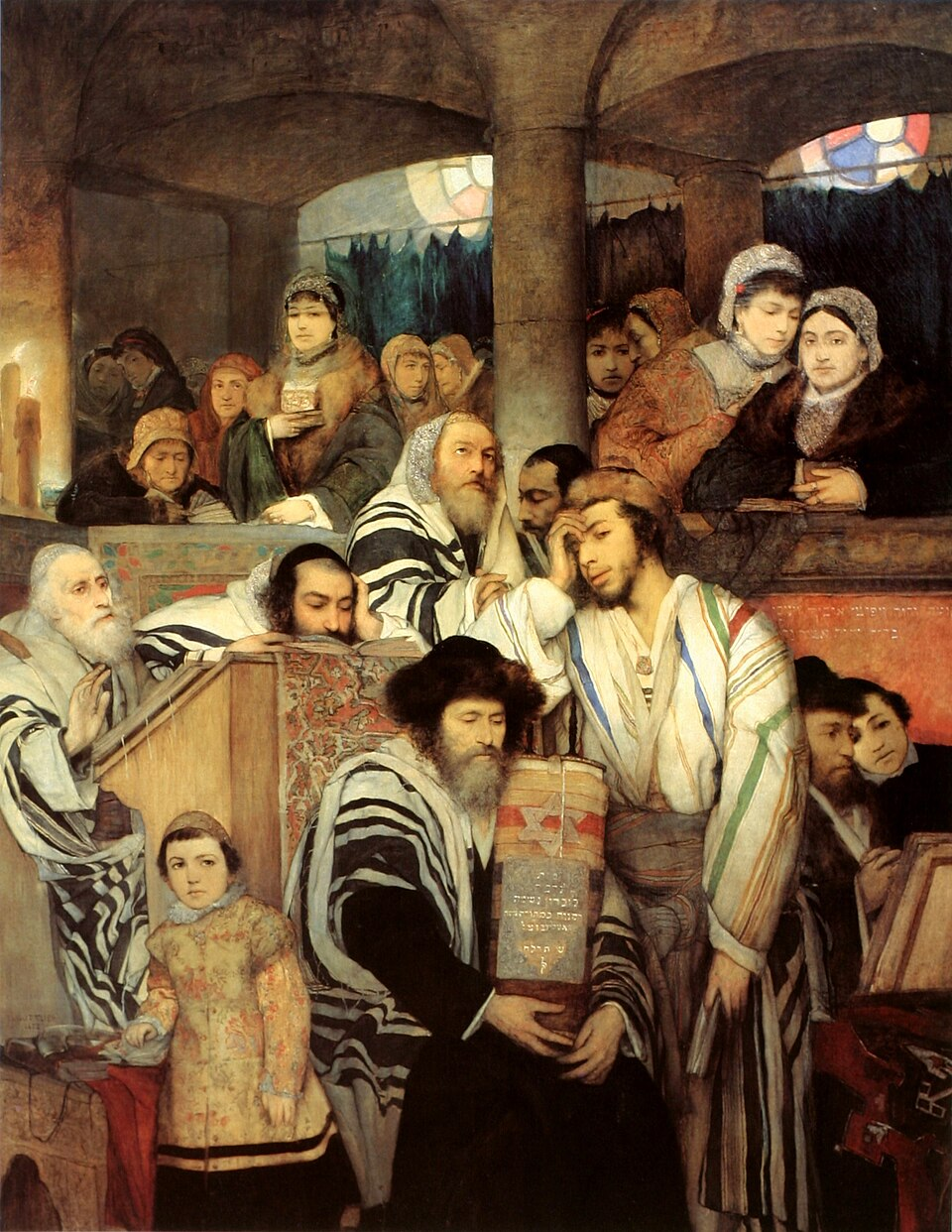
יהודים מתפללים בבית הכנסת ביום הכיפורים (1878), ציור של מאוריצי גוטליב


