פרשת ״והיה כי תבוא אל הארץ״…
האור החיים הקדוש, שעלה לארץ ממרוקו בשנת 1742 כדי לזכות ולהיקבר בארץ הקודש, כתב על הפסוק הפותח בפרשה זו: ״והיה (כי תבוא)״… לשון שמחה, שאין לשמוח אלא בישיבת הארץ״… לא משנה מתי נקרא את השורות האלה, יהיה מי שיתפלא: לשמוח בישיבת הארץ? גברת, את לא שומעת חדשות? אך התורה, ובמיוחד בפרשה הזו, אומרת לנו שלבוא אל הארץ זו שמחה, כשהיא בין קובעת עובדה ובין מצווה עלינו ״וְשָׂמַחְתָּ֣ בְכׇל־הַטּ֗וֹב״…
בעברית התנכית, בשעה שהמלה “היה” היא בלשון עבר, תוספת הוו בתחילתה – שנקראת וו ההיפוך – גורמת לה להיות בלשון עתיד, כך ש”והיה” נהיה ל-יהיה. יש בכך משהו סמלי, היכולת להפוך עבר לעתיד, להיות בתוך ומעבר לזמן, דבר שקורה לנו דווקא כאן.
הכניסה לארץ היא לא דבר פשוט ויש איתה סכנות. לא רק סכנות מאויבים מחוץ, אלא גם מעצמנו, ולא, התורה לא התכוונה כאן לוויכוחים ואי-הסכמות. אחת הסכנות שהתורה זיהתה היא זה שניקח את הארץ כדבר מובן מאליו, עוד ״סתם מקום״ בעולם ש״במקרה״ אנחנו גרים בו. כדי שזה לא יקרה לנו, קבלנו מצוות כמו שנת השמיטה וכמו הביכורים בראשית הפרשה שלנו.
הראשון שהביא ביכורים היה הבל שהביא ״מבכורות צאנו ומחלביהן״ (בראשית ד, ג-ד), ואילו קין הביא ״מפרי האדמה״. שני אלו מייצגים שתי גישות הפוכות: קין מלשון קניין, מעמיד את עצמו ואת הרצונות והצרכים שלו במרכז הבמה, נותן מעט ומן הדברים הפשוטים ביותר ושומר לעצמו את הטוב. לעומתו הבל, מוכן לתת לזולת הכל ועוד, עד כדי ביטול עצמו לחלוטין. התורה די ברורה שהמצב הקיצוני של שתי השיטות האלה אינו רצוי, ועדיין, התורה מלמדת אותנו בפרשה שלנו, שמי שיורש את הארץ הוא מי שיכול לראות ולתת לאחר.
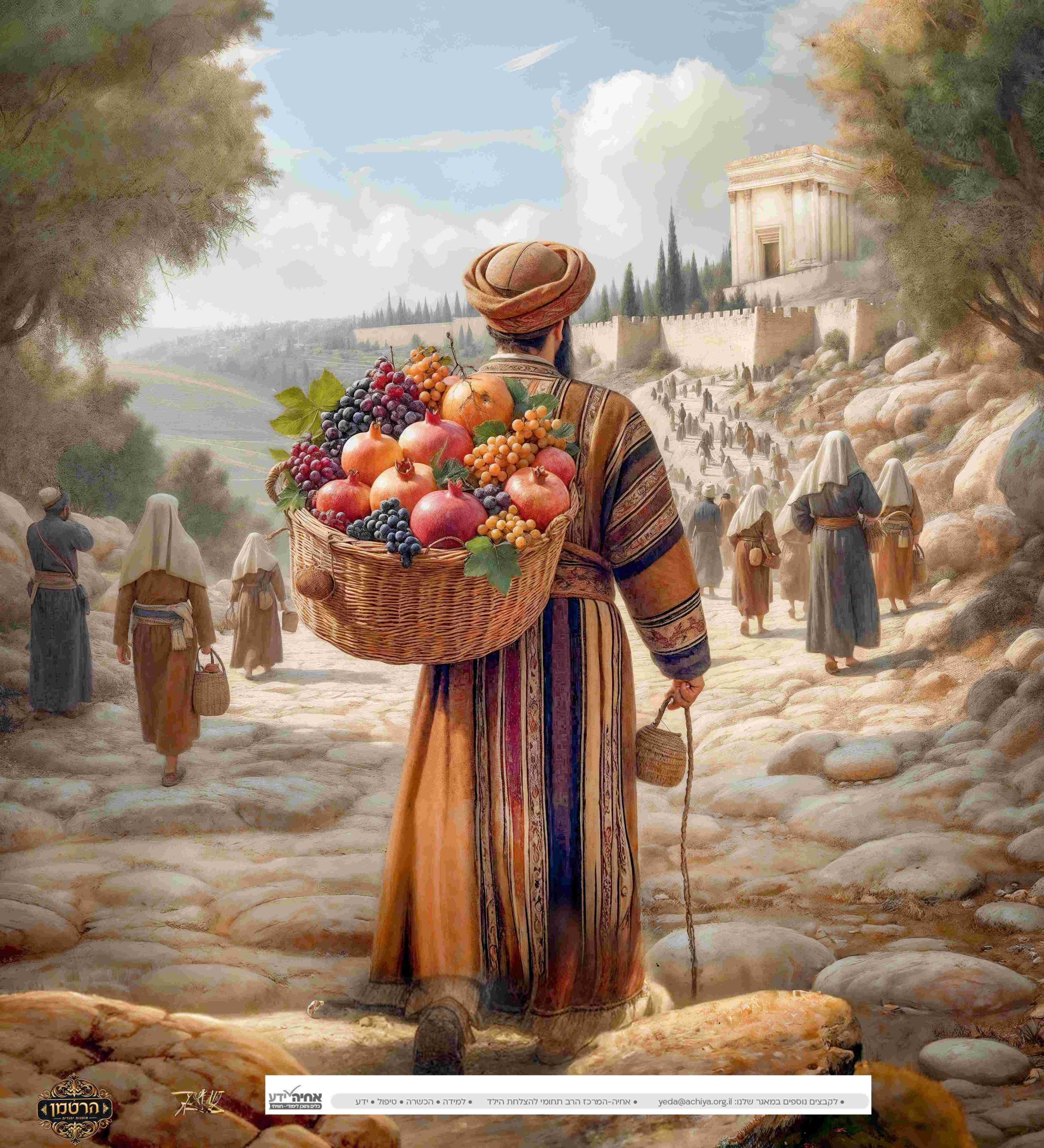
הפסוקים הראשונים מתארים את האדם שמגיע לכהן עם הטנא של הביכורים, והמשנה במסכת ביכורים מרחיבה עוד, איך היו האנשים הולכים עם הסלים הצבעוניים, העמוסים, עולים בדרך ושרים מזמורי תהילים. כמה מפתה היה לקחת את הפירות היפים האלה לעצמנו! הם נראים כל כך טובים! והם שלנו!! אבל התורה צוותה אחרת.
אחרי החודשים הארוכים שהפירות הבשילו לנגד עינינו בשדה שלנו, קטפנו אותם בזהירות, עטפנו אותם יפה, שמנו בסל, ויצאנו לירושלים לבית המקדש, לעמוד לפני הכהן ולהגיד לו פסוקים שסיכומם הוא, ׳הנה פרי השותפות שלי עם המתנות הנפלאות שהקב״ה העניק לי ולמשפחתי. קחו לכם, תודה רבה׳. רש״י אומר על האמירה הזו שכוונתה ״שֶׁאֵינְךָ כְּפוּי טוֹבָה״ (דברים כו,ג). כמה קל להגיד דווקא אז, ׳לא! זה שלי׳! ואפשר גם לתת בפנים חמוצות – נו טוב, שיהיה, קחו. אבל התורה מבקשת ללמד אותנו לשתף את הכהן, את האחר, במתנות שקבלנו, ולעשות זאת בשמחה.
מצות הביכורים מלמדת אותנו גם על תחושת ההתחדשות שצריכה להיות לנו כשאנחנו חיים בארץ, כשאנחנו אומרים: “הגדתי היום לה’ א-לוהיך כי באתי אל הארץ“ (דברים כו, ג)… נוכל להתווכח: אני לא באתי היום! זה ההורים, הסבים ודורות קודמים! ועדיין, התשובה שאנחנו אמורים לתת כשאנחנו נשאלים, למה אנחנו כאן, היא דווקא לא ״כאן נולדתי״, אלא ׳באתי היום, ואני בוחר.ת להיות כאן׳…
פרשת ״כי תבוא״ אינה פשוטה בלשון המעטה. אחרי הפתיח המרגש והיפה הזה, אנחנו מצווים לכרות שוב ברית עם הקב״ה כשנכנס לארץ, ודווקא בלב השומרון, בין הר גריזים והר עיבל, הר הברכה והר הקללה. שם, בנקודה האמצעית של ארץ ישראל התנכית, לא רחוק מהעיר שכם על ברכותיה ואתגריה, אנחנו מצווים ליצור מעמד מקביל ומשלים למעמד הר סיני. אז, במעמד הר סיני, העם עמד למטה, למרגלות ההר, והקול נשמע מלמעלה. במעמד הברכה והקללה בפרשה שלנו, העם עומד על מורדות ההרים, גריזים ועיבל, ואליו ארון הקודש וקולם של הכהנים והלווים, נשמע מלמטה (ראו בספר יהושע פרק ח). יש פעמים שהקול נשמע מלמעלה, ויש שהוא נשמע מלמטה, ומי שיכול לדמיין את שני המעמדות, אולי יראה שהם יוצרים שני משולשים הפוכים ומעין מגן דוד.
בפרשה גם נקבל רשימה של ברכות ורשימה ארוכה עוד יותר של קללות איומות, מה יקרה אם נעשה ומה אם לא, והמפרשים יגידו לנו שאלו דברים שקרו לנו עם חורבן בית שני והגלות לאחר מכן (לעומת הברכות והקללות בספר ויקרא שנחשבות שייכות לחורבן בית ראשון). חז״ל פסקו שלא לקרוא את הפרשה הזו בשבת שלפני ראש השנה, ולשים רווח בין הקללות לשנה החדשה כמאמר הפתגם – ״תכלה שנה וקללותיה, תחל שנה וברכותיה״, ולמי שצריך יותר נחמה, כדאי לקרוא את ההפטרה. הלוואי ונזכה.
שבת שלום.
Parashat “And It Will Be When You Enter the Land…”
The holy Or HaChaim, who came to the Land of Israel from Morocco in 1742 in order to have the merit of being buried in the Holy Land, wrote about the opening verse of this parashah: “And it will be (vehaya)” – is a language of joy, for “there is no joy except in settling in the Land.” No matter when we read these lines, someone is bound to wonder, Lady, don’t you listen to the news? Yet the Torah, and especially this parashah, tells us that entering the Land is a joy, both stating it as a fact and commanding us: “And you shall rejoice in all the good”…
In Biblical Hebrew, when the word haya “היה” is in the past tense, adding a vav at the beginning – known as the vav hahipuch, the “vav of reversal” – turns it into the future tense, so that “והיה” (vehaya) becomes “יהיה” (yiheye). There is something symbolic in this: the ability to turn the past into the future, to exist both within and beyond time, something that happens to us precisely here.
Entering the Land is not a simple matter, and it comes with dangers. Not only dangers from enemies outside, but also from within, and no, the Torah was not referring here to arguments and disagreements. One of the dangers the Torah identified is that we might take the Land for granted, as just another “ordinary place” in a world, where we “happen” to live. To prevent this from happening, we were given mitzvot such as the sabbatical year and, at the beginning of our parashah, the mitzvah of the bikurim, the first fruits.
The first person to bring first fruits was Abel, who brought “from the firstborn of his flock and from their fat portions” (Genesis 4:3–4), while Cain brought “from the fruit of the ground.” These two represent two opposite approaches: Cain, whose name is connected with kinyan, acquisition or possession, places himself, his desires, and his needs at the center of the stage. He gives little, and from among the simplest things, while keeping the best for himself. Abel, by contrast, is prepared to give the other everything and more, to the point of completely negating himself. The Torah makes it fairly clear that the extreme version of either approach is undesirable. And yet, in our parashah, the Torah teaches us that the person who inherits the Land is the one who is able to see the other, and to give.
The opening verses describe the person who comes to the priest with his basket of first fruits, and the Mishnah in Tractate Bikkurim expands the picture further: how people would travel with colorful, overflowing baskets, making their way up to Jerusalem as they are singing psalms. How tempting it must have been to keep those beautiful fruits for ourselves! They look so good! And they’re ours!! But the Torah commanded otherwise.
After the long months during which the fruits ripened before our eyes in our own field, we picked them carefully, wrapped them nicely, placed them in a basket, and set out for Jerusalem, to the Temple, to stand before the priest and recite verses whose essence is: “Here is the fruit of my partnership with the wonderful gifts that Gd has given me and my family. Take them. Thank you very much.” Rashi says of this declaration that its purpose is “that you are not ungrateful” (on Deuteronomy 26:3). How easy it would be, precisely at that moment, to say, “No! It’s mine!” or give with a sour face, ‘well, fine, take it’. But the Torah seeks to teach us to share with the priest, with the other, the gifts we have received. and to do so joyfully.
The mitzvah of the first fruits also teaches us about the sense of renewal that we should feel when we live in the Land, when we say: “I declare today to Hashem your Gd that I have come to the Land” (Deuteronomy 26:3)… We could argue: I didn’t come today! It was my parents, my grandparents, and earlier generations! And yet, the answer we are meant to give when we are asked why we are here is not, “oh, I was born here,” but rather, “I came – today, and I choose to be here.”
Parashat “Ki Tavo” is, to put it mildly, not an easy read. After this moving and beautiful opening, we are commanded to enter once again into a covenant with Gd when we enter the Land, specifically in the heart of Samaria, between Mount Gerizim and Mount Ebal, the mountain of blessing and the mountain of curse. There, at the midpoint of the biblical Land of Israel, not far from the city of Shechem, with all its blessings and challenges, we are commanded to create a parallel and complementary ceremony to the revelation at Mount Sinai. At Mount Sinai, the people stood below, at the foot of the mountain, and the voice was heard from above. Here, in the ceremony of blessing and curse in our parashah, the people stand on the slopes of the mountains, Gerizim and Ebal, while the Ark of the Covenant and the voices of the priests and Levites are heard from below (see also Joshua 8). Sometimes the voice is heard from above, and sometimes it is heard from below. And whoever can imagine the two ceremonies may see that together they form two inverted triangles, something like a Star of David.
The parashah also gives us a list of blessings and an even longer list of terrible curses: what will happen if we do, and what will happen if we do not. The commentators will tell us that these are things that happened to us with the destruction of the Second Temple and the exile that followed (as opposed to the blessings and curses in the Book of Leviticus, which are understood as referring to the destruction of the First Temple). The Sages ruled that this parashah should not be read on the Shabbat before Rosh Hashanah, leaving a space between the curses and the new year, in keeping with the saying: “May the year and its curses come to an end; may the year and its blessings begin.” And for those who need a little more comfort, it is worth reading the Haftarah.
Shabbat Shalom.
 |


