On Coming and Going, Joyfully

Vignette:

School started again, and as is appropriate after the long summer of being away, on the first day, we talk about our journeys; journey with a small j and a capital J. We share experiences, as we look backwards and forward on, and add meaningful quotes. I especially like Peter J. Palmer’s from his book “The Courage to Teach” who says: “Before you tell your life what you intend to do with it, listen for what it intends to do with you”. I often think of my life as a giant puzzle I put together without having the cover picture; sometime a piece I thought was the middle of the sky, turns out to be a deep, beautiful lake on the other side. I try to listen for the hints and keep watching with amazement as the picture unfolds.

Some Torah:
It’s slightly past the full moon of Elul which means less than two weeks until Rosh Hashana, and ushering the New Year! The last Shabbatot of the year are dedicated to balancing contradictions: Ki Tetze – last week, and Ki Tavo, this week; and then, next week, Nitzavim – Vayelech on the same Shabbat. The first set can be loosely translated as “going out” and “coming in”; the second set means “standing” and ”walking”.
As so often, we’re asked to simultaneously hold two contradicting positions. We’d like it to be all one way. Or another. But that’s not what it’s about. Balance is a powerful theme all year and especially at this season with the images of the heavenly scales weighing our actions, and even the upcoming (astrological sign of) Libra. How to maintain? Just when we think we “got it”, that sense of equanimity, it rocks a bit, and one side goes up, Or down. It takes sooo much patience to fine tune it; so easy to lose.
*******
One of the strange “curses” / “consequences” in this week’s reading is this (28:29):
כט וְהָיִיתָ מְמַשֵּׁשׁ בַּצָּהֳרַיִם, כַּאֲשֶׁר יְמַשֵּׁשׁ הַעִוֵּר בָּאֲפֵלָה… 29 And thou shalt grope at noonday, as the blind person gropes in darkness…
What is the added value of the words “in darkness”? what does it matter to a blind person if it’s noon or night, if anyway s/he can’t see? The commentators answer: at noon, others, who can see, can help, but at night, no one notices the blind person because no one can see. The curse doubles: Being in darkness – physically, emotionally, spiritually – gets many times worse when, on top of our own inability to “see”, we’re alone, and there is no one there to lend us a hand.
*******
There are a few surprising instructions in this last book that’s almost coming to its end. If we didn’t know it to be serious Deuteronomy, we might think it’s from some New Age guide book. The first was when we were “commanded to love”, a seemingly oxymoron; and now – a commandment to be joyful.
Be happy, says the Torah. Be happy, says the book that has no problem – in the very same parasha! – to spell out awful consequences in case we misbehave – many of which came true.
Be happy.
And if not, you’ll be punished.
What? Why?? Isn’t being happy just an “extra” bonus, after doing all the other “chores”? isn’t keeping mitzvot just really hard work? Who cares about “happy”! just do the right thing; “it’s the Law”!
But the Torah thinks otherwise.
Here’s the text (Deuteronomy 28:47) right from the heart of this week’s “curses” section:
תַּחַת אֲשֶׁר לֹא-עָבַדְתָּ אֶת-יְהוָה אֱלֹהֶיךָ, בְּשִׂמְחָה, וּבְטוּב לֵבָב–מֵרֹב, כֹּל
The easy translation is “because you did not serve Hashem your God with joyfulness, and with goodness of heart, by reason of the abundance of all things“;

There are two ways to read this verse. One, as translated here (above), but I’d like to parse the verse differently, and separate only the first 4 words out:
תַּחַת אֲשֶׁר לֹא-עָבַדְתָּ
This can simply mean:
Because you did not serve (Hashem… etc as above).
Or (and I admit that some will consider it a “creative” reading), it could mean:
Because you served “No”.
That is, the “sin” here is that we’ve “worshiped” – stayed focused on – negativity. We gave precedence to the “don’t” part of the commandments. We were big on the “no’s”. We fixated on the “chumrot” – strictures – and what we – but mostly others… – are doing wrong. Someone was always not quite perfect enough. No matter what, the cup remained half empty. Yes, true, we got so much of what we wanted; things are pretty good, in fact, not too bad, but, ah, well, not quite “perfect”. If only…
That’s when the second half of the verse comes in. Not only should we not “worship the no’s” – it’s not enough to “avoid” the negative and remain “parve”. But rather “with Hashem your G-d, (you should be) in joy and goodness of the heart for the (amazing) everything you have”.
In Hebrew, there are two words for joy – simcha & sason. The latter, sason, is unexpected joy (‘hey, look, I found a treasure!) while simcha is a joy one must work hard for (“ve’samachta bechagecha” – be joyful in your holiday, as we’re instructed in Deuteronomy 16:14). We are not commanded to be in sason (although G-d can be yasis – causing joy); but, we are commanded to be “same’ach”, which means the Torah thinks that is something we can work at, and that is within our power.

Shabbat Shalom.
 

Posted in Uncategorized | 1 Comment

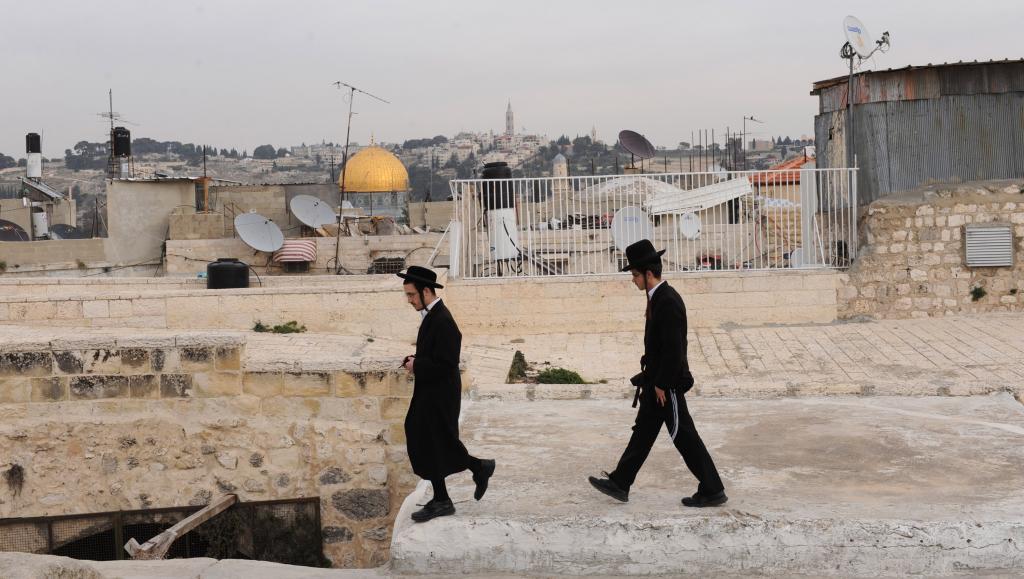
Go out, enjoy the rooftops!

The Torah portion of “Ki Tetze” has the most commandments any parasha in the Torah has: 74 in total: 27 “positive” (do this and that) and 47 “negative” (don’t do this and that). On the surface, all these commandments are dealing with our immediate physical existence, starting with “if you go out to war” and on. But already Rashi (1040-1105) comments of the opening verse (Deuteronomy 21:10) that the real war, the toughest war of all this section is talking about, is the internal war, one wages against one’s own self, one’s own evil inclination.

This continues throughout the rest of the reading. The commandments can be understood on a “pshat”, simple level, as directive for a safer, more wholesome living, and, at the same time, as holding deep spiritual messages.
For example,
During my studies at the Haifa University, I wrote a paper about “the roof in the Arabic houses”. I postulated that by analyzing the roof, I can learn a lot about how the people underneath that roof live their lives and maybe even, see the world. The Torah looks at roofs too. Deuteronomy 22:8 states: “When you build a new house, then you shall make a railing for your roof”… which totally makes sense. In the ancient world, and still in some parts of the world today, the roof is a usable place where one can dry fruits and seeds, hang laundry, sleep in the summer or sunbathe in winter, play, sit and chat and more. Such a roof, should have a railing so no one falls. But, this is so obvious! Does the Torah really need to tell us that?
The Kabbalists add a less obvious layer. They play with the fact that in gymatria “gag-cha” – your roof – is numerically equal to G-d’s four letter name (26), and tell us that we should have a railing – or what today we would call “boundaries” – around ourselves to protect ourselves and disallow disruptive things from coming in. Our human “gag” – roof, the highest point in our being is our mind, our thoughts, and much of our connection with the Divine. That part need to be secure and safely guarded.
The next verse (22:9) states: “You shall not sow your vineyard with two kinds of seeds; lest the fullness of the seed which you have sown be forfeited together with the increase of the vineyard”. Interestingly, the Hebrew word for “two kinds of seeds” is “kil’ayim”, which literally means – two prisons. Rav Hirsch (1808-1888) explains in his commentary that “two prisons” implies that we are not to mix two different kinds – of seeds or anything that grows, people too. Things that inhibit and limit each other’s growth, that “imprison” each other, and don’t allow mutual growth, have no room in the same “mix”. Our goal should be to strive to develop to our fullest potential; boundaries and a good environment – are key necessities, but something – or someone – who holds us back and restrains us, is a no-no. Elsewhere in the parasha, we’re told that it is a man’s duty to “gladden his wife” (24:5), and yet, what if that’s not possible? In the very same parasha, we’re also given provisions for separation, and even – divorce, for the very same reason of “not mixing things” that imprison each other.
And one last for this Shabbat: In the beginning of that chapter (22:1-4) is a famous favorite mitzvah, that of returning lost objects. The mitzvah of hashavat aveda – returning lost objects – is what’s called “a double mitzvah” because the Torah says “hashev teshivenu” – “indeed you shall return”, using the same root-verb twice. There is also an added negative one: “lo tuchal lehit’alem” – “you will not be able to ignore / avoid”. The sages teach us that if you find your neighbor’s lost object you must return it. This too seems to make sense; why state the obvious? Then the sages add: you must return it, meaning even 100 times! That’s when it becomes less obvious and one wonders: really?? 100 times? What can we possibly return 100 times??
So maybe the construct hashev teshivenu does not only refer to returning a lost object but also to another word that shares the same root: teshuva. Tshuva, which we quickly translate to mean “repentance” shares its root with “answer” as well as “return”. If so, this is also about us noticing within us – or others – things that are lost; different qualities that have gone astray, that we forgot somewhere and no longer use to our betterment, like the ox within us symbolizing our insistence and stubbornness who maybe now no longer works for us; or our lamb – symbolizing our meekness and more. In that sense, these are the things we must notice and can’t ignore; the things we must return back to ourselves. Even more than lost objects – a garment, a donkey – and especially in the month of Elul before the High Holidays, this is a reminder for making teshuva with each and every one of our separate, lost pieces – our outer covering, our physical, hard working drive – and even if it takes us 100 times, still, never-ever give up on bringing those back home.

Shabbat Shalom!


Posted in Uncategorized | Tagged , , , , | 2 Comments

One more (daf) and a bit about Talmud in general

As we say in Hebrew, עד עכשיו צחקנו אתכם… “until now, we were joking”, implying that now, we’re serious. That is, my first two “dapim” (Talmud pages I got to teach) included a lot of lore, beautiful stories, parables and fun (yes) discussions between our sages and those around them. This morning’s daf – was largely law and I mean – details and in depth discussion.

The 6th chapter in the Tractate of Sanhedrin opens with what happens after the sentence was pronounced and the guilty person had to be executed. Where would that execution take place? “outside the camp”, says the Torah. Or so it implies. Where is “outside the camp”? Is it outside the Temple area? Or maybe the whole city? Do we answer intuitively or do we have supporting text? What if there is conflicting texts? How do we know which one to go by?

For me, learning Talmud is maybe best described as a form of Jewish Sodoku. It’s a series of – if this, then this, then that… wait, or maybe that?? Do we have sources to base this on? Are we correct in our logic? What about semantics, i.e. if s/he used this word here and that word there, and those letters and this root… can we understand something additional from it?

The Talmud gives me great comfort. It resonates with the way I think about things in life. It’s a flow that questions, explorations and meanings. Further, it resonates with the way I wish we would teach in our schools. Many studies speak to learning in small groups, allowing each student an opportunity to actively participate, think for her/himself, struggle with complex questions and ideas, delve into resources that need dissecting rather than passive listening, having a teacher who guides rather than preaches, and much more. A few years ago, an article was published about Talmud studies for students in South Korea because they figured hundreds of years of learning in this way might have something to do with Jews later winning Nobel Prizes in a disproportionate numbers. While they are not studying the exact same Talmud, which needs Hebrew, Aramaic and Judaic background, they do learn mostly stories with good morals. And some, suggest it should be translated to more and more languages, like Hindi and Chinese so more people can be exposed to its wisdom.

Lucky for us we don’t have to wait for the Chinese translation. We can start right here and now. There are countless resources, on and off-line, in Hebrew, English, Spanish and more. Don’t worry about previous knowledge; don’t worry about the other 2710 pages we haven’t studied yet. Our people are anyway more about the journey than arrival. Just sit back and enjoy the view.

Posted in Uncategorized | Tagged , | Leave a comment

At our gates…

What’s at our gates? “Judges and law-enforcement official”, states this week’s Torah reading. The Arizal (Rabbi Yizchak Luria 1534-1572) gives us a hint: it seems like we are talking about the city’s gates, but since “the world is a [like] a big, giant person and each human is like a tiny [whole] world”, we’re also talking about our very own selves. As such we must look, not only outside, but inside too, and examine: If we were a country, what kind of systems would we have? What’s our education ministry, tourism ministry, social welfare like? What kind of guards, watch towers, protection do we have? Is our radar fine-tuned, sloppy, too intense? Based on what values do we foster our relationship with our neighboring countries? And those further away? Who do we let in? Anyone , or do we scrutinize?  Davka (especially) during this season of tshuva (repentance but also, finding answers) and new beginnings, we get to think, in what kind of place do we want to live next year, within and without? And by the way, if we’re talking about gates and about tshuva, indeed it says – that the gates of tshuva never close. Though this is a good season for it, it’s by no mean the only time to do it.

We might think that the connection between people and trees is a fad of recent years with the rise of the environmental movement, but a quick look in our Book, will reveal otherwise. כי האדם עץ השדה – “For the human is like a tree of the field“, states the famous verse from Deuteronomy 20:19, possibly asking us to consider trees and humans – similar. But things go way back, long before the last book of the Torah. Is there meaning in the fact that Adam, the first human, was placed in a Garden and that his first transgression is “vis-a-vie” a tree? If a human and a tree are one and the same, or at least mirror images, is the Torah telling us that Adam’s first mistake is sinning against himself? that that is a core requirement of us, to do right, not only to others, but to ourselves too? and that this is why G-d calls to the human saying, ‘where are you?’

The last section this week introduces the “Egla Arufa” (Deuteronomy 21:1-9). This is a peculiar practice that might get lost due to its peculiarity and deserves a very slow read. For the sake of getting this out before Shabbat, here is the short. If you chance upon a body in “no man’s land” (such as the field between two cities), and you have no idea how did this person die (though it’s clear this was a homicide), this is what you must do:  your elders and judges should measure from that body to the nearest city, so the elders of that city can perform a “ritual” (yes, don’t like this word -) to atone for the dead. The ritual includes taking a heifer and breaking its neck in the gushing river nearby, washing their hands in the blood and water, and thus “doing right in the eyes of G-d”. It’s hard not to read this and just go, eh… what???
Luckily, the great commentators and sages throughout the centuries have been likewise baffled by this. Abravanel (1437-1508) asked the same question, wondering how can the blood of a beheaded heifer atone for the iniquity and blood of the slain man? And further: if ‘no one knew’ and ‘no one did it’, why is anyone required to do anything at all???
Let’s try and picture the scene in more details: imagine, G-d forbid, walking in the filed, and chancing upon a body in the middle of nowhere. What would we do? scream, run away, stall?? I mean, we’re nowhere, there is no one, and the guy is dead! Luckily, we don’t know him, so will we slowly back up and pretend we  also didn’t see anything, and this didn’t happen?? What do we need to get involved in this for?? What if we get blamed? What if they don’t believe us?? And it’s so far, and we have things to do!!
It’s tempting to think that we would just “naturally” or “automatically” do the “right thing”, but humans were not given laws for nothing.
Next: Suppose we made it to the nearby city, and told someone about the whole thing. And suppose they believe us. They now have to assemble “our elders and our judges” – not just anyone but sages with whom we have trust – and we need to go out and measure. We don’t have google earth and can’t do this from home. We actually have to walk the distances to the nearby cities. What a strange procession we must be! Surely, we attract others attention. This now means, more people are involved from all the towns around. In pre e-days, this is our way of telling everyone of what happened: something serious. Someone was killed nearby.
People are starting to talk: Who is that someone? Is he from around here? Do we know him? Did he have enemies? Did anyone see him?? Maybe he is not from around here. How come he was near our towns and we did not pay any attention? Did he need hospitality and we didn’t provide it? Food? Shelter? Someone to talk with?? No doubt, there is an investigation. We must find the murder; we must uncover what happened. This is the life of a human being, the life of G-d’s image.

If all that does not help, we need a heifer. Do you have one?? We need a heifer “which has not been worked with and which hath not drawn in the yoke”. Do you have one just like that?? And if you do, if you do have that little, cute, young, heifer that “has not been worked with”, which you so need, are you sure you want to give it to us, to be beheaded for this ritual??
I think not. I think you- or me, if I had that heifer- would do everything possible to avoid this. This is perhaps expressed in the verse which the elders say at the end, “our hands have not shed this blood…”. Asks the Talmud, why do they need to even say this? Would we think that the elders have actually shed this (the man’s) blood?? But rather, they publicly acknowledge that they have done all they can; all that is possible and required: they were loving, kind, hospitable; they exemplified responsibility to their fellow town-people and travelers alike; and they taught others to do so as well. Can they say that? Have they (we) really done all they can??
For a while, the ordeal of “Egla Arufa” happened very rarely if ever, because the conditions are so numerous and complicated, and when bandits and robbers increased, it was canceled. But its lessons are what matters still. The whole Torah portion is about creating order and justice in society and yet, there are not enough law-enforcement forces in the whole world to guard us. The main thing is, not to get to that point where we need to worry about finding the right heifer, and solve obscure murder cases, but to do something well before.

Shabbat Shalom.


Posted in Uncategorized | Tagged , , , , , , | 1 Comment

Today’s “Daf” – One more Talmud page

In my excitement to share “Daf Yomi”, I failed to say what it is…

Literally, the words mean – a daily page. It refers to the effort to learn one of the 2,711 (Babylonian) Talmud pages per day, which is actually two sides of any given page. The initiative began in the 1920’s by Rabbi Meir Shapiro and by now, involves tens of thousands of participants the world over. Each cycle takes 7 years and 5 months; the last one ended on August 1, 2012, so you can figure out when is the next. The good news is-no wait time is needed; you can jump in anytime. Warning: The water is deep! It takes a while to get used to the language and style of the Talmud and can seem overwhelming, but – it’s good, fresh, exciting, thought-provoking and yes, even fun.

Today’s daf – Sanhedrin 39:

Posted in Uncategorized | Leave a comment

Daf Yomi – Sanhedrin 38

A great honor to teach the “daf” – the daily page of Talmud, with lots of beautiful messages about the human’s creation.


Posted in Uncategorized | 1 Comment

See, when all else fails…

Vignette:
We’re standing at the bottom of a 215 foot waterfall in NY’s Cayuga State Park, amazed. How does something like this form, exactly here, exactly like this? There is a little sign about the kind of rock, the force of the water, how over 10,000 years… I read it carefully, impressed by the details of geography and geology, and yet, one wonders… in the face of such magnificent nature, what is the explanation for that?
When all else fails, there is always G-d.

Re’e – on seeing:
In his lectures about Buddhism and Psychology, Robert Wright shares a realization his brother had: “Girls don’t look at me”, said the middle aged man, “not because they think I’m unattractive, but simply, because they don’t see me!”
It’s a great exercise, to try to see “different” people then we’re used to, different age groups, different social groups; places we thought we knew; colors we took for granted. I remember having to practice sketching at some point of my life and realizing trees were not all “shamrock”, grass green but can be dark, light, and even silver-olive, brown, purple; and what about their shapes? The various seasons?
How much do we really see?
In this week’s Torah portion, Moses opens with the famous word: Re’e! See! We can be commanded to see! We can learn to see good!
Why now?
Seeing is one of the first things G-d does in the creation of the world: “וירא אלוהים את האור”…. G-d sees the light and qualifies it as “good”. He can then distinguish it from darkness.
We are told about Abraham, walking with Isaac to the mountain that “he lifted his eyes and saw the place from afar”(Genesis 22: 4). The midrash tells us that he then turned to Isaac and asked him, ‘do you see anything on one of the mountains’? Isaac replied: ‘yes, I see a pillar of fire standing, connecting heavens and earth’. He told the lads traveling with his: “you stay here with the donkey” (22:5). Donkey, in Hebrew is chamor – חמור like chomer, חומר, materialism, as if saying, ‘you who can’t see that place, will remain down here’.
But the sense of sight can also fool us: Isaac was blind, some say because of the knife glistening blade at the time of his binding. Perhaps symbolically, that was the point he stopped “seeing” parts of the world around him, especially those related to his family. Even though he successfully dug wells and dealt with his neighbors, of some things at home, he was not aware.
We can be led astray by sights and visions, by outward beauty, attractions, distractions, and there are plenty of examples for that too.
What’s so critical about reminding us to see especially now?
In these Torah portions the people are about to enter the Land of Israel. Unlike the desert, in the Land there will be no obvious miracles. In such a situation, “seeing” – being aware of our surroundings, remembering G-d’s gifts and our spiritual path, will be harder and harder. It is now that we are taught to see; see any way we can; open up and see.

Having clear choices:
Sforno who lived in the 15-16th century Italy gives one of my favorite albeit chilling commentaries to this opening verse: “see, I set before blessing and curse…” (Deuteronomy 11:26). He answers an unasked question: what do you mean ‘I set before you blessing and curse? Didn’t G-d set many more things before the people and before us??’ but Sforno says that “see” here is a warning, and that it should be read like this: ‘watch out! There is only “blessing” and “curse”, not anything else. The middle grey mush is nothing. If we don’t walk in the way of blessing, that in itself is already a curse.’

That place I show you…
The Torah’s 5th book, Dvarim (Deuteronomy or “things”) is considered largely Moses’ “rerun”. But if it’s a rerun, what do we need it for?? It’s so much work to write a Torah, so a whole book just to repeat what was already said? A more careful read reveals that there are differences and exactly those, are important to our understanding.
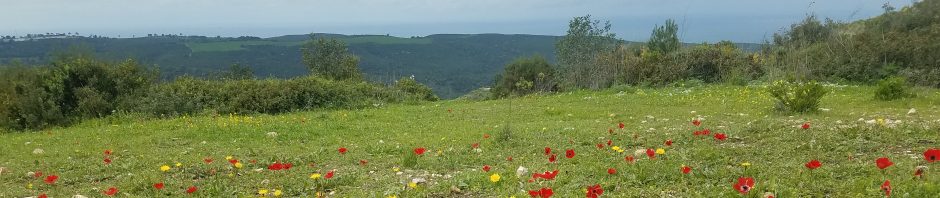
One of the things our 5th Book highlights is the connection with the Land of Israel, a land which is nothing like Egypt; a land that G-d inquires about constantly (11:10-12); a good land, with flowing water, vegetation to eat, and resources where you’ll lack nothing (8:7-10); a land that will reflect the Torah you receive for ever more, so that even thousands of years from now, those choices of blessing and curse will still be visible on the same mountains (11:29-30):

כט וְהָיָה, כִּי יְבִיאֲךָ יְהוָה אֱלֹהֶיךָ, אֶל-הָאָרֶץ, אֲשֶׁר-אַתָּה בָא-שָׁמָּה לְרִשְׁתָּהּ–וְנָתַתָּה אֶת-הַבְּרָכָה עַל-הַר גְּרִזִים, וְאֶת-הַקְּלָלָה עַל-הַר עֵיבָל. 29 And it shall come to pass, when the LORD thy God shall bring thee into the land whither thou goest to possess it, that thou shalt set the blessing upon mount Gerizim, and the curse upon mount Ebal.
ל הֲלֹא-הֵמָּה בְּעֵבֶר הַיַּרְדֵּן, אַחֲרֵי דֶּרֶךְ מְבוֹא הַשֶּׁמֶשׁ, בְּאֶרֶץ הַכְּנַעֲנִי, הַיֹּשֵׁב בָּעֲרָבָה–מוּל, הַגִּלְגָּל, אֵצֶל, אֵלוֹנֵי מֹרֶה. 30 Are they not beyond the Jordan, behind the way of the going down of the sun, in the land of the Canaanites that dwell in the Arabah, over against Gilgal, beside the terebinths of Moreh

What is the explanation for that?
When all else fails, there is always G-d.

Shabbat Shalom.

Mount Eival, the Mountain of Curse, next to Mount Grizim, the Mountain of Blessing, in the Shomron -Samaria, near Sh’chem – Nablus, Summer 2017


Posted in Uncategorized | Tagged , , , , , , , | Leave a comment

Do Make a BIG Deal!

Vignette:
I’ve never lived in an apartment building, not like this, where it’s possible to tell what day of the week it is by the smells in the hallway, and what time. Sunday morning announces itself with strong coffee and pancakes, while Thursday evening and Friday announce themselves with soup and kugel, chicken and meatballs, and Shabbat – with tchulent (chamin). Maybe someday, just like we have cameras for our vision, someone can come up with a scent app so we can capture and save and remember our life’s good, orienting scents.

Torah Portion – Heel!
Ah, don’t make such a big deal! It’s just a minor issue!!
Again and again we hear such statements, and while, of course, there is room for compromise in life, this week’s portion, Ekev, tells us otherwise.
Ekev, what a strange name for a Torah portion! “because” – it is translated, “as a result of…” but these are translations with commentaries. Ekev comes from the word akev, heel. Rashi, in his famous commentary to this opening verse, says: “And it shall come to pass, because you hearken to these ordinances, and keep, and do them, that Hashem your God shall keep with you the covenant and the mercy which He swore unto thy fathers” (Deuteronomy 7:12), says that we’re talking about the “light mitzvot”, מצוות שאדם דש בעקביו
Easy, common, mitzvot that one squishes with one’s heels.
What is the connection between heel and “because”? or, in other words, why is heel so pivotal here?
If we go back and look at the first time this root appears in the Torah, we find ourselves in Genesis 3:15:

טו וְאֵיבָה אָשִׁית, בֵּינְךָ וּבֵין הָאִשָּׁה, וּבֵין זַרְעֲךָ, וּבֵין זַרְעָהּ: הוּא יְשׁוּפְךָ רֹאשׁ, וְאַתָּה תְּשׁוּפֶנּוּ עָקֵב. 15 And I will put enmity between you and the woman, and between your seed and her seed; they shall bruise your head, and you shall bruise their heel.’

This is G-d talking to the snake in the Garden of Eden. The heel is the point “over which”, if you will, is the life long war with the snake. We also know the expression “Achilles’ Heel”, describing a weakness in spite of an overall strength, which can lead to a downfall. In Greek mythology, we’re told, when Achilles was a baby, he was dipped in the water of the river. The water should have covered his body, giving him a protective shield, but while doing so, his mother held him by his heel which was left untouched by the magic water, thus making this his vulnerable spot. Though he survived many wars, a poisonous arrow shot at him was lodged in his heel, causing his demise. We can see another “heel” when Jacob holds on to Esau: what is he trying to do by holding his brother’s “heel”? by being named after this spot?

The heel is what holds our posture. It is what gives our standing pose a good foundation.
What is the snake? Nachash (snake) shares its root with lenachesh – to guess, also – to use hidden tricks and magic, that is –to rely on something unstable, “slithering”. The animosity between the snake and our heel can be therefore, symbolic of us being hurt in our most vulnerable spot by doubt, by something small, slippery. And remember, the snake “looses” his legs right after the Garden of Eden incident. Likewise — when hiking, we most often don’t trip because of a huge mountain, but because of a small rock on our path. We don’t make a puzzle beautiful because of one big piece in the middle, but because of connecting lots of small pieces to one.
“Don’t sweat the small stuff and it’s all small stuff”, says a catchy magnet we’d like to believe, but really??
There is a scene in one of my favorite movies, “Friendship in Vienna”. Based on a true story, it describes two best friends in Vienna of 1938, one girl is Jewish and one’s father just joined the Nazi party. Upon the latter’s family’s return from Munich to celebrate Hitler annexing Austria, the Jewish girl notices that her friend is wearing a pin of Hitler Youth on her collar. Yelling at her outraged, the friend responds: “it’s nothing, it’s just the surface of things; in my heart you’re still my best friend”. It’s just a pin. It’s meaningless. Don’t worry about it. Don’t make such a big deal of such a minor matter!!!
But our life is often made of little details coming together: this minor decisions, plus that small issue, along with this other incident brought us to where we are today. It’s not that I think the Torah advocates for us to be petty; it wants us to be “large” and have “vision” and see the “big picture”, but for this week, it wants to remind us to pay attention to the details in our life. Like an impressionist painting, made of lots of tiny dots, that is how the big picture is made.

Shabbat Shalom.


Posted in Uncategorized | Tagged , , , , , , | Leave a comment

The morning after (Tish’a Be’av)

Vignette:
Hot, sticky summer night, and suddenly – sparks hopping around in the grass and bushes – fireflies! Until now, fireflies appeared only in my kids’ children’s books. Now they are here, dancing. Them and the beautiful, red cardinal, to remind me that stories are real.
Tish’a Be’av – the days after:
The worst thing Tish’a Be’av got going, aside from being the longest, hottest fast of the year, is falling in the dead of summer, when there is no school. At some point, there was an idea to combine Holocaust Day into Tish’a Be’av. After all, argued those in favor, we already have a national mourning day. Let’s tag all our national troubles to that one. The founders of our State said no, and therefore, lucky for us, whether we like it or not, at least about the Holocaust, we know a thing or two. Which can’t be said – for a large segment of the our people – when it comes to Tish’a Be’av. Wait, Tish’a be’av? Isn’t that the day we plant trees? Oh, that’s Tu Bishvat? My oh my, they do sound similar…
So now, we have discussions about how to find meaning on this day. Because, really, we’re clueless. What does it mean that the Temple was destroyed? Who cares? 2000 years have gone by! As one of my traveling teens said to me, “if a building collapses, or whatever happens to it, and you want it fixed, then fix it! Why the whining?”
To say that, is like living in a world devoid of any sunlight, and for someone would say, ‘what are you complaining about? Here, plug in this little night light, you’ll be fine’. This is one of the biggest tragedies of this day in our time, that we don’t know what we’re missing.
***
Rav Avi Weiss holds an afternoon prayer-vigil opposite the U.N. building in NYC. For 40 years, every year, on Tsh’a Be’av, he’s there, in the middle of this intense fast, standing up for the Jewish people, telling the world, Am Yisrael Chai – we’re here. Every country’s flag waves in front of us as he speaks passionately, encouraging us to continue and dream big, not to give up – who would have thought we’d be where we are? This too is Tish’a Be’av – destruction is the lowest we can go, but it only means, from there, we can go only up, always up.
***
I’m an particularly touched this year by the juxtaposition of the two shabbatot before and after Tish’a Be’av: the one before is called Chazon – vision, and the one after, this Shabbat coming up this week, Nachamu – comfort. And I’m puzzled: shouldn’t it be backwards? First comfort, in preparation of the calamities ahead, and then, once we survive, IF we survive, we’ll work on our vision… but the sages tell us – opposite: going into disaster, you don’t need comfort. It’s going to happen, whatever it is. But you need a vision to see beyond; to know there is a beyond. Then, we’ll sit and comfort.
And, in this Torah reading Moses also introduces – love: “You shall love you G-d”… (Deuteronomy 6:4). What is this? Can love actually be commanded??who can be forced to truly love? Not possible. Is it a request, as some suggest?? Also, strange. I think, it’s simply a fact. This is how it’s going to be. just like with people, your relationship with G-d will not always be predictable, not always neat and organized. It will have crazy moments, unexplainable events, passionate break ups and emotional come-backs, but always, together, guided by the most simple, complicated, healing and powerful force in the universe –love.

Shabbat Shalom.

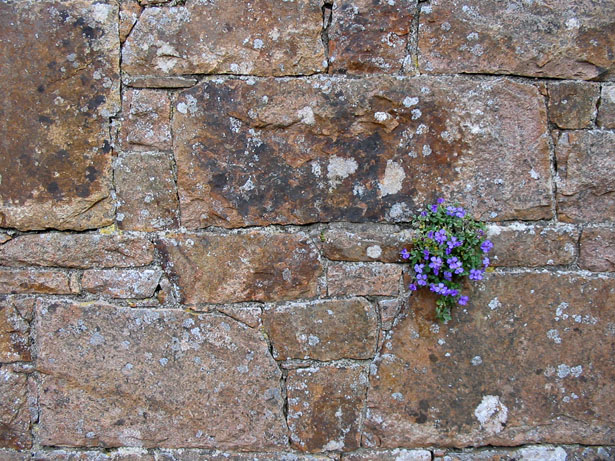
flower from the wall


Posted in Uncategorized | Tagged , , , , , | Leave a comment

Shabbat Chazon: Intro to Moses’ Speech and more

Vignette:
Riding the bus through the Bronx on a cloudy errands’ day, I find myself instinctively getting up when an “older” person gets on, offering them my seat. The person I just got up for, might be around whatever age I am now, and looking at me quite confused. I can’t explain, but somehow, when I ride a bus, any bus, I immediately revert to being the Haifa girl of my youth. Above my head are verses in square little red letters — “rise before the elderly; show respect to the aged”, they say, quoting Leviticus (19:32).
It looks so normal; every kid in Israel knows the bus-riding routine. And yet, on the week of Tish’a Be’av it gets a special meaning: 2000 years after the harshest war against us, and after our almost compete destruction, somewhere in this world, there are little signs with quotes from the Torah in buses, stubbornly continuing to teach the next generation that very same way of life.
*******
This week, we turn to the Book of Deuteronomy, the last of the Five Books. It is comprised of Moses last speech during the last month of his life (some say 36 days), and usually thought of as a “repetition” of what happened before and what was previously taught. Its other name is “Mishne Torah”, “Second Torah”, clearly, just the rambling on an old man who, after 40 years in the desert, is tired and bitter for missing out on his biggest dream, going with the People into The Land.
To add to this view of the elderly Moses, there is no obvious order in his reminiscing: if he wants to rebuke the people for their bad behavior, shouldn’t he start with the Sin of Golden Calf, which was the earliest, and then remind them of what transpired next, then next? The sins in his words appear just as they appear in his mind. He sounds almost confused, like when I sort through old photos, ‘wait, where was this? Is that…? Are you sure??
I always like Moses in the early parts of this Book of Dvarim, of ‘stuff’, like a parent walking his child to the bus stop – or airport – before they take off for a long time, on a journey the parent can’t join, as is the way of the world, and yet, no less painful. What to say? Some awkward joke? A last piece of advice? Like… eh… honey… ?
But Moses is not me. And although he is now 120 years old, he is as strong, sharp and fit as ever (Deuteronomy 34:7). So what’s going on here?
Moses, to the last moment, remains Moshe Rabeinu, Moses our teacher. His words are not meant for his own musing but for us. He never stops being an educator with a message to the people. As such, he can be selective with his facts. The purpose is not a history book of exact chronology, but a teaching which he edits and sets in front of his listeners as best suits the message.
The Sin of the Spies is the most critical one right now: As they are about to enter the Land, what if they “chicken out”? what if they send another set of spies? Will they miss the opportunity, or will the promise be fulfilled this time? Moses’ role is to remind them of the bad decisions of the past and encourage not to miss the mark this time.
And yet, even before the retelling of the Spies (1:22-42) we find that for Moses, first thing first: an orderly society with a structured, fair, just system of judges and courts (1:8-17 – quoted below). This emphasizes Moses’ preparations – that’s what he did, as opposed to what the people did – send spies, and check the physical qualities of the Land.
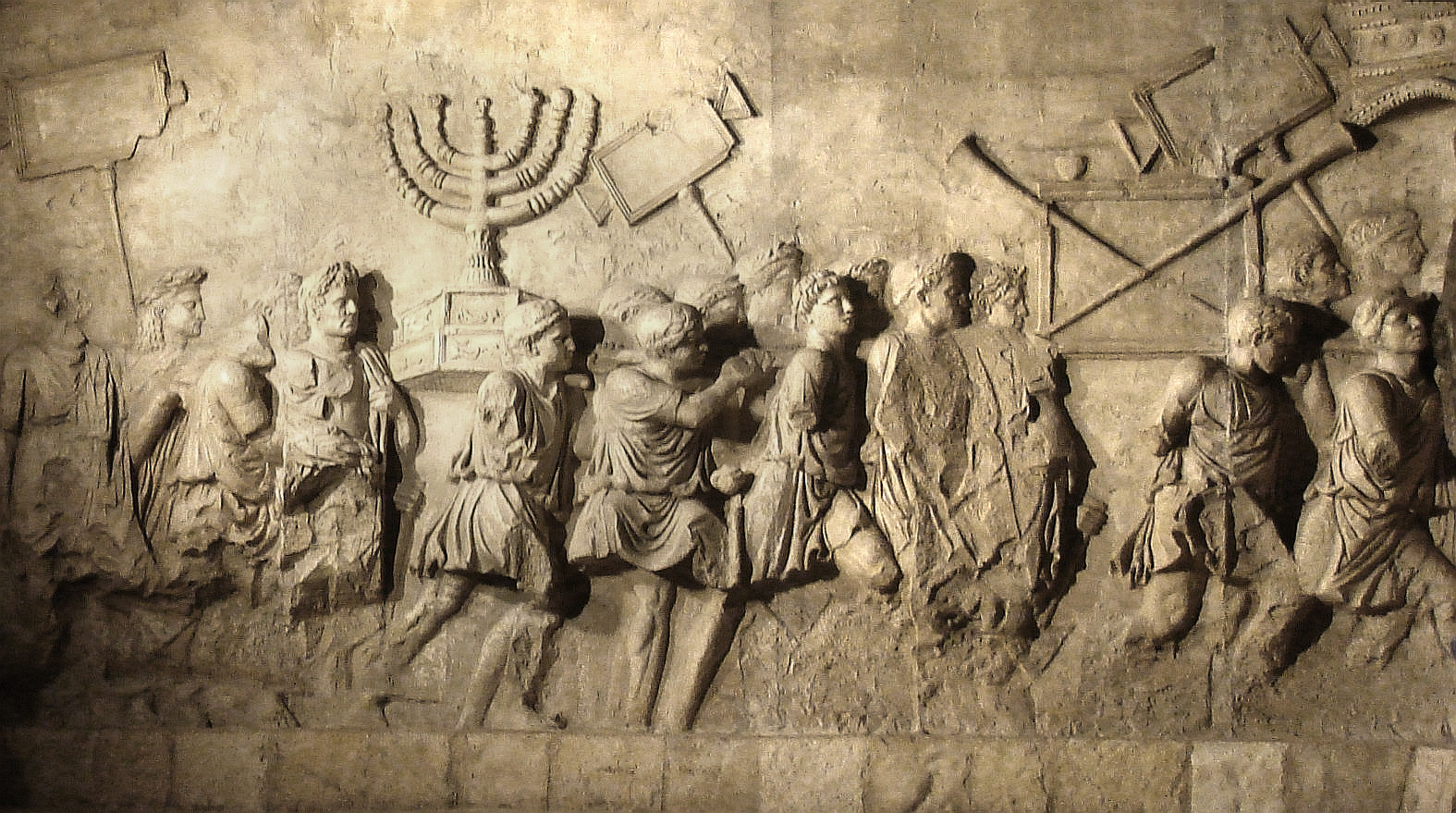
Is checking something’s – or someone’s – physical qualities to best way to know its essence? To know “how things will work out”? Obviously not. Further: if to judge from the later chapters (28:63-64), Moses knew that there might be times when we’ll be removed from the Land. If that was to be our one and only focus, how would we survive? Indeed, if our history was a “normal” story, it should have ended somewhere in the year 70-135 CE. But it’s not. And our focus have been – and should continue to be – much broader. Moses might be hinting us that even though the whole purpose of the journey was to go into the Land, and even though he is incredibly sad not to join, nevertheless, that is not what’s critical here. What’s most important is first what kind of people we are; what kind of society we have and what values we bring to the world.
*******
Through a precise system, Tish’a Be’av – the day we commemorate the destruction of the Temple – and Pesach share the same day of the week (that is, whatever day of the week 1st day of Pesach is also the day of the week Tish’a Be’av), so if this year, 1st day of Pesach was Tuesday (April 11), Tish’a Be’av is coming up this Tuesday, August 1. Coincidence? Maybe. But what if not.
Despite more than 3500 years of learning, we still have no good explanation exactly, why Egypt? Why slavery? Why be exposed to such cruelty? We offer explanations and they are nice, but satisfy us in a most limited way.
Why was the Temple destroyed? Why the exile? Why… so many unanswered whys. Our wish is for easy, simple answers: this is because of that; if you do this, this will happen; these are nice people, these are not.
But turns out, life is not like that.
On Pesach we eat matzah and maror bound together: the sweet taste of freedom and the excruciating bitterness of slavery don’t show up in two neat separated packages so we can choose which one. On Tish’a Be’av we are exposed to horrific devastation. And yet, the sages teach us, that the messiah will be born davka on that day, and a week later, we celebrate “Tu Be’av”, an ancient “love holiday”.
Eastern religions advise us to “detach”, but Judaism invites us to feel, to struggle, to engage; to sit on the floor and cry for all the national and personal losses. And at the same time know there will be a tomorrow. And smiles. The Shabbat before Tish’a Be’av is called “Shabbat Chazon”, the Shabbat of Vision. Let us see the destruction but also, what’s beyond.

Shabbat Shalom.

ח רְאֵה נָתַתִּי לִפְנֵיכֶם, אֶת-הָאָרֶץ; בֹּאוּ, וּרְשׁוּ אֶת-הָאָרֶץ, אֲשֶׁר נִשְׁבַּע יְהוָה לַאֲבֹתֵיכֶם לְאַבְרָהָם לְיִצְחָק וּלְיַעֲקֹב לָתֵת לָהֶם, וּלְזַרְעָם אַחֲרֵיהֶם. 8 Behold, I have set the land before you: go in and possess the land which the LORD swore unto your fathers, to Abraham, to Isaac, and to Jacob, to give unto them and to their seed after them.’
ט וָאֹמַר אֲלֵכֶם, בָּעֵת הַהִוא לֵאמֹר: לֹא-אוּכַל לְבַדִּי, שְׂאֵת אֶתְכֶם. 9 And I spoke unto you at that time, saying: ‘I am not able to bear you myself alone;
י יְהוָה אֱלֹהֵיכֶם, הִרְבָּה אֶתְכֶם; וְהִנְּכֶם הַיּוֹם, כְּכוֹכְבֵי הַשָּׁמַיִם לָרֹב. 10 the LORD your God hath multiplied you, and, behold, ye are this day as the stars of heaven for multitude.–
יא יְהוָה אֱלֹהֵי אֲבוֹתֵכֶם, יֹסֵף עֲלֵיכֶם כָּכֶם–אֶלֶף פְּעָמִים; וִיבָרֵךְ אֶתְכֶם, כַּאֲשֶׁר דִּבֶּר לָכֶם. 11 The LORD, the God of your fathers, make you a thousand times so many more as ye are, and bless you, as He hath promised you!–
יב אֵיכָה אֶשָּׂא, לְבַדִּי, טָרְחֲכֶם וּמַשַּׂאֲכֶם, וְרִיבְכֶם. 12 How can I myself alone bear your cumbrance, and your burden, and your strife?
יג הָבוּ לָכֶם אֲנָשִׁים חֲכָמִים וּנְבֹנִים, וִידֻעִים–לְשִׁבְטֵיכֶם; וַאֲשִׂימֵם, בְּרָאשֵׁיכֶם. 13 Get you, from each one of your tribes, wise men, and understanding, and full of knowledge, and I will make them heads over you.’
טז וָאֲצַוֶּה, אֶת-שֹׁפְטֵיכֶם, בָּעֵת הַהִוא, לֵאמֹר: שָׁמֹעַ בֵּין-אֲחֵיכֶם וּשְׁפַטְתֶּם צֶדֶק, בֵּין-אִישׁ וּבֵין-אָחִיו וּבֵין גֵּרוֹ. 16 And I charged your judges at that time, saying: ‘Hear the causes between your brethren, and judge righteously between a man and his brother, and the stranger that is with him.
יז לֹא-תַכִּירוּ פָנִים בַּמִּשְׁפָּט, כַּקָּטֹן כַּגָּדֹל תִּשְׁמָעוּן–לֹא תָגוּרוּ מִפְּנֵי-אִישׁ, כִּי הַמִּשְׁפָּט לֵאלֹהִים הוּא; וְהַדָּבָר אֲשֶׁר יִקְשֶׁה מִכֶּם, תַּקְרִבוּן אֵלַי וּשְׁמַעְתִּיו. 17 Ye shall not respect persons in judgment; ye shall hear the small and the great alike; ye shall not be afraid of the face of any man; for the judgment is God’s; and the cause that is too hard for you ye shall bring unto me, and I will hear it.’


Posted in Uncategorized | 2 Comments