Dancing together at Sinai

When religious Jews are asked, how are you? they often respond with “Baruch Hashem”, literally meaning, ‘praised be G-d’ or ‘thank G-d’. Turns out, in the Torah this construct is used largely by non-Jews, including, in this week’s Torah portion, no other than Moses’ father in Law, Yitro:
וַיֹּאמֶר֮ יִתְרוֹ֒ בָּר֣וּךְ ה’ אֲשֶׁ֨ר הִצִּ֥יל אֶתְכֶ֛ם מִיַּ֥ד מִצְרַ֖יִם וּמִיַּ֣ד פַּרְעֹ֑ה אֲשֶׁ֤ר הִצִּיל֙ אֶת־הָעָ֔ם מִתַּ֖חַת יַד־מִצְרָֽיִם׃
“Blessed be the LORD,” Jethro said, “who delivered you from the Egyptians and from Pharaoh, and who delivered the people from under the hand of the Egyptians.

Long before him, came Malki-tzedek, the king of Shalem (Genesis 14:19-20); Abraham’s servant upon meeting Rebecca (24:27); Lavan, upon seeing Rebecca’s newly acquired jewelry and the servant standing outside (24:31), and Avimelech to Yitzchak, after settling the disputes over the wells and recognizing Yitzchak’s greatness (36:29), all using the same term or a slight variation.

The Talmud, and especially the Tractate of Avoda Zara, which is currently read at daf yomi, constantly wonders, where is the line between “me” and ”the other”? what can we do together that maintain each identity and what is it that blurs it? What kind of businesses, festivities, interactions? And the answers fluctuate with time, safety, economy, general needs and more.
Yitro, “Kohen Midyan” – the Midyanite priest – introduces this complexity. The sages describe him as someone who tried every idolatrous practice available. He is also Moses’ father in law. The grandfather of Moses’ (and Tzipora’s) children. And knowledgeable in organizational management.
We are so used to the story that we might miss the “wow”: The person who talks to G-d directly at any given moment, who will be the only one to speak with G-d “face to face”, in order to care for G-d’s people better is – not only getting but – taking advice from his non-Jewish father in law.
*******
G-d and the Children of Israel are often compared to a couple. If so, we might notice that between their “date” at the Splitting of the Sea – everything done to impress and “open up” a new relationship – and their “wedding” at Mt. Sinai – a much more calculate, mature move, with a detailed contract at hand – there is a “dance”. And even music; music which can be “seen” (Exodus 20:15)!
Moses goes up the mountain (19:3). Then down to gather the people (19:7). The people approach as close as possible (19:12)– they should want to be closer and closer. After all, what could be better then being with G-d? But they are given a limit, and warned not to go up any closer. Then Moses goes down again (19:14). Then G-d comes down on Mt. Sinai (19:20), and calls Moses to come up. Moses goes up (19:20) only to be told: go down (19:21), and then: “And G-d said to him [Moses]: Go down and come up again”… (19:24)…
Then and now, there is a constant dance between us and Hashem: when we draw too near, He (for lack of a better pronoun) “withdraws”. If we back-up, we allow “Him” more space to expand and come near us, but then we also feel more remote. Which makes us draw near, as we want to be really really close, but we can only get so close. Then we must catch our breath, and… back up a bit. Which allows G-d more room…
Where are we supposed to be? Close? Closer? Far? How far?
And I think we’re supposed to be “dancing”. For one, we’re expected to be in motion. Too close is like near an endless burning sun. Too far, is cold, lonely, and lifeless. The Torah suggests neither. It tells a love story, and as such, it is fitting to be accompanied – by a dance.

Shabbat Shalom.

Illustration by Menachem Halbershtat in Musaf Makor Rishon 2013

Posted in Uncategorized | 1 Comment

Shabbat Shira: “There can be miracles”

The image of Miriam of the split sea with her drum is a favorite. So much so that tambourine in Hebrew is called “Miriam’s drum”. Rashi answers for us the question we didn’t think to ask: not like there were music stores on route, so where did they get drums from? “The women were righteous and thus guaranteed miracles, so they brought drums with them from Egypt” (on Exodus 15:20).
Music was always part of my life. I’m especially thinking of our family’s piano which traveled from Germany to Israel in the 1930’s. I admit that as a child, I pretty much took it for granted. It was always there; what’s to think? But one day my kids asked me to describe exactly, how did it make it across Europe to Israel of long ago? ‘What ima, the Nazis came to the door to kick the family out, and your grandma said, ‘just a second, if you don’t mind, the movers will be here soon, and I really hate to leave you the piano’…?
And I’m thinking of the kind of faith that is takes to prepare no sandwiches for the journey, but nevertheless brings along musical instruments…
Then there is the Sea Splitting. The Torah describes how it happened, a phenomenon which scientists have been able to somewhat duplicate:
וַיֵּ֨ט מֹשֶׁ֣ה אֶת־יָדוֹ֮ עַל־הַיָּם֒ וַיּ֣וֹלֶךְ ה ׀ אֶת־הַ֠יָּם בְּר֨וּחַ קָדִ֤ים עַזָּה֙ כָּל־הַלַּ֔יְלָה וַיָּ֥שֶׂם אֶת־הַיָּ֖ם לֶחָרָבָ֑ה וַיִּבָּקְע֖וּ הַמָּֽיִם׃
Then Moses held out his arm over the sea and the LORD drove back the sea with a strong east wind all that night, and turned the sea into dry ground. The waters were split… (Exodus 14:21).

Indeed, around where we think is Yam Suf, there are watery channels that at times, with enough winds, can shift the waters and expose dry land.
Forget the fact that the miracle has to happen in the right time and right length of time, which is already amazing. For the midrash this was not enough. Our sages describe to us a completely different scenario: seeing the confusion – Egyptians from behind, the Children of Israel at a loss, Moses praying — Nachshon ben Aminadav, the future prince of the tribe of Judah, started walking into the water. Step by step. First his toes got wet. I imagine at this point, everyone around was still arguing and crying. Clouds of dust from the approaching horses in the distance could be seen. Then his knees got wet. His thighs. His waist. At this point, some might have noticed already: ‘Hey, Nachshon! What are you doing? Hey! Hey!’ Then his chest. His shoulders. His neck. The shout-outs quiet down; the crowd is silent. What is he doing? The water are up to his nostrils and voilà!! At that moment, the sea splits.
We who know the “rest of the story” think, ah, of course, The Sea Splits, but Nachshon, unlike Miriam, didn’t pack a bathing suit. He just walks.

As slaves, the Children of Israel got their food every day; maybe even 2-3 times a day. It was probably not much – some soup, little bread; maybe some greens, a piece of fish. But it sustained them. And what’s more: it kept them from worrying. Their masters wanted them alive and working so chances are there will be more tomorrow. As they leave for the desert, they reminisced about the “pot of meat” they used to have in Egypt. A careful reading reveals they didn’t miss “meat” – they might not have much, but there was a “pot”, even if only “leftover”, conveying an idea of “security”, a feeling of ‘there will food tomorrow too’.
Then there was “freedom”.
Things turned upside down: water came from the ground, and bread – from heaven (exactly opposite from how we experience it now!) and with it, a strange directive: take only one day’s portion, except for on Shabbat when there will be double.
What was it like to go out at dusk, satisfied, not hungry yet deeply concerned; what if there will be nothing tomorrow? Ah, but there is. And what about the next morrow? How do we learn to trust, to have faith?
Three different situations: those we can prepare for, trusting that one day, the day will come; those that surprise us, but we can do something about at the moment; and those we just to have to ride, breath, hold on, appreciate the present and trust for an unknown, good tomorrow.
The days before Sinai can be described as an intense faith retreat. We’re even attacked by Amalek, the embodiment of doubt, at the end of the parasha. We have to practice our newly learned skills; we’re going to need them every day of our life.

Shabbat Shalom.

Posted in Uncategorized | Leave a comment

On patience & haste, and what if we were G-d…

Ten whole Plagues. Many days. Weeks. Months of preparations. There was even time to collect gold and silver vessels from the neighbors. Time to get organized and start baking… It seems like this could go on forever. And suddenly, chipazon!! A great and almost frantic rush. Get out! Get out! Never mind the packing, never mind the sandwiches! Just go, go, go!
What’s going on?
We always read the story all too fast, so we forget, things took time. The Exodus was not a surprise. We knew it was coming. There was a “process”. After years of slavery, we were slowly reminded that there is a tomorrow; we started relearning that there is hope; that things can actually get better, that we matter, that we have a place to go and things to do; our very own place and our own things, things that, as slaves, we could not even imagine.
That build up was necessary, and had to be gradual, just like when picking up anyone out of any bad situation (see precious blog)…
But then one day, it’s time to go. And go we must in a rush, in chipazon – חיפזון.
Rabbi Hirsch says the root ch.p.z. ח.פ.ז. means – hasten aimlessly. Aimlessly?? Aren’t we going to freedom??
We’re going, that’s for sure. We don’t yet know where to. G-d says to Moses, to a “land of milk and honey”. Moses says to Pharaoh, it’s just a quick trip to celebrate a festival. The experience of the people must be super confusing: strange things happen all around: the river turns to blood, frogs everywhere, lice, animals… It’s no wonder there is “darkness”.
But then comes a day…
The battered woman who prepared her get-away carefully, waiting for that once in a lifetime window of opportunity – and at the same time, fearing that moment – now must act; Our kidnapped soldier from Chatufim (Homeland) who couldn’t even dream that it’s possible, is now being whisked out secretly with no time for goodbyes – though he’s gotten close to his captives! My grandma has to take her three kids and leaves their longtime Berlin  home never to look back, unsure whether her husband will be able to join; And the Children of Israel, who “all of a sudden” are in such a hurry that they can’t finish baking bread for the trip, must scurry out, and start the journey.
The two Torah portions – the one of patience and the other, of haste – go hand in hand. There is time for the lengthy prep, but then comes the time to just do, to get up and go.
The tension between the two is constant: When to go along and when to step up and out? Ultimately, this is what might define much of our journey.

*******

If we were G-d and we’re about to start a new nation, what should be the first thing we tell them to do as such? Maybe we’d want them to love us. Or do what we say. Maybe love each other. Or love my Book. Be nice to their neighbors. Give tzedakah. Plant trees. Have a party. Or a holiday.
Creating a calendar might be one of the last things on our lists, but luckily, we are not G-d.
Giving us the power over time is how G-d opts to mark our transition from slavery to nationhood: החודש הזה לכם… This month is to you / for you… (Exodus 12:2), and what a profound way. As if G-d says, I, who created time in the universe, now give you, who were created in my image, authority over your own time. By taking a hold of it, you’ll be free – economically and socially, but also in a much broader and deeper sense. You can decide your comings and goings; you can make time – “yours”. In the most daily, minute way, you’ll be reminded that you’re no longer a slave, but rather, a master.
This difference can be paralleled to the difference between laborer and contractor: the worker must do what he’s told. His time is his boss’s. The contractor on the other hand, takes upon himself (or herself) tasks that s/he manages, that interest him, and handles his own workload. To be clear, we’re not invited to do nothing. Freedom in the Torah is not lazing around. We have a task: “to work and guard (the Garden)” (Genesis 2:15) but how we’re going to do what we do, has just now changed.

And a smile about us and time: https://www.youtube.com/watch?v=v0bAcKt6zkA

Shabbat Shalom.

Posted in Uncategorized | Tagged , , , , , | Leave a comment

It’s Almost MLK’s Torah Portion

America is celebrating Martin Luther King Jr this weekend. Had he a Hebrew birthday, it would have been between this week’s Torah portion and the next, the height of the story of the Exodus.
*******

ג וָאֵרָא, אֶל-אַבְרָהָם אֶל-יִצְחָק וְאֶל-יַעֲקֹב–בְּאֵל שַׁדָּי; וּשְׁמִי יְהוָה, לֹא נוֹדַעְתִּי לָהֶם. 3 and I appeared unto Abraham, unto Isaac, and unto Jacob as God Almighty, but by My name Y.H.W.H. I was not known to them (Exodus 6:3). We open this week’s reading with a strange statement. G-d introduces Himself as the One who “was seen” to our forefathers as “God Almighty”, but, until now “not known” in his “name” of “Being”, “Eternal Existence”. What is the difference between “being seen” and “being known”? and why the move from active (“I appeared”) to passive (Hebrew structure of nif’al, “was known”, as opposed to i.e. caused someone to know, just like – caused someone to see)?
I think the Torah challenges our way of thinking about acquiring knowledge. God can “appear”, “be seen”, but “being known”, especially in the Biblical sense which implies an intimate connection, takes a different skill. That kind of deep, inner knowledge depends not only on the informer, but also on the one receiving. The knowing can happen only when we are open to knowing; when we do something for it.
So the first step towards freedom is not magnificent plagues, or matza, or packing. Not yet. First, just an internal awareness, a tiny crack to let the Light in. For now, that’s all.
*******
In Tel Aviv there’s a sculpture: an upside down pyramid expressing the idea of slavery and freedom as mirror images; Sinai and slavery reflecting each other in water. We’re substituting one slavery for another: Freedom means being free to be God’s servants. Not Pharaoh. The two can so easily be mistaken. Only a tiny step between them. And a whole world.

*******

Reposting last year’s blog:

Undoing the Web of Enslavement

בעשרה מאמרות נברא העולם…
“The world was created through Ten Utterances, our sages tell us” (Pirkei Avot 5:1). And yet, one wonders: The same God Almighty who can create a perfect world in 10 sayings, can do in just one!Why all the extra words? and the extra work?
The journey of a band of slaves becoming a free people, is fascinating, perhaps because it’s something that each person can identify with on many levels. Whether the story of one’s birth, or our struggle with various kinds of mitzrayim – narrow places – of enslavement (physical, emotional, spiritual) and our complicated journey to freedom.
Once again, we read this week, about the first seven of the Ten Plagues, reminiscent of the Ten Utterances as well as the later Ten Commandments; and once again we may wonder, why so many plagues? If G-d – or anyone for that matter- wants to get someone out of a bad situation, why not just go in and get them out? And what about the people themselves? Didn’t they know they were suffering in slavery? Didn’t they groan and moan, crying and wanting to get out??
Rashi, the medieval commentator, points to Exodus 6:9:
וְלֹא שָׁמְעוּ אֶל–משֶׁה מִקֹּצֶר רוּחַ וּמֵעֲבֹדָה קָשָׁה –
“and they did not listen unto Moses due to impatience of spirit, and cruel bondage”. Drawing on the unique term “kotzer ru’ach” – literally meaning, shortness of breath, he says that someone whose breath (“ru’ach”, also wind, spirit, soul) is short, cannot have long breathing. Isn’t Rashi stating the obvious?
Rabbi Binyamin Lau explains Rashi: “This is like a person who is experiencing an asthma attack, and seeks immediate relief. As he reaches for his inhaler, someone tells them about an experimental new drug which might be available someday. The patient’s reaction is likely to be – I’m choking here, and you’re talking to me about something long term in the future? Likewise, the rulers of Egypt were pressuring the Children of Israel, leaving them breathless, unable to hear anything”.
Next, G-d explains to Moses the famous stages to the delivery from bondage, using the ארבע לשונות גאולה: Four Expressions of Salvation:
והוצאתי… והיצלתי… וגאלתי… ולקחתי… “and I shall take you out…. And I shall save you…. and I shall redeem you… and I shall take you to me unto a nation” (Exodus 6:6-8), which are the basis for our Four Cups on Passover. And again, we wonder. We can easily understand the asthma patient metaphor, but here we’re talking about G-d! Why not just get the people out already? After all, they were in so much anguish and G-d can do anything!
Inspired by watching “Chatufim”, the Israeli TV drama that was bought in the U.S. and became Homeland, I realized the devastating pattern of enslavement.
Chatufim tells the story of three IDF soldiers who are kidnapped and kept in captivity for 17 years. The complex and highly recommended show, takes a serious look into the psychology of the kidnapped. It shows what happens to someone who is kept in isolation, beaten up (physically and emotionally) and yet, at the same time, fed and cared for. Each one of these three components is critical to the combination, and creates a complete dependency of the kidnapped to his capturers.
This pattern repeats itself in all abuse situations, from that of POW’s, to battered women, to the Children of Israel in Egypt. We’ll see it later, when the Children of Israel will “remember the fish, which we ate in Egypt for free; the cucumbers, and the melons, and the leeks, and the onions, and the garlic” (Number 11:5). Is their imagination running wild? Are they suffering from heat stroke? Or perhaps, not everything was bad in Egypt? Indeed, contrary to what we teach our kids and to the ridiculous drawings in various hagadot, Pharaoh was not all stupid, and we’re doing ourselves a great injustice for presenting him so. He was stoic, “divine”, inspiring, powerful. If things were simple,  slavery would not have been possible. Too much oppression ultimately begets escape, riots and revolts, or the death of captive, situations the oppressor usually want to avoid. It takes the right mixture of isolation (in this case away from their land; silence from their G-d), harsh labor and torture (as in the backbreaking work and killing of the baby boys,) as well as care (“free food” and a sense of safety, “job security”) to create the ultimate slavery.

When we see people in abuse situation, we often wonder: why doesn’t this person who is in so much pain, just walk out? If living in Egypt didn’t work anymore, why didn’t Jacob’s children travel the relatively short distance home, with the many caravans and merchants who passed by? Similarly, why didn’t the Jews of the 1930’s leave Europe? Why doesn’t the battered woman walk out on her abuser? Why doesn’t our hero in Chatufim cross the border, not even a few kilometers away, even though there are times he can? Why don’t we free ourselves from what’s holding us down internally?
Because from where we stand during these moments, it’s not possible. The successful captor knows it. The successful redeemer must know it too. The carefully constructed web designed to keep one in, must be carefully undone to ensure a complete and safe journey out.
Hayim Sabato in his book “Ahavat Torah” points out that the “Four Expressions of Salvation”, G-d’s plan which He shares with Moses, appear in three verses. Which correspond to the three elements that hold one in (galut, avdut, & inui – exile, slavery and torture), and parallel the three elements needed in the Jewish People’s redemption: The Exodus, the Covenant at Sinai, and the journey to the Land of Israel. These further parallel to the three “regalim”, our holidays that celebrate that journey, Pesach, Shavuot and Sukkot. The journey takes a detailed plan in order to be successful. Yes, it takes a “long breath”.
Likewise, when encountering enslavement, from within or without, maybe we shouldn’t judge too quickly. Even G-d takes time when delivering a band of slaves from their oppressor. We too, have to be patient with the journey ahead.
Shabbat Shalom!

Holocaust Memorial in Tel Aviv by Yigal Tomarkin


Posted in Uncategorized | Tagged , , , , , | 1 Comment

In the desert… on names, shoes, mensches and women

In the desert you can’t remember your name…. In the Book of “Names”, so is Exodus, Shmot, שמות, called in Hebrew, some have a name and many more – don’t. Perhaps, this is so we won’t get caught up in the details, as if it doesn’t matter who it is, just what happens, and we should stay focused on the big picture story.
Maybe.
And maybe it’s because with this book, we move into exile; Exile – in capital E. In Exile, the people around you, can barely pronounce the name you were given. And they don’t know you. You’re no longer “little Moishele” from next door, the son (or daughter) of… but “that Hebrew”, “that Israeli”, “that guy”, “that girl”. People tell you apart by some outward characteristic – size, color, nationality, some abnormality. Exile messes with the details of one’s identity, and threatens your existence on every possible level. You’re teetering between almost forgetting completely where you’ve come from and where you’re going to, being assimilated and gone, and between having to fight for survival, physical, emotional, spiritual. May we fnd the way out of the Tight, Narrow place, whatever it is, that is our personal Mitzrayim (Egypt).

XXX

של נעלך מעל רגלך….

shal naalecha me’al raglecha”, says G-d to Moses in their famous meetup at the Burning Bush, “take your shoes off your feet” (Exodus 3:5). I’m thinking about barefoot Moses today, as I venture into the impressive snow storm outside. “I don’t care about the storm,”, I tell my friend, “I have shoes”. I say it and immediately regret. What kind of (stupid) statement is this? I care plenty!! Not to mention that on top of my heavy-duty, water-proof, rubber-soled, thick-lined shoes, I have many layers. And yet, I wonder, what is it about shoes?
Shoes affect the way we walk, our posture when we stand, our balance when we talk, argue, sing, dance, feel energetic and by contrast, feel exhausted. Shoes impact our attitude regarding our height, confidence, presence. And by contrast, what is about being barefoot? About feeling the earth on our skin? About being shorter, closer to the ground, simpler, humbler?
When I was little (very little), I would put on my mom’s high-heels and strut around, clicking them noisily on the tile floor, feeling tall and powerful, even if I was in my PJ, and by contrast, how about wearing a fancy evening gown, barefoot? The whole feel of the glamourous dress evaporates.
And how Moshe’s first encounter with G-d? There was no requirement to “strip”, but to take it just a notch down; to approach holiness with feeling, with nuance, with presence, with humility. To come barefoot.
What is the big deal about the Burning Bush? If G-d wanted to show Himself, couldn’t He have done so through a much grander medium? But the Burning Bush is not about G-d, who can anyway do anything; it’s about Moshe; it’s about how to be in the world; it’s about taking off barriers to be more present.
A Burning Bush that is Not Consumed is no miracle at all. Until one actually takes the extra minute to notice, it’s just another irrelevant fire in some middle of nowhere desert. Most of us might run to get water, or just – run. It takes a Moshe. To stop. Approach. Her the instructions. And. Really. Really. Look.

XXX

In the mishna, in Pirkei Avot (2:6) it says: במקום שאין אנשים, השתדל להיות איש — “Where there is no “ish” – no mensch, no one “worthy” — try to be one”. When there is no one who would be an upstanding citizen; when everybody stands back; where there is so called “no one”, you try and be “the one”.
In this week’s Torah reading, Moses finds himself in several bad situations. In one of them, the text says, he is looking here and there, maybe trying to spot someone else who would do something, but, alas: “vayar ki ein ish” – וירא כי אין איש – and sees that there is “no-one”  (Exodus 2:12). He then ducks the Egyptian in the sand. But, as Prince of Egypt shows so poignantly, there were lots of people around, and the next day, it turns out someone was there who saw exactly what happened and challenged him:
“Are you about to kill me as you did to the Egyptian yesterday?
Moses demonstrates the verse from Pirkei Avot in actuality and shows us what it’s like to be a leader: to do for others regardless of who they are, Hebrews, Egyptians, Midyanites. “Where there is “no one”, be the one; do what you can to fill the gap between what doesn’t happen and what should be done.
There are a number of heroes at the opening of the Book of Exodus that follows that call: Moses’s mother. And sister. And the midwives. And Pharaoh’s daughter. And Moses’ wife. To which we can paraphrase and say, במקום שאין אנשים, אפשר שתהיה אשה ‘where there is no “ish”, there might be an… isha’ (woman).

Shabbat Shalom.

Posted in Uncategorized | 1 Comment

Last but not least: from the journal of… מהיומן של…

… When the family will be coming down to live with us here, in Egypt, my mother will be with them too. So many moons and suns have passed since I last saw her! I’m already a mother myself… I still remember that night when I was whisked away in the darkness, shipped to a land I knew not with a convoy of Midyanites… I thought I’d never hear from her, nor see her again! But, it is Joseph, my dear, beautiful husband, who met her when he went back for his father, finally, after all these year.

כשהמשפחה שלי תגיע לחיות איתנו כאן במצרים, גם אמא שלי תהיה בין הבאים. כל כך הרבה ירחים ואפילו שמשות עברו מאז שראיתי אותה בפעם האחרונה! אני כבר אמא בעצמי… אני עדיין זוכרת את אותו הלילה כשנשלחתי, בחסות החושך, מועברת לארץ שלא הכרתי, בשיירה של מדיינים… חשבתי, חששתי, שלעולם לא אראה אותה, ולא אשמע ממנה שוב. אבל, זה היה יוסף, בעלי היקר, שפגש אותה כשחזר להביא את אביו, סופסוף, אחרי כל השנים הללו.

Until then, I was not even sure she was still alive, what with all the suffering she went through. But my mom, she’s a tough lady. He told me, that although she’s aged, as expected, and when silent, there’s a steak of sadness in her eyes, nevertheless, she’s still talkative and outgoing, chatting with the nearby ladies about this and that in all the languages of the land.

עד אז, אפילו לא ידעתי אם היא עדיין בחיים, בהתחשב בכל הסבל שעברה. אבל אמא שלי, אשה חזקה, כך סיפר לי, שלמרות שהיא הזדקנה משהו, כצפוי, ובזמנים שהיא כן שותקת, משוך קו עצב על עיניה, עדיין, היא ממשיכה לצאת ולפגוש ולדבר, לפטפט עם השכנות על הא ועל דא, בכל השפות של הארץ.

My mother. How come no one ever wondered what happened to her? After my uncles maimed and slaughtered the whole town, they grabbed her and took her home. Well, sort of “home”. When they found out she was pregnant, they contemplated how to send her away too. That was their specialty, my uncles Shimon & Levi: getting rid of the siblings they though were not fit to be part of the family’s “right” lineage. After all, that was the custom until then: not every offspring will inherit Abraham’s special spiritual blessing. It’s my grandfather who put an end to that.

אמא שלי. איך זה שאף אחד אף פעם לא תהה מה קרה לה? אחרי שהדודים שלי הטילו מום בעיר ושחטו את כל תושביה, הם תפסו אותה והלכו הביתה. סוג של “הביתה”. כשהם גילו שהיא בהריון, הם ניסו לחשוב איך לגרש גם אותה. זה היה התחום שלהם, הדודים שלי, שמעון ולוי: להפטר מאחים שלא ממש התאימו לשרשרת הדורות ה”נאותה” של המשפחה. אחרי הכל, כך היה המנהג עד אז: לא כל בן זכה לרשת בברכה הרוחנית, המיוחדת של אברהם. אבל סבא שלי שם לדבר סוף.

My mom was his only daughter, so my uncles figured out how to, at least, send me away, hoping that will blot out that “incidence” – as they called it, and bring peace and quiet to the family.

אמא שלי היתה בתו היחידה, והוא לא נתן, אז הדודים שלי תכננו לפחות איך לגרש אותי, בתקוה שזה ימחוק את ה”מקרה”, כמו שהם קראו למה שקרה לה, ובכך יביאו שלום ושלוה בחזרה למשפחה.

At first, my mom and I were cast to live elsewhere, settling on a barren hilltop with nothing but our tent and a couple of black goats. Grandpa didn’t say much, but like his own grandfather, who used to sneak out late at night from under Sarah’s watchful eyes, to bring extra food and goods to Hagar and his first born, Yishma’el, would come to visit with us regularly. After all, my father and his whole family were dead and his town – wiped out. How were we to survive, just my mother and me all alone? Who would take care of us?

בהתחלה, אמא שלי ואני נזרקנו לגור הרחק ממקום המשפחה, מתנחלות לנו על על ראש הר טרשים קרח עם ממש כלום, חוץ מאוהל וזוג עזים שחורות. סבא לא אמר הרבה, אבל כמו סבו שלו, שהיה נוהג להתגנב בשעת לילה מאוחרת ממתחת לעיניה השומרות של שרה להביא אוכל ומוצרים נוספים להגר ובכורו ישמעאל, היה בא לבקר איתנו באופן קבוע. אחרי הכל, אבא שלי וכל המשפחה שלו מתו והעיר שלו – נמחקה. איך היינו אמורותת לשרוד, רק אמי ואני, לגמרי לבד? מי ידאג לנו?

When the moon was full, I would watch grandpa climb up the hill; a bag on his shoulder. “I brought you mizimrat ha’aretz”, he would chant melodically with a semi-twinkle in his eyes, his deep voice echoing. Zimrat Haaretz, that was funny – it means the produce but also the song of the Land. Sometimes, he would bring food and spices, dates, figs and even leftover of a yummy stew he prepared so well; sometimes he would bring olive-oil we could trade with our neighbors and even a tree-sapling we could plant ourselves. Sometimes, my grandma Leah would come with Zilpa, and let her handmaid stay with us for a few days so my mom could rest during “her days”.

כשהירח היה מלא, הייתי צופה בסבא מטפס במעלה הגבעה; תיק משוך על כתפו. “הבאתי לך מזמרת הארץ”, היה מזמם לי בהרמוניה כשניצוץ בעיניו וקולו העמוק מהדהד. זמרת הארץ, זה היה קצת מצחיק – כי זה אומר התוצרת אבל גם את שירי הארץ. לפעמים, היה מביא לנו אוכל ותבלינים, תמרים, תאנים ואפילו שאריות של נזיד טעים שידע להכין כל כך טוב; לפעמים היה מביא שמן-זית שיכולנו לסחור בו עם שכנינו ואפילו שתיל שנוכל לשתול בעצמנו. לפעמים סבתא שלי לאה היתה באה עם זילפה, מניחה לעוזרתה להישאר איתנו כמה ימים כדי שאמא שלי תוכל לנוח במהלך “הימים שלה”.

Shimon & Levi were also the ones who, soon after, got rid of Joseph. I’m want to be precise, saying “got rid of” because for so long, no one knew what really happened to him. Everybody thought he was dead. I mean, grandpa thought he was dead. My mom knew something was up. She and Joseph were especially close; she knew about his dreams, worries, hopes. Then again, she also knew her brothers quite well. But grandpa… he became extremely depressed. I would hear him crying among the olive trees, his mournful wails mixing with those of the hyenas and foxes around, his face a mixture of dust and tears. “Grandpa, what happened?” I would ask. “My allergies are getting the best of me”, he would say, “especially at this season”, he’d say every time, hugging me close, his eyes wet.

שמעון ולוי היו גם אלה, שכעבור זמן קצר נפטרו מיוסף. אני רוצה לדייק ולומר “נפטרו” בלי להגיד מה הם עשו בדיוק, מכיוון שבמשך כל כך הרבה זמן אף אחד לא ידע מה באמת קרה ליוסף. כולם חשבו שהוא מת. כלומר, סבא חשב שהוא מת. אמא שלי ידעה שמשהו מוזר קורה. היא ויוסף היו קרובים במיוחד; היא ידעה על חלומותיו, דאגותיו, תקוותיו. ושוב, היא גם הכירה את אחיה די טוב. אבל סבא … הוא נכנס לדיכאון רציני. הייתי שומעת אותו בוכה בין עצי הזית, יללותיו האבלות מתערבבות בקולות הצבועים והשועלים סביב, פניו תערובת של אבק ודמעות. “סבא, מה קרה?” הייתי שואל. “האלרגיות שלי משתלטות עלי לגמרי”, הוא היה אומר, “במיוחד בעונה הזו” היה אומר תמיד, מחבק אותי מקרוב ועיניו רטובות.

I think in those days, he had no one to talk to. My uncles were out with the herds; his beloved Rachel was already dead. Grandma Leah was strict and busy; she cared for the camp as best she could, and had no time or patience for his long stories about his beloved wife’s lost son. Only I loved to listen. We would sit down under a carob tree by the spring, and he would tell me again, about the family, about how his grandfather left home, following G-d as he journeyed to Canaan; about his grandma, who was so beautiful that even when she was more than hundred years old, men fell for her charms; about Isaac, their son, who was still figuring out what happened at the Binding, meditating in the field when he saw the camels carrying great-grandma Rivkah to him; about his own escape from his brother, and the life with my tricky great-grandfather, Lavan, Rivkah’s brother.

אני חושבת שבאותם ימים לא היה לו עם מי לדבר. הדודים שלי היו בחוץ עם עדרי הצאן; רחל אהובתו כבר מתה. סבתא לאה הייתה קפדנית ועסוקה. היא טיפלה במאהל במסירות וכמיטב יכולתה, ולא היה לה זמן או סבלנות לסיפורים הארוכים שלו על בנה האבוד של אשתו האהובה. רק אני אהבתי להקשיב. היינו יושבים מתחת לעץ חרוב ליד המעיין, והוא היה מספר לי שוב על המשפחה, על איך סבו עזב את בית אביו וארץ מולדתו, הולך לדרכו בעקבות צו האלוהים בעת שנסע לכנען; על סבתו, שהיתה כל כך יפה, שגם כשהייתה בת יותר ממאה שנה, גברים נפלו בקסמיה; על יצחק, בנם, שניסה לפענח במשך זמן רב מה קרה לו בעקדה, מהלך לו בשדה עסוק במחשבותיו כשראה את הגמלים מביאים אליו את סבתא רבקה; על הבריחה שלו מאחיו ועל החיים עם סבא רבא שלי, לבן, אחיה של רבקה.

But mostly, we would talk about dreams: about his own, and those of Joseph, and mine too. What was the meaning of a dream? Was it true? And what was the meaning of “truth” when talking about dreams? Was it the same as “factual”? or was truth something else??
“Grandpa, I also want to do something great with my life”, I would say, my feet dangling in the spring’s cool water.
“Oh, you will”, he would answer, thoughtfully. “In our family, the women do great things too”.
“But what? And how? And when already?” I’d ask impatiently.
“We will have to wait and see”, he would answer with a heavy sigh, “You have to trust the journey. It might not be easy or straight, but G-d willing, it will lead you to where you need to be… Ah”, he would sigh again with a mournful heart. “I say this mostly to myself… As for you”, he would say, playing with a reddish long curls, “keep listening; keep praying; and keep dreaming. True, there are no dreams without some nonsense, and yet, the dreams will help you. They come in the darkest of nights, to remind us that there is a glimpse of light, of hope, even there. Dreams are the gateway to healing”, then he’d sigh again.

אבל בעיקר היינו מדברים על חלומות: על שלו ואלה של יוסף, וגם שלי. מה הייתה המשמעות של חלום? האם זה היה אמיתי? ומה הייתה המשמעות של “אמת” כשמדברים על חלומות? האם היה זה כמו “עובדה”? או שהאמת היא משהו אחר ??

“סבא, אני גם רוצה לעשות משהו גדול בחיים שלי”, הייתי אומרת, כפות רגלי במי המעיין הקרירים.

“אה, את תעשי”, היה עונה מתוך מחשבה עמוקה. “במשפחה שלנו גם הנשים עושות דברים גדולים”.

“אבל מה? ואיך? ומתי כבר? ” הייתי שואלת בקוצר רוח.

“נצטרך לחכות ולראות”, ענה באנחה כבדה, “את צריכה לסמוך על המסע. יכול להיות שזה לא יהיה קל או ישר, אבל בעזרת השם, זה יוביל אותך למקום שאת צריכה להיות בו … אה “, הוא היה נאנח שוב בלב מתאבל. “אני אומר את זה בעיקר לעצמי … ובאשר לך”, היה אומר ומשחק בתלתלי הארוכים-אדמדמים, “תמשיכי להקשיב; תמשיכי להתפלל; ותמשיכי לחלום. נכון, אין חלומות בלא דברי שטות, ובכל זאת, החלומות שלך יעזרו לך. הם מגיעים באפלולית הלילה, בזמן הכי חשוך, כדי להזכיר לנו שיש פתח לאור, לתקווה, אפילו שם. לפעמים – דוקא שם. חלומות הם המפתח לריפוי “, ואז היה נאנח שוב.

I had only one dream. It was very clear and it repeated every night. In my dream, I was to live in a palace. I was married to a handsome ruler who knew many languages, had divine wisdom and was the most beautiful – and well dressed! – man of the land. We would have twelve children, and there would be twelve of everything for them: tables and chairs and shiny coats and sacks and goblets and crowns… what was the meaning of this dream? How would I ever have anything, when I’m living in a dusty tent with my castaway mother?

היה לי רק חלום אחד. חלום ברור מאוד, שחזר על עצמו בכל לילה. בחלומי אני אגור בארמון. ואהיה נשואה לשליט נאה שיידע שפות רבות, יהיה בעל חוכמה אלוהית ויהיה הכי יפה – ולבוש היטב! – מכל אנשי הארץ. יהיו לנו שנים-עשר ילדים, ויהיו להם שנים-עשר מכל מה שהם צריכים: שולחנות וכסאות ומעילים מבריקים ושקים וגביעים וכתרים … מה המשמעות של החלום הזה? איך יהיה לי אי פעם משהו כשאני גרה באוהל מאובק עם אמי?

Then one night, all bundled up, on a convoy of Midyanites – another crafty, shady deal of my uncles and our Yishmaelites relatives – I was sent to Egypt. Money was exchanged as I was loaded on silently like cargo. The caravan drudged through the desert, moving at night when it was cooler, and resting at an oasis during the day. Lucky for us, the caravan’s men wanted a good price for us girls, and left the virgins among us alone. I could learn a few words in other languages and play with the other girls, while the drivers slept; I could wonder: does anyone know what happened to me? Will anyone ever come for me? Where are we going? And when will we get there?

ואז לילה אחד, שכולי עטופה ומעוטפת, על שיירת מדיינים – עוד עסקה ערמומית ואפלה של דודי ושל קרובינו הישמעאלים – נשלחתי למצרים. כסף הוחלף כאשר הועמסתי בשקט כמו מטען. השיירה הסתובבה במדבר, נעה בלילה כשהיה קר יותר, ונחה בנווה מדבר במהלך היום. למזלנו, אנשי הקראוון רצו מחיר טוב עבורנו הבנות, ועזבו את הבתולות בינינו לנפשן. יכולתי ללמוד כמה מילים בשפות אחרות ולשחק עם הבנות האחרות בזמן שהנהגים ישנו; יכולתי לתהות: האם מישהו יודע מה קרה לי? האם מישהו יבוא לחפש אותי אי פעם? לאן אנחנו הולכים? ומתי נגיע לשם?

Some of my questions were soon answered: I was sold to be a servant to Potifar’s wife. Crunched on the marble floor, scrubbing endlessly the shiny tiles, is when I saw him; at first, just his reflection; just another servant hurrying through, busy with his tasks, but then he looked up, and in his lovely face, I saw mine, and my mom, and grandpa… ah, the great miracles of life! How a something terrible can become a blessing!

כמה מהשאלות שלי נענו במהרה: נמכרתי להיות משרתת לאשתו של פוטיפר. כשכרעתי על רצפת השיש, משפשפת בלי סוף את האריחים המבריקים, אז ראיתי אותו; בהתחלה, רק את ההשתקפות שלו; עוד משרת שממהר לדרכו, עסוק במשימותיו, אבל אז הוא הרים את מבטו, ובפנים היפות שלו ראיתי את שלי ואת של אמא שלי וסבא שלי… אה, הנסים הגדולים של החיים! איך משהו נורא יכול להפוך לברכה!

I think Ephrayim & Menashe are calling me. Perhaps they can already spot the family’s convoy approaching, all 70 souls of them, well, depends who’s counting. There is so much more to say, but for now…. Shabbat Shalom!

אני חושבת שאפרים ומנשה קוראים לי. אולי הם כבר יכולים להבחין בשיירה המתקרבת של המשפחה, על כל 70 הנפש, כמובן, תלוי מי סופר… יש עוד כל כך הרבה דברים לומר, אבל לעת עתה…. שבת שלום!

Note: According to the midrash, Joseph’s wife, Osnat, the “daughter of Potifera, the priest of Onn”, was no other than Dina’s daughter, who like Joseph, was sold to be a slave in Egypt, and therefore like a “daughter” to them. This entry is based on text, midrash, gemara and my own imagination 🙂

הערה: על פי המדרש, אשתו של יוסף, אסנת, “בת פוטיפרע, כהן און”, לא הייתה אחרת מאשר בתה של דינה, שכמו יוסף, נמכרה להיות שפחה במצרים, ולכן כמו “בת” להם. ערך זה מבוסס על טקסט, מדרש, גמרא ודמיוני שלי 🙂

From Joseph, King of Dream – movie

Posted in Uncategorized | 1 Comment

Judah & Joseph: brothers in arms

We were in 5th grade; a lively group of giggly girls on route home from school, when a couple of guys approached us with some questions. They had big recorders and microphones, and thick accents. They told us they were collecting messages from Israelis for the Jewish community abroad. Of course, it’s possible they were pulling our leg, that’s not the point. The point is that while everybody said “nice” things (“tell them we said, shalom”), I said, ‘tell them they should all come to Israel right away’. None of us said things like, how are they doing over there? What do they think? How do they live? Please tell them we love them and miss them…
As a famous song says, “היינו ילדים וזה היה מזמן” – we were kids and that was long ago, but the rift of miscommunications and misunderstandings between the Jews of Eretz Yisrael and chutz-la’aretz (abroad) hasn’t shrunken much. In fact, it’s so old that some of its characteristics can be traced back to the first “ex-pat” and the first long-term diaspora.
* First, Joseph has no known intention to get to Egypt, let alone stay there, but, just like today, “things happened”.
* Things start out not so good, became great – almost perfect, but just about when it’s never been better, they start tumbling down to worse than ever, until suffering and slavery.
* While back home, in Israel, Joseph did all he could to maintain his identity as one who is different from his brothers (they were shepherds, out in the field; he was in his pretty, multi-color coat, helping his father, back in the tent). Once in Egypt, he did all he could to maintain his identity as one who is different from the Egyptians and… similar to his brothers. Numerous times we hear him repeat (variations on) the phrase “עברי אנוכי” – Ivri anochi – I am a Hebrew. This is especially striking in comparison to Moses, just a few generations later, who, when described as an Ish Mitzri, an Egyptian Man (when he saves Tzipora and her sisters at the well) shows no objection. Later, Moses will be buried outside of the Land, while Joseph will be carried back in at the time of the Exodus. Burial discussions – still take place today, as does the struggle for one’s identity on the backdrop of the outside culture (see the Hanukkah story).
* Living in the diaspora has great attractions and advantages, but it also has a great price. The influence of a different place has an impact that can’t be denied, and can cause a change in one’s behavior and presence, likes and dislikes, not to mention ideas, clothing, accent, language and more. This might explain why Jacob – and the brothers – had a hard time recognizing Joseph when they first saw him, though that also speaks to the fact that, contrary to what we think, we see with our heart and not with our eyes. Very often, we see what we expect, and not necessarily what’s in front of us, and there are plenty of studies that talk about it (like the famous “selective attention” test with the gorilla).
* last ut not least, when Jacob’s children make the “ירידה” yerida, the move “down” to Egypt, it says: “and he (Jacob) sent Judah ahead of him” (Genesis 46:28). Why did he send Judah? Rashi says, based on the midrash, that Jacob wanted Judah to set up a proper place for the family arriving shortly, including a school / place of learning. But, wasn’t Joseph already in Egypt? Couldn’t Joseph prepare everything needed? He had access to the most powerful leader in the country! He knew the terrain! Won’t he be best suited? Turns out,  Jacob (Rashi’s and the Midrash’s Jacob), thinks that, although Joseph can do a lot (including making sure Jacob will receive a Jewish burial in the Holy Land), Judah is needed for the set-up of their home in Egypt.
So which is it? Joseph or Judah? The life of the diaspora Jew, or that in the Land? The answer is still, yes. May we learn to appreciate each other and the unique gifts each brings.

Shabbat Shalom.

Posted in Uncategorized | Leave a comment

Memories, Dreams, Numbers & A Story

Chai (18) years ago, it was my oldest son’s Bar Mitzvah. Six months earlier, our Sacramento shul was firebombed. Moving to a temporary location, we rolled the ark with Torah, and the wood-lattice mechitzah down the street to a nearby school, kind enough to let us use its facility.
The compromised location, didn’t put a damper on the cheerful festivities. Family and friends came from all over the world. “People are looking up to you”, I told my son proudly, after he completed his especially long Shabbat Hanukkah service. “I’ve noticed”, he said, already then towering over me.
My Bat Mitzvah, some years prior to that, took place at Or Chadash, the reform synagogue of Haifa. In a world where the Seculars didn’t step in shul, and the Orthodox didn’t have shul services for girls, I wanted to read Torah. And Haftara. And say something. And have a Kiddush. People came over for a reception, filling our two-bedroom apartment. Presents included a sweater my mom knitted; and books like “Masada” and “4000 years of Jewish History”.
*******
This week’s reading includes Pharaoh’s dreams; Joseph interpreting those, and some of Joseph’s dreams coming true. We follow the lad, who was dropped in a pit – due to his dreams, being lifted, out of another pit, 13 years later, to the royal throne, due to his ability in figuring out dreams.
Dreams are amazing: davka (especially, contrary to what we might think) in the darkest of night, when we are most removed from life, when we are most vulnerable, entrusting our souls, a hint appears; a light; a minor prophecy.
One of my favorite sections in the Talmud deals with this issue (Tractate Brachot, Chapter 9). More than the dream itself, a great weight is given to the interpretation. Each dream is made of falsehood and truth nonsense and reality. “The interpretation “rules” the dream”, says the Zohar, “therefore one should tell his dream only to someone who loves him, so there is the greatest potential for the dream to come true in the best way possible.
At the end of last week’s reading, the butler and the baker tell joseph their dreams (Genesis 40:8):

ח וַיֹּאמְרוּ אֵלָיו–חֲלוֹם חָלַמְנוּ, וּפֹתֵר אֵין אֹתוֹ; וַיֹּאמֶר אֲלֵהֶם יוֹסֵף, הֲלוֹא לֵאלֹהִים פִּתְרֹנִים–סַפְּרוּ-נָא, לִי. 8 And they said unto him: ‘We have dreamed a dream, and there is none that can interpret it.’ And Joseph said unto them: ‘Do not interpretations belong to God? tell it me, I pray you.’

And the question is, why does Joseph say, ‘interpretation belongs to G-d, tell me’? If it belongs to G-d, shouldn’t they tell Him? It’s possible that the intent is for them to know that solutions are divine. And also, Joseph is doing “therapy” with them. He takes no credit for the solution, but encourages them to talk. Saying things can reveal meaning.
Joseph insists that there is one Power behind all the images. We might notice the number 7 in Pharaoh’s dreams: 7 cows; 7 sheaves of grain (41:5):

ה וַיִּישָׁן, וַיַּחֲלֹם שֵׁנִית; וְהִנֵּה שֶׁבַע שִׁבֳּלִים, עֹלוֹת בְּקָנֶה אֶחָד–בְּרִיאוֹת וְטֹבוֹת. 5 And he slept and dreamed a second time: and, behold, seven ears of corn came up upon one stalk, rank and good.

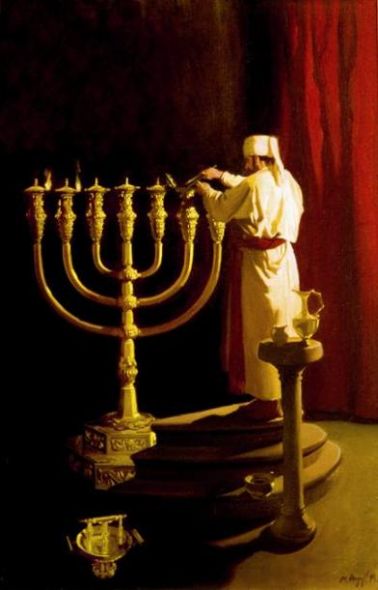
There is something else that is made of 7 that is one, and there too, the word קנה “ka-ne” (here translated as “stalk”) appears – the menorah in the Temple. The menorah had different shapes and forms, but it was made of one “block”. It’s light was not made of separate candles, but a result of its oneness – the power of unity.
Joseph too, tells Pharaoh: “Pharaoh’s dream is one (One)” – ‘it seems to you, Pharaoh, that nature is made of different pieces, that there are different gods, different forces, energies, constellations, but really, it’s part of the Oneness; that One is past, present and future, unchangeable, the power of all powers; that is the Truth.
Back to Hanukkah: We are taught that G-d’s signature is Truth. Where do we see G-d’s truth in measurable things? The word for truth in Hebrew is אמת – emet, which is gimatriya is 441 = 4+4+1=9. The number 9 doesn’t change its multiplications: 18 = 1+8=9; 36= 3+6=9 etc. Any number you add in this way, won’t be changed by a 9. Hanukkah candles begin with 1 and end with 9. The total of actual candles is 36. Even in the darkest times, a flame flickers.
*******
Rav Shteinman, one of “gdolei hador” of the Ultra-Orthodox world, passed away earlier this week at age 104. Here is but one short story:
A young man approached the rabbi, asking about buying a new sports car. “it’s been a dream”, said the young man, “My wife says I shouldn’t because we would be invoking tremendous envy, but I don’t think so”.
The Rav asked: “Is there any tractate of the Talmud you have worked at, studied really well, and now know? How about a chapter? Maybe a sugiya or even just a page?” When the young man replied in the negative, the Rav said, “Then in that case you’re right. I don’t think anyone has any reason to be envious of you”.

Hanukkah Same’ach & Shabbat Shalom

Posted in Uncategorized | Tagged , , , , , , , | 1 Comment

3 J’s – Jacob, Joseph, Jerusalem


In the opening verse of this week’s Torah portion is says:
א וַיֵּשֶׁב יַעֲקֹב, בְּאֶרֶץ מְגוּרֵי אָבִיו–בְּאֶרֶץ, כְּנָעַן. 1 And Jacob dwelt in the land of his father’s sojournings, in the land of Canaan.
There are two verbs to describe “dwelling”: one, indicating permanence (lashevet – לשבת), and one, indicating temporariness (lagur – לגור). The first (y.sh.v – י.ש.ב.) is related to y.tz.v.- י.צ.ב – stability, and denotes standing firmly, undisturbed. By contrast, the second, (lagur – לגור) denotes being a ger – גר, a transient resident, living in a place where one does not belong; living in fear (אשר יגורתי בא לי).
Jacob, who already told us “עתה הייתי לשני מחנות” – now I’ve become two camps (Genesis 32:11), continues to be stretched between two opposites: he is so ready for stability, finally, after being in exile for decades; maybe he even thinks that he deserves it; that it will happen automatically; that his wandering days are over. He wants “lashevet”, but change and unrest are inevitable. Which of the two will manage him? And us? Are we driven by a desire for peace and quiet, “laying low”, “not causing any trouble”, and what are we willing to pay for that? Are we driven by fear, and what do we give up for that? What is it that manages us?
*******
We are told about two tragedies in Jacob’s life: Dina, his only daughter, is raped (chapter 34) and Joseph, his beloved son, is almost killed and then sold by his brothers not to be seen by his family for 22 years (chapter 37).
Our sages point out the many ways these stories are intertwined. Rachel and Leah were pregnant at the same time. Dina, they tell us, was going to be born to Rachel, but Leah, in a gesture of kindness (in return for Rachel allowing her to marry Jacob, rather than be embarrassed), prays for her sister, so that she can be the mother of at least as many tribes as the maidservants, and the babies are “switched”: Leah is now pregnant with Dina while Rachel – is carrying Joseph.
We learn many things in the Torah from usage of similar words. Dina and Joseph both have strong ties to Sh’chem in the heart of the Shomron (Samaria): this is where Dina is tortured; this is where joseph is sold; this is where much later, King David’s kingdom will be split. In addition, the two brothers who “take revenge” in Dina’s case are no other than the same brothers who sell Joseph.
The midrash continues: Dina gets pregnant and bears a daughter. Jacob decides to send the child away, lest people “will speak” about him and his family, or worse, contemplate to kill the young girl. She travels to Egypt where she becomes a servant in a minister’s home, like an orphan without a family, who seems to have lost everything. No doubt, she noticed the handsome servant. Does he look similar? familiar? Do they feel “at home” with each other? Share same language? Accent? Favorite foods? Dreamworks’ “Joseph, King of Dreams” expands on the midrash further: It is that girl, whom later we know as Osnat, who brings Joseph gifts and songs when he’s thrown into the pit, and will later become Joseph’s wife, and the mother of the two tribes, Ephrayim & Menashe, the grandchildren of Jacob, Rachel & Leah.
Menashe & Ephrayim are also the ones mentioned in the Shabbat blessing we give our boys. Why not Abraham, Isaac and Jacob? Moses and Aaron? Rather, Menashe & Ephrayim? But they are the ones who stand for unity and peace in the Jewish people – the grandchildren of two rival sisters; the two brothers who grow up in a foreign land, in a foreign palace, yet do not forsake their identity.
These Torah portions are always read at this time of the year, near Hanukkah, in the dark of winter, when the days are short, reminding us that though it can take time and come in unexpected ways, darkness ultimately gives way to light.

***

Three times a day Jews all over the world pray for Jerusalem, the city King David declared our capital more than 3000 years ago. Even if we consider this prayer “newish”, let’s say “only” 1500 years old, it would mean 1500 (years) X 365 (days/year) X 3 (times / day) X as many millions of Jews there are in the world, all together making a very huge number. And yet, it turns out that sometimes, one person, stating the obvious, can become a big deal.
It is interesting to compare the recent (2017) statement by US president Trump to the 1917 Balfour Declaration and the 1947 U.N. Resolution (what is it with the number 7??). Were these latter statements true game changers or did they too, in many ways, state the already obvious? Being accepted by others, is nice, whether one is a teen or a state on the verge of its 70th anniversary, and yet, in both cases, we should first know who we are for ourselves.

Shabbat Shalom.

The song – “stripes robe“:

Posted in Uncategorized | Leave a comment

Don’t Stop Fighting!

The story is famous: Jacob, after 20 years in self-inflicted exile, is on route back to the Land and about to meet his brother, Esau, the one who was the reason for his departure long ago. He is all prepared for the meet-up: there’s a gift for Esau – which deserves its own drasha; the camp is split in case of war; and prayers were said too. Jacob sets a model for how one should tackle similar situations.
This is the next stage in his growth, in his establishing his self identify. At the end of last week’s reading, we saw him setting clear boundaries between himself and Lavan, his father in law. It worked, but it took 20 years to accomplish. No wonder he’s worried now. Although everything is ready, all of a sudden he gets up in the middle of night, takes his whole family and crosses the river. He is restless, going back and forth. Did he change his mind? Is he working on the next escape?
That’s when he’s left alone and “there wrestled a man with him until the breaking of the day”. In the well-known encounter, Jacob is asked for his name, and when he answers, the wrestling-being (angel, “ish”) says (Genesis 32:29):

כט וַיֹּאמֶר, לֹא יַעֲקֹב יֵאָמֵר עוֹד שִׁמְךָ–כִּי, אִם-יִשְׂרָאֵל: כִּי-שָׂרִיתָ עִם-אֱלֹהִים וְעִם-אֲנָשִׁים, וַתּוּכָל. 29 And he said: ‘Thy name shall be called no more Jacob, but Israel; for thou hast striven with God and with men, and hast prevailed.’

This is not the first time Jacob fights for a blessing. He demands it of G-d. Stands up to Yitzchak (Isaac), his father. He struggles with Esau. And with Lavan. Jacob fights for the blessing; he fights for what’s important to him. The result is nothing immediate, but ultimately it’s not the result, but rather, the struggle that defines him. And what defines us as well.
The Talmud says (Eruvin 65): אדם ניכר בכוסו, כיסו וכעסו
A person is recognized by his cup, his pocket and his anger. In Hebrew, it sounds much better because of the word play (kiso, koso & ka’aso), but, regardless, the idea is that a person can be recognized / defined by what s/he drinks for (and some say, how one behaves when drunk), what one spends his money on (how much can be learned from one’s bank statement) and what angers us, what one fights for.
Jacob knew that the blessing is worth fighting for, and that’s what he begets to us. Our name has been Israel. The simplest reason is that we are the children of Jacob because only all of Jacob’s children were counted among the Jewish people, and in that sense we are the “Children” of “Israel”, Jacob. But the other reason is that we inherited the struggle, as a part of our identity. We are not called the people who obey G-d; who praise G-d; or even – who love G-d, though we might do – and teach – all these. But instead, those who struggle with G-d and people.
There are many fighting styles in many cultures. What’s common to all is – closeness. Per Jonathan Safran-Feor’s recent book, Hineni (highly recommended), we can keep close only those things we refuse to let go of; only those things we fight for.
We tend to think that’s what we’re supposed to strive for peace and quiet in our relationships, challenges, life. But too much “peacefulness”, actually, makes it difficult to hold on to whatever it is, and removes those things from our lives. Most often, fights end because of apathy. The opposite of struggle is not solving everything but being disinterested, indifferent and “done”.
There are conflicting opinions who was that angel that Jacob fought with. On some levels, it’s important: maybe it’s Esau’s angel, maybe it’s Jacob’s “other” inclination, maybe G-d. it’s possible that it doesn’t matter. What matters is the engagement.
The word used for the “wrestle” ויאבק – vaye’avek – is unusual, and per Rabbi Hirsch, is used only here. It shares its root with אבק avak, dust, thus – “to dislodge the other from his standing position on earth, to render him avak, dust”. But is also close to חיבוק, chibuk, hug, “the effort to draw someone close to oneself, to embrace”, and to the name of the river he is crossing here – יבוק Yabok.
Yaakov, the expert in juggling two opposites, here too, is working to distinguish what he should draw near and from what he should distance himself, a struggle he’s left to us as well. So much so, that this is much of what defines us.
The wrestle is not painless and results in Jacob limping. He wins but is harmed. And yet, the morning after the Torah says a strange thing:

לב וַיִּזְרַח-לוֹ הַשֶּׁמֶשׁ…ֹ. 32 And the sun rose on (for) him…
Rashi asks: “just for him the sun rose on that day? Doesn’t it shine for all people”? some say, the sun has therapeutic abilities and shone specially to heal Jacob’s limp but what about the simple read? I think, on that morning, Jacob got up and felt like the sun – shone for him. The trees sways in the wind – just for him. The flowers bloomed – for him. And the sky was blue –just for him. The whole world was there,smiling at him. What an incredible feeling! True, he was limping but he emerged victorious! He overcame and received the most important blessing of his life. it was far from over, but perhaps, just for a few moments, he felt absolutely great.

Shabbat Shalom.

Katonti – the dance: https://www.youtube.com/watch?v=cXZTf48kRn8

And previous post about it: https://miko284.com/2016/12/13/katonti-lets-dance-again/

By Gustave Dore, 1832-1883


Posted in Uncategorized | Tagged , , , , , , , | Leave a comment