Katonti- let’s dance again

A couple of years ago, Israeli dance choreographer Oren Ashkenazi created the beautiful and by now famous dance “Katonti”. The words, sung by Yonatan Raz’el, are said to be “from the sources”, min hamekorot; those “sources” happen to be this week’s Torah reading.
Recent years have brought Israeli dancing to new heights. No longer centered on “hora” variations, dances are choreographed to modern songs with steps from waltz, salsa, rumba, and much more. In addition, many of the songs are indeed “from the sources” and bring to life ancient verses and prayers. One such dance is “Katonti”, expressing Jacob’s journey back to his homeland, and his feeling grateful.
But Katonti is a very strange construct in Hebrew. Literally it would mean “I’ve smallered”. For the sake of English, it would be translated as “I’ve been humbled” or maybe even “I’ve been unworthy”. This is Jacob’s way of stating how overwhelmed he feels by the many gifts he has received; as he says, gifts of two types: kindness (chasadim) and truth (emet). He is fully aware that these two are not only different, but often mutually exclusive; that many times, kindness comes without truth and vice versa. Of all people, Jacob knows what it’s like to have one without the other. He’s been in these situations. One such person, with whom he shares a complicated relationship, is his brother whom he is about to meet after not seeing him for more than 20 years, and parting in very unfortunate circumstances, when Jacob escaped home fearing death due to his brother’s (not unjustified) anger.
Jacob’s preparations for that meeting are a lesson for generations. He works on all fronts: He assembles a fascinating present for Esau as a gesture for peace, splits his camp into two in case of war, and prays. That’s when he says “katonti”: “I’ve been humbled by all Your kindnesses… now I’ve become two camps”. Again, Jacob’s Hebrew is seriously lacking. Shouldn’t he say: ‘now I had to divide my family into two camps’ or any variation on that? What is this “I’ve become two camps” – עתה הייתי לשני מחנות (Genesis 32:11)?
Interestingly, this is the time when Jacob goes through a name change; “no longer Ya’akov but now also Yisra’el” (Genesis 32). Also. Jacob is the only person who forever will be known by both his names, not either, but that’s not the only duplication in his life: though he dwells in the Land, he spends much time elsewhere; he lives with two wives, one who he fell madly in love with, and one whom he slowly grows to love; he experiences great tragedy and great joy; loneliness and self reliance along with a family that becomes a great nation; he is “tam”, wholehearted, faithful, yet knows how to bargain with G-d; he meets good and bad people and a powerful king, but angels are regulars in his life.
The “now I’ve become two camps” is perhaps Jacob realizing that the external dissonances are reflected within him. And maybe not merely “reflected”, but are him. He is about to enter the Land of Israel, and right there, is where he knows that while he‘d like it to be about “the right place”, the “right wife”, the “right child”, he is more than that: he is all these things, and their opposite too. And yet, only Jacob is the proud father of the “Children of Israel”, as all his sons become leaders of the future tribes.
That is possibly his gift to us, and thus, who we are and what our strength is. Being able to hold these opposite tensions and not let go of either is the only way to be whole (shalem) and in peace (shalom).
Shabbat Shalom.

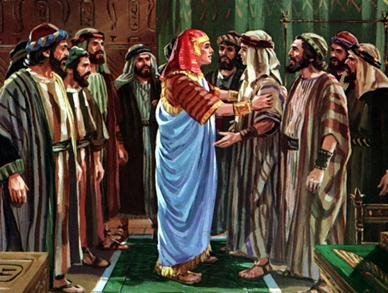
By Gustave Dore, 1832-1883

By Gustave Dore, 1832-1883

Posted in Uncategorized | 4 Comments

On Snow, Fire and the Angels in our Life

It started: that meeting between me and the wind when  we both emerge from behind a building into the open street, she twirls away carelessly while I close my suddenly teary burning eyes over a leaky face. The temperatures creep steadily towards freezing; forecast predicts first snow next week!

When I moved to Oakland and almost immediately fell in love with the city and its area, some of my friends noted that it’s because Oakland resembles Haifa, where I grew up. There is something to it, with the bay, the green mountains, hiking trails within minutes of urban centers, stairs and walkways shaded by big trees, short-cutting through lovely neighborhoods, the region’s main harbor, and both proud and strongly committed to multiculturalism. But the last couple of weeks connected these two beautiful beloved places in a painful and most unlikely way, as both saw their worst fires ever within just one week, each horrific in its own way. I know people in my hometown are still displaced and many have lost all they had, but, I also know how fortunate everybody felt that in spite of acres and buildings burning in the middle of a densely populated metropolitan, there were no casualties. Oakland’s fire focused on only one building, The Ghost Ship warehouse, but claimed 36 young lives, among them Jonathan Bernbaum z”l, son of past Midrasha Berkeley director and Bay Area well-known educator, Diane Bernbaum, who also happened to be part of my son’s greater circle of Bay Area acquaintances. To those with quick judgments, blames and accusations on either situation, I’d like to say, please, for G-d sake, just stop. These are moments that we are so small. We barely know how little we know. Hug your beloveds; call someone to tell them how much you love them. The rest is “commentary”, not needed or comforting.

Every year I am reminded:

Shabbat Shalom.


Posted in Uncategorized | Tagged , , , , | Leave a comment

On parents and children and oh well…

In 1938, when my mom was ten years old, her family left Europe. Among their belongings, were family photos sporting her father as an officer in World War I. It was a souvenir of the past, my grandma told my mom, by the time you grow up, there won’t be no army and no wars anymore.
Fast forward almost 100 years from that First World War. Above my daughter’s bed are two photos: my mom in her uniform as an army medic in 1948, and mine, also in IDF uniform. On the chair, awaits her own with the sergeant ranks on the sleeves, the pins and the combat intelligence beret. A couple of weeks ago, her younger brother joined her, drafting to an infantry unit. It’s hard not to think how did this happen, and how almost “overnight”, I turned from a “California Girl” to a double IDF mom…
The dance between parents and children, each hoping and correcting for the other has been going on forever (yes, “for each other”; I don’t for a minute believe it’s only about stepping “forward”).
In this week’s reading, Isaac is re-digging his father’s wells. When driving south in Israel, there are road signs pointing to the ancient locations mentioned in this week’s Torah portion: Rechovot, G’rar, Lachai Ro’ee. The reasons that would necessitate digging and re-digging wells in that area, are obvious: there are shifting sands, rare rain storms and hot weather most of the year. The fact that water is scarce and its source in need of constant care – is also obvious. And yet, of Isaac’s 180 years, our longest living patriarch, this is one of the very few incidences mentioned. Is it really only about the wells?
The act of digging itself implies concentrated, hard work, reaching into deep, unknown darkness to bring up new life. Rabbi Hirsch says that the root ch.f.r. – dig – denotes “the last stage of digging, the completion, in which one continues to dig until water gushes out”. Digging is our own effort but re-digging means trusting a previous location chosen by the previous generation, in Isaac’s case, his father’s wells. He’s successful in getting water, but in the old wells, there are fights between the shepherds. Only when he goes on to dig “another well”, his own, he is successful. He names it “Rechovot” (“wides”) and says, “for now G-d has made room for us; now we can be fruitful in the land” (Genesis 26:22). Isaac here, by the way, is nothing like that “child” who drags behind his old father up the mountain, nor the blind old man, fooled by his wife. He is strong, his strength is see by all, and G-d speaks with him and blesses him.
Re-digging our parents’ wells – is an amazing idea. Indeed, we have to discover who they were, and from there, discover who we are and what’s next. The future is not built “in the air”, but on the past experiences. A well is also sort of magic: Shouldn’t water come from the sky? Or maybe be picked up from a river or lake, or be carried in by a canal? But here, it’s found in the most unlikely place, where there should be nothing but dryness, darkness and silence. And yet, davka there, there is life, gushing out to be shared.
Isaac is named laughter, in the future tense. Good laughter happens when the positive unexpected comes true: oh, that’s funny, we say, I didn’t expect it!

Yesterday began the month of Kislev, known by some as the month of dreams. In the coming weeks we’ll read about Jacob’s dream, Joseph’s dream and even Pharaoh’s dream. Kislev is also the darkest month of the year with the “shortest” Shabbat (in the northern hemisphere). And yet, davka in that darkness, a vision appears, a light, a future. In some way, the same, and in some ways, totally different from all we expect. My kids take on some aspects of the journey that is similar to their previous generations – one should just listen to their sassy Hebrew (talk about unexpected!), and yet, I wish for them to find their own, better, peaceful and joyful path, where places of contention will turn to places where life force abounds. May their “swords be turned to plowshares and their spears into gardening tools”, and as poet Yehuda Amichai says, let them not stop there, but turn their tools into something that can never be used for war again.

Shabbat Shalom.
*******
One more about Haifa and the last week’s fires: http://www.ynet.co.il/articles/0,7340,L-4885850,00.html


Posted in Uncategorized | 1 Comment

Isaac & Yishama’el in the Holy Land

Life is an emotional experience, which explains why rationalizing things does not always help us take their emotional impact away; and which explains why when you escort your kid to the “Bakum”, you’re not interested in statistics on whether college life in the US or army life in Israel is safer. You’re interested in where in the world – literally – you left your sunglasses, and how will you move through the next hour without embarrassing anyone.

The Bakum is where one shows up to begin the “soldiering” process, and it is near Tel Aviv. Since my son’s home kibbutz is near the Gaza Strip, his drop off point is the parking lot for the air force museum near Be’er Sheva. Except for the other nervous and excited families, it is a mostly empty dusty field save for two booths: one, where you can buy water and sandwiches without paying any attention to what you’re being charged; and the other where you’re told which bus will take you to the real Bakum. Well, not you – you, but that kid of yours who just a few months ago told you, “mommy, mommy, I’m going to the army!” and you were hoping they don’t take 3 year old babies who babble nonsense, but then you realize that he’s actually 19 and 6’1” and all you can do is try to smear something on your face that doesn’t look like what you feel.

There’s a large group of friends accompanying us; I feel queasy as if it’s my own draft. Everybody tells jokes, laughs and slaps him on the shoulder and chest with a “sheyiheye be’mazal”, good luck wishes, like it’s a big party of some rite of passage. Overnight, I turned into a mom to not one, but two IDF soldiers. I am overwhelmed by a mixture of pride and anxiety, and seek solace with my own longtime friends who have been through this with their own kids. “Forget it”, says one, himself a retired officer, “I didn’t sleep for four years”. What can I say. The draft now is only 2 years and 8 months.

*******

On Thursday morning, I am blessed with an opportunity to visit the University of Haifa, where I was a student some decades ago. The University which has since quadrupled its student body and expanded its resources, including new departments (where learning in English is available), an extensive library and an exceptional museum of archeology and art (free and open to the public!), is located at the very top of Mount Carmel; And, while most of its buildings blend with the contours of the mountain, it does have a 30 floor tower with amazing views. Through its big glass windows, you can see almost half of Israel.

It’s a bit hazy but possible to clearly see the Galil and Rosh Hanikra by the Lebanese border; the city is stretched in front of us with its white buildings, some with lovely red roofs, nestled among the dark green pines trees which this morning sway in the fall breeze. The blue-greenish Mediterranean hugs the city gently from three sides. The Haifa port and its industrial region is on the right; the white sandy beaches, to the left. The relatively narrow road, climbing up on to the Carmel peak, winding into the woods, behind. Haifa has a pastoral side to it with its slower pace and labor mentality. There are jokes about its hardworking population and though it is “developing”, it’s still not a party-town. When we were kids, being quiet between 2-4pm was a rule; people needed their rest. There was work to be done. It’s a serious, considerate place, more European, if I may say that. It takes pride in its peaceful diversity, with the famous Bahai Gardens, and other minorities living together. Standing there, at the “top of the world”, I take a few quick random shots of “The Evergreen Mountain” and this city I love. They are not high quality, just a souvenir for myself. After all, this is the view of home we’ve always had, and will always, just the same.

Then there is a shriek from a nearby office. Below us, in the wadi, a quick pillar of smoke is rising. Within a couple of hours, the city of almost 300,000 residents, is engulfed in fires and smoke in what comes to be known as the biggest fire my hometown has ever known. There are flames through the neighborhoods of my childhood; blackened yards and schools; ashes mixed with fire extinguishing material on cars and in the streets. We head south with thousands of others, stunned.

And then, almost immediately – Israel responds. Not with a military operation, though many suspect arson as terror, but rather, with kindness, as thousands offer their homes to evacuees, discounts of toll-roads, and more.

In this week’s Torah reading Abraham’s servant is sent to find a wife for Isaac. Reading the description of the meeting at the well with Rebecca (chapter 24) is reminiscent of the description of Abraham’s hospitality when the three messengers stop by (chapter 18). The underlying message is that of kindness, which is more than doing what’s right; it is going above and beyond. This supposed to be a trait of Abraham’s children. For generations, we’ve assumed we have it. So much so, that it has been assumed a recognition sign: if someone comes and says s/he is from a village of Jews, all of whom “disappeared” somehow (presumably murdered-) and there are no “proofs” to that person’s Jewishness, just wait and see how s/he behaves. If they have the “mida of chesed” and behaves in kindness, then you know for sure, they are Jewish.

But yesterday, during the fire, something happened: Our neighbors, Abraham’s children from the other side of the fence, offered to send its 4 firetrucks over the Haifa – and 4 to the Jerusalem hills. Palestinians volunteered to risk their lives and work side by side with the Israeli fire fighters in combating the flames. Then today, as fires and evacuations continue throughout the country, Jordan and Egypt offered their planes, and Israel accepted. I may be naïve but I feel teary and chocked. Like Yitzchak and Yishma’el of this week’s reading, who set their differences aside and join together to bury their father, maybe what these Biblical siblings still need are more common projects and enemies to fight against together.

Shabbat Shalom from Kibutz Kvutzat Yavne, Israel.

Posted in Uncategorized | 4 Comments

Shabbat Shalom: About Getting Up Early in the Morning and more… מה אתה עושה כשאתה קם בבקר

Vignettes:

Hiking on Sunday morning around a random, beautiful lake near Oakland NJ. Many of the red-orange-purple leaves have already fallen, and the trail is often lost under the crinkling sound. I’m walking in a golden-copper forest.

“I got likes!”! Facebook has created a false sense of community and a false sense of self. Many of us have tens, hundreds and even thousands of friends, who “like” what we do. Those whom we don’t like, who don’t like us enough or just because we don’t want to see anymore – we can ignore, block and/ or delete, no explanation or simple politeness is necessary. We’re talking to ourselves, then we wonder how come our own echo is so empty.

Shabbat in Riverdale: On route to a semi-potluck lunch nearby, one of my friends goes to get some salad and two of us, who were walking further behind, are waiting outside the door, locked by a code. Then another person walks by: “Do you need the code to get in?” she asks seeing us there, “here”, she clicks a set of numbers. We live on a moshav at the edge of NYC.

Torah: On Getting Up Early in the Morning (published in this week’s Maharat newsletter)

In the beautiful Lecha Dodi” song, we say the famous line  סוף מעשה במחשבה תחילה- namely, that we should be thoughtful in our actions and consider the possible end when we start. In this case, from the very beginning, Hashem knew he’d create Shabbat, the crown of creation. Everything prior to it, was made for it.

That value, that we should do things with thoughtfulness and consideration has entered our life far beyond Lecha Dodi. And it’s not just ours. In Arabic there is a similar idiom: el-ajl min al-shaytan – haste is of the devil.

In this light, Avraham getting up “early in the morning” – twice – in order to do something that results potentially in harming both his sons, seems troublesome:

Genesis 21:14:
יד  וַיַּשְׁכֵּם אַבְרָהָם בַּבֹּקֶר וַיִּקַּח-לֶחֶם וְחֵמַת מַיִם וַיִּתֵּן אֶל-הָגָר שָׂם עַל-שִׁכְמָהּ, וְאֶת-הַיֶּלֶד–וַיְשַׁלְּחֶהָ; וַתֵּלֶךְ וַתֵּתַע, בְּמִדְבַּר בְּאֵר שָׁבַע. 14 And Avraham arose up early in the morning, and took bread and a bottle of water, and gave it unto Hagar, putting it on her shoulder, and the child, and sent her away; and she departed, and strayed in the wilderness of Beer-sheba.
Genesis 22: 2:
ג  וַיַּשְׁכֵּם אַבְרָהָם בַּבֹּקֶר, וַיַּחֲבֹשׁ אֶת-חֲמֹרוֹ, וַיִּקַּח אֶת-שְׁנֵי נְעָרָיו אִתּוֹ, וְאֵת יִצְחָק בְּנוֹ; וַיְבַקַּע, עֲצֵי עֹלָה,

וַיָּקָם וַיֵּלֶךְ, אֶל-הַמָּקוֹם אֲשֶׁר-אָמַר-לוֹ הָאֱלֹהִים.

3 And Avraham rose early in the morning, and saddled his ass, and took two of his young men with him, and Isaac his son; and he cleaved the wood for the burnt-offering, and rose up, and went unto the place of which God had told him.

Fearing for Avraham’s good reputation, I was glad to find another “vayashkem” – and he rose. In chapter 19:27-28 we read:

כז  וַיַּשְׁכֵּם אַבְרָהָם, בַּבֹּקֶר:  אֶל-הַמָּקוֹם–אֲשֶׁר-עָמַד שָׁם, אֶת-פְּנֵי יְהוָה. 27 And Avraham got up early in the morning to the place where he had stood before the LORD.
כח  וַיַּשְׁקֵף, עַל-פְּנֵי סְדֹם וַעֲמֹרָה, וְעַל-כָּל-פְּנֵי, אֶרֶץ הַכִּכָּר;

וַיַּרְא, וְהִנֵּה עָלָה קִיטֹר הָאָרֶץ כְּקִיטֹר הַכִּבְשָׁן.

28 And he looked out toward Sodom and Gomorrah, and toward all the land of the Plain, and beheld, and, lo, the smoke of the land went up as the smoke of a furnace.

In this case, Avraham gets up early in the morning to go to the place where he last spoke with Hashem regarding Sodom and Gamora. After pleading with Hashem to save the cities, he now stands overlooking the region which has been destroyed. There is nothing but smoke as that of a furnace and its chimney, a description that especially in our own era, is even more real and so much worse.

How do these three “early mornings” tie together and teach us, maybe even inspire us?

Avraham traditionally is associated with the quality of chesed, kindness, and with Tefilat Shacharit, the Morning Prayer, exactly because of his notorious rising early. But why is chesed associated with the morning?

When we wake up, we meet God’s in His kindness. Simply – because we are alive. The moment we open our eyes, it means that we were just given a gift: life and the potential of another day when we can partner with Hashem to better the world.

Our tradition is very clear about the idea that waking up is a gift because the first thing we say is mode / moda ani – literally – thankful I am, for even before there is an “I” which is fully present, there is already thankfulness. Saying ‘thank you’ implies that we got a something, something great. Much later, we will be named Jews – Yehudim, from Yehuda, Judah, Jacob’s son, whose name comes from – and teaches – thankfulness. That is the foundation of who we are, and therefore, of each and every one of our days.

On these three occasions when Avraham gets up early, he actually discovers, to his horror, that Someone has tampered with his morning kindness! On those mornings, God’s kindness was not at all obvious. God here was the destroyer, not the giver. A whole region was wiped out. His first born son was out in the desert and the younger one, who should have been the true heir, had to be brought up on the altar.

Avraham here gets up for a “berur” – an inquiry – with God. Things are not as they “should be” and he needs to figure them out, vis-a vis himself, vis-a vis the Divine in his life. These are times when he is called to meet God in the absence of kindness and there, to seek Him out. As Elie Wiesel said, “For a Jew to believe in God is good. For a Jew to protest against God or be angry at God, is still good. But simply to ignore God, that is not good”. For Avraham, settling his relationship with hashem, is the first thing to do in the morning. Especially when it is not there for him, he seeks the pained place to go figure it out. This also might help explain why the binding is considered Avraham’s “nisayon” – test – and not Isaac. It should have Isaac’s, to give up one’s life for Hashem?! But it is Avraham’s (as we learn from Genesis 22:2). It is possibly easier to find the quality of Din and Gevura – judgment and might – in the world, than that of chesed, kindness. Our patriarch leaves us with the message that every morning, no matter what, we need to engage with Hashem, and we need to look for, introduce and share – kindness in the world.

Shabbat Slalom from TLV!

Posted in Uncategorized | 1 Comment

Lech Lecha, go…

Vignettes:
Manhattan. 11 o’clock at night. Breathless after another session of Israeli dancing in the city where one can dance more than 7 times a week, I grab my stuff and run to the subway. There is a moment of hesitation – how “sketch” is it going to be? – but the subway is packed full with people of all colors, ages and styles. I walk in nonchalantly as if I’ve done this forever too, leaning on the bar, then eye the other passengers, wondering: do I already look like one of them or can they tell?
I too have stuffed extra gloves in my pockets and bag; I got my leg warmers on; my scarf wrapped around; and my black bottoms. But the flowery dress. I’m thinking, I’ll need to work on those flowers.

This Torah, this journey, this week:
“The worst punishment that ever happened to us, is to confuse our languages”, says my friend, Sophia about last week’s Torah portion. “Look at us. We still haven’t recovered”.
I agree. And the question is, just like with the Garden of Eden and other consequences since, what opportunities were created with this one? What was easy before and perhaps taken for granted, and now has become a place for us to correct, to reinstate the understanding of one language, to pay much greater attention to in each other, knowing very well we do not speak the same language??
Abraham shows up on the Torah stage on the heels of – not Noah, as we often compare the two, but the Tower of Babel; and the first commandment that G-d has for him is, lech lecha, literally – go to yourself, go- figure it out. Leave everything familiar, because you can’t think where everything has been chewed and prescribed for you by others; embark on your own journey, because – going on your own journey, finding your own path, turning on that light within you, that can, should and will – be a blessing to everyone around you.
I know there are lots of other ways to understand this week’s opening verse – we can talk about faith and dedication, about the first monotheist, and some, I’m sure, will say, see? we should all make aliya and move to Israel…
After weeks of warm sunlight, the day after the elections in NYC, it’s dark, chilly and rainy. There is a feeling of gloom, disbelief, devastation, an end, and a great fear of what’s coming.
On that Tuesday evening, I facilitate a program at our Yeshiva – a thought provoking film and discussion about women’s issues. Some of those I invite apologize for not being able to attend because they have an elections party to go to. When I ask, how do they know who’s going to win, they look at me as if for me to imply that it can be anything but what they think, is to be out of my mind.
More than the results themselves, I’m saddened by the shock they cause; that throughout this elections season, I didn’t have one thoughtful conversation with anyone who doesn’t agree with me – no slogans, no idiotic statements, but a true dialog; that I too am fearful, impatient and threatened by the prospect of hearing someone “different”.
The famous story about Rabbi Yochanan and Reish Lakish comes to mind: when Reish Lakish died, Rabbi Yochanan was heartbroken for losing not only his brother in law but his dear brilliant trusted chavruta. The rabbis contemplate how to console him and send another sage to learn with him, but when he agrees with everything, Rabbi Yochanan exclaims in anguish: ‘Don’t you think I know I’m right?? Where oh where is Reish Lakish who would argue with me, thus helping me to sharpen my thinking?’
When I drove across the “fly over” middle states this past summer, friends from the edges told me how sorry they were that I’m in “Trump country”. Some of these people are very open minded; open to everything – women’s rights, gay marriage, poor and needy everywhere, progressive laws – but, they did not personally know any one Trump supporter. Because they are “open”.
Openness, it turns out, can be very closed. And should you be a Trump supporter, don’t yet smile and be smug about it because it’s true on both sides, each with their own self-righteousness and hubris.
A lot of humility is needed the day after. And a new journey.
We, who have been reading about Abraham forever, think we know the answer; we know the rest of the verse and from it, deduce what the beginning should mean, but what if, for a moment, we stayed with just the beginning; with the injunction to go; to get unstuck from our spot somewhere halfway along the path; to leave the comfort of our preconceived notions and head to the land which will be shown, a land we do not yet know?
True openness is very scary but – it also introduces hope. Ironically, the most scared we should be when things are perfect, because there is nowhere to go from the top but down. But when things are “broken”, however we perceive it, there is room for us to do and things to happen; and maybe we don’t know how it’s all supposed to work out.
So this is how I’d like to read this week’s Torah portion this year:
In conjunction with the elections’ results, whatever anyone of us thought, whoever we all voted for, let’s take a deep breath. Then let’s find someone who thinks exactly the opposite; someone with whom we profoundly disagree; someone who’s out of our element and might take us out too. Invite that person for coffee. Pack lightly for that meeting: leave the assumptions, the fear, the ‘what you thought you knew you thought the person is thinking’ – behind… Listen. Yes, they might say things that will drive you crazy; they might even say things in order to drive you crazy. So what. Go crazy a little. Get another coffee. Maybe a mimosa. Or a glass of wine. And something to eat. Plan to sit for a while. Listen some more. It takes time and hard work to bridge all the different languages we’ve developed, but then, you might learn that they are scared too; that they are unsure; and that although differently, they care too. You might find hope along the way after all.

As I write, galgalatz announces that singer, “rabbi” to many, Leonard Cohen died at 82. His deep voice echoes with hope. Earlier this week, we quote him in class:

“Ring the bells that still can ring
Forget your perfect offering
There’s a crack in everything
That’s how the light gets in”

May his memory be a blessing.

Shabbat Shalom.

Posted in Uncategorized | Tagged | 2 Comments

Noah & the Lit Ark, Talmud in the Streets and more

Vignettes:
I have received plenty of warnings about the East Coast winters, and specifically the New York storms, wind tunnels, dirty snow, black ice and what not, all things I’m awaiting with great apprehension, “leafing” through websites for warm clothing, waterproof shoes, dawn coats, long underwear, and heated blankets. Meanwhile, not only the sun is shining beautifully outside, but my one-bedroom apartment’s temperature is controlled by central heating, and I’m sitting here in my lightest summer dress, sweating and sweltering…

I haven’t lived alone for some decades now, and forgot the pains and joys of it. The pain: the way I leave it when I rush out in the morning, is the way it welcomes me when I come back. The joy: the way I leave it when I rush out in the morning, is the way it welcomes me…
And one more on this: When living alone, the first thing to go is dinner. The second – is the bathroom door. And the decor, some of it constructed of (more and less) empty boxes. It’s in the works and will take some time, and that’s ok.

Talmud in the Street:
Among other things, we’re learning the Tractate of Bava Metzi’a which discusses civil matters such as property law and usury, as well examines one’s obligations visa-vie lost property, as owner, finder, claimer or trusty. Our minds are swirling with minutia of what to do with a lost object, how to announce it, return it, guard it, keep it and more. Then some Shabbat ago I chance upon a hand-written note pinned to the hedge near a bus-stop. It reads: “Last Monday afternoon, I left my black coat right here. If you know its whereabouts, please call the number below. If however you need it and wish to keep it, I hereby relinquish my ownership to you” (my italics). In one sentence, 119 dense pages of 10 complex chapters transform from being hundreds years old manuscript of dry law, and become – today.

Noah and the Lit Ark
In the famous story, Noah is told how to build an ark, a teiva. The word appears in the whole Bible only in two contexts; here and in the story of “baby Moses”. In both cases, a teiva is a life saving vessel, floating on the water (not a boat or basket-) and its purpose is survival rather than arrival somewhere. The root of the word is unclear and we can only learn about it from itself. Interestingly, in Modern Hebrew it can also be used for a musical bar or measure, and I can’t help but wonder, if somehow someone thought that music also qualifies as ‘life saving vessel’ which is about ‘being’ rather than ‘arriving’.
G-d doesn’t leave anything for Noah’s imagination regarding the measurements and material of which the teiva should be built. The last piece is the window. Well, not quite a window, but a tzohar, צהר another unusual word that appears only here (and from which in modern Hebrew we get tzohorayim, noon, the time of extra or double light). Rav Hirsch connects tzohar to zohar, זהר to illuminate, and Rashi, based on the midrash, says about the tzohar that is can mean both “window” or “a good gem”, both being a source of light for those in the ark: The good gem would light for those inside the closed ark from within, while, in contrast, the window would allow light from the outside. So where does light comes from? Is it something we have within us, and by the nature of who we are, emanate and share it with those around us – or – is it something far away, incomprehensible, we look for outside of ourselves, and get only a glimpse of?
Yes.

Shabbat Shalom.

what happens when one googles : “noah’s ark’s light”…

Posted in Uncategorized | Tagged , , , | 4 Comments

Sukkot: The Holiday of Temporary Housing and More

Sukkot: Vignettes
On chol hamo’ed – the intermediary days of – Sukkot, I do what all Israelis do: go out to nature. Bear Mountain is less than an hour away with trees in unbelievable fall colors, beautiful lakes and stunning views of the Hudson River. With the aid of a couple of “trail angels”, I manage to find the route I was planning for, including a section of the famous Appalachian Trail, a lake and a steep climb back up to Bear Mountain Tower. I run into other MOT’s (“Members Of the Tribe”) all along the way: One calls me her “savior” as she follows me after being stuck in some bushes off the trail; some are in white shirts and black pants, long skirts, dark socks and head covering, and speak only Yiddish, but came prepared with a rope for the slippery rocks. I wonder if they recognize me as I recognize them. By the time I get back to my car, the parking lot is quite full; so much so that a couple of guys stop each other to ask, “nu, when is mincha?”…
****
Sukkot: The Holiday of Temporary Housing
Sukkot is holiday when we move out of our comfort to celebrate our temporary housing as a permanent one, while realizing our permanent “stuff” is only temporary. It’s a reminder of how everything is all “backwards”: we live our day to day life with the illusion that nothing changes; that for sure, tomorrow, we’ll have the same looks, health, wealth, thought power, job and friends, when in reality, they all change all the time, and the only constant is – change itself. Tomorrow, as did today, doesn’t guarantee us the same anything, but somehow, we behave as if it does.
My own stuff, packed earlier this summer, and I have been separated for almost 4 months. Living the last few months mostly out of my suitcase has been thought provoking to say the least. More than the “stuff”, there is a longing for it which keeps one busy; and there is the wondering about how much stuff we actually need in life; and the doubt: what have I packed there?? and the planning: oh, when it comes…
Of course, it all has to arrive “davka” during this festival of temporary housing! When it comes, I’m excited, like meeting an old friend. There is an old movie ticket in my pocket, my kids’ art, old letters, my books and piano, all here, and even a little dust from Oakland. But in a way, it also makes the move a little more finite, a little further away, a little more isolated. Fall is all around, emphasizing Sukkot’s message all the more so.
****
On Shmini Atzeret, the last extra day of Sukkot, coming this Sunday evening, we’ll start praying for rain. Although initially intended to be about rain in the Land of Israel, much has been written about the ecological meaning of this day, our impact on our climate, the need for clean water, and the wish for timely, blessed rains, which is all good and meaningful, but also, a little bit, bothered me. Because if that’s what it’s all about, why not extend it to say the words of “mashiv haru’ach umorid hagashem” – the one who bring wind and brings down rain – all year long? If we impact the world through our words and prayer, and half the planet now begins summer, does this explanation really make sense? is it enough??
I’d like to add an insight into the Hebrew of this saying. If we look at it carefully, it some of it should be familiar: here is the same root we’ve heard about sine before Rosh Hashana: mashiv, being back, just like teshuva; and ru’ach? True, it’s wind, but it is also the word for soul, spirit (as in spirituality). And what about geshem, the word for rain? That shares its root with gashmiyut, reality and hitgashmut, fulfillment. So maybe we can read it to say something like , please, return our soul, our spirit, and reign on us fulfillment, and may that sustain us through the dark months ahead.

Shabbat Shalom & Mo’adim Lesimcha.

Posted in shabbat shalom | Tagged , , , , , | 3 Comments

Almost Shabbat, Almost Sukkot

Vignette:
Throughout most of the day, Riverdale seems like a suburb and not really part of the bustling city, just a couple of miles south. Here’s there are big beautiful trees, nearby trails along the river, gorgeous homes, and people who are pleasant to each other like in any other small town. But it’s still in NYC, and that relationship is perhaps most evident when it comes to looking for parking. “There’s plenty of parking”, I was told, “ach, don’t worry about it!” I’m not. That’s why I am out in all wrong hours of the day: morning (schools drop off time), early afternoon (schools pick-up times), late afternoon (back from commute), evening (everybody’s home) and night (you’re out at night??), not to mention the nights before alternate street cleaning, unless it’s Yom Kippur when street cleaning is suspended, and everybody is anyway already parked, getting ready. If there is a space,it’s probably a fire hydrant. So, after putting lots of miles-weight, my blue stallion is on a serious diet. It’s easier to walk almost everywhere; buses and subway are close; and if all else fails, there’s uber. Anything but to move the car. In the famous words of a typical “Tel-Avivi” (person from Tel Aviv): “We should totally get together! No, sorry, I can’t move my car, but you can come here; there’s plenty of parking!!”

Torah: Ha’azinu
This Shabbat we read a song, Shirat Ha’azinu. What is the difference between prayer and song? The Kabbalist point out that tefila (prayer) and shira (song) have the same numerical value. A song is a kind of a prayer but possibly while prayer is more spontaneous, a song is more perfect, more thought-through. The text of this week’s reading is written in two columns as opposed to the usual running text. The words are arranged like bricks, building two towers one on top of the other. There is a parable about a man who watches a tailor preparing a garment. The man, who does not know the art of sewing, is alarmed when the tailor reaches for the cloth and starts cutting and tearing at it, but the end result is a beautiful garment. So it is with us. The song, opening by a call to connect heaven and earth, the spiritual and physical realms, can be seen as a teaching that the two are not inseparable but they do connect. Just before we delve into the endless details of the New Year, it helps remind us that somewhere, sometime, there is a possibility for perfection.

Coming up: Sukkot:
Almost as soon as Yom Kippur was over, an email flew in from the shul: come pick up your Lulav & Etrog! Currently night life in Riverdale (when not looking for parking) includes shul hopping (when it’s Shabbat and Holiday) and getting ready for the next Shabbat or holiday. Sukkot is fun and it’s everywhere, but this year, as the holiday is “late”, there is also great concern that it might rain. We go out davka (especially) when it gets colder outside and everybody thinks about going in and getting ready for winter. Sure, we can say that the Torah didn’t know we’d be living in North America and thought more of fall in the Land of Israel but even there it starts raining during this season.
Much has been written about going out as a symbolism for having faith; maybe we can just stop after “going out”. oaith is a complicated thing, with no guarantee, while on so many levels, it’s crucial to first, just “go out”. G-d told Abraham to go out of his homeland and birth place. Jacob had to go out from that homeland. The Children of Israel left their land and then again left Egypt. And after centuries back in the Land, the Jews were dispersed all over the world. To be clear, I am not suggesting a nomadic lifestyle, but there is power in going out: going out of our homes and seeing nature, miracles and other people with their wisdom, joys, and pains; going out of our minds and expanding our thinking; going out as individuals, couples, families, communities, to see that which we don’t yet know.
On Yom Kippur, Rabbi Steven Exler, Senior Rabbi of HIR, gave a beautiful sermon telling about the Temple service and the High Priest of old who according to the Talmud used to say: : יותר ממה שקראתי לפניכם כתוב כאן – More than I have read before you, is written here (Babylonian Talmud, Yoma 68:b). Should we think that what we have in front of us, is all there is, we’re reminded again and again: there is so much more. Rain or shine, let’s go out and see.

Shabbat Shalom & Chag Same’ach!

Posted in Uncategorized | 2 Comments

Chatima Tova!

Kenneth Bone went from being an undecided voter in the “middle of nowhere” to a national hero after asking a question in the recent debate. Perhaps more than his question, it was the following comment: “I feel like Mr. Trump represents my personal interests very well; economically, he would probably do more to protect my job at the fossil tower industry. But Secretary Clinton is a better representative for all of America so this election cycle, personally to me, is about my interest versus the common good”.
This is also what Yona, the prophet is juggling in the Yom Kippur afternoon reading: personal or common good?
We know Yona’s story: G-d wants him to tell the people of Ninve that they must repent. Yona instead, runs away the other direction, trying to hide from G-d, first in the boat, then in the belly of the big fish, from which, according to the midrash, he watches the world, as if the fish’s eyes were windows. He then decides to go back to his task and deliver his prophecy. The king and his city listen and repent, and everybody lives happily ever after. The book should have ended right there, after three chapters. If all it is, is a ‘be less selfish’ and ‘do something for the greater good’, the 4th chapter is not needed.
Kum lech, arise, go, says G-d in the beginning of the book, and we may be reminded of Abraham, who was also told – lech – lecha. Another verb that repeats itself it “kra” (k.r.a.), to call, like Abraham calling G-d’s name, G-d calling on Moses and more. Yona ben Amitai is definitely a prophet. His name might suggest something about him: Yona comes from the root n.h.y. which means to mutter, speak softly, possibly whine. The Yona, dove, was a kind of fowl that was brought up as sacrifice. It was also a symbol of peace, and at times, a symbol of Israel. The name Amitai is made of G-d’s truth (emet Hashem) and implies the kind of words he spoke. An example of that we see when the sailors ask him who he is and what’s his profession, he says: ‘I am a Hebrew; and I fear the God of heaven’ (1:9).
If so, why did he run away?
Only in chapter 4, Yona prays and says (slightly paraphrasing), ‘I fled because I know You, oh G-d, to be gracious, compassionate, patient and abundant in mercy’ i.e. I knew You, G-d, would forgive them! (Yona 4:2).
Wait, what? Didn’t he flee because he thought he would fail? Because he thought, he’d do what G-d asked him, and everybody will reject his words, or laugh at him?
Turns out, it’s possible that Yona fled, not his failure, but his success. Unlikely?? Not so. Studies show that it is often much harder for us to be successful, to fully rise to who we can and should be, than to fail. Especially, the “yona” character, the sacrificial dove, might have found it easier to be that ‘nobody loves me’ yet, the G-d of the Book of Yona is not interested in that.
Ok, so shall he be triumphant, “successful”? Then hide away again? After all, he’s done his job! Now what?? Why is G-d still “bugging” him in chapter 4??
Perhaps G-d is mostly not interested in the end result, but rather in the conversation. This theme repeats again and again, but there isno place it is more appropriate than towards the end of Yom Kippur. By the time we reach the end of this reading, we too, are tired, hungry, thirsty. Now what, we too might ask? Aren’t we done already? Havent we done everything to be good for the year to come?
The Book of Yona ends abruptly, strangely. We remain wondering, what’s going on. Like Yona, we too, might want a period, a clear end to the sentence, but G-d ends with a question. That question is an invitation to continue our dialog throughout the whole year.

Chatima Tova!

Posted in Uncategorized | 2 Comments