Lech Lecha – Peace be the Journey

Vignette:

Turns out, in Brooklyn, there are no yard-sales (no yards…) and no garage sales (for same reason) but! instead, there are “stoop sales” – a yard-sale on the brownstone’s steps…

This Shabbat is “Shabbat Project”:The idea is simple – Jews from all walks of life, from across the spectrum of religious affiliation, young and old, from all corners of the world – come together to experience the magic of one full Shabbat kept together…”
One Shabbat a year it’s extra official: shuls, JCCs, meals, programs, challah bake… you name it. There sure to be a place nearby to celebrate. Really, every Shabbat should be “Shabbat Project” (so it is at “my shul”) and anyone should always be able to find a seat near the table. Yet, so often, something we can do “anytime”, we never do. So especially this Shabbat, pull a chair closer… and if you’re near Brooklyn, I hope you’ll let me know.

Lech-Lecha: Go to Yourself
Last week’s Torah portion was Noah, from the Hebrew word, Nach, rested, paused. And this week, with Lech-Lecha – literally “go to yourself” – we’re walking. The first Jewish couple is in motion, constantly moving. This restlessness they beget in us; that drive to, not just accept things as they are, but, keep “stirring the pot”, keep moving about, working to increase blessing in the world.
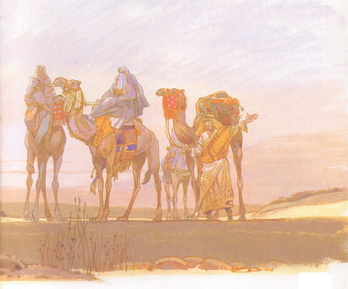
We probably all know the story about young Abram who was left to watch the idols in his father’s workshop. Somehow a fight broke out between the idols, the biggest one beat up the little ones and many of them broke. When his dad came back home, he was enraged and kicked Abram out. So Abram started journeying, leaving his birth place in Ur Casdim, Ur of the Chaldeans…
It’s a beautiful story with many deep meanings and two disappointing facts: one, in spite of its great familiarity, it’s not in Torah; and two, Abram’s father, Terach, actually left Ur Casdim with Abram and the rest of the family. At the end of last week’s reading, we find:
לא וַיִּקַּח תֶּרַח אֶת-אַבְרָם בְּנוֹ, וְאֶת-לוֹט בֶּן-הָרָן בֶּן-בְּנוֹ, וְאֵת שָׂרַי כַּלָּתוֹ, אֵשֶׁת אַבְרָם בְּנוֹ; וַיֵּצְאוּ אִתָּם מֵאוּר כַּשְׂדִּים, לָלֶכֶת אַרְצָה כְּנַעַן, וַיָּבֹאוּ עַד-חָרָן, וַיֵּשְׁבוּ שָׁם. 31 And Terah took Abram his son, and Lot the son of Haran, his son’s son, and Sarai his daughter-in-law, his son Abram’s wife; and they went forth with them from Ur of the Chaldeans, to go into the land of Canaan; and they came unto Haran, and dwelt there.
It is quite possible that the departure was due to many reasons, not excluding embarking on a new, unique spiritual path. But somewhere along the way, the family stopped. Doubts? Misgivings? Second thoughts? Others wondering what’s the craziness, what gotten into them? Or maybe life got in the way: Haran, Abram’s brother, died; Abram and his other brother, Nachor, married. Haran’s son, Lot, needed care. The family settled. The dreams of a journey far away were cut short.
But for some, there is no way back. It is then that G-d begins his ‘one on one’ relationship with Abram (Genesis 12:1-4):
א וַיֹּאמֶר יְהוָה אֶל-אַבְרָם, לֶךְ-לְךָ מֵאַרְצְךָ וּמִמּוֹלַדְתְּךָ וּמִבֵּית אָבִיךָ, אֶל-הָאָרֶץ, אֲשֶׁר אַרְאֶךָּ. 1 Now the LORD said unto Abram: ‘Get thee out of thy country, and from thy kindred, and from thy father’s house, unto the land that I will show thee.
ב וְאֶעֶשְׂךָ, לְגוֹי גָּדוֹל, וַאֲבָרֶכְךָ, וַאֲגַדְּלָה שְׁמֶךָ; וֶהְיֵה, בְּרָכָה. 2 And I will make of thee a great nation, and I will bless thee, and make thy name great; and be thou a blessing.
ג וַאֲבָרְכָה, מְבָרְכֶיךָ, וּמְקַלֶּלְךָ, אָאֹר; וְנִבְרְכוּ בְךָ, כֹּל מִשְׁפְּחֹת הָאֲדָמָה. 3 And I will bless them that bless thee, and him that curses you will I curse; and in thee shall all the families of the earth be blessed.’
ד וַיֵּלֶךְ אַבְרָם, כַּאֲשֶׁר דִּבֶּר אֵלָיו יְהוָה, וַיֵּלֶךְ אִתּוֹ, לוֹט; וְאַבְרָם, בֶּן-חָמֵשׁ שָׁנִים וְשִׁבְעִים שָׁנָה, בְּצֵאתוֹ, מֵחָרָן. 4 So Abram went, as the LORD had spoken unto him; and Lot went with him; and Abram was seventy and five years old when he departed out of Haran.
And again, something strange: when one leaves on a journey, first one walks out of the parents’ home, then the neighborhood and close community, and lastly, the land, while here, the order is backwards. Perhaps the journey is not only physical, and in a spiritual journey, the order is reversed. When we leave the shells and habits of the past, we are invited “to the land that I will show you”.
Traditionally, the land, “aretz” is understood to be Eretz Yisrael, the Land of Israel. But in one of my many readings, I find another layer: the word eretz, land, is connected to the word ratzon, want.
The goal of our journey is – our want, wish, desire, will. Indeed, one of the most complex things in life is to identify and clarify what is it that we really want. When we’re little, we scream loud and ask what we’d like to have unabashedly: not this! That! Not that color! That one!! Now! But then, we “grow up”, we learn “how to behave” and lose much of it, and with it, often lose our way, our core, our purpose, which needs to be regained, often through great effort.
As a parent, one is hard at work so that one’s kids will not have to struggle, not like you, not that much, but at the end of the day, each of us has their journey to the aretz; and that journey takes listening, following, investing time, persistence and hard work. It might slip many times, doubts, temptations, false voices, all are inevitable along the way, but just as inevitable is to keep walking, adhering to that voice telling us, Lech-Lecha.

Shabbat Shalom.

Posted in Uncategorized | Tagged , , , , | Leave a comment

Tuesday morning daf yomi – Sanhedrin 100

Join me for one daf (Talmud page) a week. Today, we’re at Sanhedrin 100, asking what is a “heretic” (apikoros), how respectful one has to be of a Torah scholar, and what does it mean when the Talmud says, not to read ba-sfarim hachitzoniyim” – in the “External Books” (i.e Apocrypha).


Posted in Uncategorized | Leave a comment

Noah, Noah

Vignette:
“Excuse me, where can I find car oil”?
“Hahaha”, laughs the cashier at the big, well-stocked, grocery store, “that will be the day!” After much thought (‘where on earth is there a place that sells such obscure stuff?’) she suggests a gas station on some corner or an auto specialized store on the other side of the neighborhood. In the land of bicyclists, runners and walkers, my “Blue Stallion” is a lone wolf… But then, if no one has cars around here, what makes all the traffic??
Noah, too righteous
There he is: Noah, the good old man among the ugly, evil doers who hears G-d and builds an ark; a devotee turned carpenter, long white beard (of course) and cute animals all around…
For the rabbis, Noah has been a challenge: on one hand, the Torah describes him as “tzadik” – a righteous person, and on the other, how can a “righteous person” spend 120 years building an ark the size of a football field to save only 9 people? How did they sail away watching everyone else drown?
The question is really, is that righteousness? Is that good enough? Especially during dark times in history, that was a critical issue: Is it good enough to be good compared to those around us, or is there some standard? If Noah is a tzadik and Abraham is a tzadik, are they the same or perhaps, there are different levels?
According to the Kdushat Levi (1740-1809), there are indeed two kinds of “tzadikut” (righteousness): one, doing right and good between people, and one – between people and G-d. Noah was of the latter but not of the former. Further, he says, Noah had faith in G-d but not in himself (!). Because Noah had no faith in his own self, he did not have the wherewithal to dare stand up to G-d, and say, ‘hey, no way You’re going to destroy our world (see Abraham coming up in a couple of weeks)!!’ He was the overly meek and humble, and therefore, did not believe that he deserves anything. Walking off, looking for his tape-measure and hammer, he (possibly) shrugged; or maybe that evening, he told his wife; ‘eh, so G-d decided to destroy the world and save me (us), oh well, sure, whatever He wants; honey, pass the lentils please’…
Obviously, from the simplistic Torah text, G-d “favored” Noah, and for sure, he was righteous, but for our sages, a “yes-man” is not the ideal. Strict obedience is not enough and not our way.
Noah’s Wife
What was her name? Who is she? What was her reaction? What did she do and what could she have done? I go back and forth between thinking of her as the most loving wife in the Torah, and between wondering; She couldn’t have told him to take the neighbors too? she couldn’t talk to her friends? what if she was different?…
The Lit Ark 
G-d, who knows Noah, doesn’t leave anything for Noah’s imagination regarding the measurements and material of which the teiva should be built. The last piece is the window. Well, not quite a window, but a tzohar, צהר an unusual word that appears only here (and from which in modern Hebrew we get tzohorayim, צהריים noon, the time of extra or double light).
Rav Hirsch connects tzohar to zohar, זהר to illuminate, and Rashi, based on the midrash, says about the tzohar that is can mean both “window” or “a good gem”, both being a source of light for those in the ark, with an important distinction: The good gem would provide light inside for those inside the closed ark from within, while, in contrast, a window is something that allows light from the outside to come in. Where does light come from, for us? Is it something we have independently within us, something that emanates from us, which we share with those around us – or – is it something far away, incomprehensible, we look for outside of ourselves, and get only a glimpse of?

Shabbat Shalom.

Posted in Uncategorized | 2 Comments

Who’s simcha is it?

Vignette:

I’m becoming a New Yorker… The recent realization follows needing to move my car due to “Street Cleaning”. The “whole world” double-parks from here until forever, waiting for this “seige” to be over. Should I go on a day trip out of town? Well, I could. But if parking is challenging at 1:00pm, at 10:00pm it will be impossible, so I don’t.
I join the double-parkers some blocks away, so I can find a spot, and then, “freely” take public transportation to whereever I need to go… But my my eyes remain tight like a sniper, and when I’m later back, I spot him: a van, idling, on two spots!! “hi there”, I say, stumbling over a sidewalk crack, almost falling into his car not very graciously and fully aware of how ridiculous this is, “can I please have one of these spots, please?”
“No”, he says, “I waiting for a repair van to fix some problem in my building”
“Repair? oh that’s great” Poor guy, little does he know I’m not letting go that easily, “And how long are they “reparing” for”?
“If all goes well, about an hour. Why? what?”
“Please”, I say, combining my Israeli and NY insistance with a CA smile, “Here’s my number; call me when this spot opens”…
And then, a miracle: He calls. I bring my car. He waves and drives away. My Blue Stalion and I cheer. Ah, America!

NorCal:
No better time to pray for rain. Please.

Shmini Atzeret & Simchat Torah:
One more holiday in this stretch of fall holidays. In Israel, the 8th day of Sukkot is the same day as Simchat Torah, some say because in Israel the material and spiritual – combine, while outside of Israel, we live in a more separate world.
Here, we will pray for rain geshem – tomorrow, which is symbolic of all “gashmiyut“, materialism, while the next day, we’ll celebrate with the Torah, sadly increasing the disconnect between spiritual and physical.
As customary, for some strange reason, there will be drinking and dancing and more drinking and even too much drinking (which can’t be said about dancing :-). This is a good time to remember that it’s not our simcha (joy / celebration), but the Torah’s! What makes her happy?

Chag / Hug Same’ach& Shabbat Shalom!

Posted in Uncategorized | 2 Comments

Sukkot – סוכתי הסוכה

My Sukkot starts on the last chapter of the book of Jonah, the unnecessary chapter of the book, after Jonah “did his job”, the people did “their repentance”, and everybody lives happily ever after. Why doesn’t G-d just leave the poor guy alone? what else can G-d possibly want from him?

Jonah, disappointed with his success (yes! that happens to us too !) goes out to sit under a… sukkah; in its shade he finds refuge. And indeed, in Hebrew, tzel (shade) and hatzala (salvation, rescue) share the same letters and are very close words.

How strange for Jonah to find refuge in a sukkah. Shouldn’t he have found it maybe in a fortress? And yet, our whole holiday is about just that: reminding us that things that appear “solid”, might be not so, and things that appear transient – can be lasting.

Last week, I had the great honor to spend two days in Houston, Texas on an all too brief mission sponsored by Yeshivat Maharat. And there we were, trying to salvage items with long lasting “guarantees” from brick and mortar houses, designed “forever”, but flooded and damaged, while outside, in the yard, quietly and peacefully, stood – ready for a chag – a sukkah.

Sukkot is also a holiday which introduces the hardest mitzvah of all: being happy. How can we possibly be commanded to be happy??

May we find joy in this holiday, and from it, to the rest of the year. Chag Sameach!


Posted in Uncategorized | Tagged , , , | Leave a comment

This Yom Kippur, what for ? היום כיפ’ר הזה, על שום מה

Much (and more) has been writing about Yom Kippur, this “day of Attornment” in an effort to figure out, explain, interpret, rationalize… words and words (and more… beautiful commentary and many wise insights, some of which I plan to use too, and yet, many are left without an answer: What are we doing? How does it make sense? What is this day all about?
We know it as a day to fast – from food and drink, but also bathing, anointing and marital relations. Mostly – it’s intended to be a day to pause from worldly “stuff”, which the sages, sadly, for us, had to put in concrete terms and practical restrictions. I pull out my machzor to prepare. It’s really beautiful and I love much of what’s in it. And yet, if I read through all of this, will that tell me what’s Yom Kippur? Is a day to approach through these words with one’s intellect, or maybe…

And then, a moment:

As background to my unpacking (great activity for erev YK morning 😊), I’m listening to Galgalatz, the Israeli “music and traffic” radio station. On this day, at 4:55pm Israel time, they play a new’ish version of Kol Nidrei. At 5:00pm – they broadcast the “News”, and then, they say, quite nonchalantly: כאן תמו שידורינו – this completes our broadcasting (until after chag).
And then, there is Silence.
Silence with capital S. Silence which rings in my ears as loud as the shofar; as loud the siren on Holocaust Memorial Day and Yom Hazikaron, Memorial Day for IDF and Terror Victims; Silence which is piercing and all present, filling the air with great joy and great awe. Silence which calls out, “Shabbat-Shabaton”, this is a Mega-Pause from Everything to recalibrate back to zero, like a spiritual bathtub to dunk in. There are no words for that feeling when we get out a good bath. I listen to that Silence and think to myself, that’s it. This is Yom Kippur.


Posted in Uncategorized | Leave a comment

Balance anyone? Shana Tova!!

I’m sitting on the edge of the last chair in my apartment, waiting for the movers to come… what a grand way to accentuate this being the eve of the New Year 5778!
The past few days have been busy spent sorting through my life – again: “what will be thrown away, what will be given to a clothing drive, and what will go on with me to my next stop”… I find it all crazy-making, sad, cleansing, heavy, wonderful, exciting, fun…
This year, I think, again, of those tensions in our life, saying yes between two opposing ideas without giving up on either side. We’ve talked about it earlier, when we encountered Ki Tetze & Ki Tavo (the Torah portions of Living and Coming); Nitzavim & Vayelech (standing & walking) and now we come to Rosh Hashana.
We always say “Rosh” is head and “Shana” is year. Easy. But – I’d like to suggest that shana – connected to 2nd – sheni and “leshanen”, as in the Ve’ahavta, which indicated repeated learning, and Mishna, which is a deeper rerun of the Torah.
Rosh is also strange, if you think about it. It’s the “head”, thus the “beginning”, but who’s to say my body doesn’t start form my feet or arms or heart? “Rosh” is more of a leader, 1st.
A leader is nothing without those 2nd and 3rd. For something to be a beginning, it must have a following, a continuity.
So already from day one we’re given an oxymoron: A 1st and a 2nd. It’s the “beginning” of “repetition”, if you will. And we’re supposed to find the balance between the two.
This year, Rosh Hashana falls on the equinox. That was the “start” point for the rabbis’ calendar calculations, the zero. We walk into our “Yom HaDin” – day of judgment when everything is on the scale, as the world of astrology introduces Libra, the scales. Every little act can tilt the scales one way or another. It’s heavenly and divine; we’re constantly dealing with balls tossed at us over which we have no control; and yet, simultaneously, in our hands. What will we do with these balls? How will this year look? How will we conduct the partnership with the one on High, who also, struggles with his opposite midot (qualities) between judgment and mercy (see below)? Asking and seeking for that point is what drives us constantly forward.

May it be a sweet, good year! L’shana Tova U’Metuka!

*******

Bereishit Rabba 12:15 בראשית רבה (וילנא) יב/טו

ה’ א-להים, (משל) למלך שהיו לו כוסות ריקים אמר המלך אם אני נותן לתוכן חמין הם מתבקעין, צונן הם מקריסין, ומה עשה המלך ערב חמין בצונן ונתן בהם ועמדו, כך אמר הקדוש ברוך הוא אם בורא אני את העולם במדת הרחמים הוי חטייה סגיאין, במדת הדין היאך העולם יכול לעמוד, אלא הרי אני בורא אותו במדת הדין ובמדת הרחמים, והלואי יעמוד

The Lord God [made earth and heaven]. This may be compared to a king who had empty glasses. Said the king: ‘If I pour hot water into them, they will burst; if cold, they will contract [and snap].’ What then did the king do? He mixed hot and cold water and poured it into them, and so they remained [unbroken]. Even so, said the Blessed Holy One: ‘If I create the world on the basis of mercy alone, its sins will be great; on the basis of judgment alone, the world cannot exist. Hence I will create it on the basis of judgment and of mercy, and may it then stand!’.


Posted in Uncategorized | 1 Comment

People of the Journey

Vignettes:

It’s the last Shabbat of this Jewish year, 5777, and — my fist Shabbat at my new position at the Prospect Heights Shul, in Brooklyn. “Wow”, is all I’ll say for now… and if you’re in the area, please stop by, visit, come for Shabbat, holiday, coffee, walk in the nearby Propsect Park etc. There is a busy schedule for this Shabbat starting with beautiful Kabbalat Shabbat, Saturday morning coffee before tefila, mini-drash, a lunch & learn, party in the park in the afternoon, and – slichot at night, along with “Slichot Across Brooklyn”, till midnight. Along with that, it’s probably no wonder that the following is what I read in this week’s Torah reading.

Torah*

The third Torah portion from the very beginning of Bereishit, and the third Torah portion from the end of Devarim, share the same root.
Moshe and Avraham, both are characterized by walking. About Avraham we read:

א וַיֹּאמֶר יְהוָה אֶל-אַבְרָם, לֶךְ-לְךָ מֵאַרְצְךָ וּמִמּוֹלַדְתְּךָ וּמִבֵּית אָבִיךָ, אֶל-הָאָרֶץ, אֲשֶׁר אַרְאֶךָּ.
1 Now the LORD said unto Abram: ‘Get thee out of thy country, and from thy kindred, and from thy father’s house, unto the land that I will show thee.
And about Moshe:
וַיֵּלֶךְ, מֹשֶׁה; וַיְדַבֵּר אֶת-הַדְּבָרִים הָאֵלֶּה, אֶל-כָּל-יִשְׂרָאֵל.
1 And Moses went and spoke these words unto all Israel.
Where are they going?

We are taught that Abraham was journeying to the Land of Israel, and yet, from the verse itself, that is not obvious. God simply instructs him to go from everything he has and knows to a land he will be shown. Rashi adds that Avraham simply had to go: and “there” (wherever that is), I – God – will make you a great nation; here you will not merit sons, and further, (by going “there”), I will make you known in the world.

And Moshe? Where is he going?

The Toldot Yitzchak (1458-1535, uncle of Yosef Karo, the editor of the Shulchan Aruch) writes:
“וילך משה”… ולא כתוב לאן הלך – כי לכל מקום שהלך דיבר את הדברים האלה: ברחוב, במשא ובמתן, בעבודה, בעסקי הפרט ובציבור, בכל מקום החדיר את דבר ה‘ה”
And Moshe went… and (the text) doesn’t say where he went to, for everywhere he went he spoke these words: in the street, when bargaining, at work, when dealing with individuals in privacy and public matters; everywhere he injected the words of Hashem.

Our tradition teaches that the last four Torah portions of Devarim were written by Moshe during the last day of his life. On that day Moshe was 120 years old, and yet, he is not sitting in his tent, fanned by servants, as befitting a great leader; nor awaiting the people to come and greet him. But rather, he gets up and goes. In fact, The Noam Megadim (born in 1805,  of the third generation Chasidut sages) says that even after Moshe has “walked” in the sense of leaving the world, he still keeps speaking all these words to the Children of Israel, to all of us. Further, he adds: halicha – הליכה walking-  indicates rising higher and higher.

Lots of other people in the Torah walk: Noah, Rebecka and more. But not only do our leaders walk; we do too. About eighty percent of the Torah deals with our own journey, and during the remaining twenty percent we move around as well, from Charan to the Land of Israel; back to Charan, back to the Land of Israel and then to Egypt.

And someone else walks as well. In this Torah portion of Vayelech we read:
חִזְקוּ וְאִמְצוּ, אַל-תִּירְאוּ וְאַל-תַּעַרְצוּ מִפְּנֵיהֶם: כִּי ה’ אֱלֹקיךָ, הוּא הַהֹלֵךְ עִמָּךְ–לֹא יַרְפְּךָ, וְלֹא יַעַזְבֶךָּ
Be strong and of good courage, fear not, nor be frightened by them; for the Hashem your G-d, He is the One who goes with you; He will not fail you, nor forsake you.’

Hashem’s journey with us is reiterated in the partner Torah portion of this week, Nitzavim, when the Torah says (30:3):
וְשָׁב יְהוָה אֱלֹהֶיךָ אֶת-שְׁבוּתְךָ, וְרִחֲמֶךָ; וְשָׁב, וְקִבֶּצְךָ מִכָּל-הָעַמִּים, אֲשֶׁר הֱפִיצְךָ יְהוָה אֱלֹהֶיךָ, שָׁמָּה
that then Hashem your G-d will turn your captivity, and have compassion upon you, and will return and gather you from all the peoples, wherever Hashem your G-d has scattered you.

The translation avoids the complexity in Hebrew, which does not say “God will turn” (or as it appears elsewhere – “God will restore”…). Instead, it says: God will return… as in, come back. Rashi says: Our sages learn from this that the Sh’china, God presence, is with Israel in their exile, and when they’re redeemed, God will redeem Himself and come back with us.

We’ve been called the People of the Book, but it would not be an exaggeration to say that we are likewise a People of the Journey. We journey physically – and spiritually. So much so, that as soon as we complete telling about the journey and are just about to set foot in the Promised Land, we roll our scroll back to the beginning and start all over. Jewish Law is also known as “halacha”, which comes from the same root indicating a lively path to walk on, not a stationary, frozen object. Like in the famous poem, Ithaca by the Egyptian Greek poet, journalist and civil servant Constantine Peter Cavafy, (1863-1933), the arrival is secondary to the journey and the movement, onward and upward.

Shabbat Shalom!

Shvil Yisrael

* published by Yeshivat Maharat


Posted in Uncategorized | Tagged , , , , | 2 Comments

On Coming and Going, Joyfully

Vignette:

School started again, and as is appropriate after the long summer of being away, on the first day, we talk about our journeys; journey with a small j and a capital J. We share experiences, as we look backwards and forward on, and add meaningful quotes. I especially like Peter J. Palmer’s from his book “The Courage to Teach” who says: “Before you tell your life what you intend to do with it, listen for what it intends to do with you”. I often think of my life as a giant puzzle I put together without having the cover picture; sometime a piece I thought was the middle of the sky, turns out to be a deep, beautiful lake on the other side. I try to listen for the hints and keep watching with amazement as the picture unfolds.

Some Torah:
It’s slightly past the full moon of Elul which means less than two weeks until Rosh Hashana, and ushering the New Year! The last Shabbatot of the year are dedicated to balancing contradictions: Ki Tetze – last week, and Ki Tavo, this week; and then, next week, Nitzavim – Vayelech on the same Shabbat. The first set can be loosely translated as “going out” and “coming in”; the second set means “standing” and ”walking”.
As so often, we’re asked to simultaneously hold two contradicting positions. We’d like it to be all one way. Or another. But that’s not what it’s about. Balance is a powerful theme all year and especially at this season with the images of the heavenly scales weighing our actions, and even the upcoming (astrological sign of) Libra. How to maintain? Just when we think we “got it”, that sense of equanimity, it rocks a bit, and one side goes up, Or down. It takes sooo much patience to fine tune it; so easy to lose.
*******
One of the strange “curses” / “consequences” in this week’s reading is this (28:29):
כט וְהָיִיתָ מְמַשֵּׁשׁ בַּצָּהֳרַיִם, כַּאֲשֶׁר יְמַשֵּׁשׁ הַעִוֵּר בָּאֲפֵלָה… 29 And thou shalt grope at noonday, as the blind person gropes in darkness…
What is the added value of the words “in darkness”? what does it matter to a blind person if it’s noon or night, if anyway s/he can’t see? The commentators answer: at noon, others, who can see, can help, but at night, no one notices the blind person because no one can see. The curse doubles: Being in darkness – physically, emotionally, spiritually – gets many times worse when, on top of our own inability to “see”, we’re alone, and there is no one there to lend us a hand.
*******
There are a few surprising instructions in this last book that’s almost coming to its end. If we didn’t know it to be serious Deuteronomy, we might think it’s from some New Age guide book. The first was when we were “commanded to love”, a seemingly oxymoron; and now – a commandment to be joyful.
Be happy, says the Torah. Be happy, says the book that has no problem – in the very same parasha! – to spell out awful consequences in case we misbehave – many of which came true.
Be happy.
And if not, you’ll be punished.
What? Why?? Isn’t being happy just an “extra” bonus, after doing all the other “chores”? isn’t keeping mitzvot just really hard work? Who cares about “happy”! just do the right thing; “it’s the Law”!
But the Torah thinks otherwise.
Here’s the text (Deuteronomy 28:47) right from the heart of this week’s “curses” section:
תַּחַת אֲשֶׁר לֹא-עָבַדְתָּ אֶת-יְהוָה אֱלֹהֶיךָ, בְּשִׂמְחָה, וּבְטוּב לֵבָב–מֵרֹב, כֹּל
The easy translation is “because you did not serve Hashem your God with joyfulness, and with goodness of heart, by reason of the abundance of all things“;

There are two ways to read this verse. One, as translated here (above), but I’d like to parse the verse differently, and separate only the first 4 words out:
תַּחַת אֲשֶׁר לֹא-עָבַדְתָּ
This can simply mean:
Because you did not serve (Hashem… etc as above).
Or (and I admit that some will consider it a “creative” reading), it could mean:
Because you served “No”.
That is, the “sin” here is that we’ve “worshiped” – stayed focused on – negativity. We gave precedence to the “don’t” part of the commandments. We were big on the “no’s”. We fixated on the “chumrot” – strictures – and what we – but mostly others… – are doing wrong. Someone was always not quite perfect enough. No matter what, the cup remained half empty. Yes, true, we got so much of what we wanted; things are pretty good, in fact, not too bad, but, ah, well, not quite “perfect”. If only…
That’s when the second half of the verse comes in. Not only should we not “worship the no’s” – it’s not enough to “avoid” the negative and remain “parve”. But rather “with Hashem your G-d, (you should be) in joy and goodness of the heart for the (amazing) everything you have”.
In Hebrew, there are two words for joy – simcha & sason. The latter, sason, is unexpected joy (‘hey, look, I found a treasure!) while simcha is a joy one must work hard for (“ve’samachta bechagecha” – be joyful in your holiday, as we’re instructed in Deuteronomy 16:14). We are not commanded to be in sason (although G-d can be yasis – causing joy); but, we are commanded to be “same’ach”, which means the Torah thinks that is something we can work at, and that is within our power.

Shabbat Shalom.


Posted in Uncategorized | 1 Comment

Go out, enjoy the rooftops!

The Torah portion of “Ki Tetze” has the most commandments any parasha in the Torah has: 74 in total: 27 “positive” (do this and that) and 47 “negative” (don’t do this and that). On the surface, all these commandments are dealing with our immediate physical existence, starting with “if you go out to war” and on. But already Rashi (1040-1105) comments of the opening verse (Deuteronomy 21:10) that the real war, the toughest war of all this section is talking about, is the internal war, one wages against one’s own self, one’s own evil inclination.

This continues throughout the rest of the reading. The commandments can be understood on a “pshat”, simple level, as directive for a safer, more wholesome living, and, at the same time, as holding deep spiritual messages.
For example,
During my studies at the Haifa University, I wrote a paper about “the roof in the Arabic houses”. I postulated that by analyzing the roof, I can learn a lot about how the people underneath that roof live their lives and maybe even, see the world. The Torah looks at roofs too. Deuteronomy 22:8 states: “When you build a new house, then you shall make a railing for your roof”… which totally makes sense. In the ancient world, and still in some parts of the world today, the roof is a usable place where one can dry fruits and seeds, hang laundry, sleep in the summer or sunbathe in winter, play, sit and chat and more. Such a roof, should have a railing so no one falls. But, this is so obvious! Does the Torah really need to tell us that?
The Kabbalists add a less obvious layer. They play with the fact that in gymatria “gag-cha” – your roof – is numerically equal to G-d’s four letter name (26), and tell us that we should have a railing – or what today we would call “boundaries” – around ourselves to protect ourselves and disallow disruptive things from coming in. Our human “gag” – roof, the highest point in our being is our mind, our thoughts, and much of our connection with the Divine. That part need to be secure and safely guarded.
The next verse (22:9) states: “You shall not sow your vineyard with two kinds of seeds; lest the fullness of the seed which you have sown be forfeited together with the increase of the vineyard”. Interestingly, the Hebrew word for “two kinds of seeds” is “kil’ayim”, which literally means – two prisons. Rav Hirsch (1808-1888) explains in his commentary that “two prisons” implies that we are not to mix two different kinds – of seeds or anything that grows, people too. Things that inhibit and limit each other’s growth, that “imprison” each other, and don’t allow mutual growth, have no room in the same “mix”. Our goal should be to strive to develop to our fullest potential; boundaries and a good environment – are key necessities, but something – or someone – who holds us back and restrains us, is a no-no. Elsewhere in the parasha, we’re told that it is a man’s duty to “gladden his wife” (24:5), and yet, what if that’s not possible? In the very same parasha, we’re also given provisions for separation, and even – divorce, for the very same reason of “not mixing things” that imprison each other.
And one last for this Shabbat: In the beginning of that chapter (22:1-4) is a famous favorite mitzvah, that of returning lost objects. The mitzvah of hashavat aveda – returning lost objects – is what’s called “a double mitzvah” because the Torah says “hashev teshivenu” – “indeed you shall return”, using the same root-verb twice. There is also an added negative one: “lo tuchal lehit’alem” – “you will not be able to ignore / avoid”. The sages teach us that if you find your neighbor’s lost object you must return it. This too seems to make sense; why state the obvious? Then the sages add: you must return it, meaning even 100 times! That’s when it becomes less obvious and one wonders: really?? 100 times? What can we possibly return 100 times??
So maybe the construct hashev teshivenu does not only refer to returning a lost object but also to another word that shares the same root: teshuva. Tshuva, which we quickly translate to mean “repentance” shares its root with “answer” as well as “return”. If so, this is also about us noticing within us – or others – things that are lost; different qualities that have gone astray, that we forgot somewhere and no longer use to our betterment, like the ox within us symbolizing our insistence and stubbornness who maybe now no longer works for us; or our lamb – symbolizing our meekness and more. In that sense, these are the things we must notice and can’t ignore; the things we must return back to ourselves. Even more than lost objects – a garment, a donkey – and especially in the month of Elul before the High Holidays, this is a reminder for making teshuva with each and every one of our separate, lost pieces – our outer covering, our physical, hard working drive – and even if it takes us 100 times, still, never-ever give up on bringing those back home.

Shabbat Shalom!


Posted in Uncategorized | Tagged , , , , | 2 Comments