“Take pure olive oil”…

Drawing trees as a child, mine were all two dimensional green ball on a brown stick. With time I added little orange circles on the green tuft. Inspired by my grandparents home in the moshav, I also specialized in green triangles on shorter, slightly fatter, brown sticks. My family looked at my creations and concluded that my brother was “the artistic one”, while I was “more social”. Talking has always been a strength, and drawing, I dutifully dropped. About twenty years later, considering a career in landscape architecture, I was forced to stop and really look at trees again.
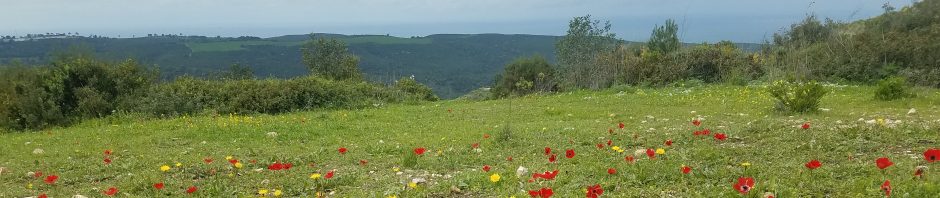
Turns out, they are not all circles and triangles. And they are definitely not all the same – one and only – green crayon in my pencil-box, but range from the assortment of purples-burgundies- orange – yellow in the fall, to 50 million shades of green in the spring, from bright yellow-chartreuse to silvery and dark, almost black-green. I go into the school yard, or sit near my computer on that hill, and notice how they change, hour by hour, with the light, the sun, the rain, and the spring springing all around.
People have always had special relationship with trees. The Torah tells us “ki ha’adam etz hasadeh” – for a (hu)man is like a tree of the field (Deuteronomy 20:19). Originally this was actually the opposite: the idea was that trees are not like people, for they cannot run away and therefore, we should not wage war against them, especially fruit trees. But over the centuries, the verse took on a new meaning. The Talmud in Pirkei Avot (3:17) compares people to trees – those with good deeds and great learning are like those with extensive branches and deep roots – and much later Kabalistic and Chasidic teachings embellished on that.
16th century Rabbi Judah Loew known as the Maharal of Prague writes that man’s “branches are in heaven, for the head, which is the root of a man, faces upwards…” (Sefer Gur Aryeh). The idea was adapted into a modern Israeli poem by Nathan Zach.
This week’s reading focuses on the High Priest, his duties and his garments, which is all full of symbolism. It starts with an instruction to “bring pure olive oil beaten for the light, to cause a lamp to burn continually”. And of course, the question is, why olive oil? One beautiful commentary connects this with another interesting fact about this week’s reading: it is the only parasha when Moses is alive but not mentioned. The traditional explanation is that during the incident of the Golden Calf, when Moses was arguing for the sake of his people, he said to G-d, “please forgive them, and if not, erase me from Your book” (Exodus 32:32). This is one of many examples of Moses’ humility, and the Netivot Shalom (Chasidic rabbi and commentator -1911-2000) connects it to olive oil.
Olive oil can be gotten only when the olives themselves are crushed. Aside from having a fruit, and aside from being able to produce a liquid from the fruit (as is the case with other juices), the unique quality of the olive oil is that it gives light, which in turn can light other lights. He suggests that there is a part of us that lights up only after a lot of work, trials and tribulations.
Most of us don’t necessarily enjoy or welcome hardship, and in “real time”, I don’t appreciate when people meet another person’s pain with “it’s all for the best”. Our role is to try and be compassionate but at the same time, in retrospect we often realize that in order to learn certain things, become certain people, we had to encounter those challenges that we have had; we had to have certain parts of us “crushed”. In spite of the immense pain in the process, this is exactly what sometimes helps our light shine.

Enjoy the beautiful spring all around and Shabbat Shalom.

 

Posted in shabbat shalom, פרשת השבוע לחילוני האדוק | Leave a comment

A Spotlight on a Family Reunion

About 2½ years ago, I got the first email. It had a lot of “maternal” and “paternal” in it, and a string of family relations I could not follow. The writer told me that he’s been looking for me since he believes we are second cousins. What in the world are “second cousins”?? It was exactly the kind of email that could be followed with something like – ‘and now that my family and I are stranded in Nigeria / Cyprus / Buenos Aires, we need a loan of…’
I am embarrassed to say, I didn’t even make it to the end. Clearly – spam. I clicked ‘delete’ and went on my day. Then another email came. And another. What was that?? If anyone in my immediate family would have known about anything like this, it would have been me! and I knew for sure that there were no unknown relatives on that side of the family.
But, wait, aren’t “unknown relatives” by definition, unknown until known??
By the third or fourth email, I gave in and actually read the whole message, still struggling to understand what was going on. No, it did not make any sense. As a child, I always wanted a bigger family, a noisier dinner table, a busier play area. I envied my friends who had more siblings and who on Shabbat had aunts and uncles and swarms of cousins from all sides, all different versions of each other, making their own neighborhood soccer teams, while my brother and I walked over to the field, just the two of us and the ball’s bounce echoing in the empty street. I could never figure out, why there are pages of pages in the Haifa phone book of “Kahana”‘s and none of them, none! is in any way, shape of form, my relative.
My cousins on my mother’s side lived in another town; we went to see them on vacations and there got a taste of the “real things”, but close family gatherings were comprised mostly of the same people: my grandmother, my uncle, my aunt. Sometimes, another uncle and another aunt. Everyone was an adult. Everyone was serious. Everyone had a story. No one talked much, because whatever it was, wasn’t anybody’s business anyway. Gossip was out of the question. The past was nothing new; the present was shared. Eating was done with one’s mouth closed, focused, chewing quietly. And if I asked one too many questions, they said, nu be’emet, which roughly means, ‘really, you got to be kidding, how dare you, don’t you have homework’ (and I know it’s hard to believe that two words could say all that, but, well, in their own way, they did).
Sometime in the early 1970’s this guy showed up in our house. Alexander. He had, what my mother would call, a “Slavic face”, broad and reddish, with thick glasses in a black frame, and disheveled, silver curls. His buttoned, often stained, shirt, exploded over his bulging belly. He had a loud laughter. He loved chocolates. And vodka. And he had an accent – not the “appropriate” yeke (German) accent, but a heavy, Russian accent. Worst of all: he said he was my father’s cousin.
He was a regular guest in our home until he died about 20 years later, and I don’t think I ever seriously explored, how in the world were we related??
“A cousin of some sorts”, my mother would say of her late husband’s family, “give me a break, please, nu be’emet!” Only in the last 2-3 years I learned that my grandfather was one of 7 siblings. And while not everyone survived WWII, and not everyone went on to have children and grandchildren, enough of us did. One of these children was Alexander, and one of the grandchildren is the one who insisted on finding me, Michael, funny how names get recycled in the family. Somewhere in Germany of the 1920’s and 1930’s, and then in Israel of the 1930’s, 40’s – our parents were each other’s cousins. A World War, other wars, thousands of ocean miles and life, separated them and we all lost touch. Almost. Until now.
Shabbat Dinner
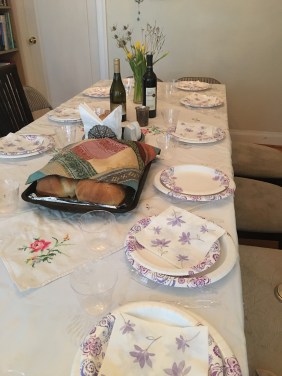
We organize a whole weekend which starts with a Shabbat dinner here. My kids are a little reluctant: ‘do we have to?’ I shuffle between the kitchen and dining area, giving orders: get another chair, from there, no, from there; wait, the soup, oh no, did I forget the fish, what if the challah, did we get enough…
I light candles. Last touch ups. The house quiets down. We wait. Are you sure it’s ok? What do I wear? Do they have the address? Did we set the right seats?
Then the door bell. They start in: Hi, I am… I have a rough chart printed out, and we show each other our branch on the family tree. Some old photos are on the table too: yes, that’s my father and his father, your grandmother’s brother… oh yes, here’s a picture of her…
The evening flows as if we’ve been doing this every week. So does the next day. And the next eve. We share, ask questions, tease, joke around, speak sincerely. When someone asks if I’m “really religious”, I have to smile, for I know my father was asked some of the same questions in another lifetime. So it goes. We search for resemblances, looking for ourselves in each other’s faces, likes, movements, manners, preferences, skills, tastes. In some strange way, everybody seems familiar. We are someone’s tomorrow, and someone else’s yesterday. I realize how family helps shape a person, learn where one begins and where another one ends.
Spotlight
Much has been said about Spotlight, the incredible movie that is now up for six academy awards nominations. And while I too am touched by the story like the rest of the audience, I also watch it completely selfishly. There is Liev Schreiber, playing editor Marty Baron, hunched over the paper, the light still on in his office long after everybody has gone home as he brings new meaning to investigative journalism, and all I can think of is, someone else in this family writes!! It’s the first time in my life that my passion has company. I walk out amazed, inspired and proud to be part of this newly found greater “us”.

המשפחה החדשה 128


Posted in Uncategorized | Tagged , , , , | 5 Comments

Teruma: Constructing the Menorah, and Life

Sometimes I think my students leave my class more confused than they walked in. We talk about Moses’ leadership traits and delve into the story of the Golden Calf (to be read in a couple of weeks). As we recall, Moses comes down from Mt. Sinai and smashes the tablet, and the question is, was that ok? Was there maybe an educational purpose to this act? But then, how dare Moses just throw them to the ground? After all, the tablets were made by G-d Himself!
I take a detour and ask them, ‘Wait, isn’t everything made by G-d? Shouldn’t we be careful with everything?’
A split second of silence and then one student “explodes”: ‘I don’t want to live as if I can’t do anything because everything was made by G-d and I have to be so so careful because oh, what if I drop something or break it! I want to be able to have a life; I want to live it! Isn’t that what we’re here to do? Weren’t we given the world to enjoy it? G-d doesn’t want us to do nothing and just be scared of Him, does He? Which way is it’
As with most ‘which way is it’ questions, I have to say, “yes”. I want them to realize there are more colors than black and white; there’s greater depth. And – as mentioned elsewhere here – sometimes it’s a big yes to two conflicting ideas.
In this week’s reading of parashat Truma, we’re learning about the construction of the Mishkan, the mobile temple. The Mishkan is an amazing structure designed exactly for saying yes, but I’ve often felt that the reading about it, is a section for engineers, designers and architects; not for me. I strain to keep all these details in my mind and quickly get lost: how many what where? And this fits together, how?
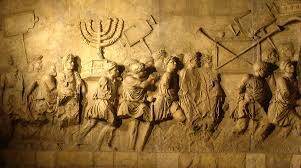
Luckily, I’m in good company. We’re told that Moses too could not figure it out. When G-d told him how to build the menorah, Moses just could not see it: one piece of gold with flowers and buttons?
לא וְעָשִׂיתָ מְנֹרַת, זָהָב טָהוֹר; מִקְשָׁה תֵּעָשֶׂה הַמְּנוֹרָה, יְרֵכָהּ וְקָנָהּ, גְּבִיעֶיהָ כַּפְתֹּרֶיהָ וּפְרָחֶיהָ, מִמֶּנָּה יִהְיוּ. 31 And you shall make a candlestick of pure gold: of beaten work shall the candlestick be made, even its base, and its shaft; its cups, its knops, and its flowers, shall be of one piece with it.
לב וְשִׁשָּׁה קָנִים, יֹצְאִים מִצִּדֶּיהָ: שְׁלֹשָׁה קְנֵי מְנֹרָה, מִצִּדָּהּ הָאֶחָד, וּשְׁלֹשָׁה קְנֵי מְנֹרָה, מִצִּדָּהּ הַשֵּׁנִי. 32 And there shall be six branches going out of the sides thereof: three branches of the candlestick out of the one side thereof, and three branches of the candle-stick out of the other side thereof;
לג שְׁלֹשָׁה גְבִעִים מְשֻׁקָּדִים בַּקָּנֶה הָאֶחָד, כַּפְתֹּר וָפֶרַח, וּשְׁלֹשָׁה גְבִעִים מְשֻׁקָּדִים בַּקָּנֶה הָאֶחָד, כַּפְתֹּר וָפָרַח; כֵּן לְשֵׁשֶׁת הַקָּנִים, הַיֹּצְאִים מִן-הַמְּנֹרָה. 33 three cups made like almond-blossoms in one branch, a knop and a flower; and three cups made like almond-blossoms in the other branch, a knop and a flower; so for the six branches going out of the candlestick.
לד וּבַמְּנֹרָה, אַרְבָּעָה גְבִעִים: מְשֻׁקָּדִים–כַּפְתֹּרֶיהָ, וּפְרָחֶיהָ. 34 And in the candlestick four cups made like almond-blossoms, the knops thereof, and the flowers thereof.
לה וְכַפְתֹּר תַּחַת שְׁנֵי הַקָּנִים מִמֶּנָּה, וְכַפְתֹּר תַּחַת שְׁנֵי הַקָּנִים מִמֶּנָּה, וְכַפְתֹּר, תַּחַת-שְׁנֵי הַקָּנִים מִמֶּנָּה–לְשֵׁשֶׁת, הַקָּנִים, הַיֹּצְאִים, מִן-הַמְּנֹרָה. 35 And a knop under two branches of one piece with it, and a knop under two branches of one piece with it, and a knop under two branches of one piece with it, for the six branches going out of the candlestick.
לו כַּפְתֹּרֵיהֶם וּקְנֹתָם, מִמֶּנָּה יִהְיוּ; כֻּלָּהּ מִקְשָׁה אַחַת, זָהָב טָהוֹר. 36 Their knops and their branches shall be of one piece with it; the whole of it one beaten work of pure gold.

At the end of Exodus 25, G-d says to him: “And see that you make them after their pattern, which is being shown you in the mount”. The midrash says that Moses was so lost in the previous description of the menorah that G-d just showed him a picture of what He has in mind, thus “is being shown to you”.
Let’s look back at verse 31 above: “And you shall make a candlestick of pure gold: of beaten work shall the candlestick be made”… it seems that there are two different instructions. The first is simple: “you shall make!” But then it follows with “(it) shall be made”, in the passive, as if, this will be done for you – by someone else. Which way is it? Yes. There are things to do and act on and push for; and things to let get done, and life is about sorting those out and finding the balance between them.
Shabbat Shalom.


Posted in shabbat shalom | Tagged , , , , , | Leave a comment

When is Jewish Valentine Day?

Source: When is Jewish Valentine Day?

Posted in Uncategorized | Leave a comment

When is Jewish Valentine Day?

Michal Kohane מיכל כהנא's avatarTorah & more... תורה ועוד

Valentine Day is coming up and the world has filled with red roses, fluffy teddy-bears and little cute chocolates, so that once a year we can “celebrate love”. Once a year is definitely better than none, and once a year, has its advantages: Once a year is hard to miss, especially when it’s all over the place, adds, news bits, stores, internet. And it’s pretty doable: a pretty card, a lovely date, a gadget, a piece of jewelry, and you’re all good.

Parashat Mishpatim, read this week, stands in stark contrast to the pink “fluff” around us. From last week’s amazing wow of Sinai and the revelation, which in itself is often compared to a wedding between G-d and the Jewish people with the clouds as a chuppa (wedding canopy) and the Torah as the ktuba, we’re thrown to the depth of detailed laws, mitzvoth, legalities, decrees. The honeymoon…

View original post 824 more words

Posted in Uncategorized | Leave a comment

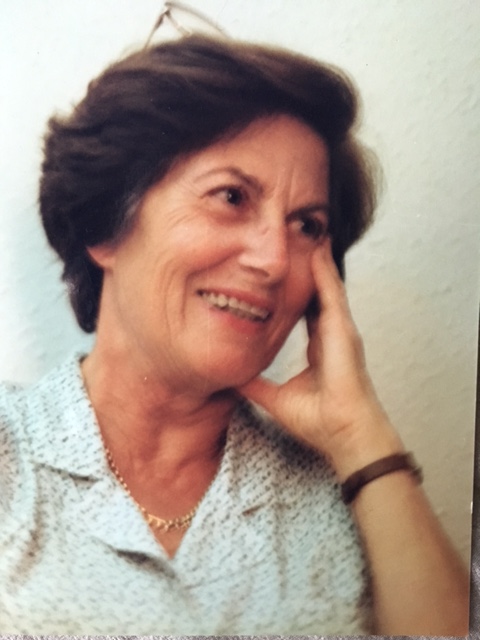
My Mom: 10 year later, I wonder

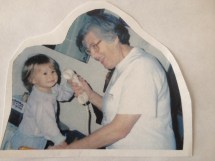
When my mom was my age, I took my backpack and went on a year long trip around the world from which I’m still trying to figure out how to get back… what was she thinking? Travel – in that dinosauric era when there was no facebook to share pictures and no cell phones to send texts and my location… It literally took hours to get through, a phone operator finally connecting two dots across the ocean only to find out you dialed at a time when there’s no one home, not even an answering machine to catch the call. It took days and sometimes weeks to get to a local consulate or some other agreed upon address, to receive letters from home, real letters, in pen on bluish aerograms. I want to ask her, how did she sleep at night? Did she actually sleep at night all?? Because now, when my kids are packing their bags and heading out the door, each to their own adventure on the other sides of the world, I wonder.
I wonder about so many things.
It’s been ten years, and I still wonder.
Some years ago I’ve asked her to record her life story. She said no. I’ve asked again. And again. After my endless nagging (as if she didn’t know -), she agreed (as if I didn’t know -), reluctantly: “I have such a terrible accent”, she said, “Please listen to it only after I’m dead”. There is something about the quality of voice. Accents of dead people are much worse than live ones…
So I listened anyway (ah Michal, you’re impossible!). I heard everything. I wrote it all down. I got a lot of facts. And still. I wonder.
How was it for her to grow up in Germany of the 1930’s; to leave that beautiful home overlooking a lovely town-park, where in the winters she would go ice-skating on the river with her grandmother; the same grandma they had to leave behind because the quota was filled; the same grandma who said don’t worry about me, after all my husband is a World War I vet; the same grandma they learned later was gassed in Teresienstadt.
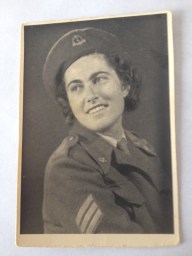
How was it to sail in a big ship far away; to arrive at the shores of then British Mandate Palestine in 1938, 10 years old, and go live in a moshav, a rural settlement with red sandy dirt that got into everything, and citrus orchards, and fuzzy, squeaky little chicks; where you can go barefoot and plant cypresses and vegetables, and get sunburned; how was it to complete high school in the 1940’s, in Ben Shemen, the notable Agricultural Boarding School, and then, be a paramedic in Israel’s War of Independence. In the bottom of a drawer I find an old yellowing photo of her and a handsome guy with a dark mustache, both in uniform. Who is he? Is the back blank because she didn’t know or because she never forgot? What will my kids find of me one day??
She stayed in the medical field. The early 1950’s saw some of the wettest winters in the very young country with tens of thousands newly arrived immigrants and no infrastructure. She went to volunteer at a nearby swampy ma’abara (tent city). She told me how she stood there, wet, in tears, unable to contain the scene, unsure what to do, when an old man in a tattered robe got off his barely dry bed, drudging through the water with his stick, to comfort her, to tell her things will soon be better. I’ve always loved that story for many reasons, maybe also because even when she could have come out as Florence Nightingale, she left the stage to another. When my daughter at six years old told me she was shy, I was wondering if I was raising my mother…
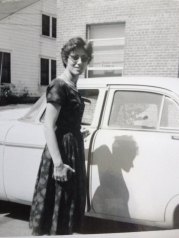
She gave us all the travel bug. In the late 1950’s she packed her stuff and boarded a ship again, this time in order to spend almost two years in North Carolina, working in a hematology lab and doing research on Cherokee Indians, as if this was a perfectly normal thing to do, including arguing with bus drivers when she insisted on sitting in the back, and returning to Israel with records of Paul Robeson, because “shy” does not mean ‘not opinionated’!
There is something between parents and children, like a river run: by the time we reach the point they last stood, they’re off to somewhere else. How much can we really know? But sometimes when I look in the mirror, I see her eyes in me. And I wonder.
Especially today, I miss her dearly.
May her memory be a blessing.

sargent maya frolich, 1949

NC1958

north carolina, 1959

shmiz march 2015 plus 080

savta 1997

1989

Continue reading

Posted in life and some, סיפורים קצרים | Tagged , , , | 12 Comments

what about receiving?

We had to stop short our learning in 1st grade this afternoon so they can get to PE on time. At first they were so, so disappointed, then they realized something and started to jump with joy: “Tomorrow we’re getting the Torah! Tomorrow we’re getting the Torah!”
Although the holiday celebrating the Giving of the Torah is still almost six months away, this week’s reading which includes the Ten Commandments, is like a little holiday of such. The extensive preparations and excitement was great back then, not only in my class.
Before the Giving of the Torah, the Children of Israel are told:
וְאַתֶּ֧ם תִּהְיוּ־לִ֛י מַמְלֶ֥כֶת כֹּהֲנִ֖ים וְג֣וֹי קָד֑וֹשׁ
“And you shall be unto Me a kingdom of priests, and a holy nation” (Exodus 19:6), and the question raised is, what does it mean for you to be “a kingdom of priests”? If it means that we should all be like the priests, well then, the priests of the Temple did not own land, were dependent on the people for their food and basic survival, and were busy serving the sacrifices, which were made and brought to them by others! If we’re all priests, who will do the rest of the work? Are you seriously saying we’re all supposed to be kind of like this?
Yes, pretty much, says the “Ba’al HaSulam” (1885-1954). There are many commentaries on this but his focus is saying that just like the priests have no share in the materialistic things of the land, so we should also remember that the world belongs to G-d, and we have to part of the flow, part of giving and receiving.
Flow is hard for us. It means being tunes in to the song of the universe; it means – being. In order to do so, we need to switch our self-centered egotistical needs and wishes, to more altruistic feelings and actions; to focusing on what we can and want to give; to figuring out how we can serve and improve life for those around us. Giving means we empty a spot within us to receive, and vise versa. Sometimes the action itself is not that different and all that happens is us seeing ourselves differently. “In those moments”, says the Ba’al HaSulam, “it’s as if someone who is doing their daily, mundane chores, sowing or harvesting ot whatever the task, is like the high priest, standing in the Temple, offering incenses and sacrifices to G-d.”
We still talk about the Giving of the Torah, because while it is given, it is up to us to receive it. Contrary to what we might think, receiving is even harder than giving (think of compliments we hear about ourselves – we tend to view them either with “modesty” or haughtiness). The Torah is a love song to the world. Had G-d not cared about His creation, He would have not bothered telling us what to do, how to be better to each other, our animals, plants and greater environment around us. Us joining it with joy and excitement, is us participating in this great love.

Shabbat Shalom.

Posted in life and some, shabbat shalom, פרשת השבוע לחילוני האדוק | Tagged , , , , | Leave a comment

The Granddaughter of Doctor Doolittle

I am a granddaughter of a vet, so in our family, it was always very clear: animals live outside, people live inside. My childhood memories have lots of cats, mitzi and kfitzi and the like, all running through the streets of Haifa, rummaging through our neighborhood’s garbage cans, meowing high-pitched concerts at night. Living at ground level with windows open to a common yard, it happened occasionally that one or two sought a safe haven in the bottom shelf of the linen closet to give birth to a litter. After their discovery and recovery, as was the case whenever we children found a living creature, we gave it milk and got some soft shmates to line up an old crate. And if we were really good and it was really desperate, or the other way around, we would be allowed to leave it right near the front door, outside.
We never had a dog, because with a 3 rooms apartment, where would we put it? Dogs were a lot of work, suitable for those who had private yards, time to walk them, and the gumption to pick up their poop. The dogs I knew were tied to a tree in an orchard, their rope reaching just about the doorstep of the farmhouse at my grandfather’s moshav. They were meant to avert strangers, and they scared me.
Don’t get me wrong: being kind to animals was an important value. My grandfather, always addressed as doctor and highly respected, had, what a better sign of reverence? one of the only two phone lines in that moshav. The area’s agricultural residents would bring their donkeys, mules, horses and once, legend has it, even a circus elephant, to be cared for and cured. They would park their wagons at the dusty roadside, the row of cypress trees planted by my mom as a child already taller than me. He would walk down the brick path with a measured step, bag in hand, talk to the animal, talk to the owner, do some magic to make them both feel better, and send them on their way, trotting along.
The granddaughter of Doctor Doolittle, I knew the rules: animals are out, people are in. This is how I grew up.
My kids, naturally, inherited some of that attitude too. We treat our animals with joy, wonder, appreciation and care, but they are just as much farm animals as pets. When any one of the many rabbits we had, opted to run into the woods, that’s just the way life goes. When the song bird’s cage was left open and it flew out, we wished it a good life somewhere. And when the iguana, on a leash and harness, decided to climb the apple tree, we chuckled at life’s curiosities.
And then Zoe came into our life.
In retrospect, there was some scientific explanation to it: we simply got her a week too early, something about ours and the owner’s schedule. She was only 7 weeks old and missed the last week of basic training with her birth mother, the one about socialization with other dogs. One way or another, while for outsiders, she looked like any other (though much cuter!) golden lab, both she and we knew it: she was not really a dog.
So there was not even a question of where she’d live (inside), where she’d eat (bowl in kitchen, right near the dining table) and where she’d sleep (naturally, not near or under, but in our beds). Many hiking trails were chosen with one question in mind: not how long or how beautiful or how far, but – can we bring her. The 5 seater Camry often fit 5 of us, plus Zoe’s 75lb sprawled all over us. She knew she was part of the family and I think, was quite proud of it. She earned it and deserved it. Sure, she was cute, but she was the best dog one can hope for – kind and friendly and beautiful and joyful, always ready for an adventure, and… well, she was ours.
Earlier this week, she ran out, slipped, fell over and just died. I was there the whole time and still I can’t tell, what happened, did she hit her head too hard, was it a stroke, an aneurism, a… who knows. I find that there is not always comfort in knowing everything. We know she’s not here. The beds are emptier, the table is emptier, the car is emptier, and life, well, life is emptier too.
I never imagined one can get so attached to a dog, but In Hebrew, the word for dog is kelev – literally meaning, like a heart, and Zoe was just that. From her early days, with me, not knowing what to do with such a tiny ball of fluff, taking her to work, showering with her, caring her in my kids’ sling to do grocery shopping, she was part of the family. In time, her “babiness” wore off, and she grew out of her “teen” years of barking (only when we tried to eat or watch a movie– preferably with guests…) into a lovely lady. She had good and wise eyes; she understood people and interactions, approaching and distancing herself as needed; she put up with our nonsense, like dressing her up for Halloween; she knew when we’re going on a walk or a drive, and was quick to get in the back seat, lest she’d miss an outing.
I often tell my kids, it’s hard to raise parents. It was hard for Zoe to raise us too, but through all this, she allowed us an opportunity to be better, to get out of our comfort zone, to care for another, even when inconvenient; not to mention to have a healthy routine of walking twice a day and being outdoors, definitely improve our gumption level, picking up all sorts of things, and understand jokes about dogs and owners we would otherwise never… oh Zoe, we’ll miss you.

Posted in life and some, סיפורים קצרים | Tagged , , | 2 Comments

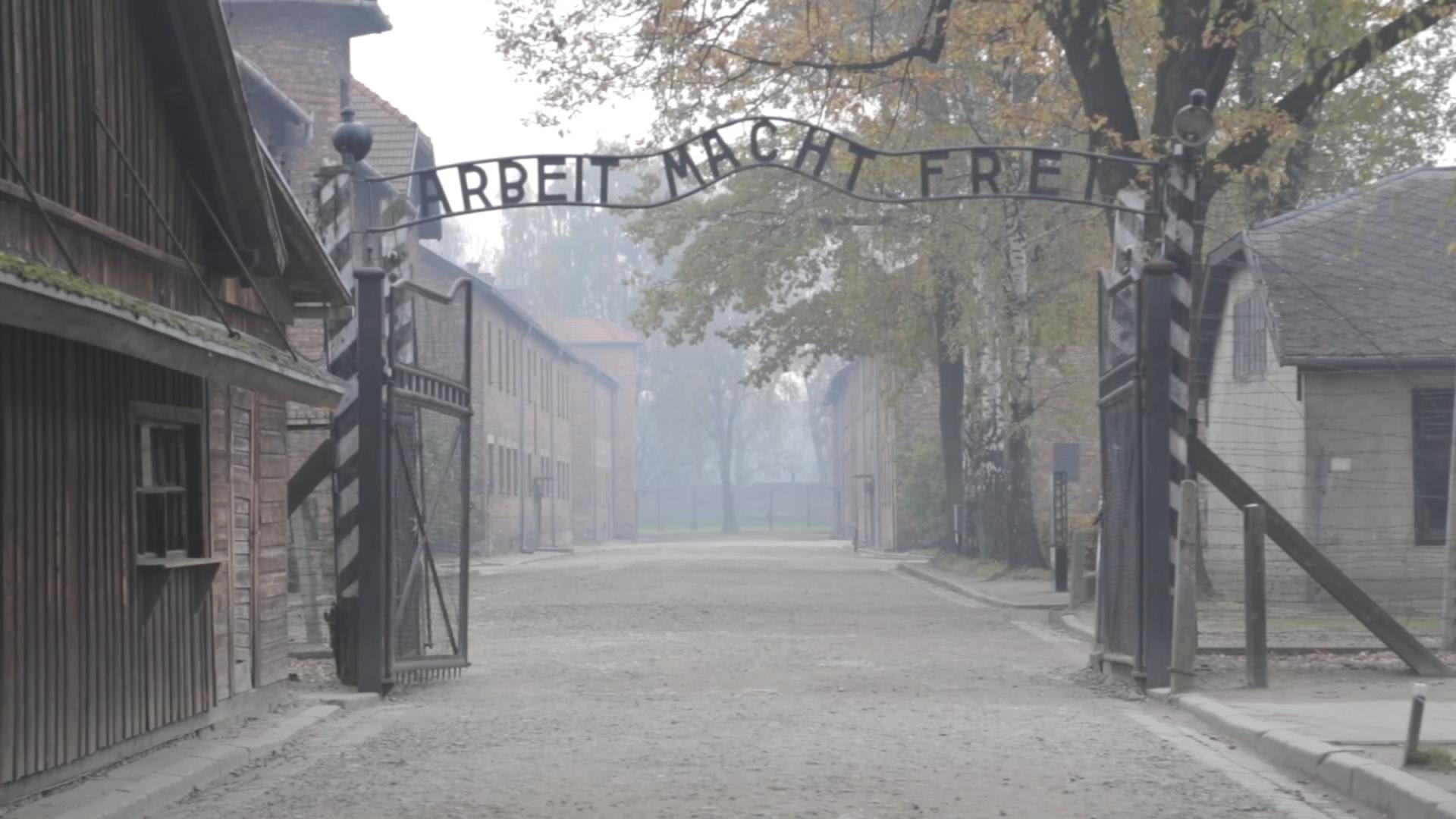
The Liberation of Auschwitz – 71 years later

In honor of the 71st anniversary of the Liberation of Auschwitz tomorrow, January 27, I’ve asked – and am honored – to share this amazing story:

Shabbat B’shalach and the Liberation of Auschwitz
by Patrick Pinchas Feigelson

Having lived a significant portion of my life with two direct witnesses of the horrors of the Sho’ah , I think I have a primary (and growing) responsibility to pass on the message I received from them; a message made of words and silence, love and tears, fear and courage; a message that may not necessarily be found in books, movies, or museums.

My father, Raphael Feigelson, was born in Paris, where his father, Paul, forced into political exile, had come from Lithuania with his wife in the late 1880s. He was a metal worker, and he raised his son with the values of the union movement: social justice and education.

When World War II broke out, Paul started his own clandestine resistance with a newsletter, La Lettre de Monsieur Paul. Following in his footsteps, his son became one of the hundreds of students who marched down the Champs Elysées on November 11, 1940 — in theory to celebrate the end of World War I, but in fact to protest the presence of the Germans on French soil. He was only 14 years old. When the collaborators of the Vichy Government arrested his father, Raphael, for safety reasons, was sent to the city of Toulouse. There, while going to high school, he organized underground fighting among youths in the southwest of France. Imagine yourself, 17 years old, spotting a drunk German soldier in the middle of the night, knocking him down to steal his gun, a Mauser, and throwing him in the river. Imagine yourself, 17 years old, thinking, “When my father was my age, he killed people”…

In the spring of 1944, the French Nazi group, la Milice Française, caught my father and tortured him for one week before delivering him to the SS for more tortures. In June 1944, he was transferred to Compiègnes Prison. In the train, he tried unsuccessfully to escape. He was then sent to Drancy, the concentration camp outside of Paris from where Jews from France were deported to the extermination camp of Auschwitz.

My father was sent to Auschwitz in the last train that left Drancy, on July 31, 1944. Some 300 Jewish orphans were put in that last train to Auschwitz at the last moment, by the request of the SS chief of the camp, Alois Brunner, so that he could meet the quota of 1500 per train. Upon their arrival in Auschwitz, all these children were brutally thrown into the crematorium. Alois Brunner escaped punishment, and lived in Syria until his death in about 2010.

En route to Auschwitz, my father tried to escape again, but failed again.

My father’s number tattooed on his arm is B 3747. He talks about Auschwitz every day, one way or the other. I remember him telling about the work assignments like the Mine commando, the SS Kadduck, the underground resistance network (which he joined when one of the leaders recognized him from his Paris activities), Shmulevsky (the man who took the pictures of the crematoria that were sent to London), the smell of the burning flesh, the words ‘Shema Israel’ heard over and over and over, and much more…

As the Death Marches started in January 1945, a small group from the underground resistance network prepared a plan to escape. For two days they encouraged people to try to escape. It turned out that only those who tried, survived. Having worked in the Disinfection section, my father knew where to find sheets and clothes. At night, a handful of underground members left the camp, covered by white sheets to simulate the snow. Some of them, too tired, returned to Auschwitz. No more than six, exhausted, finally reached the Red Army, which had been stationed less than 60 miles east of Auschwitz since August 1944. (They had no instructions to go to Auschwitz.) The first Russians soldiers they encountered arrested them as spies. But the officer in charge was Jewish. He understood the Yiddish words that were spoken to him by the escapees. “Bist du a Yid?” he asks. And my father tells him the horrors. He tells him Himmler just sent a Commando of SS to destroy the evidence of the massacre. He tells him they must go there to liberate the camp.

The officer sought permission from his superiors to go to Auschwitz. After days without an answer, spurred on by constant pestering by my father and his handful of companions, the officer finally gave in. They arrived at Auschwitz on Saturday, January 27, 1945 – Shabbat Beshalach (13 of Shevat 5705), when Jews around the world read about the miraculous Exodus from Egypt, and sea splitting and the escape to freedom…

And so, as History goes, the Russians liberated Auschwitz… My father still has the military uniform and coat that they gave him then. I am personally very grateful that the ‘Frantsusky Partizan’ refused the honor of the invitation by Stalin to go to Moscow… Instead he traveled through the Ukraine and took a boat in Odessa to Marseilles. On the way, he wrote a telegram to General De Gaulle in Paris: “We, the first survivors to come back to France, miraculously saved, want to keep fighting…”

Right after the war ended, most survivors tried to find a place to live, and tried to live. My father kept fighting: He would go to meetings, schools, conferences, where he would explain again and again the dimensions of the horror. He would work with the American Joint Committee to rescue Jewish children. He would write newspaper and magazine articles, books, essays, poetry. He told me: No one would listen then, no one could believe; some of us even stopped talking about it because no one seemed interested. But he kept talking. He kept fighting.

I’ll conclude with a remark that my father shared with me when I read an earlier version of this text to him in 2001. He said:

“We don’t understand what caused the Sho’ah to happen and we are probably still very far from finding an explanation… but you know, we should also ask the question: What caused the Sho’ah to stop?”


Posted in life and some, סיפורים קצרים | Tagged , , , | 1 Comment

The Song of the Trees: Shabbat Shira & Tu Bishvat

Shabbat, although repeated next week in the Ten Commandments, is already mentioned in this week’s reading. Contrary to life the way we know it, when we get rain from the heavens and bread from the ground, the miraculous journey the desert begins with the unthinkable: rain from the ground (some say, through a traveling well), and bread – from the sky. The people can go out and collect that sweet white stuff that is their food daily, but not on Shabbat. On Shabbat no manna will show up on the ground. Instead, they will get a double portion on Friday and Shabbat will be a day or rest. (Exodus 16:4-30).
When some do go out on the 7th day, unable to perceive how is this supposed to work out with us not working seven days a week, Moses is very angry with them, as if, they already suppose to know, and one wonders, why?
Maybe because from the Torah perspective, Shabbat is as old as the world. The first time we hear about it is as the 7th day of creation (Genesis 2:1-3), when G-d “rested”. Does G-d really need a break, or did He create a day for us?
As often is the case, the sages offer two conflicting ideas about this day. The first is described with this imagery: “In this world, a person picks figs on Shabbat, and the fig says nothing. But, in the world to come, the fig will scream and say – it’s Shabbat today!!”
The second quotes a verse from later in the Book of Exodus saying: “for it is holy to you” (31:14) and explains: “’to you’ namely, she (Shabbat) belongs to you and not you – to her” .
The first saying emphasizes Shabbat as an innate part of the world. Even a fruit of a tree knows of this day, and can advocate for its holiness. In the second, Shabbat is ours, and we get to do with it as we wish. If my way of “resting” is going to a soccer game, then so be it.
Which way is it? Yes.
There is something about Friday afternoon which I cannot explain, as if a soft blanket wraps the world and slows everything down. This is not about a specifically “Jewish” environment because the neighborhood I live in is as mixed as they come. It’s just a tiny, brief moment of greater peacefulness (yes, I wonder if it can be felt on a lonely island -). And yet, that something, if not captured, is quickly gone. That’s when the second saying comes in: Shabbat is ours. We get to decide. We get to act.
Nowadays there’s talk about the concept of “unplug” and making a “not to do” lists. Because the challenge of the Children of Israel in the desert is ours too. It is so hard to stop! There is always one more thing, one more dish to prepare, one more message to send, one more thing to write down, one more place to go to… but what if not. What if for 25 hours, everything can wait. What if I can get it into my mind that in spite of how highly I think of myself, and the importance of all I do, it is possible to make time for nothing, and allow me and the material world a break from each other? What would that look like?

This Monday is Tu Bishvat, literally “the 15th day of the month of the Hebrew month of Shvat (the construct “tu” being made of the Hebrew letters tet = 9 and vav = 6), which has been set aside as “the birthday of the trees”, or more correctly the “New Year’s” for the trees, already in the Mishna (so about 1800 years ago). Why would the trees need a birthday?? Because the Torah tells us how to treat the fruits of a tree that is 3, 4 or 5 years old, so counting the years of the trees was important and practical. But the day has also allowed an opportunity to honor and celebrate trees and nature. The Kabalists created a whole Tu Bishvat seder with different fruits parallel to the different worlds we experience (with a hard pit or core, with a hard shell and with neither), and in modern Israel, it became a day of planting and going out to celebrate nature.
Elsewhere in the Torah (Deuteronomy 20:19) it says, “ki ha’adam etz hasade” – “for humans are like a tree in the field”. Actually, if I understand the original correctly, the context is exactly the opposite: the topic is war and we are commanded not to chop down fruit tree. The Torah asks an obvious question: are trees like people and who can run away when a war is waged on them?
But the Torah has no vowel or punctuation marks, so maybe it is a statement, and maybe because of the deep nature of the issue (wondering how far we can actually run away, from which war, what does that mean etc -), the sages understood that people are indeed like trees of the field. Just like trees, in order to grow, we need a home and base (ground), nourishment (water), warmth and support (sun), and challenges to get stronger (wind). A tree is a reminder of the connection between heaven and earth, planted in the ground and reaching to the heavens. The metaphor is likewise handy in relationship with other people, especially as educators, parents, teachers. Thinking of people as trees means paying attention to who we are in our core; It means understanding that our differences and uniqueness is essential to who we are; it means thinking which branches help us and which ones block us and our sunlight; it means thinking of stuff that bore holes in us, and stuff that heals.
Perhaps one of the most beautiful essays I’ve ever read about trees is by Nobel Prize winner, Herman Hesse. Here is just a piece of it: “When we are stricken and cannot bear our lives any longer, a tree has something to say to us: Be still! Be still! Look at me! Life is not easy. Life is not difficult. Those are childish thoughts. Let G-d speak within you and your thoughts will grow silent. You are anxious because your path leads you away from home. But every step and every day lead you back again. Home is neither here nor there. Home is within you, or nowhere at all”….
Shabbat Shalom.

Posted in life and some, shabbat shalom, פרשת השבוע לחילוני האדוק | Tagged , , , , , , , , , , | Leave a comment