Why Moses?

Maybe it’s the Torah’s way of warning us how easy it is to go “down”, for within just a few verses, life has changed very dramatically! No longer in the Land of Israel, we’re living in Egypt; no longer a small, close-knit family but a prosperous people that multiplies and spreads, and even threatens others in its mere existence. A new pharaoh has risen, who knows not Joseph, and we’re in slavery.

We’re hanging in by a thread, literally: the sages try to analyze what kept us from being lost forever, assimilated into a new, overpowering, culture. They tell us that we’re saved because the Children of Israel kept their language, their names and their clothing; they tell us the women had to work extra hard to seduce the men, making sure there will be a next generation. Again, the amount of commentaries just tells us how bothered they were by this. How did we survive??
Pharaoh on his end clearly didn’t read about books about job productivity and staff management. Not only does he give the people hard work, but makes the hard work – harder: “You shall no more give the people straw to make brick, as heretofore. Let them go and gather straw for themselves. And the tale of the bricks, which they did make heretofore, ye shall lay upon them; ye shall not diminish aught thereof; for they are idle; therefore they cry, saying: Let us go and sacrifice to our God” (Exodus 5:7-8).
Why not give them straw, and ask them to make twice as many bricks faster? Because the issue is not productivity; it is power. Productivity could possibly give the workers meaning: oh, look what we made! But meaning gives life, a future, hope, and Pharaoh is slowly doing what he can to take those away. Indeed, a number of commentators point to the fact that Pharaoh wanted not just to enslave their bodies but their spirits and minds as well (more on that here).
But then, parallel to that, as if opened on a different screen, we meet Moses. Moses, the child being threatened with death who grows up in the palace; a caring shepherd; hard of speech (why oh why does G-d have to make his most speaking prophet, unable to speak??). We often speak of Moses’ greatest quality as that of humility: Moses, we read much later, was the “humblest of all people that were upon the earth” (Number 12:3). Is that why G-d chose him? Maybe. But maybe a better insight can be found in three words from this week’s reading.
Asura na ve’er’e”, says Moses upon seeing the burning bush, “let me turn aside (from my path) and see” (Exodus 3:3).
In this world, where everything has gone from bad to worse, we’re introduced to our new leader, the man who will be with us for the next four of the five books. We already saw him standing up for others, Jews and non-Jews, men and women alike. And we know G-d likes shepherds. It demonstrates and strengthens a variety of good and important leadership qualities. The sages tell us that he chanced upon the bush because a little sheep was running away from the flock, perhaps lost, and Moses went to fetch it.
To me, that just says that the sages were likewise bothered by Moshe’s “asura na” here. Why did Moses, the caring shepherd, who guides his flock through the desert’s dangerous environment, step aside from his vocation to see a mere bush?! Must be because he was even more caring!!
Perhaps.
But for me, as much as I like the caring Moses, I like the fact that he takes initiative and goes to see the bush, davka not because of a lamb, but because he is the kind of person who wants to see what this is.
Moses, unlike the downward slope the Children of Israel are on, unable to think from the harsh labor, is able to see, to feel, to notice and give careful, focused attention to details, to be open to the wow of life, to think.
G-d could have appeared anywhere; a little earthquake or maybe a personal flood; a booming voice, a flash of lightening, but G-d appears to Moses in a sne, a small bush; a bush burning and not consumed. In order to notice that it keeps burning and not being consumed, Moses has to step aside and look. Indeed, the miracle is not G-d being there, but Moses noticing. That is what makes him the right person to be our leader, and a great model for us to this very day.
Shabbat Shalom.


Posted in life and some, shabbat shalom, פרשת השבוע לחילוני האדוק | Tagged , , , , , , | Leave a comment

Had my father been alive… (גם בעברית, אחרי התמונות)

Had my father been alive, today would have been his 95th birthday. Because of the magic of the calendar (95 being 19X5), this is both his Gregorian and Hebrew day: January 6th, the full moon of the month of Tevet.

I write these words and look at them, turn them upside down, philosophy with them, unsure what to make of this.
There are people 95 and older in my life. It could have been possible. I could have had a dad; my kids could have had a “saba” – grandpa – but at age 43, my father started feeling a kind of numbness in his left foot. It bothered him, a bit, especially when he drove but then again, his work place, the Haifa Oil Refinery where he was a respected lawyer, had a shuttle from our neighborhood and driving didn’t seem like a big deal, especially in Israel of the 1960’s where few had – or felt the need for – cars.
Then he tripped over the carpet. An annoyance. The carpet was rolled away under the sofa and the incident not discussed again. Then the stairs going up to our flat on the 2nd floor became impossible.
At 45 the diagnosis was final. To my mom, the doctors said, “We’re so sorry but don’t worry, you’re still young, you can marry again”, knowing how devastating ALS still sadly is. My parents heard of new treatments in London and decided to go and check it out. They came back with plaid skirts decorated with a giant safety pin and a doll that opens and closes its eyes; my brother got a high quality “Marks & Spencer” sweater and a big double-decker bus. Of course, we had no idea what has been whispered above our heads while we played with our toys, zooming around the carpetless room.
It turned out, that an apartment became available near my grandma, aunt and uncle; a first floor apartment, with only two stairs leading to it, indeed, a very rare find in hilly Haifa. They figured, this would make it easier to roll his wheelchair in, now that the crutches were of no use anymore. Oh, how we liked those crutches, using them as imaginary swords in our games, chasing each other around, my mom thinking it so inappropriate, my dad trying to balance with, ‘leave them, leave them’, as if already aware of how little time was left for him to see us play, and she, already aware of what awaits her, raising us alone.
Then Moshe showed up, a strong male nurse who can help my mom lift my dad for a bath; then Rachel, a lady whose kids were grown and could help with us. I remember the day she picked us up from the school: “your parents are in Tel Aviv today”. “That’s funny”, I said, “My teacher is also in Tel Aviv today; maybe they’ll all meet?” She seemed pensive, but we chatted obliviously about school, and teachers, and friends and the like, excited about spending the afternoon at her sun filled home on the slopes of the Carmel.
That evening, we were brought back home. The two bedroom apartment was dark and crowded. Trying to rush to my father’s bedside, to tell him about my day, my path blocked. Unable to see through, unable to reach my destination, I learned of his passing. At 48 he succumbed to ALS. I was 7½.
Death does funny things to people. Almost immediately, they become a legend, especially if dying relatively young. It’s no wonder that some of that happened to him too. We got a lot of “oy, if only your father knew…” when we didn’t practice piano, or finish homework, or came later than curfew, or brought the “wrong” friend, or didn’t bring an all A’s report card. “Ah, your father? He had all A’s”, they would say, “oy, oy…”
We found some report cards later on. He did have mostly A’s though not in PE, and not having an A in PE, for us, young macabis in the growing State of Israel, crushed us to deep embarrassment and just canceled out the rest. He had some “right” and some “wrong” friends, some of whom he helped through court; some were his partners in the establishment of a new, masorti shul in Haifa. He loved traveling and was a true renaissance man with sagging bookshelves and a vast knowledge about everything. Famous above all, was his amazing, virtuoso piano playing. In 1928, a Berlin newspaper featured his picture with the caption: “Do we have a new Mozart”? He played all his life, for local choirs and chamber music and lots at home, much of it on that very same piano, until ALS made it impossible for him to move his fingers.
And he also wrote; there are letters on fine papers, some postcards, and some of his works. And there are the cryptic notes to my mom, days before he died, unable to speak anymore, a rough pencil, etching, almost ripping through the this paper: “stay with me, Maya”.
I’ve missed him ever since. May his memory be for a blessing.

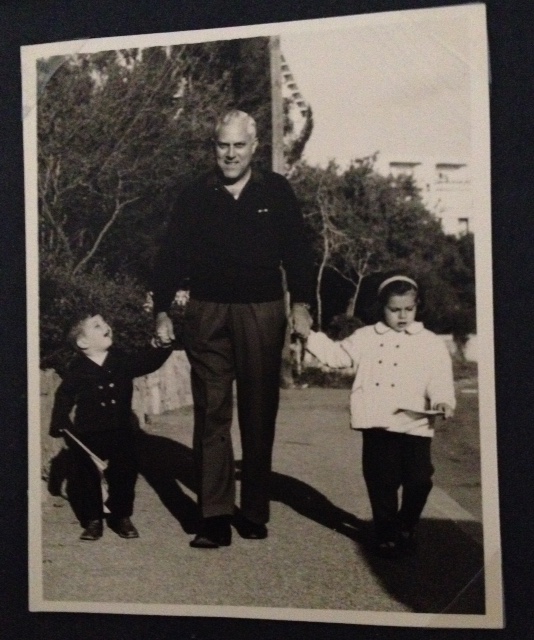
My Parents.1960

my parents.1960

אילו אבא שלי היה חי, היום הוא היה בן 95. בגלל הקסם בלוח השנה (וזה ש-95 שווה 19 כפול 5) היום הוא גם התאריך העברי וגם הלועזי: ה-6 בינואר, ירח מלא של חודש טבת.
אני כותבת את המילים האלו, מסתכלת עליהן, הופכת אותן, מתפלספת איתן, לא בטוחה מה לעשות איתן.
יש אנשים בני 95 בחיי. זה יכול היה להיות אפשרי. יכל להיות לי אבא. לילדים שלי יכל להיות סבא. אבל בגיל 43, אבא שלי התחיל להרגיש תחושה מוזרה, דגדוג לא מוסבר, בכף רגלו השמאלית. זה היה קצת מטריד, במיוחד כשניסה לנהוג, אבל מצד שני, מקום עבודתו, בתי הזיקוק בחיפה שם היה עורך-דין מכובד, הציע הסעה לעובדים מהבית, ונהיגה לא היה כזה “ביג-דיל” במיוחד בישראל של שנות ה-60, מקום בו למעטים היה רכב או צורך בו.
אחר-כך הוא מעד על השטיח. באסה. השטיח גולגל בקפדנות, הוחבא תחת הספה והנושא שוב לא הועלה. אחר-כך המדרגות הומליכות לדירה שלנו בקומה השניה נהיו בלתי נסבלות.
בגיל 45 הדיאגנוזה הושלמה סופית. לאמא שלי הרופאים אמרו: “אנחנו מצטערים אבל אל תדאגי, את עוד צעירה ויכולה להתחתן שוב”. הורי לא ויתרו, שמעו על טיפול חדשני בלונדון והחליטו לנסוע. הם חזרו עם חצאיות משובצות שסיכת בטחון ענקית בצידן, ובובה שפותחת וסוגרת עיניים. לאחי, הביאו סוודר “מארק וספנסר” מ”איכות מצוינת” ואוטובוס קומותיים. כמובן שלא היה לנו שום מושג על מה לחששו מעלינו בשעה שאנחנו שחקנו לנו בצעצועים שלנו, נוהגים בחפזון ברכב החדש, על הרצפה חסרת השטיח.
הסתבר, שנמצאה דירה ליד סבתי, דודתי ודודי. דירה בקומה ראשונה, רק שתי מדרגות מהמדרכה, אכן, מחזה נדיר בחיפה ההררית. ברור היה שזה יקל מאד, כשצריך להכניס ולהוציא את כסא הגלגלים שלו שעכשיו נזקק לו, עכשיו כשהקביים הפכו להיות חסרי תועלת. או, כמה אהבנו את הקביים, משתמשים בהם כחרבות דמיוניות במשחקים שלנו, רודפים זה אחר זו בדירה הקטנה, אמא חושבת שזה מאד לא לענין, אבא מנסה לאזן ב”עזבי, עזבי”, כאילו כבר יודע כמה מעט זמן נשאר לו לראות אותנו משחקים, והיא, כבר יודעת מה מחכה לה, לגדל את שנינו לבד.
אחר-כך הופיע משה, אח-סיעודי שבא לעזור לאמא שלי להרים את אבי למקלחת ולשירותים. אחר-כך הגיעה רחל, אשה שילדיה בגרו ויכלה לעזור איתנו. אני זוכרת את היום בו אספה אותנו מבית הספר: “ההורים שלכם נסעו לתל-אביב”, אמרה. “מצחיק”, אמרתי, “גם המורה שלי נסעה לתל-אביב. אולי הם יפגשו?” היא נראתה מהורהרת מה, עצובה, אבל אנחנו פטפטנו בלי שים לב על בית הספר ועל המורים ועל חברים, נרגשים לבלות את אחר-הצהרים בביתה שטוף השמש שעל מרגלות הכרמל.
באותו הערב, הוחזרנו הביתה. דירת שלושת החדרים הקטנה היתה חשוכה וצפופה. בנסיון למהר ולהגיע אל מטתו של אבא, לספר לו עם היום שלי, דרכי חסומה, לא מסוגלת לראות מבעד לכל הרגליים, להגיע למחוז חפצי, למדתי שהוא נפטר. בגיל 48 אבי נכנע לכוחה האדיר של אי.אל אס (מחלת לו גרינג). הייתי בת ½7.
המוות עושה נפלאות לאנשים. כמעט מיידית הם הופכים לאגדה, במיוחד אם חלילה נפטרו צעירים. אין פלא שזה גם מה שקרה לו. קבלנו הרבה “אוי, אילו רק אבא היה יודע”… כשלא התאמנו בפסנתר, או לא סיימנו שיעורים, או באנו הביתה מאוחר או הבאנו את החברים ה”לא נכונים” או לא הבאנו “אלף” בתעודה. “אה, אבא שלכם?? הכל רק אלף היה לו”, כך אמרו, “אוי ואבוי”…
מצאנו תעודות שלו, זמן רב לאחר מכן. באמת היו לו, בעיקר, אלפים, אבל לא בהתעמלות, וזה שלא היה לו אלף בהתעמלות, עבורנו, מכבים רכים בשנים במדינה צעירה, גמר אותנו מרוב בושה. אבל היו לו חברים ומכרים נכונים וגם “לא נכונים”, חלקם, אנשים להם עזר בבעיות משפטיות, חלקם שותפיו להקמת בית כנסת קונסרבטיבי בכרמל. הוא אהב לטייל והיה איש “רנסאנס” רחב אופקים במלוא מובן המלה עם ידע רב וענין בנושאים רבים ושונים וספריה עם מדפים עמוסים. מפורסמת ביותר היתה נגינת הפסנתר שלו. בשנת 1928, עיתון ברלינאי פרסם את תמונתו תחת הכותרת: “האם נולד לנו מוצרט חדש”? הוא נגן כל חייו, עבור מקהלות מקומיות וקבוצות קמריות והרבה בבית, על אותו פסנתר עצמו, עד שמחלת האי.אל.אס מנעה אותו מלהניע את אצבעותיו.
והוא גם כתב. מכתבים על נייר עדין, גלויות צבעוניות, וענייני עבודה. וגם בידינו הפתקים שכתב לאמא, ימים ספורים לפני שנפטר, כשכבר לא יכל לדבר, עפרון מחוספס, שוחק, כמעט קורע את הנייר: “תשארי איתי, מאיה”.
אני מתגעגעת אליו מאז. יהיה זכרו ברוך.

Posted in life and some, סיפורים קצרים | Tagged , , , , , , , , , | 7 Comments

Lessons from the first expat, Joseph Jacob-son

Joseph is the first expat. Different from his great-grandpa Abraham, who was born in the diaspora and made aliya; different from his father Jacob who went to exile for a few years, got himself together, and actually came back, Joseph provides a new model. True, it wasn’t his (conscious) choice to leave the holy land but once he did, and after a challenging period (not unlike many modern expats-), he discovered new opportunities which were not available back home, like being second to the Pharaoh, having nice clothes, a lovely Egyptian wife and an Egyptian name, perhaps because “Yoseph” was too difficult to pronounce for the locals, another phenomena many of us are very familiar with (try getting your drink at Starbucks with a name like Michal).

His brothers come due to drought and famine in the land, who can blame them? Survival is critical (although we might question how dire was their situation if they could bring gifts of food to the Egyptian ruler, Genesis 43:11-12). Regardless, now, well into the 17th year of their arrival, they show no signs of going back.
Then Joseph is called to deal with his father’s death, another situation many of us are sadly familiar with, and a lens through which to shed light on the complex tension between life in “chutz la’aretz” and in Israel.
Not much different from his grandma Sarah, Jacob death is told in a Torah portion titled “life”, and here too, we deal with burial, except Abraham buried his wife in a plot he bought, in the homeland where he lived; Jacob doesn’t seem that any of his wives to do so, and further, he and the family are now living in Egypt. He has no choice but to approach his son in the matter.
And so we hear (Genesis 47:29): “And the time drew near that Israel (Jacob) must die; and he called his son Joseph, and said unto him: ‘If now I have found favor in your eyes, put, I pray thee, thy hand under my thigh, and deal kindly and truly with me; bury me not, I pray thee, in Egypt”, again, not different from what many of us tell – and have told – our children throughout history: it’s one thing to live here, but when the time comes, don’t leave me in the galut.
Joseph, of course, agrees, but Jacob insists that he must swear to him, and only when Joseph does so, Jacob bows on his bed.
Why does Jacob not accept Joseph’s words, “I will do as you say” (47:30) and demands an oath?
Check again his previous words: “… If now I have found favor in your eyes…” As Rav Hirsch points, this is not how a parent would speak to his child, so what’s going on?
It is possible that Joseph, as viceroy to Pharaoh, could and possibly did arrange favors to Jacob, and Jacob must have approached being the “father of…” with mixed feelings: proud of his son who made in “die goldene medina” but also frustrated to be needy and dependent in a foreign land, with people whose culture and language he knows not, and wanting to be known and remembered for who he himself was. But then, Jacob has always been also a realist; a realist who spent many years living in another diaspora; a realist who especially now, with his renewed insight, could sense the difference between living in a stressful diaspora as he did, a place that doesn’t let you forget who you are, waiting to get rid of you, and between this place of growing comfort and acceptance, in Egypt.
And he could sense how further complicated things can – and will – get. Here he asks for “chesed ve’emet”, an act of both kindness and truth for Jacob knows the two don’t always travel together: Kindness without truth can be fake; truth without kindness can be harsh. Jacob, as Abraham’s grandson and the heir of this way of life, asks Joseph for both. Then immediately almost begs twice within the same nine words: “and please, do not bury me in Egypt”.
Google Earth tells us that walking from (about) Cairo to Hebron can take (about) 10-12 days. It was generally “in the neighborhood”, but from Jacob’s repeated request we can surmise that there must have been a chance that Pharaoh would have disallowed the journey; that this sort of journey would further signal to Pharaoh and his people that the Children of Israel view Egypt as a temporary home; that ultimately, they are still attached to their homeland.
But Jacob was less concerned with his impression on Pharaoh and more with the slow, creeping permanence of settling in Egypt: “and Israel settled in the land of Egypt… and they acquired property / possessions there, became fruitful and multiplied exceedingly” (47:27 – last verse of last week’s reading). Note that “vaye’achazu ba”, here translated as “acquire property” is really more “they held tight to it”.
What’s more, much later, when Joseph actually fulfills his father’s last wish, he tells Pharaoh: “My father made me swear, saying: Lo, I die; in my grave which I have prepared for me in the land of Canaan, there shall you bury me. Now therefore let me go up, I pray thee, and bury my father, and I will come back.’ “ (50:5). Not one word about Jacob not wanting to be buried in Egypt! And check that tone, “my father made me… (I had to) swear”; “I pray thee”, and the promise to be right back. No talk about visiting his mother’s grave or maybe taking a quick tour in the holy land, perhaps arranging for a “birthright” trip for his own children? Pharaoh is impressed with Jacob, blessed and honored to support Joseph’s request to pay last respects to the old man, but as the trusted advisor, Joseph also knows exactly where he stands: he is 2nd to, not 1st. He doesn’t say what doesn’t need to be heard, what can get him in trouble; he smiles and says ‘thank you’ and ‘have a nice day’. It’s enough that he can do his father’s wishes.
It’s no wonder that the blessing that Jacob gave Joseph’s children has stayed with us: “may G-d make you like Ephrayim and Menashe”; maybe G-d make you like these two boys who grew up in Pharaoh’s palace yet never forgot their father’s home, family and teachings; who could walk the line between acceptance in another society and maintaining their core identity.
For 2000 years the Jewish people lived in various courts of various Pharaohs, some better, some worse. The temptation to let go of our way of life was always immense. But time and time again, Jacobs insisted and Josephs did their parents’ bidding, maintaining that careful balance, keeping a connection with who we are, and with the Land of Israel, alive and relevant.
Shabbat Shalom.

"May G-d make you like Efrayim & Menashe"


Posted in life and some, shabbat shalom, פרשת השבוע לחילוני האדוק | Tagged , , , , , | Leave a comment

Joseph, write home!

The meet up between Judah and Joseph can be reminiscent of other brotherly meetings: Isaac and Yishma’el come to bury Abraham; Jacob and Esau meet on the road after twenty years apart. But in all other cases, the brother meet and walk away, each going to form his own life, his own family, his own nation, often in contrast to the other. Only here, in a most emotional encounter, the brothers meet and rejoin to make one people.
Judah and Joseph are not just two brothers; they also represent two ways of being as humans; two ways of being Jewish. As described elsewhere here, one is a shepherd; his clothing probably simple, functional and not particularly attractive. He feels the burdens of physical life, of working the land, being subject to famine and hunger. The other, a high power minister, ambitious, well-dressed, well-off, making it in the new “man-made” land. The one for whom family is a constant element to care for and be responsible for, and the one who hasn’t written home in more than twenty years. The pioneer of the Land of Israel and the businessman of the diaspora face each other.
Which way is a better way to be Jewish? The answer like so many Jewish answers is “yes”. The debate is as old as this story and spans from them to the relatively new Meir Shalev book, “My Russian Grandmother and her American Vacuum-cleaner”. Although each of us will drag one of them to “our side” to “prove” that our way works, that our location, customs, learning and on and on is better, more justified, more in tune with our forefathers’ wishes, I see the opposite: in their outward presence, Judah and Joseph symbolize two very different, yet valid ways to be Jewish. If anything, the haftara from Ezekiel (chap 37) makes it even more obvious that it’s not an either or and that only when the two come together, they make the one people.
But ultimately, according to our tradition, we are of Judah’s descendants and there is one thing that might distinguish us: Joseph makes the best of any given situation he is in. The eternal “na’ar”, optimist lad, he remains faithful and he knows that whatever it is “it’s for the best”. All he need to do is just to “ride” the opportunities that come his way. Judah is much more complex and harder to guess; and can’t rely on anything but his own best efforts, trials and error. G-d doesn’t tell him what to do with Joseph at the pit; G-d doesn’t tell him how to treat Tamar. G-d doesn’t even tell him how to speak to Joseph now and what to do next.
Maybe that became who we are. We do our best. We try to be responsible, caring, good, even courageous at times, but ultimately, each move is our best guess for this moment.
***
Why did Joseph not write home, not even once? The rabbis throughout the ages struggled with this question. The brothers, we already discussed, hated him and “couldn’t see him”, and never even went looking for him – in spite of the great remorse they present this week. Jacob – didn’t know Joseph might be alive, and according to many (based on textual references), his spirit of prophecy vanished due to his extended mourning so since Joseph’s disappearance, he couldn’t even guess or sense that his son is in the area. But what about Joseph himself? He knew he was alive, and he knew where the family lived. Couldn’t he ask Pharaoh for a few days family time and gone to see his father, quietly, at night, while the brothers are out with the flocks somewhere far away, just to give him a little reassurance??
For some reason, I’m reminded of Cat Stevens song. Indeed, I might have had a better answer 20-30 years ago, when I was closer to Joseph’s age and could better understand his desire to start a new life elsewhere, shaking off the burdens of the past, the land that repaid their hard work with a famine; his hateful brothers, his dead mother, and even caring for his aging – and growing unhappy – father. But now I find this the saddest move in Joseph’s life. I don’t think he “sinned” by telling his dreams, as some say; I forgive him for showing off with his fancy coat; I hear his pain when he begs the cudbearer to not forget him; I am with him in his excitement with his new clothes, new name, new job, new wife, new home in the palace. But I’m sorry, Joseph, as a parent I want to tell you, you should have written home. Maybe that too, is a line between Joseph and Judah, and another teaching for who we’re supposed to be.
Shabbat Shalom.

Posted in Uncategorized | 3 Comments

ReJewvenate @ Pardes

the link for this summer’s application is now live on http://www.rejewvenate.info !
please forward on.

Michal Kohane מיכל כהנא's avatarTorah & more... תורה ועוד

ReJewvenate @ Pardes” is an opportunity for someone in the 40 plus age group who has not experienced immersive Jewish learning, to receive a grant from reJewvenate for Pardes’ three weeks summer program. With the support of generous donors, we set out to create new and unique opportunities for the 40 plus age group in the Jewish community as we believe that exciting and purposeful Jewish learning should continue throughout one’s life. Selected from a pool of applicants, Naomi Myrvaagnes was our first grantee last summer, and her moving impressions are described below. We plan on offering the grant again in the upcoming summer. If you’d like to donate – or apply, please let me know.

ReJewvenate @ Pardes:  Pardes Summer Program and the Post-40 Set – by Naomi Myrvaagnes

As the first recipient of the reJewvenate @ Pardes grant for summer program learners over 40, I…

View original post 558 more words

Posted in Uncategorized | Leave a comment

Light One Candle II: The Blinding Power of Hatred

How come the brothers didn’t recognize Joseph? On occasion I run into a past student of mine, then in grade school and now a young adult. They obviously have changed, and yet, it doesn’t take long before we go, ‘Oh My G-d!’ and something along the lines of ‘you haven’t changed a bit!’ Same goes to high school and family reunions. Sooner or later, someone says, ‘wait, wait, aren’t you…’ I’m sure you’ve had the same experience too.
Joseph was not a baby when the brothers sold him to a caravan of merchants, traveling south. He was 17; not quite fully grown, but a young man. To make matters worse, the caravan is described as “Yishma’elim”. Yishma’elim is currently used for just about anyone living in Israel who is not Jewish, but originally, it should have been reserved (as is today) for the descendants of Yishma’el. For Joseph, could that have meant that he was sold to his half-second cousins? Ok, “half second cousins” are not people we might associate with regularly, but this is not a big family. Surely they knew at least that they were somehow related!? How come no one said anything to Jacob? or told the brothers where they dropped Joseph? A man disappears for 13 years in the small region between Hebron and roughly Cairo, fully in the open, and no one knows his whereabouts??
Further, upon meeting him, the brothers don’t even suspect that he looks slightly familiar! I know, I know: he had a different hair-do and new clothing, and maybe even make-up. He was out of context. And at least initially, he didn’t socialize with them and maybe stood at a distance (although later when they bring Benjamin he shared a meal alone with them). But seriously!! Usually people who have given a child to adoption or lost a relative with inconclusive ending, forever keep calculating and looking in a crowd for that person. And here we have ten grown man, later 11, and no one sees anything? Women might have something to say here about men and density, but still the question remains: How come the brother didn’t recognize Joseph?
Add to that, that he immediately knew them. Of course, they were much more conspicuous; he waited for them, they didn’t know he was there. And yet?
Perhaps the answer can be found in last week’s reading: “And when his brothers saw that their father loved him more than all his brothers, they hated him, and could not speak peaceably unto him ; (Genesis 37:4). And immediately in the next verse: “And Joseph dreamed a dream, and he told it to his brothers, and they hated him yet the more” (37:5), and if we didn’t yet quite get how the brothers felt about Joseph, the text says again: “…And they hated him yet the more…” (37:8).
Contrast this with Joseph’s personality. Joseph “sees”. Joseph sees dreams, just like Jacob did when he was younger; Joseph sees solutions, opportunities and, mostly, he sees G-d wherever he goes. No matter if he is in a pit, sold to slavery, a servant in a compromised situation, a prisoner or second to Pharaoh, life is a godly “wow” to him. The brothers, on the other hand, don’t see anything. The last time the verb “to see” is mentioned with them, is when they see Joseph coming and they conspire to kill him (37:18). It takes awhile before the verb to see shows up again, and it is when Jacob finally sees that “there is food in Egypt” (42:1). That “seeing” is what leads to the family’s meeting, resolution and ultimate reunion. Continue and hear Judah’s words when he asks their father to take little Benjamin with them (by the way, according to tradition, at this point, Benjamin was already a grown man and father to his own children). Judah implores Jacob, telling him that Joseph said: “You shall not see my face, unless your brother be with you.” (43:5). And last, after the emotional meeting and revelation (coming up next week), Joseph says to them: “And, behold, your eyes (now) see…” (45:12).
I am struck this week with the blinding power of hatred; how much we miss when we let ourselves be engulfed in hatred!
We don’t know what Joseph’s intentions were when he initially told the brothers his dreams. We “assume” he was a show off but the ones who read ill-will into his words were his brothers, not him. Perhaps Joseph wanted to share his joy at the fact that he sees them all together in the future! Up until now, always the younger one was “chosen” and the older one went off to establish another people. This is the first time all the children continue to be the “Children of Israel”, and obviously, one needs to be the leader. Joseph, as one of the younger ones, son of beloved Rachel, and a dreamer like his dad, was perfect for the task!
But the brothers couldn’t stand him, and therefore couldn’t even imagine anything good in his words. Their hatred shut off their ability to see and hear him.
Miketz, this week’s reading, is often read around Hanukkah. Again, there is darkness. Again, we have an opportunity to add a small light, to make a conscious decision to see.
Shabbat Shalom & Haukkah Same’ach.


Posted in life and some, shabbat shalom, פרשת השבוע לחילוני האדוק | Tagged , , , , , , | 2 Comments

Light One Candle: On Joseph and Hanukkah

It might be no wonder that when Jacob meets Pharaoh in 2 Torah portions, Jacob will tell him: “… few and unhappy have been the years of my life…” (Genesis 47:8-9).
The reading this week begins with the words Vayeshev, “and Jacob settled”… (37:1). We might think – finally! After all the troubles, the tension between his parents, the threatening brother, the escape, 20 years of hard labor at his father in law’s, the switching of his wives, the struggle with the angel, the scary meeting with Esau, the loss of his beloved wife at childbirth, the rape of his only daughter and his sons revenge thereafter, it’s time for Jacob to “settle”.
That’s maybe what Jacob thought as well, but new trouble is already brewing. The very next verse claims that “these are the generations of Jacob, Joseph was 17”, introducing us to a whole new set of challenges with teenagers.
Family therapy, as described elsewhere in this collection, might have helped them see some of the repeating patterns. For example, it says that the brothers hated Joseph (37:4). Hate is a powerful word, and sends us back to the last time we heard of hate, which was when the text tells us that Jacob hated Leah (29:31). Wait, Jacob and Leah had six kids together. Did he really hate her? Whose voice is this?
Turns out, from Jacob’s perspective, he loved Rachel more than Leah, meaning, he really loved both (29:30), but it was G-d who saw that Leah was hated. Apparently, to be compared and loved “less” – as a spouse or a child – feels like hatred, not like ‘little love” and if, sadly you’ve been there, you know that too.
When the next generation takes the stage, Leah’s and the handmaids’ children ‘pay back’: in a place where their mom felt hated, they now hate Joseph.
What does Joseph think? Surely, he knows and feels what’s going on. The brothers already butchered a whole city; they were not shy with their opinions. Is he that confident? That arrogant?
Some commentators look at the word na’ar, describing Joseph as a lad (37:2). Joseph, was not only good looking (dressed in a beautiful coat to complement his lovely appearance), but internally, he remained young at heart, truly optimist. Whatever the task, he is ready and faithful that things will be ok. No wonder he’s described as the “generations of Jacob”. He is the continuation of Jacob: one who doesn’t shy away from misfortune, or honors but faces it and overcomes it (with style!); one who doesn’t hope to “settle”, “ride” or “fall”, and just “is”.
At his father’s request, Joseph goes to look for his brothers, a “short” journey of about 85km from Hebron area to Sh’chem. The last time we heard about Sh’chem was when the brothers joined together to defend Dina’s honor and killed every male in the city by sword. Our ears should be ringing by now with scary music like in any other movie; we should scream: ‘run, Joseph, run’!
But Joseph goes, and we know the rest of the story: the brothers contemplate to kill him, and eventually sell him to a convoy of Yishma’elites who “go down” to Egypt. “Going down” is a repetitive theme of this parasha. Not only Joseph goes down to Egypt (or rather, “being taken down” – 39:1), but also Judah “goes down” from his brothers (38:1) on a whole separate story. And as if Egypt is not “down” enough, Joseph is further taken down to the bor, prison (following another scandal with a piece of garment, this time a shirt ripped and left at his master’s wife’s hand 39:7-20). Bor, by the way, literally meaning “hole”, same word that was used for the hole his brothers threw him in.
Things look bad.
With Jacob depressed, the brothers divided, Judah away and Joseph in jail? Things looked really bad.
This parasha, Vayeshev, is always read right around Hanukkah. What’s the connection?
Greece in Hebrew is Yavan. The kabalists say that if we read this word backwards we get noy, which means outward beauty. Ancient Greece was all about outward attraction: the structures, the human body, and (just like today-), it was very (very!) seductive. We could have been people of a great cultured world! What were the chances to survive this massive attack? Things looked really bad here too.
But we have a principal, that davka (especially) when it’s dark and gloomy, an unexpected light begins to shine, like a flower which sprouts from a seed which rots in the depth of the earth. In Hebrew, shachor – is black but shachar, which comes from the same root, means dawn.
There is a strange commentary teaching that Joseph is Esau’s Satan. This doesn’t translate very well but what the text is trying to say is that Joseph is like a picture’s negative to Esau: Esau looked ok to his dad on the outside, but his inside was not so. Joseph looked “pretty” on the outside, playing with his hair and clothing, but his inside was strong and amazingly reliable.
Last but not least, we started with Jacob’s lineage but we focused only on Joseph. The previous reading ended with a long list of Esau’s begets. Rashi compares it to finding a pearl in the sand, sifting through lots of names, until arriving at the right one. Likewise, the attraction of the Greek culture was being a man of the big world; do some of this and some of this, yet in the process, lose ourselves. The Torah, possibly from the root y.r.h. to shoot, asks us to focus, like the rays of the sun under a magnifying glass, and from there to create a spark.
Shabbat Shalom & Happy Hanukkah.

Posted in Uncategorized | 1 Comment

ReJewvenate @ Pardes

ReJewvenate @ Pardes” is an opportunity for someone in the 40 plus age group who has not experienced immersive Jewish learning, to receive a grant from reJewvenate for Pardes’ three weeks summer program. With the support of generous donors, we set out to create new and unique opportunities for the 40 plus age group in the Jewish community as we believe that exciting and purposeful Jewish learning should continue throughout one’s life. Selected from a pool of applicants, Naomi Myrvaagnes was our first grantee last summer, and her moving impressions are described below. We plan on offering the grant again in the upcoming summer. If you’d like to donate – or apply, please let me know.

ReJewvenate @ Pardes:  Pardes Summer Program and the Post-40 Set – by Naomi Myrvaagnes

As the first recipient of the reJewvenate @ Pardes grant for summer program learners over 40, I want to express my appreciation to Pardes and to the funders and initiators of the reJewvenate grant for the wonderful experience I had at the 2014 summer program.  It was a wonderful three weeks of instruction and inspiration for the older student learning for the pleasure of it.

I know I am not the only person in my age group to love Jewish learning for its own sake, to benefit from adult education offerings and to grow my knowledge through reading.  And surely I’m not the only one over forty who didn’t graduate from day school.  I know I haven’t been the only one to believe that study in Israel was somehow beyond my horizon: where would I fit in?  What about my spotty Hebrew?  For many, there is also the question of cost.  Thanks to the generous funders of the reJewvenate tuition grant, all these obstacles fell away for me.

I came, I immersed in study, I enjoyed.  I felt entirely comfortable being part of the warm, inclusive, generous-spirited community that is Pardes.  There is no Us and Them in the program; no Us and You, no Young and Old.  The marvelous faculty talks to everybody equally, at a high level that is magically accessible to all.

Such teachers!  They are so versed and so serious about the material and about teaching.  Meticulously prepared for each class, with helpful handouts.  So knowledgeable.  Humble, engaging, easy-going, encouraging, energetic.  Entertaining, as well.  My vocabulary does not suffice to praise and thank the faculty sufficiently.

Even beyond all that competence, Pardes is a magical blend of seriousness of purpose and lightness of spirit.  Faculty, students, and staff are all respectful yet warm and generous; committed to study and also to treating everyone else with respect and concern.  July, 2014 was not the most serene time to be in Jerusalem, but even though the fighting was on everyone’s mind, Pardes was a haven of caring for the here and now of its people.

A few points I’d like to offer prospective older students.  To engage in the program, even in the beginner level courses, it’s important to be able to read Hebrew, even just to decode the letters.  The more Hebrew the better, of course.  It doesn’t take a lot of Hebrew to keep up at a basic level, but in my view, at least basic literacy is necessary.

As for orientation of the program and how students of varying backgrounds and locations in the vast spectrum of Judaism fit in: the orientation of the faculty and of school practice (as with food and meals) is halachic, Modern Orthodox.  The realm of ideas and approaches to Judaism and texts is thoughtful and wide, wide open.  The program doesn’t even seem to work hard at talking a very inclusive language or responding to a wide range of viewpoints; it feels as though this openness comes naturally to faculty and staff.  One does not feel the presence of any hidden agendas.  Gender equality and inclusiveness are a given, as is open-mindedness on theology and social issues.

I had a wonderful experience in these three weeks.  I learned a goodly amount of new material, which feels like a springboard for further learning.  I feel privileged to have studied with this faculty and with the other students.  Thank you, thank you, Pardes and reJewvenate.

rejewvenate @ pardes: it's never too late to start learning

Posted in life and some | Tagged , , , , | 2 Comments

katonti – קטונתי – and Jacob’s split life

A couple of years ago, Israeli dance choreographer Oren Ashkenazi choreographed the beautiful and by now famous dance “Katonti”. The words for the song, sung by Yonatan Raz’el are said to be “from the sources”, min hamekorot. Those “sources” happen to be this week’s Torah reading.
Recent years have brought Israeli dancing to new heights. No longer centered around the “hora”, now choreographers create creative dances to modern songs with steps from waltz, salsa, rumba, and much more. “Katonti” “travels” along the circle, possibly hinting Jacob’s journey as described in the opening words of this week’s reading; then we go in and out, possibly “crossing the river”, and pausing for small steps, reaching out our hands in thankfulness, expressing “katonti”.
Katonti is a very strange construct in Hebrew. Literally it would mean “I’ve smalled” (become little) as in “I’ve been humbled” or some even say “I’ve been unworthy”. Jacob feels overwhelmed by the many gifts he has received; gifts of two kinds: kindness (chasadim) and truth (emet). He is fully aware that these two are not only not identical, but also often mutually exclusive. Jacob knows what it’s like to have one without the other and expresses his gratitude for having both, together.
He knows he’s been given much, and much of it he might not directly deserve. There were promises made to his father and grandfather on which he is now making good, especially promises of kindness, chesed, to Abraham, which were intentions for the future, and only now have a chance to turn into emet, truth. Jacob’s life is far from perfect. Any fulfillment of even one of the promises is therefore due to G-d’s greatness rather than his own doings.
And yet, humility is slippery. If we think we have it, it’s gone. There is a famous midrash about the Torah being given on Mount Sinai. Mount Sinai, we’re told, was the humblest of all mountains and therefore, the Torah was given on it. But then, if humility is such a grand quality, why not give the Torah in a valley, which has no height at all? That is, answer our sages, too easy: to obtain humility when one is anyway nothing, is not such a great thing. You have to be something in order to try and be a nothing…
So, where are we in the story? Jacob just escaped from his father in law in Charan where he worked for more than 20 years for his wives and flock. He is heading back to the Land of his forefathers, a place he escaped two decades earlier, and is now about to meet Esau, his brother.
As part of the preparations for that meeting, Jacob assembles a fascinating present for Esau, splits his camp into two and sets out to pray. That’s when he says “katonti”: “I’ve been humbled by all Your kindnesses… now I’ve become two camps”. Again, Jacob’s Hebrew is seriously lacking. Shouldn’t he say: ‘now I had to divide my family into two camps’ or any variation on that? What is this “I’ve become two camps” – עתה הייתי לשני מחנות (Genesis 32:11)?
Jacob is the one who goes through a name change from Jacob to Israel, but forever will be known by both, not either (like no one else); though he travels to the Land, he has lived a significant portion of his life elsewhere and more is waiting for him (going “down” to Egypt); he lives with two wives, one who he fell in love with, and one who he grew to love. He experiences great tragedy and great joy; loneliness and self reliance, side by side with absolute faith. He meets good and bad people as well as angels.
For me, “now I’ve become two camps” is Jacob realizing that the external split is a reflection of the split within him. The realization comes to him right as he is about to enter the Land of Israel. Right there, is where he knows that while he‘d like it to be about “the right place”, the “right wife”, the “right child”, the split is  carried within him. And yet, only Jacob is the proud father of the “Children of Israel”, as all his sons become leaders of the future tribes. That is what he gives to us too: we, his future children, might have inherited that split within us, that so often, when we’re “there”, we want to be “here”. We have “become the split camp” – and yet, in spite of the tension, the only way to be whole (shalem) and in peace (shalom) is to not let go of any part within us, but hold both together.

Shabbat Shalom.

By Gustave Dore, 1832-1883

By Gustave Dore, 1832-1883

Posted in life and some, shabbat shalom, פרשת השבוע לחילוני האדוק | Tagged , , , , | 7 Comments

On Jacob’s Journey, Thanksgiving & Black Friday

Like his grandfather, like his great-great-grandchildren, and like us too, Jacob set on a journey, and so, the opening word – and the name – of this week’s reading is vayetze, “and (he) exited”. Rashi points to us the fact that this word is not needed. It would have been enough to say, Jacob went… but Jacob was a righteous person, and his departure, very noticeable. Kdushat Levi (Torah commentary written by Reb Levi Yitzchok of Berditchev, 1740–1810) adds that it should have said, vayered, and he went down, as most departures from Israel are considered a going “down”, but it doesn’t. Supposedly, the land’s holiness went with Jacob wherever he went. There are those who say his mom wanted him to leave, and his father, wanted him to go find a wife in Haran. In order to fulfill both his parents’ commands, the text repeats both: “and he left, and he went” (Genesis 28:10).
Rabbi Hirsch takes a slightly different look and says that this is so critical because it introduces a new section – the independent life of Jacob. He bases it on the fact that we already know Jacob left. We were told so in last week’s parasha, when Rebecca tells Jacob to go (Genesis 27:43), when Isaac tells him to go (28:2), when Isaac sends him again (28:5) and when the text clearly says: “and Jacob listened to his father and his mother and went”… (28:7).
But now we’re told yet again, “and Jacob left”. The departure itself is what’s important because unlike Abraham, his grandfather, Jacob travels alone and as far as we know, with mostly nothing. This is reinforced by his encounter with G-d, which happens right after his departure, and of whom Jacob asks to give him “bread to eat and clothing to wear” (28:20). Indeed, he only took one thing: his father’s “blessing”, proving that the blessing was not any physical-materialistic gains but spiritual ones. It also lets us know that any gains he might achieve are due to who he is and how he conducts himself, and not to the fact that he started out better off.
Jacob is us. As parents, we hate seeing our children leave; as kids, we hesitate taking the journey. Not everybody’s journey means traveling around the globe and living (at least for now-) 8000 miles away from home, but our forefathers seem to tell us that some space away is often needed for one’s growth.
Relationship:
It’s hard to talk about this parasha and not look at Jacob and his wives. Indeed, lots of things in Jacob’s life are not what they initially seem to be, but no doubt, one of the most complex is his marriage. Hints that things won’t work out right are already there his first meeting with Rachel: he saw her, he kissed her, he burst out crying, then he told her who he is, and then she went to tell her family (29:11-12). His love for her is so great that he is willing to work for her seven years and then another seven; he protects her in the upcoming meeting with Esau and spoils their first born, and yet, he ends his life with Leah, and is buried next to her. In the tension between nature (in this case, falling in love) and nurture (the daily grunt of building a relationship), Jacob provides us with a lot of room for thought.

Thanksgiving:
Imagine: dinner at Lavan’s tent, shortly before Jacob is planning to leave and head back to his father’s land. The father in law; the mother in law? their sons and their families; Jacob, two wives, two maid-servants, eleven sons and at least one daughter. Anytime we plan to complain about family during this “holiday season”, we can pause and think of Jacob.

Black Friday:
More people shop on Black Friday than vote, even in the best attended elections which means that: 1. If we want more people to vote, we should consider placing the polling stations at the entrance to Macy’s and Wal-Mart. 2. As long as this does not happen, how we shop is going to be more important than how we vote (courtesy of Lotem).

Rachel_and_Jacob


Posted in life and some, shabbat shalom, פרשת השבוע לחילוני האדוק | Tagged , , , , , , , , , | Leave a comment